 Send
Send Share
Share
 Details

 Download
 Similars
 Diaporama
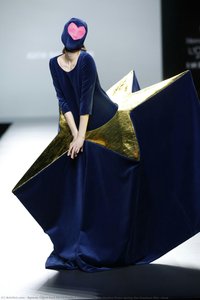
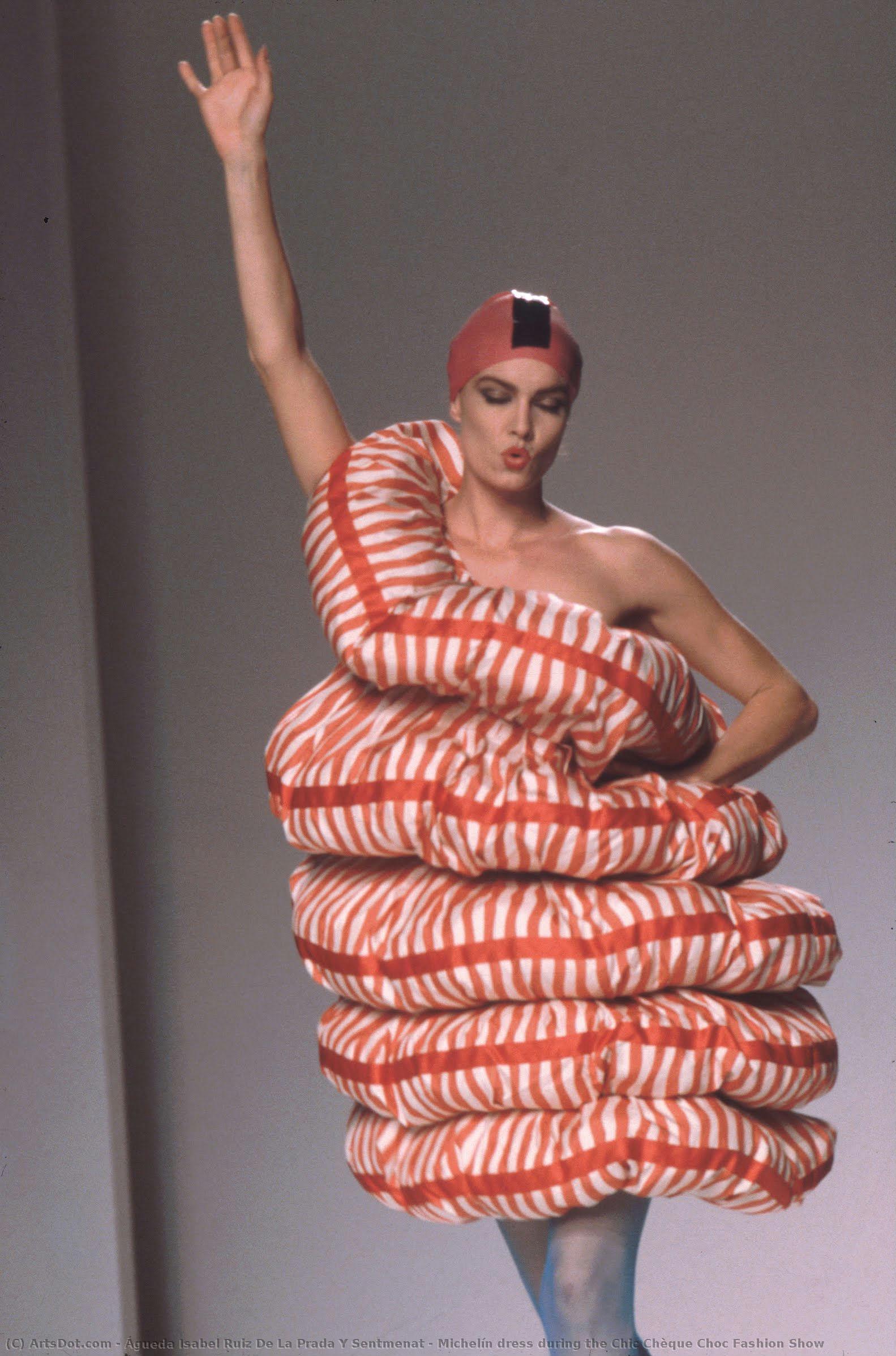
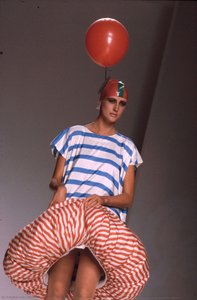
Michelín dress during the Chic Chèque Choc Fashion Show
 Black and White Photography
- Photo
- Contemporary Fashion
 1986
1986- Contemporary
 Agatha Ruiz de la Prada Foundation
 Read More
Giclée / Art Print
Museum-quality giclée or canvas print with fast production and flexible finish options. ( Buy Hand Made Painting Buy Image)




































Pick from our preset sizes that match the artwork's original proportions.

You may enter your own dimensions to fit a specific frame or space. If your selected size does not match the original image's proportions, we will either crop the artwork or extend the image with a mirrored or solid-fill edge. A digital mockup will be sent for your approval before production begins.
Please note that the on-screen preview does not reflect the actual cropping or extension. Only the mockup will accurately show the final composition.
While custom sizes are available, we recommend selecting a dimension from the predefined list to preserve the original proportions.
Worldwide Delivery () in 2 weeks instead of standard 4/5 weeks. (5 September)

Free Worldwide Express Shipping

High-Quality Linen Canvas

Full Shipping Insurance

Customs Tax Refund Guarantee

True Color Matching Guarantee

60-Day Return Policy (Defects Only)

100% Money-Back Guarantee

Bulk Discount Offer
 Glass option is only available in size under 110 CM

Michelín dress during the Chic Chèque Choc Fashion Show
Giclée / Art Print
Reproduction Size
-


Total Price
$ 63
Michelín Dress During The Chic Chèque Choc Fashion Show
The image captures a striking moment frozen in time – 1986 – at the Chic Chèque Choc Fashion Show, where Águeda Isabel Ruiz de la Prada y Sentmenat’s “Michelín Dress” commanded attention. This photograph isn't merely documentation; it’s an invitation into the vibrant world of Spanish avant-garde fashion and a testament to Ruiz de la Prada’s singular artistic vision. The composition is deliberately understated, prioritizing the dress itself as its focal point against a muted backdrop that allows its bold colors and intricate design to dominate the visual field.Subject Matter & Design
The dress embodies an audacious fusion of geometric abstraction and playful whimsy. Its dominant motif—a stylized Michelin tire—immediately establishes a connection to industrial imagery, juxtaposed with the softness of fabric and the elegance of drapery. The striking red and white stripes create a dynamic visual rhythm, mirroring the movement of tires rolling along asphalt. However, this seemingly utilitarian reference is elevated by the oversized bow adorning the woman’s head – a symbol of femininity, aspiration, and perhaps even a subtle critique of societal expectations. Ruiz de la Prada expertly utilizes color psychology; red conveys passion and confidence, while white represents purity and sophistication.Technique & Material
Ruiz de la Prada's approach to textile design is characterized by meticulous craftsmanship and an unwavering commitment to experimentation. The dress was created using a combination of silk chiffon and crepe satin—materials chosen for their drape and luminosity—allowing the fabric to flow gracefully around the figure. The bow, crafted from textured satin ribbon, adds depth and tactile interest to the overall aesthetic. The photograph’s black and white treatment enhances the drama of the garment's colors, emphasizing its sculptural form and highlighting the artist’s masterful manipulation of texture and hue.Historical Context & Artistic Influence
The Chic Chèque Choc Fashion Show was a pivotal event in establishing Ruiz de la Prada’s reputation as a visionary designer who dared to challenge conventional notions of beauty and style. Influenced by Surrealism and Constructivism, Ruiz de la Prada's work reflects a broader artistic movement concerned with exploring the relationship between art and everyday life. Her embrace of unconventional materials and motifs—like the Michelin tire—demonstrates a desire to disrupt established hierarchies and provoke contemplation about cultural symbols. The dress stands as an emblem of this rebellious spirit, cementing Ruiz de la Prada’s legacy as one of Spain's most influential fashion artists.Emotional Impact & Artistic Legacy
Ultimately, “Michelín Dress” transcends mere visual appeal; it communicates a profound emotional resonance. The photograph captures not just the garment itself but also the confidence and artistic conviction embodied by its wearer—a woman who refuses to conform to societal norms and embraces individuality as a source of creative expression. Ruiz de la Prada’s enduring influence can be seen in contemporary fashion trends, where designers continue to explore bold color combinations, geometric patterns, and playful references to industrial imagery. The dress remains an iconic symbol of artistic innovation and a celebration of the transformative power of imagination.Related Artworks


Artist Biography
A Kaleidoscope of Joy: The World of Ágatha Ruiz de la Prada
Águeda Isabel Ruiz de la Prada y Sentmenat, known to the world as Ágatha Ruiz de la Prada, is more than a fashion designer; she’s an architect of happiness. Born in Madrid in 1960 into a family steeped in both aristocracy and artistic appreciation, her journey has been one of vibrant rebellion against convention, transforming the landscape of Spanish design with a playful spirit that continues to captivate globally. Growing up surrounded by art – her father was a collector boasting works by luminaries like Andy Warhol and Miró – instilled within young Ágatha an innate understanding of color, form, and the power of visual expression. This early exposure wasn’t about replicating masters but absorbing their audacity, their willingness to challenge norms, a seed that would blossom into her signature aesthetic. Initially aspiring to be a painter herself, she ultimately found her canvas in clothing, recognizing its potential for wearable art, for broadcasting joy directly onto the human form.From Madrid’s Movida to International Acclaim
Ágatha's entry into the fashion world was remarkably swift and impactful. In 1981, she launched her first women’s collection, a burst of color and whimsical designs that immediately resonated with a Spain undergoing its own cultural explosion – *La Movida Madrileña*. This post-Franco era saw a surge in artistic freedom and experimentation, and Ágatha became one of its most visible and exuberant proponents. Her early work wasn't about sleek sophistication; it was deliberately childlike, adorned with hearts, flowers, stars, and bold, unapologetic hues. A pivotal partnership with El Corte Inglés, the Spanish department store chain, catapulted her designs into mainstream consciousness, making them accessible to a wider audience and solidifying her position as a rising star. This wasn’t merely commercial success; it was a cultural moment, injecting a much-needed dose of optimism and playfulness into a society emerging from decades of restraint. Her expansion beyond clothing in 1991 – licensing her brand for everything from ceramics and toys to linens and makeup – demonstrated an astute business sense alongside her artistic vision, transforming “Ágatha Ruiz de la Prada” into a lifestyle empire spanning over 140 countries.Aristocratic Roots & Artistic Influences
The title of Marchioness of Castelldosríus and Baroness of Santa Pau, bestowed upon her in 2010 after a protracted legal battle with an uncle, adds another layer to the fascinating narrative of Ágatha’s life. While she embraces her aristocratic heritage, it has never defined her artistic output. Instead, it provides a unique perspective – a playful subversion of tradition. Her designs are often described as surrealist, and indeed, there's a clear lineage connecting her work to the dreamlike imagery of artists like Salvador Dalí and René Magritte. However, she also draws heavily from Pop Art, particularly the bold colors and graphic simplicity of Andy Warhol, whose influence is evident in her recurring motifs and playful appropriation of everyday objects. Beyond visual art, Ágatha cites a deep appreciation for music and performance, elements that contribute to the theatricality and energy of her fashion shows. She doesn’t simply present clothes; she creates experiences, immersive worlds where joy and imagination reign supreme.A Legacy of Color & Celebration
Ágatha Ruiz de la Prada's influence extends far beyond the realm of high fashion. She has dressed numerous celebrities, most notably Miley Cyrus, who embraced her designs with an enthusiasm that perfectly captured their spirit of playful rebellion. Her work is a celebration of individuality, encouraging people to embrace color and express themselves without reservation. The Agatha Ruiz de la Prada Foundation, established in Madrid, serves as a testament to her commitment to art and culture, showcasing her own creations alongside works by other artists who share her vision. She has collaborated with major brands like Mattel (designing a dress for Barbie) and Vorwerk (creating vibrant rug collections), demonstrating the versatility of her aesthetic and its appeal across diverse platforms. More than just a designer, Ágatha is a cultural icon, a symbol of optimism, creativity, and the enduring power of joy. Her designs aren’t simply garments; they are statements – declarations of individuality, celebrations of life, and reminders that fashion can be, above all else, *fun*.
Águeda Isabel Ruiz de la Prada y Sentmenat
1960 - , Spain
Quick Facts
- Artistic Movement Or Style: Colorful fashion, Pop art
- Artists Who Influenced This Artist:
- Andy Warhol
- Miro
- Date Of Birth: July 22, 1960
- Full Name: Águeda Isabel Ruiz de la Prada
- Nationality: Spanish
- Notable Artworks:
- Sketches Greatest Hits
- Rooster
- Dress selection
- Place Of Birth: Madrid, Spain
Related Articles

White on Canvas: 10 Masterpieces & Timeless Elegance for Your Home Decor
Explore 10 iconic white paintings by Monet, Whistler & Rothko! Discover the stories behind these serene masterpieces and their impact on art history. Find museum-quality reproductions for your home decor at .

Crimson Threads of Narrative: Exploring Symbolism & Representation in Artworks Featuring the Red Dress
Explore the rich symbolism of the red dress in art history! From ancient power displays to iconic portraits like Cézanne’s 'Madame Cezanne', discover the cultural and artistic significance behind this captivating color. Expert analysis & insights.
Mikhail Larionov: Rayonism, Primitivism & the Dawn of Russian Avant-Garde Painting
Explore the revolutionary art of Mikhail Larionov & the Russian Avant-Garde. Discover Rayonism, Primitivism's influence, and his lasting impact on modern painting. Expert insights for collectors.

The Subtleties of White: Exploring Absence, Light & Symbolism in Art History
Explore the profound symbolism & history of white in art! From ancient purity to modern abstraction, discover how artists have used absence & light. Expert insights from ArtsDot.

Mark Rothko's Masterpieces: 25 Paintings That Define Abstract Expressionism | ArtsDot
Explore 25 iconic Mark Rothko paintings that define Abstract Expressionism. Discover the stories, colors & emotions behind these masterpieces. Find museum-quality art reproductions and curated decor ideas at ArtsDot.com.