 Preview
 Send
Send Share
Share
 Details

 Download
 Similars
 X-Ray
X-Ray Diaporama
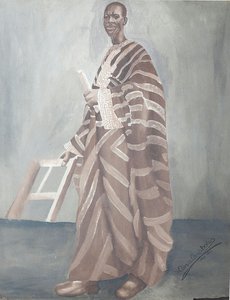
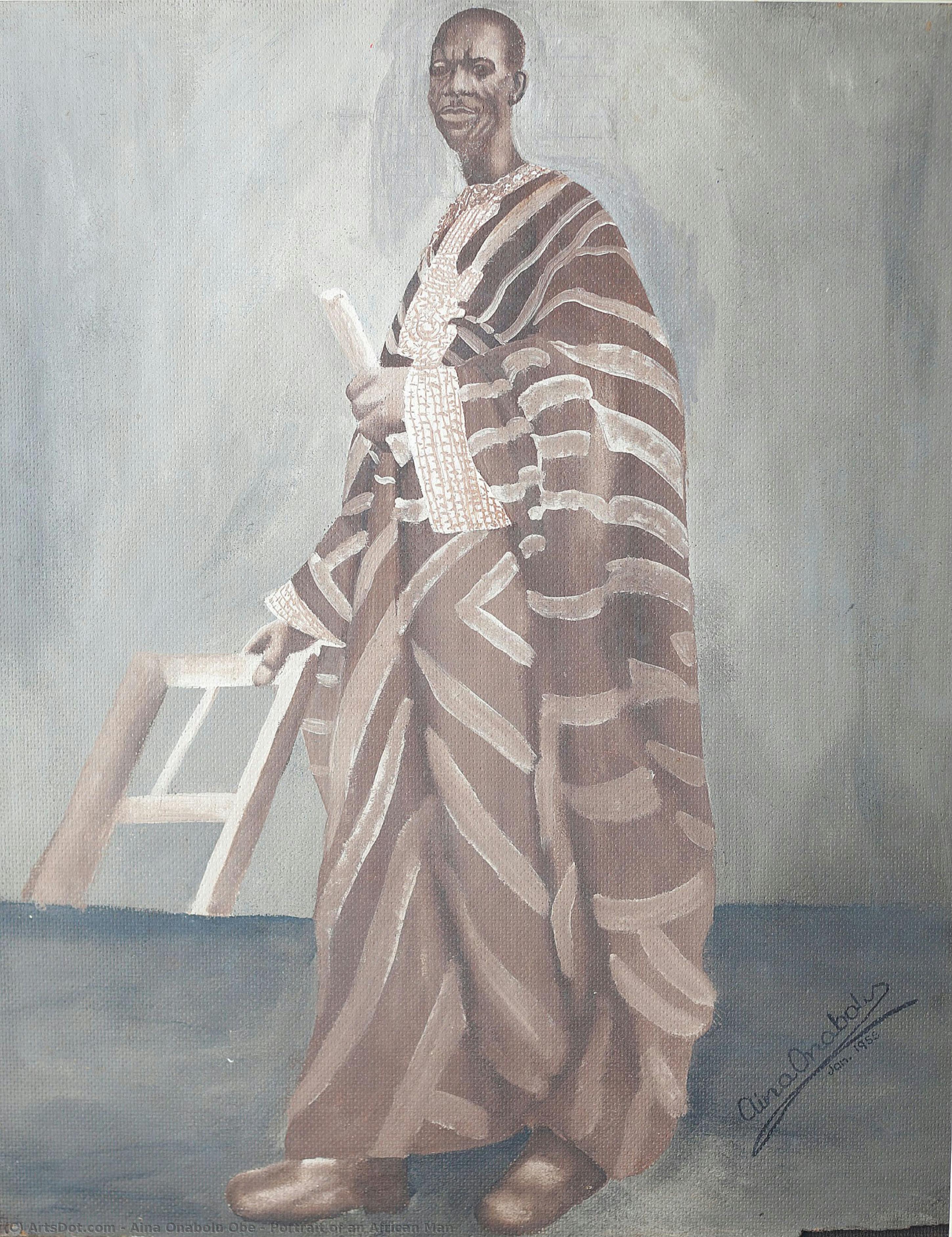
Portrait of an African Man
 1955
1955 48.0 x 38.0 cm
 Yemisi Shyllon Museum of Art
 Read More
Giclée / Art Print
Museum-quality giclée or canvas print with fast production and flexible finish options. ( Buy Hand Made Painting Buy Image)




































Pick from our preset sizes that match the artwork's original proportions.

You may enter your own dimensions to fit a specific frame or space. If your selected size does not match the original image's proportions, we will either crop the artwork or extend the image with a mirrored or solid-fill edge. A digital mockup will be sent for your approval before production begins.
Please note that the on-screen preview does not reflect the actual cropping or extension. Only the mockup will accurately show the final composition.
While custom sizes are available, we recommend selecting a dimension from the predefined list to preserve the original proportions.
Worldwide Delivery () in 2 weeks instead of standard 4/5 weeks. (23 August)

Free Worldwide Express Shipping

High-Quality Linen Canvas

Full Shipping Insurance

Customs Tax Refund Guarantee

True Color Matching Guarantee

60-Day Return Policy (Defects Only)

100% Money-Back Guarantee

Bulk Discount Offer
 Glass option is only available in size under 110 CM

Portrait of an African Man
Giclée / Art Print
Reproduction Size
-


Total Price
$ 63
Collectible Description
Related Artworks




Artist Biography
A Visionary of the Canvas: The Life and Legacy of Aina Onabolu Obe
In the vibrant tapestry of African art history, few threads shine as brightly or as foundational as that of Aina Onabolu Obe. Born in 1882 in the historic town of Ijebu-Ode, Nigeria, Onabolu emerged during a period of profound cultural transition. His journey from a young boy captivated by the illustrations in missionary religious texts and Western magazines to becoming the preeminent pioneer of modern Nigerian art is a testament to an indomitable creative spirit. This early exposure to European academic styles, disseminated through the printed word, planted the seeds of a lifelong fascination with verisimilitude—the pursuit of capturing life with striking accuracy.
Onabolu’s path was not merely one of self-taught brilliance, though his initial mastery as a draftsman was remarkable. Driven by an unquenchable thirst for formal excellence, he ventured far beyond the borders of his homeland to seek training at the prestigious Académie Julian in Paris and later within the rigorous art schools of London. By 1922, he had secured a diploma in fine arts and a teacher’s certificate from St. John Woods College, bringing back to Nigeria a sophisticated command of Western techniques. This period of international study allowed him to refine his ability to manipulate light, shadow, and form, preparing him to introduce a new visual language to the Nigerian landscape.
The Architect of Art Education
Beyond the solitary act of creation, Onabolu’s most enduring contribution lies in his role as a transformative educator. He recognized that for a modern Nigerian identity to flourish, a formal structure for artistic training was essential. Taking up teaching positions at prestigious institutions such as King's College and CMS Grammar School in Lagos, he spearheaded the integration of fine arts into the secondary school curriculum. His pedagogical philosophy was revolutionary for its time; rather than focusing solely on abstract concepts, he encouraged students to observe and depict their immediate environments with a realistic, observational precision.
This commitment to formalizing art education had a ripple effect that shaped generations of African artists. By championing the depiction of environmental forms and human subjects through a verisimilitudinous lens, he provided the tools for students to document their world with dignity and technical prowess. His influence was so profound that he is often credited with inviting the British educator Kenneth Murray to Nigeria, an event that further solidified the foundations of modern art instruction in the region. Through his classroom, Onabolu did not just teach painting; he cultivated a new way of seeing.
Mastery of Portraiture and Historical Significance
The works of Aina Onabolu Obe are characterized by an exquisite attention to detail and a profound respect for his subjects. He became most renowned for his portraiture, a genre that allowed him to explore the nuances of human character and the changing social fabric of colonial Nigeria. His ability to capture the essence of both local figures and historical personalities—such as his depictions related to the explorer Mungo Park—demonstrates a versatile mastery of the medium. In these portraits, one finds a delicate balance between the technical rigors of European academicism and a burgeoning sense of African modernism.
The historical significance of Onabolu cannot be overstated. He stands as a bridge between traditional influences and the dawn of modernism in West Africa. While his early inspirations were rooted in Western imagery, his life's work was dedicated to establishing a professional artistic standard within his own nation. His achievements have been recognized with numerous honors, including the Medal of the British Empire in 1957 for his contributions to fine arts education. Today, as we look back upon his oeuvre—including notable works like Northern Setting and Portrait of an African Man—we see not just the paintings of a skilled craftsman, but the enduring legacy of a man who taught a nation how to capture its own soul on canvas.
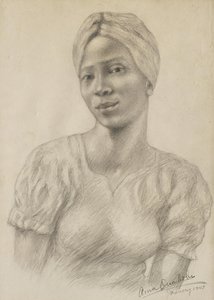
aina onabolu obe
1882 - 1963 , Nigeria
Quick Facts
- Artistic Movement Or Style: Modernism
- Artists Or Movements Influenced By This Artist: ['Western Art']
- Artists Who Influenced This Artist: ['Joseph Onabolu']
- Date Of Birth: 1882
- Date Of Death: 1963
- Full Name: Aina Onabolu Obe
- Nationality: Nigerian
- Notable Artworks:
- Portrait of Mrs Spencer Savage
- Portrait of Mr Randle
- Portrait of Chief (Dr.) Sapara
- Place Of Birth: Ibadan, Nigeria