 Preview
 Send
Send Share
Share
 Details

 Download
 Similars
 X-Ray
X-Ray Diaporama
Rajarani Temple Ⅰ
 Oil On Canvas
- WallArt
- Impressionism
 Modern
 181.0 x 150.0 cm
 Hamamatsu City Fuku Akino Art Museum
 Read More
Hand Made Oil Reproduction
Hand-painted oil on canvas in your size and frame, made to order by our artists. ( Buy Print Buy Image)




P118B $10

P118H $10

P118W $10

P438Z $10

P508JH $12

P508YH $12

P805H $10

P805Z $10

P919BZ $10

P919G $10

P919XJ $10

P959ZH $10

P968JZ $12

W106C $8

W218G $10

W218JH $8

W218Y $10

W307PJ $10

W316G $10

W316PJ $8

W316Y $10

W398PJ $8

W4111J $10

W500HY $15

W500JH $15

W692G $12

W849H $8

W940BG $15

W953PJ $8




Pick from our preset sizes that match the artwork's original proportions.

You may enter your own dimensions to fit a specific frame or space. If your selected size does not match the original image's proportions, we will either crop the artwork or extend the painting with additional hand-painted elements. A digital mockup will be sent for your approval before production begins.
Please note that the on-screen preview does not reflect the actual cropping or extension. Only the mockup will accurately show the final composition.
While custom sizes are available, we recommend selecting a dimension from the predefined list to preserve the original proportions.
After order, ArtsDot.com team will email client for instructions and provide a mockup preview
Worldwide Delivery () in 3/4 weeks instead of standard 5 weeks. (17 August). No compromise on quality.

Free Worldwide Express Shipping

High-Quality Linen Canvas

Full Shipping Insurance

Customs Tax Refund Guarantee

True Color Matching Guarantee

60-Day Return Policy (Defects Only)

100% Money-Back Guarantee

Bulk Discount Offer
 Glass option is only available in size under 110 CM

Rajarani Temple Ⅰ
Reproduction Medium
Reproduction Size
-


Total Price
$ 263
Artwork Description
A Vision of Timeless Devotion
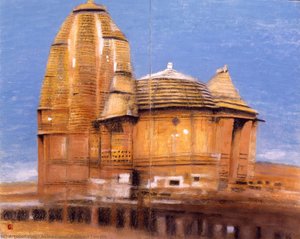
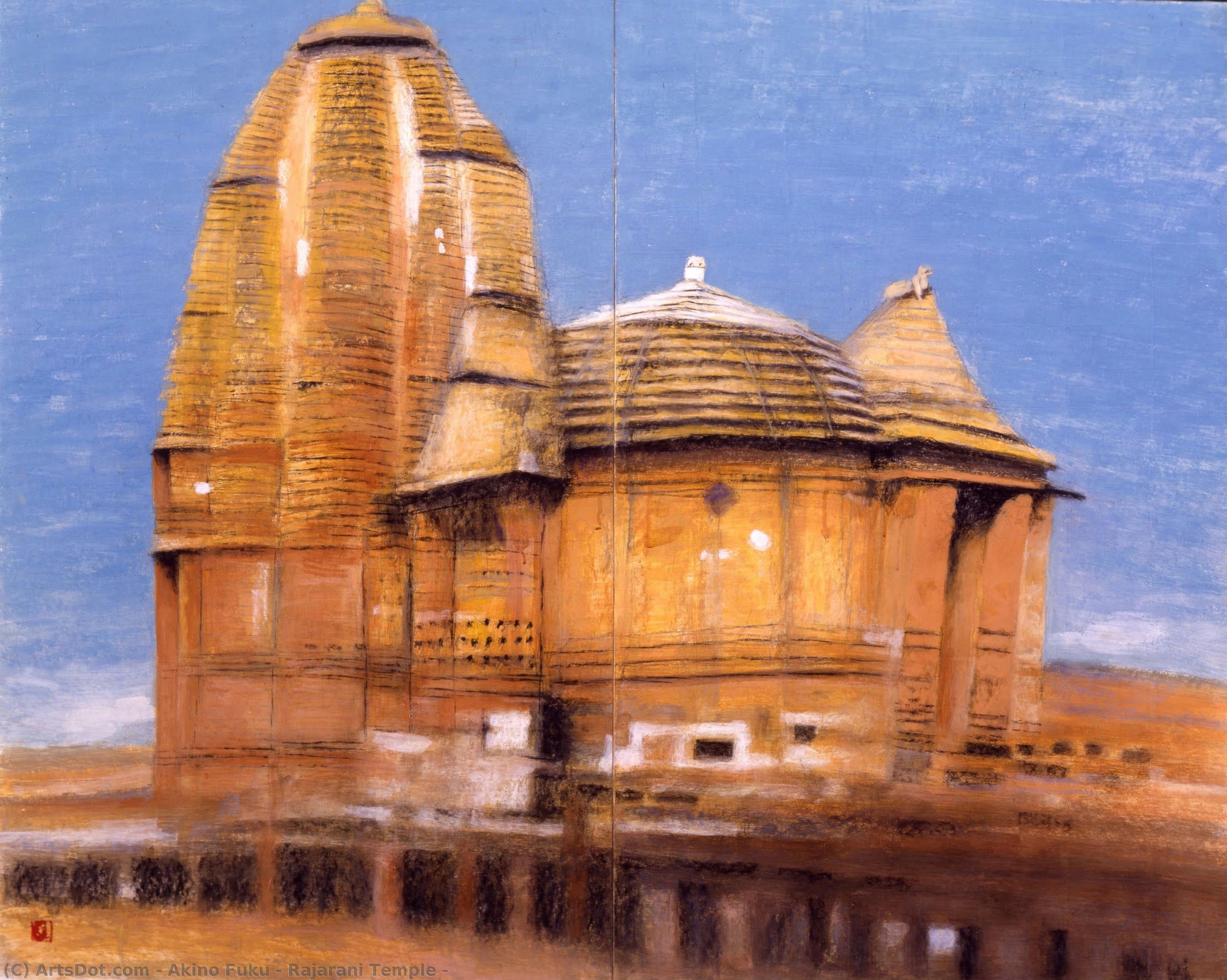
In the evocative oil painting Rajarani Temple I, the viewer is transported to a realm where history and atmosphere converge in a breathtaking display of architectural reverence. The work captures a multi-tiered temple structure rising majestically against a hazy, ethereal landscape, inviting us into a moment of profound stillness. Through the masterful hand of Akino Fuku, the temple does not merely exist as a stone monument but breathes as a living entity within its environment. The composition is anchored by this central sacred structure, which commands the frame with a sense of quiet authority, flanked by soft bands of sky and earth that suggest an infinite, undulating world beyond the viewer's immediate gaze.
The artist’s technique is a testament to the beauty of impressionistic fluidity. Utilizing a wet-on-wet oil method on canvas, Fuku employs loose, expressive brushstrokes that prioritize the emotional essence of the scene over rigid, photographic precision. This approach allows for a seamless blending of colors, where the geometric forms of squares, rectangles, and conical tiers are softened by the organic movement of paint. The texture of the piece is rich and tactile; one can almost feel the weathered roughness of the ancient temple walls contrasted against the delicate, diffused light that bathes the entire landscape in a warm, golden glow. This use of atmospheric perspective—where distant elements fade into pale, dreamlike silhouettes—creates an immense sense of depth, pulling the observer deeper into this sacred Indian vista.
The Intersection of Cultures and Spirit
To understand the soul of Rajarani Temple I, one must look to the unique biography of Akino Fuku. A Japanese painter trained in the delicate traditions of Kyoto, Fuku found a profound spiritual resonance in the landscapes and cultures of India. Her time as a guest professor at Visva-Bharati University deeply infused her palette with the warmth and complexity of the Indian subcontinent. This painting serves as a beautiful bridge between Eastern sensibilities; it carries the disciplined eye of Japanese landscape tradition while embracing the vibrant, monumental spirit of Indian religious architecture. The result is a work that transcends borders, offering a universal language of peace and contemplation.
For the discerning collector or interior designer, this piece offers more than mere decoration; it provides an emotional anchor for a space. The painting evokes a sense of tranquility and reverence, making it an ideal centerpiece for environments designed for reflection, such as a quiet study, a serene library, or a sophisticated living area. Its soft, muted tones and organic shapes harmonize effortlessly with both classical and contemporary interiors, adding a layer of historical depth and worldly elegance. Owning a reproduction of this caliber is an invitation to bring the timeless, meditative beauty of the ancient world into the modern home, fostering an atmosphere of enduring grace.
Related Artworks


Artist Biography
early life and training
akino fuku, a renowned japanese painter, was born in futamata, iwata-gun, shizuoka prefecture, japan in 1908. she began her artistic journey under the guidance of suisho nishiyama in kyoto, where she studied japanese-style painting.artistic career and style
akino fuku's work is characterized by its focus on indian themes, landscapes, and peoples. her unique style, which blends traditional japanese techniques with her fascination for indian culture, has captivated audiences worldwide. notably, her artwork "returning through the fields" (1930) was selected for the teiten exhibition, marking a significant milestone in her career.international recognition and travel
in 1962, akino fuku was invited to teach at visva-bharati university in india as a guest professor. this experience deeply influenced her work, leading to numerous subsequent visits to the country. her travels also extended to afghanistan, nepal, cambodia, and africa, which she depicted in her artwork.awards and legacy
akino fuku's contributions to japanese art have been recognized with several awards, including the order of cultural merit (1991) and the order of culture (1999). her legacy continues to inspire artists and art enthusiasts alike.notable artworks and exhibitions
* "on the sand" (1936), exhibited at the bunten juried exhibition * "the significance of the museum of fine arts (gifu, japan)", featuring her work at the museum of fine arts (gifu, japan) * featured in the collection of the murauchi art museum in tokyo, japan- view akino fuku's artworks on ArtsDot.com: https://ArtsDot.com/@/akino fuku
- explore her biography and notable works on wikipedia: https://en.wikipedia.org/wiki/fuku_akino
conclusion
akino fuku's remarkable life and artistic career serve as a testament to her innovative spirit and dedication to capturing the essence of diverse cultures. through her work, she continues to inspire new generations of artists and art enthusiasts worldwide.
akino fuku
1908 - 2001 , Japan
Quick Facts
- Artistic Movement Or Style: Nihonga, Indian themes
- Artists Or Movements Influenced By This Artist: ['Sozo Bijutsu']
- Artists Who Influenced This Artist:
- Suisho Nishiyama
- Ishii Rinkyo
- Date Of Birth: 1908-07-25
- Date Of Death: 2001-10-11
- Full Name: Akino Fuku
- Nationality: Japanese
- Notable Artworks:
- On the Sand (1936)
- The Significance...
- River Crossing
- Place Of Birth: Futamata, Hamamatsu City, Japan
Related Articles

Hokusai's Masterpieces: 25 Iconic Prints & Paintings for Art Lovers | ArtsDot
Journey through Katsushika Hokusai’s 25 most iconic artworks, including *The Great Wave*. Explore the ukiyo-e master's history, style & timeless Japanese woodblock prints. Find museum-quality reproductions for your home at ArtsDot.com.

Beyond the Horizon: 10 Landscape Masterpieces for Your Home Decor
Journey through 10 breathtaking landscape paintings by Monet, Van Gogh & more! Explore iconic artworks, artistic techniques & find inspiration for your home decor. Museum-quality reproductions at ArtsDot.com. Discover all masterpieces on ArtsDot.com

Evocations of Place: A Historical Journey Through Landscape Art
Explore the rich history of landscape art with ArtsDot. Discover renowned artists, movements like Impressionism & Romanticism, and expert guidance for collecting timeless pieces. Find your perfect serene escape today!

Romantic Landscapes: 10 Masterpieces for Your Home | ArtsDot
Journey through 10 Romantic landscape masterpieces by Friedrich, Turner & Cole. Explore emotional art, sublime nature scenes & iconic 19th-century paintings. Find museum-quality reproductions for your home at ArtsDot.com – discover the full collection online!

Evocations of Place: A Historical Journey Through Landscape Art
Explore the rich history of landscape art with ArtsDot. Discover renowned artists, movements like Impressionism & tonalism, and expert guidance for collecting timeless pieces. Find your perfect serene escape today!