 Preview
 Send
Send Share
Share
 Details

 Download
 Similars
 X-Ray
X-Ray Diaporama
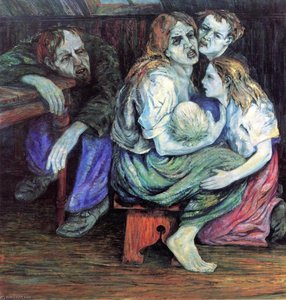
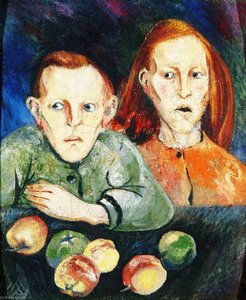
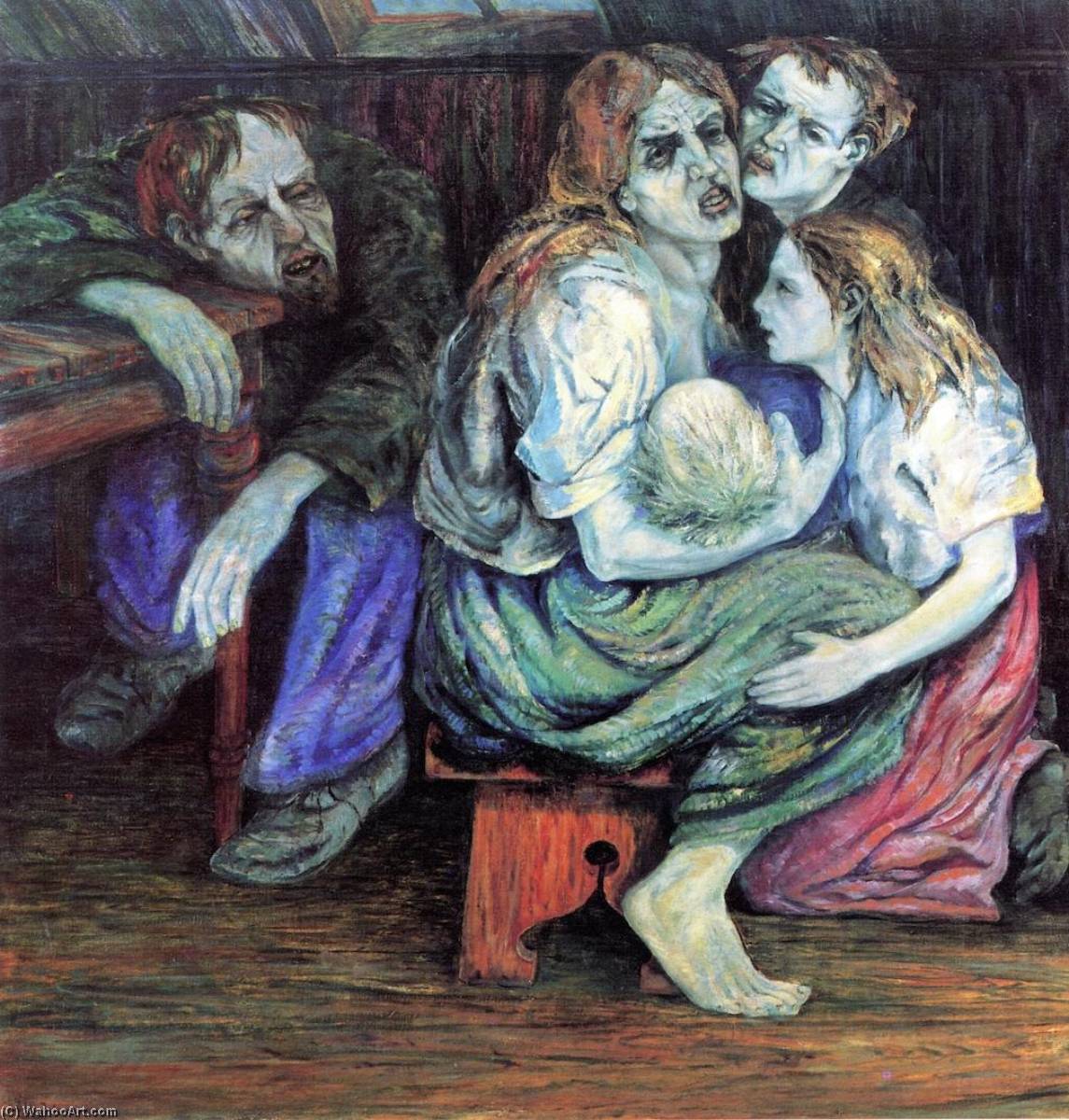
The Drinker's Family
 Expressionism
 1916
1916 115.0 x 135.0 cm
 Read More
Hand Made Oil Reproduction
Hand-painted oil on canvas in your size and frame, made to order by our artists. ( Buy Print Buy Image)




































Pick from our preset sizes that match the artwork's original proportions.

You may enter your own dimensions to fit a specific frame or space. If your selected size does not match the original image's proportions, we will either crop the artwork or extend the painting with additional hand-painted elements. A digital mockup will be sent for your approval before production begins.
Please note that the on-screen preview does not reflect the actual cropping or extension. Only the mockup will accurately show the final composition.
While custom sizes are available, we recommend selecting a dimension from the predefined list to preserve the original proportions.
After order, ArtsDot.com team will email client for instructions and provide a mockup preview
Worldwide Delivery () in 3/4 weeks instead of standard 5 weeks. (17 August). No compromise on quality.

Free Worldwide Express Shipping

High-Quality Linen Canvas

Full Shipping Insurance

Customs Tax Refund Guarantee

True Color Matching Guarantee

60-Day Return Policy (Defects Only)

100% Money-Back Guarantee

Bulk Discount Offer
 Glass option is only available in size under 110 CM

The Drinker's Family
Reproduction Medium
Reproduction Size
-


Total Price
$ 313
Artwork Description
A Glimpse into Despair: "The Drinker's Family" by Aksel Johannessen
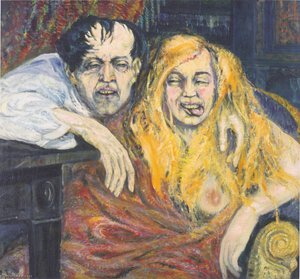
Aksel Waldemar Johannessen’s “The Drinker’s Family,” painted in 1916, is a profoundly moving Expressionist work that offers a stark and intimate portrayal of familial suffering. This powerful oil painting depicts a father, mother, and child huddled together within a dimly lit interior – a scene radiating with palpable distress. The composition's tight framing creates an immediate sense of claustrophobia, drawing the viewer directly into their shared anguish. Recently rediscovered, Johannessen’s work is gaining recognition as a significant contribution to Norwegian Expressionism, offering a poignant commentary on social realities and human vulnerability.Expressionist Technique & Visual Language
Johannessen masterfully employs the tenets of Expressionism to convey raw emotion above all else. The painting isn't concerned with photographic realism; instead, it prioritizes subjective experience. Notice the distorted features, the swirling brushstrokes that define forms and create a sense of turbulence, and the flattened perspective which eliminates traditional spatial depth. This deliberate distortion amplifies the emotional intensity. The heavy impasto technique – thick layers of oil paint – further enhance the texture and contribute to the painting’s visceral impact. The color palette, dominated by blues and greens with touches of red and yellow, reinforces the somber mood, moving beyond mere representation to evoke a feeling of profound sadness.Symbolism & Historical Context
Created during a period of significant social upheaval in Europe, “The Drinker’s Family” likely reflects the hardships faced by working-class families. While the exact circumstances depicted remain open to interpretation, the scene powerfully suggests poverty, illness, or loss – themes prevalent in early 20th-century society. The figures' expressions—the father’s mournful gaze, the mother’s protective embrace of her child, and the child’s upward stare filled with distress—speak volumes about their shared burden. Johannessen's work aligns with a broader artistic movement that sought to expose social injustices and depict the realities of everyday life for ordinary people, moving away from idealized portrayals prevalent in earlier art periods.Emotional Resonance & Lasting Impact
“The Drinker’s Family” is not merely an observation; it's a visceral experience. The artwork evokes feelings of sorrow, vulnerability, and desperation, leaving a lasting impression on the viewer. Its unsettling yet poignant nature stems from Johannessen’s ability to capture the raw essence of human suffering with such unflinching honesty. This piece serves as a powerful reminder of the fragility of family life and the enduring strength required to face adversity. It's an artwork that invites contemplation and resonates deeply, making it a compelling addition to any collection or interior space seeking to evoke emotion and spark conversation.Related Artworks
Artist Biography
Aksel Waldemar Johannessen: A Rediscovered Voice of the Norwegian Working Class
The art world often rewards those who are immediately recognized, lauded for their innovations and contributions. But sometimes, brilliance is obscured by circumstance, forgotten amidst the currents of time. Aksel Waldemar Johannessen (1880-1922) represents precisely such a rediscovery – a Norwegian Expressionist painter whose powerful depictions of the lives of workers and his unflinching social commentary were largely ignored during his lifetime, only to be resurrected with renewed appreciation in recent decades. His work offers a poignant glimpse into the realities of early 20th-century Norway, revealing a uniquely sensitive and critical perspective rarely seen in contemporary art.
Born in Oslo’s Hammersborg district – a neighborhood characterized by poverty and industrial labor – Johannessen's upbringing profoundly shaped his artistic vision. Growing up amidst the struggles of working-class families instilled within him a deep empathy for their plight, which he translated into his paintings with remarkable honesty. He initially studied sculpting at the state-run art school in Oslo, finding mentorship under Lars Utne, before marrying Anna Nilsen and relocating to Gjøvik around 1910. This move brought him a position as a furniture designer, providing a practical grounding while simultaneously fueling his artistic explorations. It was during this period that he began to develop his distinctive style – a potent blend of realism and emotional intensity, informed by the influence of Edvard Munch, though possessing a uniquely Nordic sensibility.
The Palette of Struggle: Style and Technique
Johannessen’s paintings are immediately recognizable for their raw emotion and unflinching portrayal of everyday life. He eschewed idealized representations in favor of depicting the harsh realities faced by laborers – miners, factory workers, and domestic servants – with a directness that was both unsettling and profoundly moving. His brushwork is often loose and expressive, conveying a sense of urgency and turmoil. He frequently employed muted earth tones—browns, grays, and ochres—to create a somber atmosphere, reflecting the bleak conditions he depicted. Light plays a crucial role in his work, often diffused and melancholic, casting long shadows that emphasize the isolation and vulnerability of his subjects.
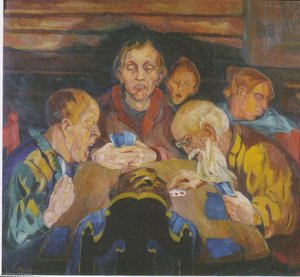
Consider “Washing Hair,” a particularly evocative piece from 1920. The painting captures a moment of quiet intimacy within a cramped dwelling, yet it’s imbued with an underlying sense of hardship. The woman's face is etched with weariness, her movements deliberate and economical. The loose brushstrokes and subtle use of light create a palpable atmosphere of fatigue and resignation. Similarly, “Card Players,” showcases the starkness of working-class life, presenting a scene of men engaged in a simple pastime, their faces reflecting the burdens they carry.
A Forgotten Master: Influences and Context
While Johannessen’s work bears clear affinities with Edvard Munch – particularly his exploration of psychological intensity and emotional landscapes – he forged his own distinct path. The influence of Northern European realism is also evident, grounding his depictions in a tangible sense of place and time. The social context of early 20th-century Norway—a nation grappling with rapid industrialization and social inequality—provided the backdrop for his artistic concerns. He was part of a broader movement seeking to depict the lives of ordinary people, challenging prevailing notions of beauty and heroism.
Interestingly, Johannessen’s work remained largely unknown until 1990, when art collector Haakon Mehren stumbled upon a collection of his paintings. This rediscovery sparked renewed interest in his oeuvre, leading to exhibitions and critical reassessment. The play “The Forgotten Painter” by Alexander Kratzer further cemented his place in the cultural consciousness, bringing his story to a wider audience.
Legacy and Recognition
Aksel Waldemar Johannessen’s life was tragically cut short at the age of 42, succumbing to pneumonia after battling alcoholism. Despite his untimely death, his artistic legacy has experienced a remarkable resurgence. His paintings now command significant attention within the art world, recognized for their raw emotional power and social commentary. His work stands as a testament to the importance of remembering those whose voices have been historically marginalized – a poignant reminder that true artistry often lies hidden beneath the surface, waiting to be rediscovered.
Johannessen’s story serves as a powerful illustration of how art can reflect and shape our understanding of society. His paintings offer a vital window into the lives of ordinary people, prompting us to confront uncomfortable truths about social inequality and human suffering. He remains a significant figure in Norwegian Expressionism, a forgotten master whose voice is finally being heard.
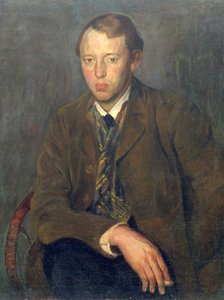
aksel waldemar johannessen
1880 - 1922
Quick Facts
- Artistic Movement Or Style: Expressionism, Realism
- Artists Who Influenced This Artist: ['Edvard Munch']
- Date Of Birth: 1880
- Date Of Death: 1922
- Full Name: Aksel Waldemar Johannessen
- Nationality: Norwegian
- Notable Artworks:
- Card Players
- Washing Hair
- Place Of Birth: Oslo, Norway
Related Articles
Slate Blue Masterpieces: 10 Iconic Paintings & Timeless Home Decor Ideas
Immerse yourself in the captivating world of slate blue! Explore 10 iconic paintings by Monet, Van Gogh & Renoir. Discover their stories, techniques & find museum-quality art reproductions for your home at .
The Allure of Azure: Exploring the Symbolic & Aesthetic Depths of Blue in Art History
Explore the rich history of blue in art! Discover its symbolism, from ancient pigments to modern masterpieces by Kandinsky & Seurat. Uncover the psychological impact and cultural meanings behind this captivating hue.
German Expressionism's 10 Defining Masterpieces | Art for Your Home
Explore 10 defining German Expressionism masterpieces – from Munch's 'The Scream' to Kandinsky’s abstracts. Discover the artists, stories & bold colors behind this powerful art movement. Find museum-quality reproductions at ArtsDot.com.
Expressionism's Soul: 10 Masterpieces for Your Home |
Journey into the soul of Expressionism! Explore 10 iconic paintings by Munch, Kirchner, Kandinsky & more. Discover their stories, bold colors & lasting impact. Find museum-quality art reproductions at .
Azure Visions: Exploring Representations of the Blue Dress in Western Art History
Explore the rich history of the blue dress in Western art! Discover its symbolism, from Renaissance masterpieces to modern interpretations by artists like Martin & Schiele. Uncover cultural meanings and artistic techniques.