

 Preview
 Send
Send Share
Share
 Details

 Download
 Similars
 X-Ray
X-Ray Diaporama
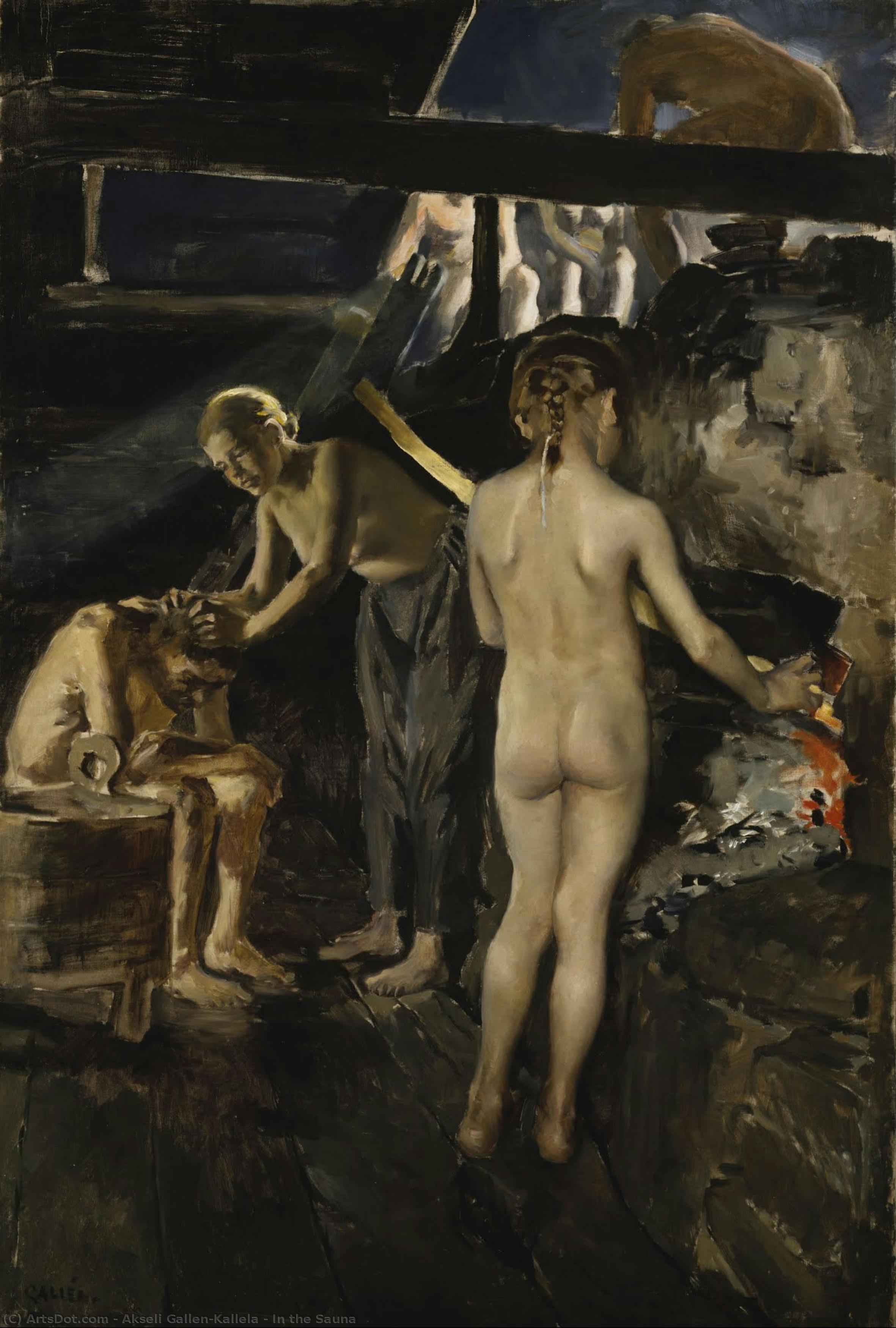
In the Sauna
 Acrylic On Canvas
- WallArt
- National Romanticism
 1889
1889 81.0 x 120.0 cm
 Ateneum Art Museum
 Read More
Purchase a high-resolution, enhanced digital image, far superior to the online preview.
Each file is meticulously prepared by our in-house specialists using advanced tools and expert manual retouching. We ensure every image has exceptional clarity, precise color accuracy, and fine detail.
The final file is delivered via email within 72 hours, optimized for immediate use in professional, editorial, and print environments. This is the same quality trusted by top-tier design studios, publishers, and galleries.
Digital Image
Download a high-resolution file for personal display, printing, and creative projects. ( Buy Print Buy Hand Made Painting)
Included in Every Digital Image Order
Expert Digital Delivery, Guaranteed
When you choose ArtsDot.com, you're not just getting an image - you're receiving a professionally enhanced digital artwork, crafted with precision and backed by a satisfaction guarantee. Here's everything that comes with your order, automatically:

Fast Email Delivery
Your high-resolution digital image file will be emailed to you within 72 hours of ordering - ready for immediate use.

AI-Enhanced Digital File
Your artwork is professionally optimized using advanced AI tools and manual editing, ensuring maximum detail, clarity, and color accuracy.

Free Lifetime Re-Delivery
Accidentally deleted or lost your file? No worries - we'll resend it to you anytime, free of charge.

No Import Fees - Ever
Enjoy your artwork instantly with zero customs, duties, or delivery fees - digital downloads are always tax-free.

Color Accuracy Guarantee
We ensure your digital image reflects the original colors as closely as possible using professional tools and color management.

60-Day Satisfaction Guarantee
If you're not satisfied with your digital image, we'll revise it or refund 100% within 60 days - no questions asked.

100% Money-Back Guarantee
Not satisfied? Get a full refund within 60 days of receiving your digital file - no questions asked.

Bulk Order Discounts
Buy 3 images, save 10% - Buy 5, save 15% - Buy 10+, save 20%. Great for creative projects, galleries, and agencies.
Collectible Description
Akseli Gallen-Kallela’s “In The Sauna”: A Vision of Finnish Soul
The painting "In The Sauna," completed in 1889 by Akseli Gallen-Kallela, transcends mere depiction; it embodies the very essence of Finnish identity and artistic ambition during its time. More than just a visual record of a communal ritual, it’s a profound meditation on solitude, resilience, and the connection between humanity and nature—themes that resonate powerfully even today. Gallen-Kallela's masterful use of muted tones and meticulous detail captures not only the physical space of the sauna but also its intangible atmosphere – a place where men find solace in shared experience and contemplation.The Artist’s Context: Finland Embraces Its Voice
Akseli Gallen-Kallela’s life was inextricably linked to the burgeoning Finnish nationalist movement of the late 19th century. Born Axel Waldemar Gallén in Pori, Finland, he navigated a complex landscape shaped by Swedish dominance and aspirations for cultural autonomy. His decision to adopt “Gallen-Kallela” – incorporating his mother's surname – was a deliberate assertion of Finnic heritage, signaling a commitment to preserving and celebrating Finnish folklore and artistic traditions. Gallen-Kallela’s formative years instilled in him a deep appreciation for the landscapes and myths of Finland, influencing his artistic vision throughout his career. He studied at the Académie Julian in Paris, absorbing the currents of European Impressionism while simultaneously nurturing his own distinctive style—a synthesis that would become synonymous with Finnish Romanticism.A Symbolist Landscape: Capturing Essence Over Literal Representation
Gallen-Kallela’s technique is characterized by a meticulous attention to detail and an unwavering commitment to capturing not just what he sees but what he feels. Employing oil paints on canvas, he utilizes subtle gradations of color—primarily browns, greys, and ochres—to create a landscape that prioritizes mood and atmosphere over precise topographical accuracy. The sauna itself is rendered with painstaking realism, showcasing the textures of wood grain, stone surfaces, and flickering candlelight. However, it’s the overarching symbolism that elevates “In The Sauna” beyond mere observation. The solitary figure standing on the left side represents introspection and contemplation—a deliberate contrast to the communal warmth of the sauna's interior. The placement of the dogs adds another layer of meaning, symbolizing loyalty and companionship – elements crucial to Finnish culture and identity.The Kalevala’s Influence: Mythic Resonance in Visual Form
“In The Sauna” draws heavily from the Kalevala, Finland’s national epic—a collection of myths and legends that recount the creation of Finland and its heroic past. Gallen-Kallela's fascination with Finnish folklore is evident in his depiction of the sauna as a space for ritual purification and renewal—mirroring themes found throughout the Kalevala narrative. The painting’s subdued palette and careful composition evoke the stillness and solemnity of ancient Finnish traditions, conveying a sense of timelessness and spiritual depth. Gallen-Kallela's artistic legacy extends far beyond his individual paintings; he established the Gallen-Kallela Foundation, dedicated to promoting Finnish art and culture—a testament to his unwavering belief in the transformative power of creativity.Emotional Impact: A Portrait of Quiet Strength
Ultimately, “In The Sauna” succeeds in conveying a profound emotional resonance. It’s not an exuberant celebration of life but rather a contemplative portrayal of human resilience amidst solitude—a reflection on the importance of inner peace and connection to one's roots. Gallen-Kallela’s masterful handling of light and shadow creates a sense of intimacy, inviting viewers into the quiet sanctuary of the sauna and prompting them to consider the enduring values of Finnish culture. The painting remains an iconic representation of Finnish identity—a visual embodiment of the nation’s soul—and continues to inspire artists and collectors alike.Related Artworks
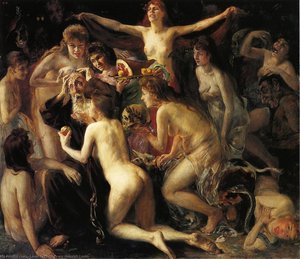
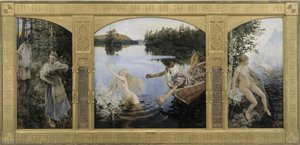
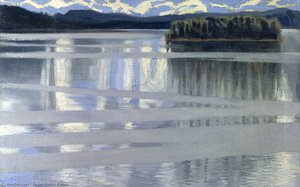
Artist Biography
A Life Woven into the Finnish Soul
Akseli Gallen-Kallela, born Axel Waldemar Gallén in 1865 in Pori, Finland, wasn’t merely a painter; he was a visual poet of a nation finding its voice. His life unfolded against a backdrop of shifting political tides and a burgeoning national identity, deeply influencing his artistic trajectory. Initially raised in a Swedish-speaking family—a common reality within Finland at the time—Gallen-Kallela's eventual embrace and championing of Finnish culture was not simply an aesthetic choice but a deliberate act of cultural affirmation. His early years were marked by a tension between familial expectations and artistic ambition, leading him to Paris in 1884 to study at the Académie Julian. This period exposed him to the currents of European art, yet it also ignited within him a longing for the landscapes and folklore of his homeland.
The Parisian experience was formative, introducing him to artists like Albert Edelfelt and fostering friendships with figures such as August Strindberg. However, Gallén-Kallela’s artistic spirit proved resistant to complete assimilation into the prevailing European styles. He began returning frequently to Finland, drawn by a desire to capture the essence of its rural life and ancient mythology. This marked a turning point, a conscious decision to forge an artistic path rooted in Finnish identity. His early works reflected this shift, depicting scenes of peasant life with a realism tempered by a growing symbolic sensibility—a style that would soon become his signature.
The Kalevala’s Embrace: Myth and National Identity
Gallen-Kallela's most enduring legacy lies in his breathtaking illustrations of the Kalevala, Finland’s national epic. This collection of ancient folklore, poems, and myths became more than just subject matter for him; it was a wellspring of inspiration, a key to unlocking the soul of his nation. Paintings like The Defense of the Sampo (1897) and Lemminkäinen’s Mother (1893) are not mere illustrations but powerful visual interpretations that resonate with the epic's themes of heroism, loss, and the struggle against adversity. He didn’t simply depict scenes from the Kalevala; he *embodied* them, infusing his canvases with a sense of primal energy and symbolic depth.
His approach was meticulous, involving extensive research into Finnish folklore, traditions, and landscapes. He sought to capture not just the narrative elements but also the underlying spiritual beliefs and cultural values embedded within the epic. This dedication elevated his work beyond mere illustration; it transformed him into a visual storyteller, a conduit for preserving and celebrating Finland’s cultural heritage. The impact of these works was profound, solidifying Gallen-Kallela's position as a pivotal figure in Finnish art and contributing significantly to the nation’s growing sense of self-awareness.
Beyond Myth: Symbolism, Expression, and Artistic Evolution
While inextricably linked with the Kalevala, Gallen-Kallela’s artistic range extended far beyond mythological subjects. He explored symbolism in works like Symposium (1894), a haunting depiction of Finnish artists engaged in intellectual discourse, subtly hinting at anxieties about national identity and cultural preservation. His style evolved over time, incorporating elements of Art Nouveau and later embracing the expressive power of color and form. A pivotal moment came with his journey to Kenya in 1909-1910, where he encountered a different culture and landscape that profoundly impacted his artistic vision.
This experience led to a shift towards more vibrant colors and bolder brushstrokes, foreshadowing the emergence of Expressionism. He continued to experiment with various mediums, including frescoes—most notably those commissioned for the Jusélius Mausoleum—and designs for textiles and furniture, demonstrating a holistic approach to art that extended beyond the confines of traditional painting. Even during periods of political turmoil, such as the Finnish Civil War in 1917-1918, Gallen-Kallela remained actively engaged, designing uniforms and decorations for the newly independent Finnish army.
A Lasting Legacy: The Shaping of a National Aesthetic
Akseli Gallen-Kallela’s influence on Finnish art and culture is immeasurable. He didn't just paint pictures; he helped to define what it meant to be Finnish, visually articulating the nation’s identity during a period of profound transformation. His work continues to inspire artists today, serving as a testament to the power of art to shape national consciousness and preserve cultural heritage.
- National Romanticism: Gallen-Kallela is considered a central figure in Finnish National Romanticism, an artistic movement that sought to celebrate Finland’s unique culture and identity.
- Cultural Icon: His illustrations of the Kalevala have become iconic representations of Finnish mythology and folklore.
- Artistic Innovation: He was a versatile artist who experimented with various styles and mediums, pushing the boundaries of Finnish art.
- Enduring Influence: His work continues to inspire artists and shape Finland’s cultural landscape today.
Gallen-Kallela's life was a testament to the power of artistic vision, a journey from youthful ambition to national icon. He died in Stockholm in 1931, leaving behind a body of work that continues to resonate with audiences worldwide—a legacy woven into the very fabric of the Finnish soul.
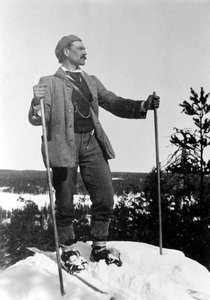
Akseli Gallen-Kallela
1865 - 1931 , Finland
Quick Facts
- Artistic Movement Or Style: National Romanticism
- Artists Or Movements Influenced By This Artist: ['Finnish Art']
- Date Of Birth: April 26, 1865
- Date Of Death: March 7, 1931
- Full Name: Akseli Gallen-Kallela
- Nationality: Finnish
- Notable Artworks:
- The Defense of the Sampo
- Lemminkäinen's Mother
- Kullervo's Curse
- Place Of Birth: Pori, Finland

