 Preview
 Send
Send Share
Share
 Details

 Download
 Similars
 X-Ray
X-Ray Diaporama
Single Horizontal Slot Painting


 Read More
Giclée / Art Print
Museum-quality giclée or canvas print with fast production and flexible finish options. ( Buy Hand Made Painting Buy Image)




































Pick from our preset sizes that match the artwork's original proportions.

You may enter your own dimensions to fit a specific frame or space. If your selected size does not match the original image's proportions, we will either crop the artwork or extend the image with a mirrored or solid-fill edge. A digital mockup will be sent for your approval before production begins.
Please note that the on-screen preview does not reflect the actual cropping or extension. Only the mockup will accurately show the final composition.
While custom sizes are available, we recommend selecting a dimension from the predefined list to preserve the original proportions.
Worldwide Delivery () in 2 weeks instead of standard 4/5 weeks. (18 August)

Free Worldwide Express Shipping

High-Quality Linen Canvas

Full Shipping Insurance

Customs Tax Refund Guarantee

True Color Matching Guarantee

60-Day Return Policy (Defects Only)

100% Money-Back Guarantee

Bulk Discount Offer
 Glass option is only available in size under 110 CM

Single Horizontal Slot Painting
Giclée / Art Print
Reproduction Size
-


Total Price
$ 63
Collectible Description
The Essence of Minimalist Serenity
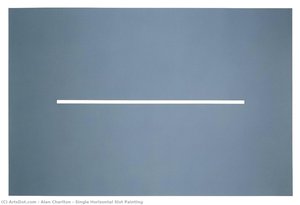
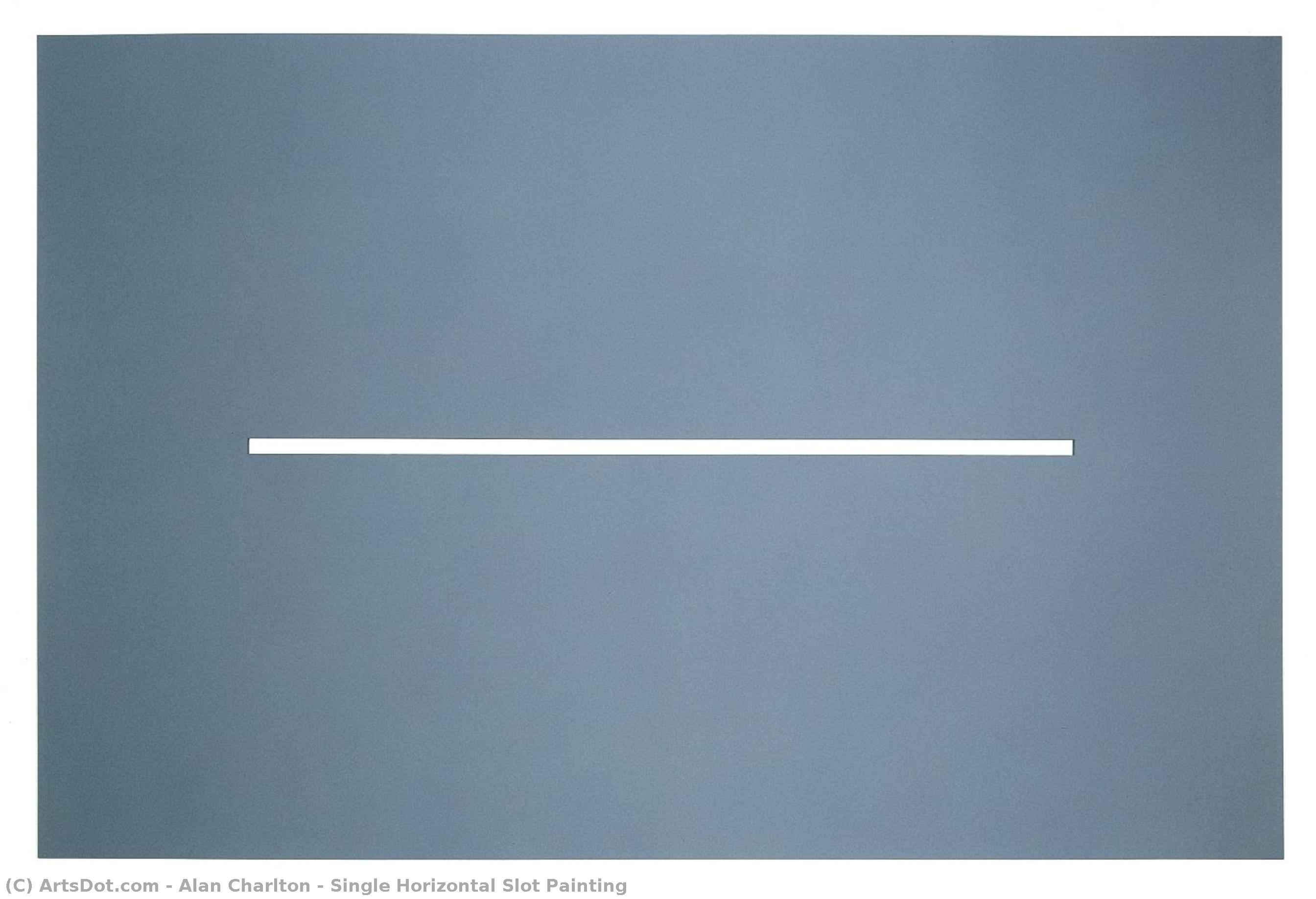
In the vast landscape of contemporary abstraction, few works achieve the profound stillness found in Alan Charlton’s Single Horizontal Slot Painting. Created in 1991, this masterpiece serves as a masterclass in the power of reduction. At first glance, the viewer is met with a composition of breathtaking simplicity: a single, crisp white horizontal line that bisects a deep, atmospheric blue field. This line does not merely sit upon the surface; it acts as a structural anchor, carving through a gradient of color that transitions from a heavy, midnight indigo at the top to a lighter, more ethereal azure toward the bottom. The result is a visual experience that feels both grounded and weightless, inviting the observer into a state of quiet contemplation.
The technique employed in this work reflects Charlton’s lifelong dedication to the geometry of the monochrome. While the image captured here is a photographic representation of the original canvas, it preserves the essential soul of the painting—the smooth, seamless transition of tones and the razor-sharp precision of the central void. The blue gradient creates an illusion of depth, suggesting a vast, twilight sky or the silent depths of an ocean, yet the composition remains resolutely flat and two-dimensional. This tension between perceived depth and physical flatness is where the true magic of the piece resides, challenging the eye to find complexity within the most basic of geometric forms.
A Legacy of Conceptual Precision
To understand the emotional resonance of this painting, one must look toward the artist’s broader conceptual journey. Alan Charlton, a pivotal figure in British conceptual art since the 1970s, has long been defined by his rejection of the flamboyant. His famous self-description as an artist who "makes a grey painting" underscores a philosophy of restraint and an obsession with how light and space interact within limited palettes. In Single Horizontal Slot, we see this philosophy reaching a peak of balance. The white slot functions as a symbol of clarity and order, a singular moment of light cutting through the encroaching shadows of the blue gradient.
For the discerning collector or interior designer, this artwork offers more than just aesthetic beauty; it provides a focal point of sophisticated calm. Its cool color palette and minimalist structure make it an ideal centerpiece for modern, high-end environments—be it a minimalist gallery space, a professional executive suite, or a serene residential sanctuary. The painting does not demand attention through noise or chaos; instead, it commands the room through its dignified presence and its ability to harmonize with diverse textures and lightings. Owning a high-quality reproduction of this work means bringing a piece of art history’s most disciplined movement into one's personal space, offering a permanent window into the quiet beauty of the essential.
Related Artworks

Artist Biography
Alan Charlton: The Quiet Geometry of Monochrome
Alan Charlton (born Sheffield, United Kingdom, 1948) stands as a singular figure in British conceptual art—a practitioner whose unwavering dedication to minimalist principles has yielded a body of work characterized by striking simplicity and profound spatial exploration. Since the early 1970s, Charlton’s artistic vision has revolved around a deceptively straightforward concept: “I am an artist who makes a grey painting.” This declaration encapsulates the core ethos of his oeuvre—a deliberate rejection of flamboyant color palettes in favor of a monochrome gray scale that serves as both canvas and conceptual framework.- Early Influences & Conceptual Roots Charlton’s artistic journey began amidst the burgeoning experimental spirit of British art in the late 1960s and early 1970s, aligning him with movements like Minimalism and Structural Surrealism. These influences instilled a deep appreciation for geometric forms and spatial relationships—elements that would become central to his distinctive style.
- The Gray Canvas: Method & Philosophy Charlton’s meticulous process is remarkably consistent. Each painting begins with a precisely measured cotton canvas, typically 4.5 cm by 4.5 cm, ensuring uniformity across his entire collection. The color—always gray—is applied uniformly, creating an illusion of depth and dimensionality despite its apparent lack of chromatic variation.
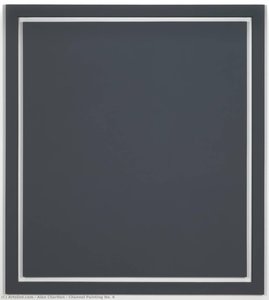
- Notable Works: Channel Paintings & Spatial Exploration Charlton’s most celebrated pieces are undoubtedly the “Channel Paintings,” a series of canvases that exemplify his commitment to geometric abstraction. These works explore spatial perception through subtle variations in texture and tonal nuance—demonstrating how seemingly insignificant adjustments can generate complex visual effects.
Exploring Spatial Dimension Through Minimal Form
Charlton’s approach transcends mere aesthetic preference; it represents a deliberate investigation into the fundamental principles of perception. By stripping away color, he forces viewers to confront the canvas itself—its surface materiality and its relationship to surrounding space. This technique is not simply about achieving visual impact but about prompting contemplation on how our brains interpret visual information.- Geometric Precision Charlton’s canvases are defined by geometric precision—squares, rectangles, and circles meticulously positioned within the frame. These forms aren't merely decorative; they serve as anchors for spatial considerations, guiding the eye across the surface and creating an illusion of depth.
- Texture & Tactile Quality The artist’s deliberate use of texture contributes significantly to the overall experience. Charlton employs a technique known as “dry brushing,” applying paint in thin layers that create subtle variations in surface sheen—enhancing the canvas's tactile quality and reinforcing its connection to physical space.
Influence & Legacy: A Quiet Voice in Contemporary Art
Despite his understated aesthetic, Charlton’s work has garnered considerable recognition within the art world. Critics have lauded his unwavering dedication to minimalist principles as a courageous response to prevailing trends—a refusal to succumb to stylistic excess and an insistence on exploring fundamental visual concepts. His influence extends beyond individual artworks; he represents a continuing dialogue with Minimalism's core tenets.- Recognition & Critical Acclaim Charlton’s work has been exhibited internationally, cementing his position as a respected figure in British conceptual art. Critics such as Alan Clutton-Brock have praised his insightful analyses of landscape painting and atmospheric realism—underscoring the breadth of his artistic engagement.
- Enduring Relevance Charlton's minimalist grey paintings continue to resonate with artists and audiences alike, demonstrating the enduring power of simplicity and geometric abstraction. He serves as a reminder that profound artistic expression can emerge from seemingly unassuming gestures—a testament to the transformative potential of focused observation and meticulous execution.

Alan Charlton
1948 - , United Kingdom
Quick Facts
- Artistic Movement Or Style: Conceptual Art
- Date Of Birth: Sheffield, United Kingdom (1948)
- Full Name: Alan Charlton
- Nationality: British
- Notable Artworks:
- Channel Painting No. 6
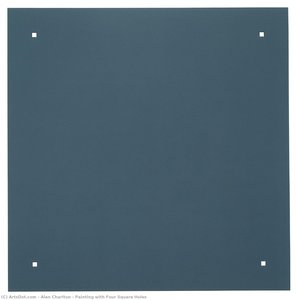
- Painting with Four Square Holes
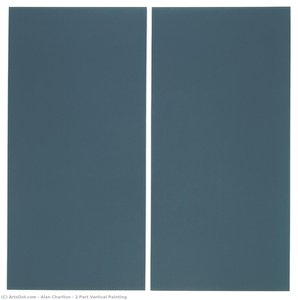
- 2 Part Vertical Painting
- Place Of Birth: Sheffield
Related Articles

White on Canvas: 10 Masterpieces & Timeless Elegance for Your Home Decor
Explore 10 iconic white paintings by Monet, Whistler & Rothko! Discover the stories behind these serene masterpieces and their impact on art history. Find museum-quality reproductions for your home decor at .

Slate Blue Masterpieces: 10 Iconic Paintings & Timeless Home Decor Ideas
Immerse yourself in the captivating world of slate blue! Explore 10 iconic paintings by Monet, Van Gogh & Renoir. Discover their stories, techniques & find museum-quality art reproductions for your home at .
Kandinsky's Masterpieces: 25 Paintings That Define Abstract Art | ArtsDot
Journey through Wassily Kandinsky's 25 most iconic abstract paintings. Explore his revolutionary use of color, form & spiritual expressionism. Find museum-quality Kandinsky reproductions and elevate your home decor with ArtsDot.com. Discover all masterpieces on ArtsDot.com!

Serene Blue Backgrounds: Discover Soulful Art to Transform Your Space with Timeless Elegance
Transform your home with soulful blue art. From serene Monet impressions to modern textured sculptures, discover curated masterpieces designed to inspire calm. Explore expert art consultations and bespoke hand-painted reproductions to create your personal sanctuary.

Geometric Abstraction's 10 Defining Masterpieces | Art for Your Home - ArtsDot
Explore 10 defining masterpieces of Geometric Abstraction! Discover Kandinsky, Mondrian & Malevich’s iconic works. Find museum-quality art reproductions and curated decor ideas to elevate your home at ArtsDot.com.