 Preview
 Send
Send Share
Share
 Details

 Download
 Similars
 X-Ray
X-Ray Diaporama
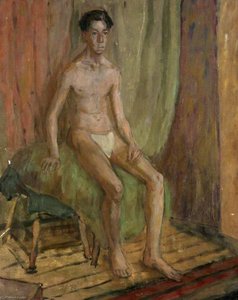
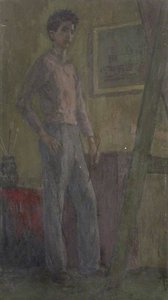
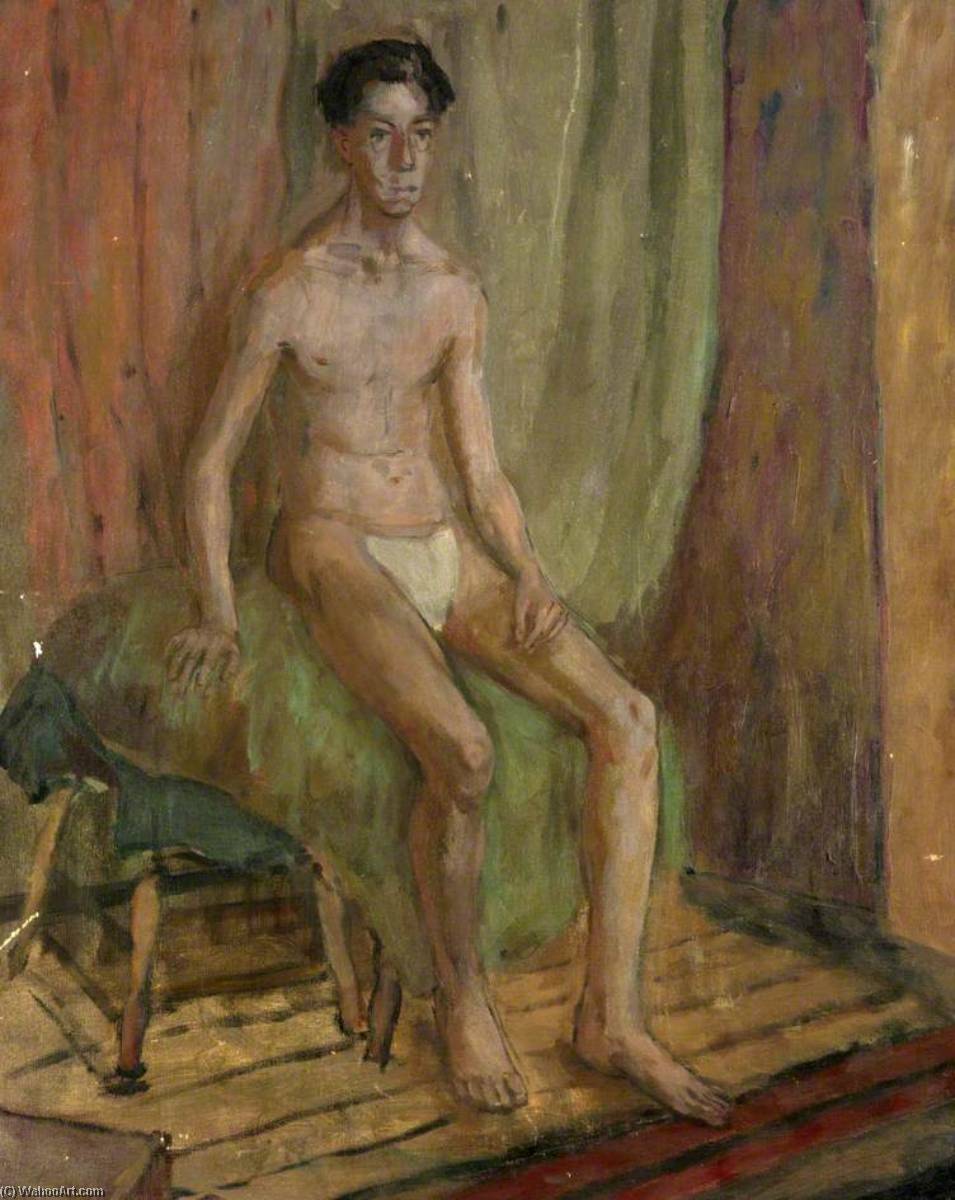
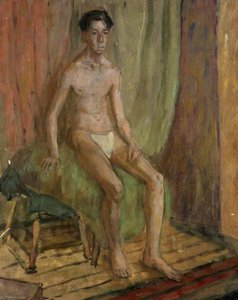
Male Nude Seated
 1949
1949 78.0 x 61.0 cm
 Edinburgh College of Art
 Read More
Giclée / Art Print
Museum-quality giclée or canvas print with fast production and flexible finish options. ( Buy Hand Made Painting Buy Image)




































Pick from our preset sizes that match the artwork's original proportions.

You may enter your own dimensions to fit a specific frame or space. If your selected size does not match the original image's proportions, we will either crop the artwork or extend the image with a mirrored or solid-fill edge. A digital mockup will be sent for your approval before production begins.
Please note that the on-screen preview does not reflect the actual cropping or extension. Only the mockup will accurately show the final composition.
While custom sizes are available, we recommend selecting a dimension from the predefined list to preserve the original proportions.
Worldwide Delivery () in 2 weeks instead of standard 4/5 weeks. (24 August)

Free Worldwide Express Shipping

High-Quality Linen Canvas

Full Shipping Insurance

Customs Tax Refund Guarantee

True Color Matching Guarantee

60-Day Return Policy (Defects Only)

100% Money-Back Guarantee

Bulk Discount Offer
 Glass option is only available in size under 110 CM

Male Nude Seated
Giclée / Art Print
Reproduction Size
-


Total Price
$ 63
Related Artworks










Artist Biography
Alastair Frederick Flattely: A Landscape of Emotion
Born in Inverness, Scotland, in 1922, Alastair Frederick Flattely’s artistic journey was shaped by a profound connection to the natural world and a deep-seated appreciation for evocative storytelling through paint. His early life, though somewhat sparsely documented, instilled within him a sensitivity to the subtleties of light and atmosphere – qualities that would become hallmarks of his distinctive style. Educated at Maiden Erlegh School in Reading and Glasgow University, where he earned a postgraduate scholarship to Edinburgh College of Art, Flattely’s formal training provided a foundation while simultaneously fueling an independent spirit, one that ultimately led him away from purely academic pursuits and toward a deeply personal artistic vision.
Flattely's formative years were marked by significant travel experiences. A Charles Jervase Prize in 1950 and a Stewart Prize in 1952, both awarded by the Royal Scottish Watercolour Society (RSW), recognized his burgeoning talent and established him within the Scottish art community. Crucially, an Andrew Grant Travelling Scholarship to Spain in 1950-5 provided invaluable exposure to Iberian landscapes – a region that would profoundly influence his later work, particularly his depictions of rugged coastlines and ancient ruins. This immersion in a dramatically different artistic tradition broadened his palette and encouraged him to explore the expressive potential of color and texture.
The Development of a Distinctive Style
Returning to Scotland, Flattely began teaching at Edinburgh College of Art (1952-3) and later at Gray’s School of Art in Aberdeen (1955-9), roles that simultaneously shaped his artistic practice and provided him with opportunities to mentor the next generation of artists. His time as principal of Gloucester College of Art, Cheltenham (1960-72), and subsequently as principal of Gray's School of Art, Aberdeen (1972-87), further solidified his reputation as a respected educator and administrator within the Scottish art scene. Despite these demanding professional commitments, Flattely consistently prioritized his own painting, producing a body of work characterized by a remarkable blend of realism and emotional intensity.
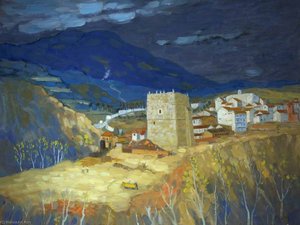
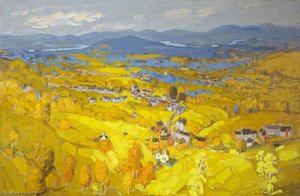
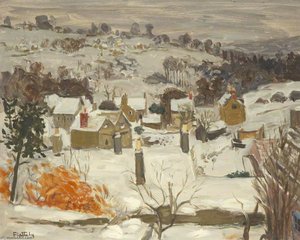
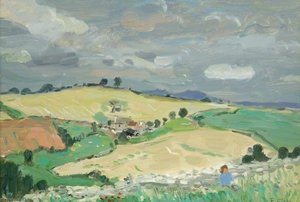
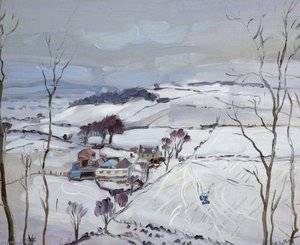
Flattely’s paintings are immediately recognizable for their atmospheric quality and meticulous attention to detail. He eschewed purely representational approaches, instead employing a loose, impressionistic technique that captured the essence of his subjects rather than rendering them with photographic accuracy. His use of impasto – applying paint thickly to create texture and depth – is particularly noteworthy, lending a tangible sense of physicality to his landscapes. Subjects ranged from dramatic coastal scenes—such as “Arab Castle, Agreda,” a captivating depiction of a medieval tower rising from the rugged Scottish landscape—to quieter, more introspective views of rural England, exemplified by "Late Summer in the Severn Valley." These works are imbued with a melancholic beauty, reflecting a deep sensitivity to the passage of time and the enduring power of nature.
Key Works and Recognition
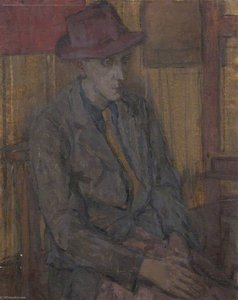
Several paintings stand out as particularly significant examples of Flattely’s oeuvre. “Portrait of Adam Hogg” (1949), a striking oil painting featuring a local man, showcases his ability to capture not only physical likeness but also the subject's inner character through subtle shifts in expression and gesture. The portrait is notable for its emotive realism and masterful use of light and shadow. "Arab Castle, Agreda" exemplifies his skill at rendering atmospheric perspective and creating a sense of timelessness, while “Late Summer in the Severn Valley” demonstrates his ability to evoke a specific mood and atmosphere through careful observation and skillful brushwork.
Throughout his career, Flattely’s work was exhibited widely, including shows at Wildenstein Gallery, Roland Browse & Delbanco, the Scottish National Gallery of Modern Art, and Upper Grosvenor Gallery. His paintings are now held in public collections across Scotland, England, and private collections internationally. In 2003, Lyon & Turnbull held a retrospective exhibition showcasing over fifty years of his work, demonstrating the enduring appreciation for his artistic contributions.
Legacy and Influence
Alastair Frederick Flattely’s legacy extends beyond his individual paintings. He was a dedicated teacher who nurtured the talents of countless young artists, shaping the landscape of Scottish art education. His emphasis on observation, emotional expression, and technical skill left an indelible mark on those he mentored. Flattely's work continues to resonate with viewers today, offering a poignant reflection on the beauty and fragility of the natural world and the enduring power of human emotion. He passed away in Dorchester, Dorset, in 2009, leaving behind a rich body of work that stands as a testament to his artistic vision and unwavering dedication.
alastair frederick flattely
1922 - 2009
Quick Facts
- Artistic Movement Or Style: Landscape, Surrealism
- Artists Who Influenced This Artist: ['None],\n "Artists or movements influenced by this artist": [None']
- Date Of Birth: 1922
- Date Of Death: 2009
- Full Name: Alastair Frederick Flattely
- Nationality: Scottish
- Notable Artworks:
- Portrait of Adam Hogg
- Arab Castle, Agreda
- Late Summer in Severn Valley
- Place Of Birth: Inverness, Scotland