

 Preview
 Send
Send Share
Share
 Details

 Download
 Similars
 X-Ray
X-Ray Diaporama
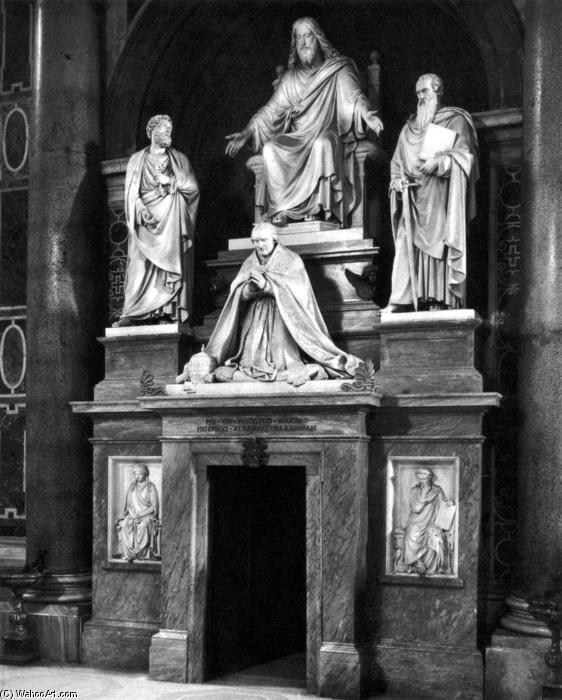
Monument of Pius VIII


 Read More
Purchase a high-resolution, enhanced digital image, far superior to the online preview.
Each file is meticulously prepared by our in-house specialists using advanced tools and expert manual retouching. We ensure every image has exceptional clarity, precise color accuracy, and fine detail.
The final file is delivered via email within 72 hours, optimized for immediate use in professional, editorial, and print environments. This is the same quality trusted by top-tier design studios, publishers, and galleries.
Digital Image
Download a high-resolution file for personal display, printing, and creative projects. ( Buy Print Buy Hand Made Painting)
Included in Every Digital Image Order
Expert Digital Delivery, Guaranteed
When you choose ArtsDot.com, you're not just getting an image - you're receiving a professionally enhanced digital artwork, crafted with precision and backed by a satisfaction guarantee. Here's everything that comes with your order, automatically:

Fast Email Delivery
Your high-resolution digital image file will be emailed to you within 72 hours of ordering - ready for immediate use.

AI-Enhanced Digital File
Your artwork is professionally optimized using advanced AI tools and manual editing, ensuring maximum detail, clarity, and color accuracy.

Free Lifetime Re-Delivery
Accidentally deleted or lost your file? No worries - we'll resend it to you anytime, free of charge.

No Import Fees - Ever
Enjoy your artwork instantly with zero customs, duties, or delivery fees - digital downloads are always tax-free.

Color Accuracy Guarantee
We ensure your digital image reflects the original colors as closely as possible using professional tools and color management.

60-Day Satisfaction Guarantee
If you're not satisfied with your digital image, we'll revise it or refund 100% within 60 days - no questions asked.

100% Money-Back Guarantee
Not satisfied? Get a full refund within 60 days of receiving your digital file - no questions asked.

Bulk Order Discounts
Buy 3 images, save 10% - Buy 5, save 15% - Buy 10+, save 20%. Great for creative projects, galleries, and agencies.
Collectible Description
A Titan of Neoclassical Sculpture: Exploring Albert Bertel Thorvaldsen’s Monument of Pius VIII
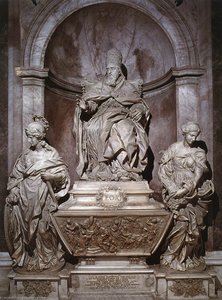
The sculpture “Monument of Pius VIII,” crafted by Albert Bertel Thorvaldsen in 1853, stands as a testament to the enduring influence of classical ideals within European art. More than just a depiction of Pope Pius VIII—a figure revered for his unwavering faith and pivotal role in papal history—the monument embodies the very essence of Neoclassical sculpture: restraint, precision, and an aspiration towards timeless beauty. Located within a Roman church interior, its solemn grandeur speaks volumes about the artistic sensibilities of its era and continues to captivate viewers today.The Sculptor’s Vision: Thorvaldsen's Embrace of Antiquity
Albert Bertel Thorvaldsen (1770-1844) emerged from humble beginnings in Copenhagen, Denmark, carrying with him a profound connection to Iceland—a heritage that instilled within him an appreciation for rugged landscapes and enduring traditions. Recognizing his prodigious talent early on, the Royal Danish Academy bestowed upon him a rare opportunity: patronage to pursue artistic studies in Rome – a pilgrimage undertaken by many artists of his time seeking inspiration from the glories of Greece and Rome. This formative journey irrevocably shaped Thorvaldsen’s artistic worldview, propelling him toward an unwavering devotion to reviving classical forms and principles.A Masterpiece of Neoclassical Style: Form and Technique
Thorvaldsen's Monument of Pius VIII exemplifies the hallmarks of Neoclassical sculpture with remarkable fidelity. The statue itself is executed in Carrara marble—a material chosen not merely for its aesthetic qualities but also for its ability to capture subtle nuances of light and shadow, mirroring the idealized beauty championed by artists like Jacques-Louis David and Antonio Canova. The sculptor’s meticulous attention to detail is evident in every aspect of the piece: from the smooth, polished surface of Pius VIII's drapery—rendered with painstaking realism—to the delicately sculpted folds conveying movement and emotion. Lines are predominantly geometric – vertical supports anchoring the monumental base and horizontal panels delineating distinct sections – reflecting a desire for clarity and order rooted in classical aesthetics. The pyramidal form of the sculpture’s composition contributes to its visual impact, symbolizing stability and divine authority.Symbolism Rooted in Faith and Remembrance
Beyond its formal brilliance lies a rich tapestry of symbolic meaning. Pius VIII is portrayed seated upon a tiered base adorned with sculptural reliefs depicting saints—figures venerated for their piety and devotion—underscoring the monument’s purpose as an act of religious commemoration. The statue's posture exudes dignity and solemn contemplation, reflecting the Pope’s unwavering faith and his role as protector of the Catholic Church. Furthermore, the overall composition speaks to the enduring legacy of Christianity and its influence on European culture during the mid-19th century. Thorvaldsen skillfully utilizes marble’s inherent qualities—its coolness, solidity, and luminosity—to convey a sense of permanence and spiritual grandeur.A Legacy Enduring Through Reproduction
Today, reproductions of “Monument of Pius VIII” grace homes and galleries worldwide, allowing admirers to experience the sublime beauty and intellectual depth of Thorvaldsen's masterpiece. The photograph captures the sculpture’s intricate details with exceptional clarity, transporting viewers back to Rome and illuminating the enduring power of classical art to inspire awe and contemplation. Its timeless elegance continues to resonate with collectors and interior designers alike—a testament to Thorvaldsen’s genius and the lasting impact of Neoclassical sculpture on artistic expression.Related Artworks
Artist Biography
Bertel Thorvaldsen: A Life in Stone
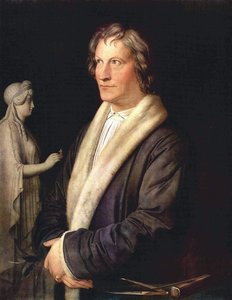
Albert Bertel Thorvaldsen (1770-1844) was a Danish and Icelandic sculptor of international renown, whose work embodies the ideals of Neoclassical art. His life story is one of remarkable talent, dedicated study, and widespread acclaim.
Early Life and Education
Born in Copenhagen, Denmark, to a working-class family with Icelandic roots, Thorvaldsen displayed artistic promise from a young age. He was accepted into the Royal Danish Academy of Art at just eleven years old. His exceptional skill earned him a stipend to travel to Rome in 1797 – a crucial step that would define his career.
Years in Rome: Developing a Style
Rome proved to be the ideal environment for Thorvaldsen’s artistic development. He immersed himself in the study of classical antiquity, meticulously copying ancient sculptures and absorbing their principles of form and proportion. This dedication led him to develop a distinctly Neoclassical style characterized by purity of line, idealized forms, and a sense of serene grandeur.
Influences and Artistic Development
Thorvaldsen was profoundly influenced by the works of ancient Greek and Roman sculptors, as well as by contemporary artists like Antonio Canova. However, he gradually moved away from Canova’s more flamboyant style towards a greater emphasis on simplicity and restraint. He sought to capture not just physical beauty but also moral virtue in his figures.
Major Achievements and Notable Works
- Religious Sculpture: Thorvaldsen created numerous religious works, including the tomb monument of Pope Pius VII – the only work by a non-Catholic artist within St. Peter’s Basilica.
- Mythological Subjects: His sculptures depicting mythological figures like Ganymede and the Eagle, Hebe, and Apollo are celebrated for their grace and classical beauty.
- Public Monuments: He received commissions for public monuments across Europe, including statues of Nicolaus Copernicus and Józef Poniatowski in Warsaw, and Maximilian I in Munich.
Return to Denmark and Legacy
In 1838, Thorvaldsen returned to Denmark as a national hero. The Danish government erected the Thorvaldsen Museum in Copenhagen to house his works, a testament to his immense popularity and artistic significance. He died in 1844 and is buried within the courtyard of the museum.
Historical Significance
Bertel Thorvaldsen played a pivotal role in shaping the Neoclassical movement. His sculptures were widely admired and imitated, influencing generations of artists. He successfully revived classical ideals in sculpture, creating works that continue to inspire awe and admiration today. His ability to blend technical skill with artistic vision cemented his place as one of the most important sculptors of the 19th century.
albert bertel thorvaldsen
1770 - 1844 , Denmark
Quick Facts
- Birth Date: 1770
- Birth Place: Copenhagen, Denmark
- Death Date: 1844
- Influenced: None, 'influenced by': 'Antonio Canova', 'movement': 'Neoclassicism', 'name': 'Albert Bertel Thorvaldsen', 'nationality': 'Danish, Icelandic', 'notable works': ['Statues of Nicolaus Copernicus and Józef Poniatowski (Warsaw)', 'Statue of Maximilian I (Munich)',

