

 Preview
 Send
Send Share
Share
 Details

 Download
 Similars
 X-Ray
X-Ray Diaporama
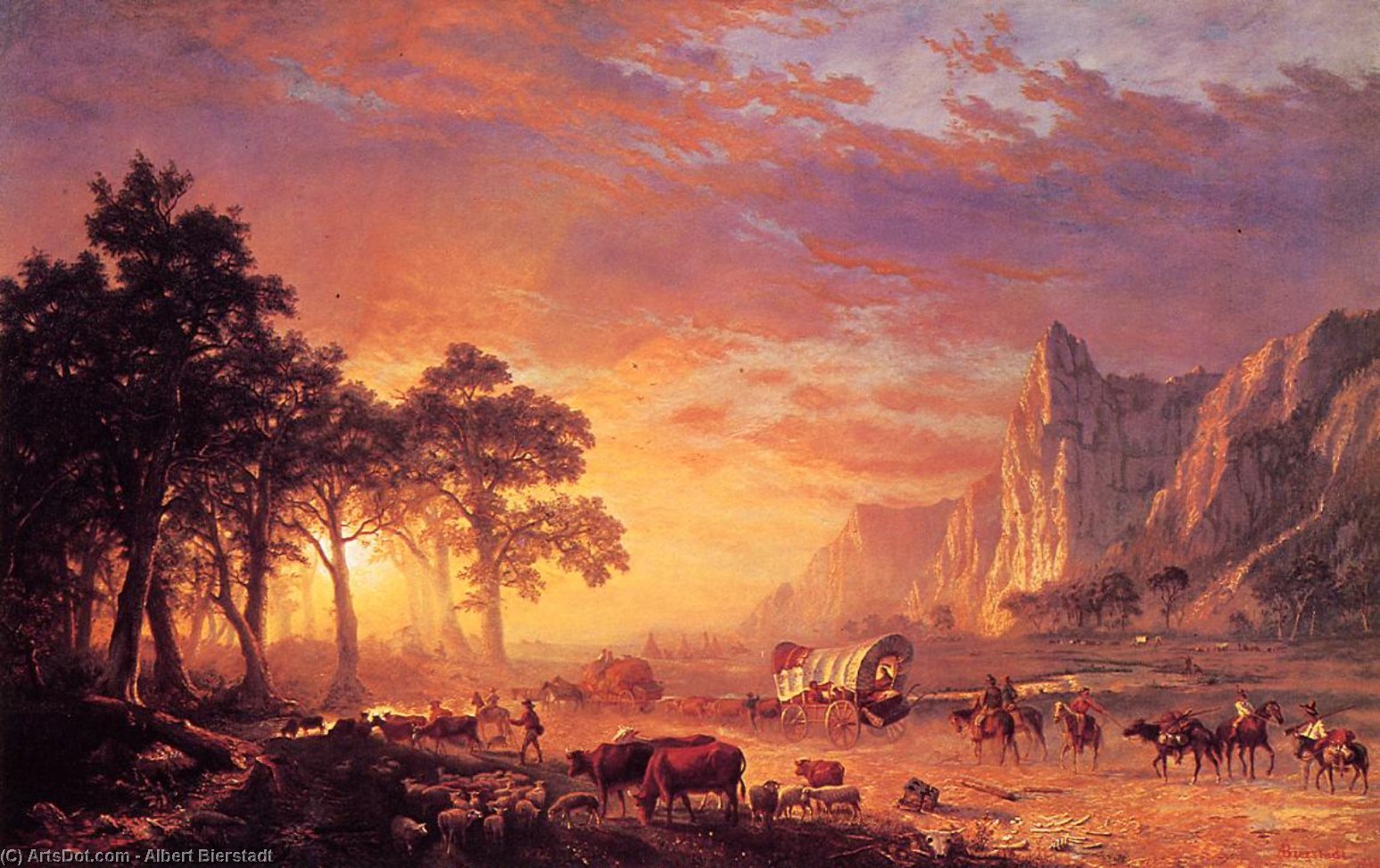
The Oregon Trail
 Oil On Canvas
- WallArt
- Hudson River School
 1869
1869- 19th Century
 78.0 x 124.0 cm
 Read More
Purchase a high-resolution, enhanced digital image, far superior to the online preview.
Each file is meticulously prepared by our in-house specialists using advanced tools and expert manual retouching. We ensure every image has exceptional clarity, precise color accuracy, and fine detail.
The final file is delivered via email within 72 hours, optimized for immediate use in professional, editorial, and print environments. This is the same quality trusted by top-tier design studios, publishers, and galleries.
Digital Image
Download a high-resolution file for personal display, printing, and creative projects. ( Buy Print Buy Hand Made Painting)
Included in Every Digital Image Order
Expert Digital Delivery, Guaranteed
When you choose ArtsDot.com, you're not just getting an image - you're receiving a professionally enhanced digital artwork, crafted with precision and backed by a satisfaction guarantee. Here's everything that comes with your order, automatically:

Fast Email Delivery
Your high-resolution digital image file will be emailed to you within 72 hours of ordering - ready for immediate use.

AI-Enhanced Digital File
Your artwork is professionally optimized using advanced AI tools and manual editing, ensuring maximum detail, clarity, and color accuracy.

Free Lifetime Re-Delivery
Accidentally deleted or lost your file? No worries - we'll resend it to you anytime, free of charge.

No Import Fees - Ever
Enjoy your artwork instantly with zero customs, duties, or delivery fees - digital downloads are always tax-free.

Color Accuracy Guarantee
We ensure your digital image reflects the original colors as closely as possible using professional tools and color management.

60-Day Satisfaction Guarantee
If you're not satisfied with your digital image, we'll revise it or refund 100% within 60 days - no questions asked.

100% Money-Back Guarantee
Not satisfied? Get a full refund within 60 days of receiving your digital file - no questions asked.

Bulk Order Discounts
Buy 3 images, save 10% - Buy 5, save 15% - Buy 10+, save 20%. Great for creative projects, galleries, and agencies.
Collectible Description
The Grand Sweep of Manifest Destiny: An Encounter with Bierstadt's West
To stand before a depiction like this is not merely to observe a painting; it is to be swept away by the very spirit of an age—the relentless, breathtaking march westward across the American continent. Albert Bierstadt, master chronicler of the sublime American landscape, captures here more than just a wagon train traversing the prairie in 1869. He arrests a moment saturated with ambition, struggle, and unparalleled natural grandeur. The scene unfolds under a dramatic, almost theatrical sunset, bathing towering mountains and endless plains in a wash of molten gold and deep crimson. It speaks directly to the era's feverish belief in progress, making it an immediate focal point for any space yearning for epic scale and historical resonance.
Luminism and the Sublime: A Study in Light
Technically, this work is a quintessential example of Luminism, a style that elevates light itself to a primary subject. Bierstadt achieves this through masterful atmospheric perspective; the distant mountains do not simply exist—they recede into a hazy, ethereal blue-gray mist, suggesting infinite depth. The artist’s handling of oil paint allows for subtle gradations of color, particularly in the sky where warm oranges bleed into cooler violets near the horizon line. Notice how the sunset doesn't just illuminate; it permeates everything, casting a palpable warmth over the scene. This meticulous attention to light ensures that even the rough texture suggested on the foreground terrain feels softened by divine radiance, inviting the viewer into its vastness.
Symbolism of Passage and Promise
The composition is deeply symbolic. The wagon train itself, with its trailing cattle and horses, embodies the human spirit's enduring drive—the very concept of Manifest Destiny made visible. It is a line drawn from the known world toward an unknown promise. Conversely, the immense scale of the surrounding nature—the towering peaks and sweeping plains—serves as a powerful counterpoint to human endeavor. This tension between fragile human enterprise and overwhelming natural majesty is what gives the piece its profound emotional weight. The sunset, that perfect blend of ending day and promising night, mirrors this duality: beauty found within transition.
A Statement Piece for the Collector's Vision
For the discerning collector or designer, this reproduction offers more than mere decoration; it offers narrative depth. Its dominant palette of warm reds, oranges, and yellows ensures that it acts as a powerful anchor piece in any grand room—be it a library, an entryway hall, or a formal dining space. The size, 78 x 124 cm, commands attention without overwhelming the architecture. Owning this vision is to curate a conversation about American history, artistic mastery, and the enduring allure of the frontier spirit. It is a piece that demands contemplation, promising that every glance will reveal another layer of Bierstadt's breathtaking genius.
Related Artworks

Artist Biography
A Pioneer of the American West: The Life and Art of Albert Bierstadt
Born in Prussia in 1830, Albert Bierstadt’s story is one deeply interwoven with the burgeoning identity of America itself. His family's early emigration to New Bedford, Massachusetts, when he was just a year old, planted the seeds for a lifelong fascination with the landscapes that would come to define his artistic legacy. Though initially self-taught, sketching with crayons as a youth, Bierstadt recognized the need for formal training and embarked on studies in Düsseldorf, Germany, in 1853. This European grounding proved crucial, providing him with technical mastery—a meticulous attention to detail and a sophisticated understanding of light and atmosphere—that he would later apply to his depictions of the American wilderness. It was not merely replication that Bierstadt sought, but an emotional resonance, a way to convey the sublime power and beauty of nature.Capturing the Majesty: The Hudson River School and Beyond
Upon his return to the United States in 1857, Bierstadt quickly became associated with the Hudson River School, a group of artists dedicated to portraying the American landscape with both accuracy and romantic idealism. However, while sharing their reverence for nature, Bierstadt soon distinguished himself through his ambitious scale and dramatic compositions. He wasn’t content to simply paint pretty pictures; he aimed to create immersive experiences that transported viewers to the heart of the wilderness. His breakthrough came in 1858 with a Swiss landscape exhibited at the National Academy of Design, earning him immediate acclaim and honorary membership. But it was his subsequent expeditions westward—first with land surveyor Frederick W. Lander in 1859, then with author Fitz Hugh Ludlow in 1863 to Yosemite Valley—that truly ignited his artistic vision. These journeys weren’t just about observation; they were about immersion, allowing Bierstadt to absorb the grandeur of the Rocky Mountains, the vastness of the plains, and the awe-inspiring scale of canyons and waterfalls.The Painter of Empires: Shaping Perceptions of the West
Bierstadt’s paintings weren't simply landscapes; they were statements about national identity and Manifest Destiny. His canvases—often enormous in size—depicted the American West not as a harsh, untamed frontier, but as a land of promise, abundance, and divine beauty. The Rocky Mountains, Lander’s Peak, completed in 1863 and purchased for an astonishing $25,000 (equivalent to nearly $400,000 today), exemplifies this approach. The painting isn't a precise topographical rendering; it’s a carefully constructed vision of idealized grandeur, bathed in golden light and imbued with a sense of spiritual significance. This ability to evoke emotion, to inspire awe, made Bierstadt immensely popular during his lifetime. He wasn’t just an artist; he was a cultural ambassador, shaping how Americans—and the world—perceived the West. His work fueled westward expansion by presenting it as a noble and divinely ordained undertaking.Legacy and Influence: A Lasting Impression
While Bierstadt's popularity waned somewhat in the late 19th century as artistic tastes shifted, his influence on American landscape painting remains undeniable. He demonstrated the power of large-scale canvases to create immersive experiences, a technique later adopted by many artists. His meticulous attention to detail and masterful use of light continue to inspire painters today. Beyond his technical achievements, Bierstadt’s work serves as a valuable historical document, offering insights into the evolving perceptions of the American West during a period of rapid change and expansion. He captured a moment in time—a vision of pristine wilderness before it was irrevocably altered by human intervention. His paintings are not just beautiful images; they are windows into a pivotal era in American history, reminding us of both the promise and the cost of westward expansion. His legacy endures, ensuring that his breathtaking landscapes will continue to captivate and inspire generations to come.
Albert Bierstadt
1830 - 1902 , Germany
Quick Facts
- Artistic Movement Or Style: Hudson River School
- Date Of Birth: January 7, 1830
- Date Of Death: February 18, 1902
- Full Name: Albert Bierstadt
- Nationality: German-American
- Notable Artworks:
- Western Landscape
- Coastal Scene
- Place Of Birth: Solingen, Germany

