 Preview
 Send
Send Share
Share
 Details

 Download
 Similars
 X-Ray
X-Ray Diaporama
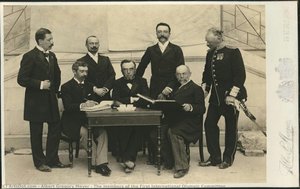
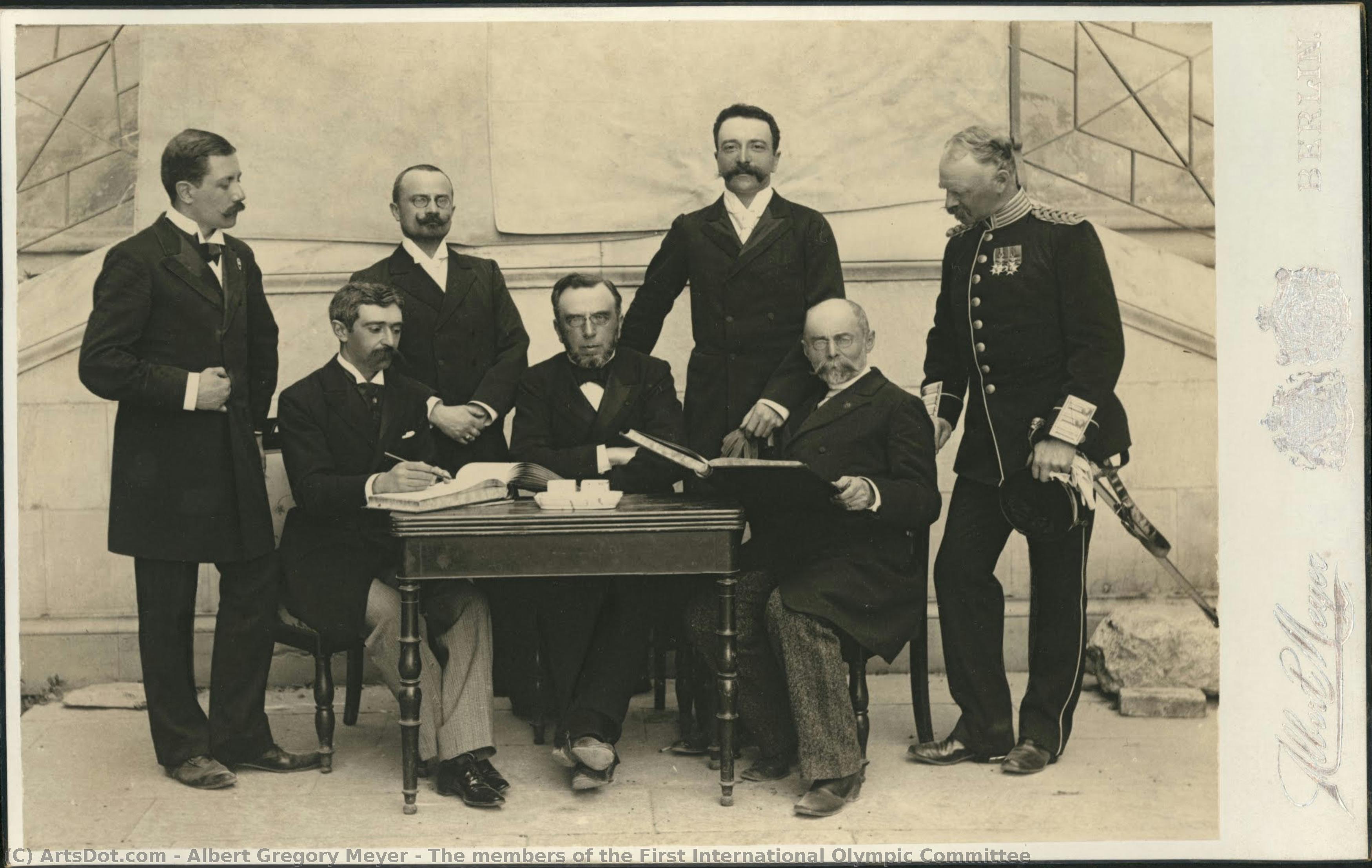
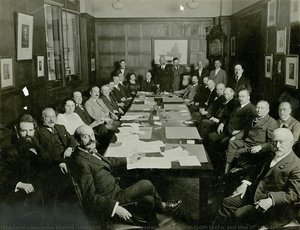
The members of the First International Olympic Committee
 Other
Other 1896
1896 187.0 x 129.0 cm
 Benaki Museum of Greek Civilization
 Read More
Giclée / Art Print
Museum-quality giclée or canvas print with fast production and flexible finish options. ( Buy Hand Made Painting Buy Image)




































Pick from our preset sizes that match the artwork's original proportions.

You may enter your own dimensions to fit a specific frame or space. If your selected size does not match the original image's proportions, we will either crop the artwork or extend the image with a mirrored or solid-fill edge. A digital mockup will be sent for your approval before production begins.
Please note that the on-screen preview does not reflect the actual cropping or extension. Only the mockup will accurately show the final composition.
While custom sizes are available, we recommend selecting a dimension from the predefined list to preserve the original proportions.
Worldwide Delivery () in 2 weeks instead of standard 4/5 weeks. (21 August)

Free Worldwide Express Shipping

High-Quality Linen Canvas

Full Shipping Insurance

Customs Tax Refund Guarantee

True Color Matching Guarantee

60-Day Return Policy (Defects Only)

100% Money-Back Guarantee

Bulk Discount Offer
 Glass option is only available in size under 110 CM

The members of the First International Olympic Committee
Giclée / Art Print
Reproduction Size
-


Total Price
$ 63
Related Artworks
Artist Biography
A Lens on History: The Photographic Legacy of Albert Gregory Meyer
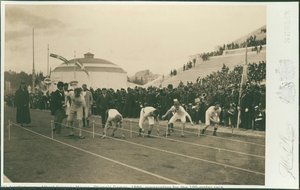
While history often remembers Albert Gregory Meyer through the solemn lens of his ecclesiastical leadership, a different, more vibrant dimension of his life emerges when we examine his contributions to photographic documentation. Born in Milwaukee in 1903, Meyer possessed an eye that captured the fleeting moments of human triumph and the structured grandeur of international ceremony. His work, particularly his albumen prints, serves as a profound visual bridge to the late 19th century, preserving the raw energy of the inaugural modern Olympic Games with a clarity that transcends time.
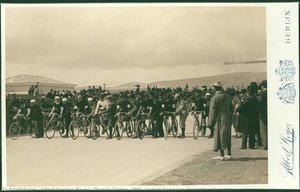
The essence of Meyer’s artistic contribution lies in his ability to freeze the pulse of history. His photographic repertoire provides an intimate window into the 1896 Olympic Games, capturing not just the athletes, but the very atmosphere of a world rediscovering the spirit of competition. Through his lens, we encounter the grit and determination of cyclists at the start of the grueling twelve-hour race, where the tension of the moment is palpable in every grain of the print. These images are more than mere documentation; they are evocative compositions that utilize light and shadow to tell a story of endurance and human potential.
Capturing the Spirit of Victory and Ceremony
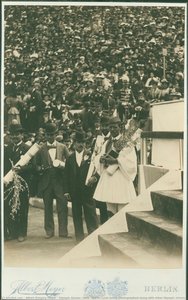
Beyond the kinetic energy of the races, Meyer’s work excels in capturing the formal dignity of athletic achievement. One of his most poignant contributions is his documentation of Spyros Louis, the Greek hero of the 1896 Games, being honored alongside fellow victors during the medals and diplomas ceremony. In these photographs, Meyer captures a momentous intersection of national pride and individual excellence. The composition of these works reflects a deep respect for the ritual of victory, elevating a sporting event into a timeless tableau of human glory.
His photographic eye also turned toward the architects of modern sport. By documenting the members of the First International Olympic Committee, Meyer provided a historical record of the individuals who laid the foundation for the global phenomenon we recognize today. These black and white portraits offer a window into the late 19th-century sporting heritage, showcasing a level of detail that allows contemporary viewers to connect with the faces behind the movement. Through these works, Meyer’s legacy is cemented as a vital chronicler of the Olympic spirit.
A Dual Legacy of Faith and Vision
It is impossible to separate the man who documented the triumphs of the arena from the man who would eventually lead the Archdiocese of Chicago. The same sensitivity to human experience that allowed him to capture the sweat of a cyclist or the pride of an Olympian informed his later role as a champion for social justice and racial equality. His life was a tapestry woven from threads of profound faith, a commitment to the Civil Rights Movement, and an enduring appreciation for the beauty found in both the spiritual and the visual realms.
Ultimately, the work of Albert Gregory Meyer stands as a testament to the power of observation. Whether through the theological depth of his leadership or the precise, historical clarity of his photography, he remained dedicated to uncovering and preserving the truth of the human condition. His ability to find significance in both the monumental and the momentary ensures that his visual and spiritual contributions continue to resonate with audiences seeking connection to our shared global history.
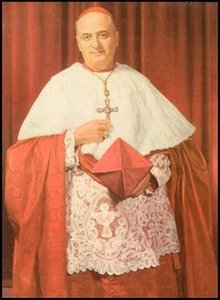
albert gregory meyer
1903 - 1965 , United States of America
Quick Facts
- Artists Or Movements Influenced By This Artist: ['Renaissance Sculpture']
- Artists Who Influenced This Artist: ['Diego de Siloe']
- Date Of Birth: March 9, 1903
- Date Of Death: April 9, 1965
- Full Name: Albert Gregory Meyer
- Nationality: American
- Notable Artworks:
- San Secondo
- Martin Luther and the Wittenberg Reformers
- Place Of Birth: Milwaukee, United States
Related Articles

White on Canvas: 10 Masterpieces & Timeless Elegance for Your Home Decor
Explore 10 iconic white paintings by Monet, Whistler & Rothko! Discover the stories behind these serene masterpieces and their impact on art history. Find museum-quality reproductions for your home decor at .

Monochrome Visions: Exploring the Aesthetic & Historical Significance of Black & White Photography
Explore the rich history & artistic power of black and white photography. From early techniques to iconic masters like Ansel Adams, discover why monochrome continues to captivate art lovers today. Expert insights for collectors.

Dark Masterpieces: 10 Iconic Paintings Dominated by Black Tones |
Explore 10 iconic paintings dominated by black tones, from Rembrandt’s chiaroscuro to Goya's dark expressions. Discover the stories behind these masterpieces & find museum-quality art reproductions for your home at .
Documentary Photography's Defining Moments: 10 Masterpieces for Your Home |
Explore 10 defining documentary photography masterpieces – from Dorothea Lange to Robert Capa. Discover powerful stories, iconic images & timeless art for your home. Museum-quality prints at .
Mars Black Masterpieces: 10 Iconic Paintings & Timeless Art Decor Ideas
Delve into the power of 'Mars Black' with 10 iconic paintings by masters like Rembrandt & Caravaggio. Explore dramatic chiaroscuro, gothic art, and timeless beauty. Find museum-quality reproductions & elevate your home decor on .