 Preview
 Send
Send Share
Share
 Details

 Download
 Similars
 X-Ray
X-Ray Diaporama
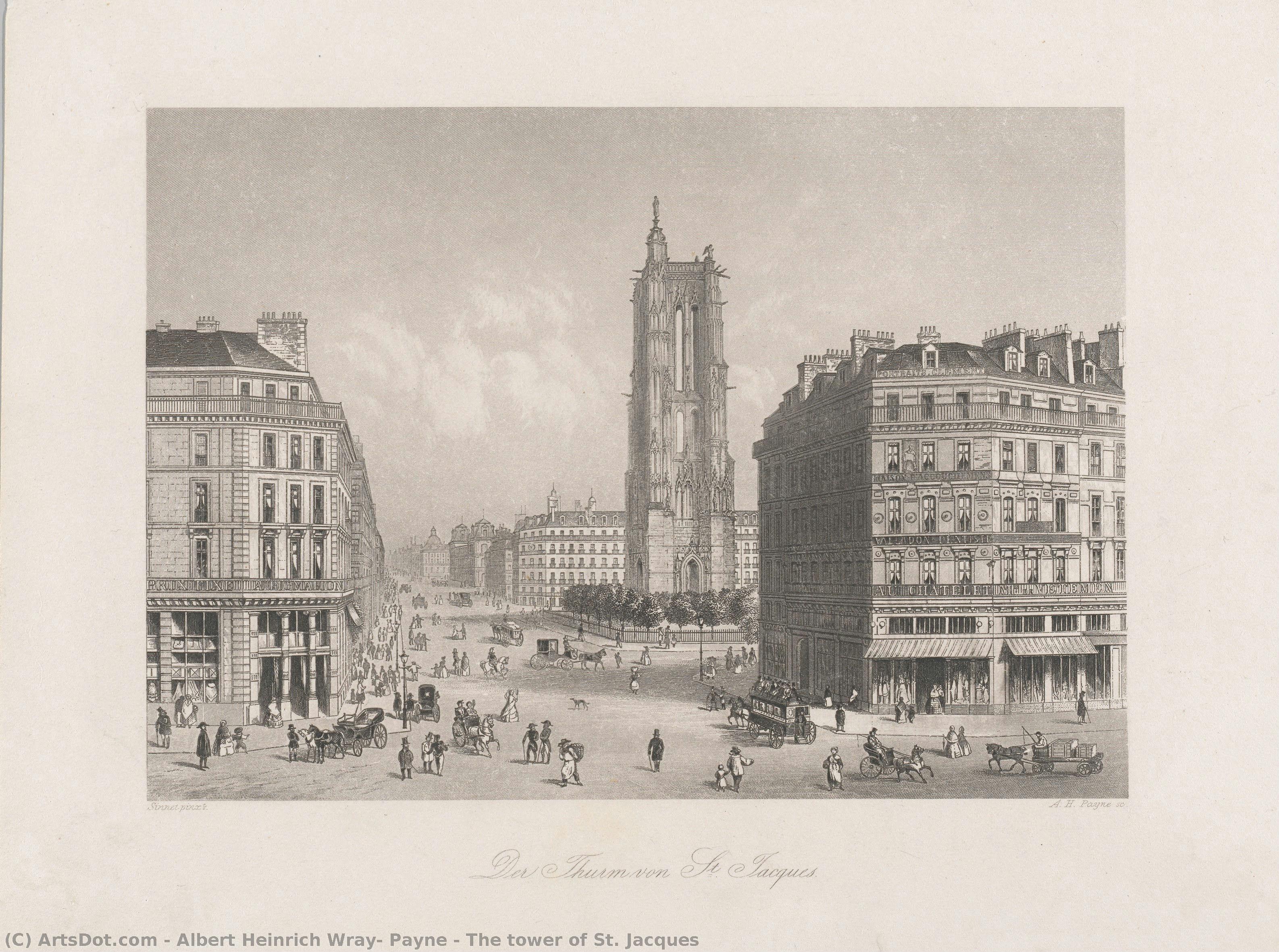
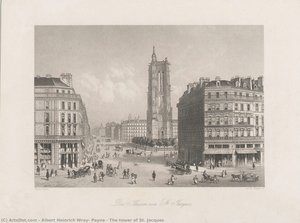
The tower of St. Jacques

 Read More
Giclée / Art Print
Museum-quality giclée or canvas print with fast production and flexible finish options. ( Buy Hand Made Painting Buy Image)




































Pick from our preset sizes that match the artwork's original proportions.

You may enter your own dimensions to fit a specific frame or space. If your selected size does not match the original image's proportions, we will either crop the artwork or extend the image with a mirrored or solid-fill edge. A digital mockup will be sent for your approval before production begins.
Please note that the on-screen preview does not reflect the actual cropping or extension. Only the mockup will accurately show the final composition.
While custom sizes are available, we recommend selecting a dimension from the predefined list to preserve the original proportions.
Worldwide Delivery () in 2 weeks instead of standard 4/5 weeks. (30 August)

Free Worldwide Express Shipping

High-Quality Linen Canvas

Full Shipping Insurance

Customs Tax Refund Guarantee

True Color Matching Guarantee

60-Day Return Policy (Defects Only)

100% Money-Back Guarantee

Bulk Discount Offer
 Glass option is only available in size under 110 CM

The tower of St. Jacques
Giclée / Art Print
Reproduction Size
-


Total Price
$ 63
Related Artworks




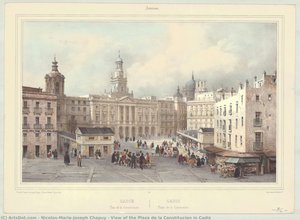
Artist Biography
A Master of the Burin: The Life and Legacy of Albert Henry Payne
Born in the bustling heart of London in 1812, Albert Henry Payne emerged as a defining voice in the intricate world of Victorian steel engraving. His journey was one of profound transformation, moving from the disciplined, technical rigors of a trained engraver to the expansive role of a prolific publisher and illustrator. This evolution was catalyzed by a pivotal relocation to Leipzig in 1839, where he established his renowned Englische Kunsthandlung. By securing German citizenship in 1845, Payne did more than change his legal status; he immersed himself in a vibrant European artistic milieu that would forever enrich the depth and scope of his creative vision.
The essence of Payne’s artistry lay in his masterful command of the steel engraving medium, a technique that demanded unparalleled precision. Unlike the softer textures of copper, steel allowed for an exquisite level of detail and a breathtaking range of tonal gradation. Through the meticulous application of shading and hatching, Payne breathed life into static metal, capturing the grandeur of sweeping urban vistas and the delicate nuances of historical narratives. His work was never merely a mechanical reproduction; rather, it was a deeply personal interpretation. He possessed a rare ability to use light and shadow to convey atmosphere and emotional resonance, ensuring that each line etched into the plate served a greater narrative purpose.
Architectural Grandeur and Historical Narrative
Payne’s repertoire was as diverse as the landscapes of Europe itself. His illustrations functioned as vital windows into the 19th century, documenting both the physical majesty of the era's architecture and the weight of its historical milestones. One of his most evocative achievements can be seen in works such as The Tower of St. Jacques, where his dedication to capturing the complexity of European cityscapes is on full display. His ability to render architectural textures—the cold stone of a monument or the intricate carvings of a cathedral—demonstrates a profound connection to the structural beauty of his subjects.
Beyond the built environment, Payne’s work often touched upon the human and historical drama of his time. His engravings frequently explored:
- Architectural Renderings: Capturing the monumental scale of prominent European buildings with scientific accuracy and artistic flair.
- Historical Portraits and Events: Documenting significant figures and moments, imbuing them with a sense of permanence through the enduring medium of steel.
- Atmospheric Landscapes: Utilizing tonal mastery to depict everything from the quietude of Italian nights to the sprawling views of German vistas like Gotha.
A Lasting Impression on Victorian Art
The historical significance of Albert Henry Payne extends far beyond the individual plates he produced. As a publisher and engraver, he played a crucial role in the dissemination of visual knowledge during an age of rapid technological and social change. His work sat at the intersection of fine art and mass communication, making high-quality, detailed imagery accessible to a growing middle class. While his style was deeply rooted in the precision of his craft, it also reflected the broader artistic currents of his era, including the lingering influence of Romanticism and the dramatic sensibilities found in the works of masters like Eugène Delacroix.
Today, Payne is remembered as a pioneer who bridged the gap between the technical artisan and the fine artist. His legacy resides in the meticulous clarity of his lines and the enduring emotional depth of his compositions. Through his contributions to the Victorian art landscape, he ensured that the architectural splendor and historical gravity of the 19th century were preserved with a level of detail that continues to captivate collectors and historians alike.
albert heinrich wray, payne
1812 - 1902 , United Kingdom
Quick Facts
- Artistic Movement Or Style: Victorian Art
- Date Of Birth: 1812
- Full Name: Albert Henry Payne
- Nationality: British
- Notable Artworks: ['The Tower of St. Jacques']
- Place Of Birth: London, United Kingdom