 Preview
 Send
Send Share
Share
 Details

 Download
 Similars
 X-Ray
X-Ray Diaporama
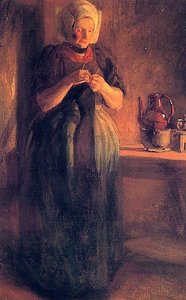
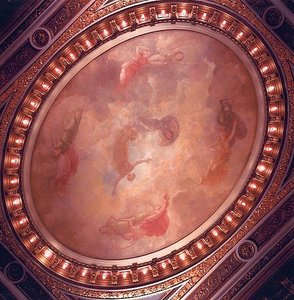
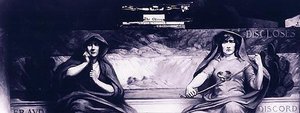
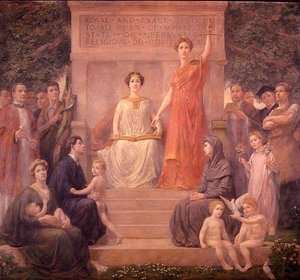
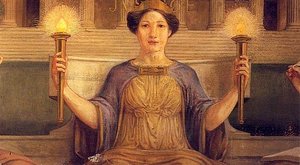
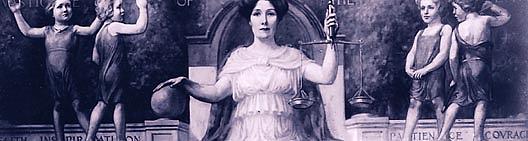
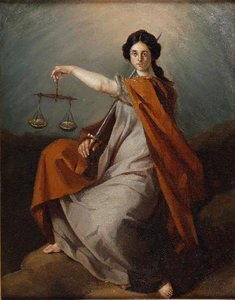
Justice of the Law Faith and Inspiration, Patience and Courage, (painting)


 Read More
Hand Made Oil Reproduction
Hand-painted oil on canvas in your size and frame, made to order by our artists. ( Buy Print Buy Image)




































Pick from our preset sizes that match the artwork's original proportions.

You may enter your own dimensions to fit a specific frame or space. If your selected size does not match the original image's proportions, we will either crop the artwork or extend the painting with additional hand-painted elements. A digital mockup will be sent for your approval before production begins.
Please note that the on-screen preview does not reflect the actual cropping or extension. Only the mockup will accurately show the final composition.
While custom sizes are available, we recommend selecting a dimension from the predefined list to preserve the original proportions.
After order, ArtsDot.com team will email client for instructions and provide a mockup preview
Worldwide Delivery () in 3/4 weeks instead of standard 5 weeks. (16 August). No compromise on quality.

Free Worldwide Express Shipping

High-Quality Linen Canvas

Full Shipping Insurance

Customs Tax Refund Guarantee

True Color Matching Guarantee

60-Day Return Policy (Defects Only)

100% Money-Back Guarantee

Bulk Discount Offer
 Glass option is only available in size under 110 CM

Justice of the Law Faith and Inspiration, Patience and Courage, (painting)
Reproduction Medium
Reproduction Size
-


Total Price
$ 313
Related Artworks
Artist Biography
A Life Immersed in Art: The Journey of Albert Henry Krehbiel
Albert Henry Krehbiel, born in Denmark, Iowa, in 1873, emerged as a pivotal figure in American art, bridging the gap between academic tradition and the burgeoning currents of early modernism. His life was a testament to dedicated study, artistic exploration, and a profound commitment to both his craft and pedagogy. From humble beginnings in rural Kansas, where his father practiced the time-honored trades of blacksmithing and carriage making, Krehbiel’s innate talent caught the eye of William Merchant Richardson French, director of the Art Institute of Chicago, setting him on a path that would lead to international recognition and lasting contributions to American mural painting and Impressionism. This early encouragement proved transformative, propelling him towards formal training at the Art Institute itself, where he honed his skills and secured an American Traveling Scholarship in 1902 – a prestigious award that opened doors to artistic immersion in Europe.European Foundations and Early Acclaim
Krehbiel’s arrival in Paris in 1903 marked a crucial phase in his development. He enrolled at the Académie Julian, studying under Jean-Paul Laurens, a renowned history painter and muralist. This period was characterized by rigorous academic training, focused on mastering classical techniques and honing observational skills. Krehbiel thrived within this environment, demonstrating exceptional talent that garnered him unprecedented accolades – four gold medals, an achievement unmatched by any other American student at the Académie Julian, alongside the coveted Prix de Rome. These awards weren’t merely symbolic; they signified a mastery of draftsmanship, composition, and a deep understanding of artistic principles. His work during this time reflected a neoclassical sensibility, evident in his precise renderings and narrative focus. In 1905, two of Krehbiel's neoclassical paintings were accepted for exhibition at the prestigious Société des Artistes Français (Paris Salon), solidifying his position within the established art world and signaling his arrival as a significant artistic voice. This early success laid the groundwork for ambitious commissions that would define his career upon returning to America.Monumental Murals and Public Commissions
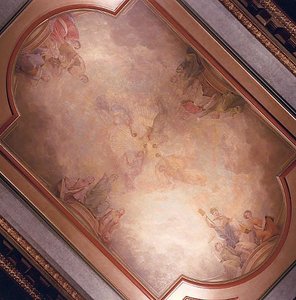
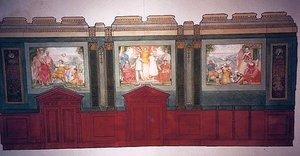
Upon his return to the United States in 1906, Krehbiel quickly established himself as a sought-after muralist. He secured a commission to create murals for the Chicago Juvenile Court, but it was the Illinois Supreme and Appellate Court Rooms in Springfield that would become his most monumental achievement. Winning a national competition in 1907, he embarked on a project of immense scale – designing and painting eleven wall murals and two ceiling murals. Completed by 1911, these works were lauded as “an example of the best mural painting ever executed in the west” by architect W. Carby Zimmerman. The murals weren’t simply decorative; they were carefully conceived narratives, integrating allegory and historical themes to convey concepts of justice, law, and civic virtue. This project showcased Krehbiel's ability to translate complex ideas into visually compelling compositions, demonstrating a remarkable command of scale, color, and narrative storytelling. These murals remain a testament to his skill as a public artist, transforming the courtrooms into spaces that inspire contemplation and respect for the legal system.The Santa Fe Influence and Evolving Style
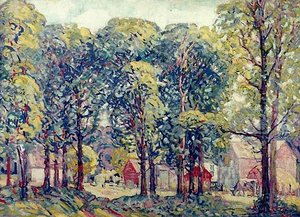
A pivotal shift in Krehbiel’s artistic trajectory occurred between 1918 and 1923 with extended sojourns in Santa Monica, California, and particularly Santa Fe, New Mexico. This immersion in the vibrant artistic communities of the Southwest proved transformative. Becoming an exhibiting member of the Santa Fe Art Colony and participating in the Museum of New Mexico’s visiting artists program alongside contemporaries like Robert Henri, Krehbiel encountered a different aesthetic sensibility – one that emphasized direct observation, simplified forms, and a heightened awareness of light and atmosphere. This exposure loosened his brushwork, encouraged experimentation with color, and led him towards a more Impressionistic approach to landscape painting. He found himself captivated by the unique quality of light in New Mexico, its ability to transform the desert landscape into a spectacle of vibrant hues and dramatic shadows. His association with artists like George Bellows, Gustave Baumann, and Marsden Hartley further broadened his artistic horizons, fostering a spirit of innovation and experimentation that would characterize his later work.Legacy of Artistry and Education
Beyond his accomplishments as a muralist and painter, Albert Henry Krehbiel dedicated nearly four decades to art education. He served as a faculty member at the Art Institute of Chicago for 39 years and simultaneously taught at the Armour Institute of Technology (later Illinois Institute of Technology) for 32 years. Recognizing the need for immersive artistic experiences outside the traditional classroom setting, he pioneered the Chicago Art Institute Summer School of Painting – later known as Ox-Bow – in Saugatuck, Michigan. This summer school became a haven for artists seeking to hone their skills and explore new approaches to painting *en plein air*. Krehbiel’s commitment to teaching extended beyond technical instruction; he fostered a spirit of creativity, encouraging his students to develop their individual voices and embrace artistic experimentation. His later landscapes, often depicting scenes around Saugatuck and Galena, Illinois, reflected his evolving style – characterized by looser brushwork, vibrant color palettes, and a keen sensitivity to the nuances of light and atmosphere. Albert Henry Krehbiel’s career stands as a compelling narrative of artistic growth, demonstrating a remarkable ability to adapt, innovate, and leave an indelible mark on American art history through both his monumental public works and his dedication to nurturing future generations of artists. His contributions continue to resonate today, inspiring artists and captivating audiences with their beauty, skill, and enduring relevance.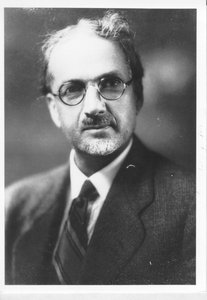
Albert Henry Krehbiel
1873 - 1945 , United States of America
Quick Facts
- Artistic Movement Or Style: Neoclassical, Impressionism
- Date Of Birth: 1873
- Date Of Death: 1945
- Full Name: Albert Henry Krehbiel
- Nationality: American
- Notable Artworks:
- Lady in Pink
- Children Resting
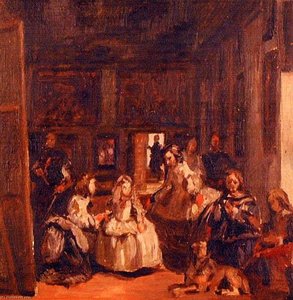
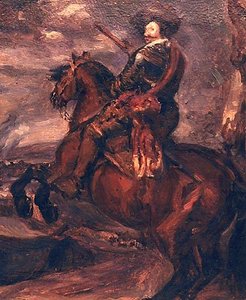
- Study of Velazquez
- Place Of Birth: Denmark, USA
Related Articles
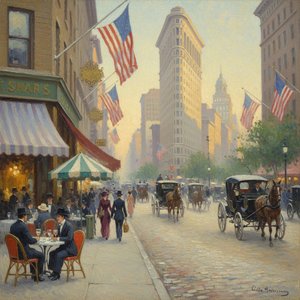
Frederick Childe Hassam: American Impressionism's Chronicler of Light & Modern Life
Explore the captivating world of Frederick Childe Hassam, a pioneer of American Impressionism. Discover his iconic paintings capturing light, urban life & coastal beauty. Learn about his legacy and influence on American art history.
Capturing a Nation's Light: Exploring the American Impressionist Movement
Explore the captivating world of American Impressionism! Discover key artists, techniques & its lasting impact on art history. Find museum-quality reproductions and expert guidance at ArtsDot.

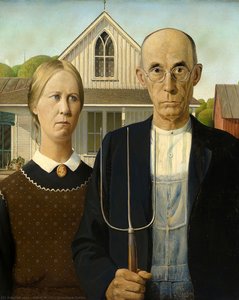
Grant Wood & American Regionalism: Identity, Myth & the Rural Landscape
Explore the world of Grant Wood & American Regionalism with ArtsDot. Discover the symbolism behind 'American Gothic', recurring themes, and the movement's lasting impact on art history. High-quality reproductions available.
Herman Armour Webster: Capturing Atmospheric Light in American Impressionism
Explore the captivating world of Herman Armour Webster, an American Impressionist master. Discover his Parisian influences, unique style, and lasting legacy with ArtsDot.
Lilla Cabot Perry: Pioneering American Impressionism & Society Portraiture
Discover Lilla Cabot Perry (1848-1933), a pioneering American Impressionist painter. Explore her captivating portraits of Boston society, Monet's influence, and lasting legacy in art history. Learn more at ArtsDot.