 Preview
 Send
Send Share
Share
 Details

 Download
 Similars
 X-Ray
X-Ray Diaporama
 Stats
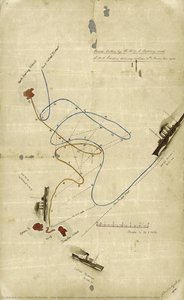
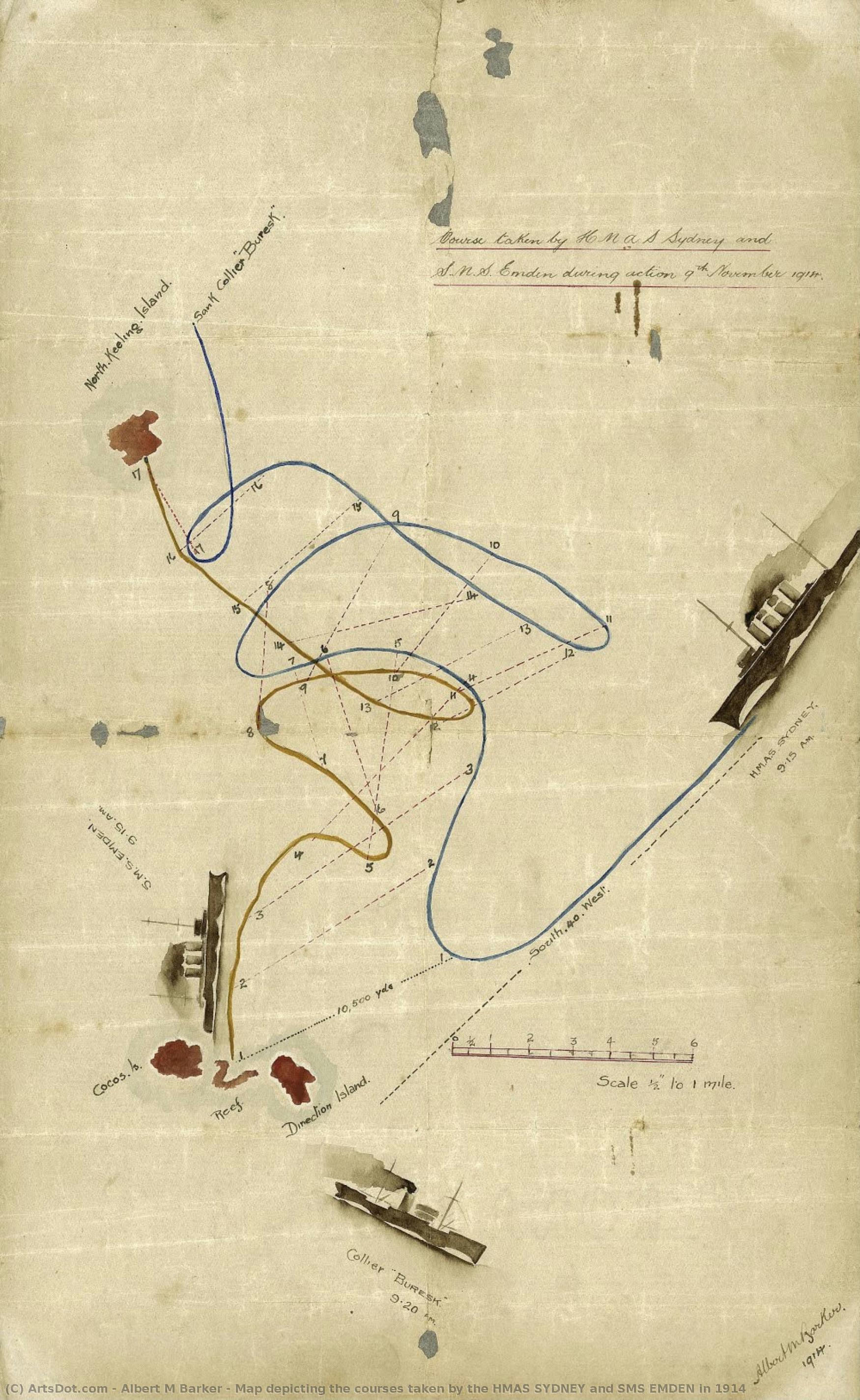
StatsMap depicting the courses taken by the HMAS SYDNEY and SMS EMDEN in 1914

 Read More
Hand Made Oil Reproduction
Hand-painted oil on canvas in your size and frame, made to order by our artists. ( Switch to Print Switch to Digital Image)




































Pick from our preset sizes that match the artwork's original proportions.

You may enter your own dimensions to fit a specific frame or space. If your selected size does not match the original image's proportions, we will either crop the artwork or extend the painting with additional hand-painted elements. A digital mockup will be sent for your approval before production begins.
Please note that the on-screen preview does not reflect the actual cropping or extension. Only the mockup will accurately show the final composition.
While custom sizes are available, we recommend selecting a dimension from the predefined list to preserve the original proportions.
After order, ArtsDot.com team will email client for instructions and provide a mockup preview
Worldwide Delivery () in 3/4 weeks instead of standard 5 weeks. (13 September). No compromise on quality.

Free Worldwide Express Shipping

High-Quality Linen Canvas

Full Shipping Insurance

Customs Tax Refund Guarantee

True Color Matching Guarantee

100-Day Return Policy (Defects Only)

100% Money-Back Guarantee

Bulk Discount Offer
 Glass option is only available in size under 110 CM

Map depicting the courses taken by the HMAS SYDNEY and SMS EMDEN in 1914
Reproduction Medium
Reproduction Size
-


Total Price
$ 263
Related Artworks
![Untitled [verso] 3 — Mark Rothko, Color Field Expressionism](/media/artworks/images-thumb/99/7e/997e9795a88518a26ae6ae35358c8907.jpg)



Artist Biography
Albert M. Barker: A Pennsylvania Landscape in Lithograph
Born in the bustling city of Chicago in 1874, Albert M. Barker’s artistic journey took him far from the urban sprawl and into the heartland of America – specifically, the rolling hills and quiet farms of rural Pennsylvania. While his early life was marked by a brief stint in architecture, it was through a serendipitous encounter with lithography that Barker discovered his true calling: capturing the essence of the Pennsylvania landscape with remarkable detail and evocative atmosphere. This discovery fundamentally shaped his artistic practice and ultimately defined his legacy as one of America’s most compelling regionalist printmakers.
Barker's formal training began at the Pennsylvania Academy of Fine Arts from 1890 to 1895, a period during which he honed his drawing skills. However, it was his observation that he possessed a particular aptitude for charcoal – a sensitivity to tonal variations and subtle shading – that led him to abandon traditional painting in favor of lithography. This decision wasn’t merely stylistic; Barker's inherent colorblindness presented a significant challenge to conventional painting techniques. Lithography offered a method to translate the rich, nuanced colors he perceived into a tangible image, bypassing the limitations of his visual perception.
His career trajectory is fascinatingly layered. After leaving Philadelphia, Barker spent several years as an instructor at the School of Industrial Art in Philadelphia and later at Friends’ Central School. Crucially, he also embraced archaeological studies during this time, earning a Ph.D. from the University of Pennsylvania – a pursuit that likely informed his meticulous attention to detail and his deep appreciation for the historical context of the landscapes he depicted. This intellectual curiosity combined with his artistic talent created an artist uniquely positioned to capture not just the visual beauty of Pennsylvania but also its cultural significance.
The Lithographic Process and Barker’s Style
Barker's mastery of lithography was central to his distinctive style. He wasn’t simply reproducing landscapes; he was translating them through a complex process involving stone, ink, and paper. He initially studied with Bolton Brown at the Summer School of Lithography in the Catskills, immersing himself in the technical intricacies of the medium. Barker's lithographs are characterized by their remarkable precision, intricate detail, and subtle tonal variations – qualities that owe much to his careful observation and his understanding of the lithographic process.
Unlike many landscape artists who relied on broad brushstrokes and vibrant colors, Barker favored a more restrained palette and a focus on capturing the atmosphere and light of the Pennsylvania countryside. His compositions often feature modest farmhouses nestled amongst rolling hills, fields dotted with livestock, and winding streams reflecting the sky. He wasn’t interested in grand vistas or dramatic scenes; instead, he sought to convey a sense of quietude, tranquility, and connection to the land – a sentiment deeply rooted in the American experience.
His subject matter was consistently rooted in the landscapes surrounding Wilmington, Delaware, where he served as director of art education. This regional focus is evident in his extensive body of work, which includes over 200 lithographs depicting scenes from rural Pennsylvania. These works are not merely representations of scenery; they’re imbued with a sense of nostalgia and a profound appreciation for the simple beauty of everyday life.
Archaeological Influences and Artistic Legacy
Barker's academic pursuits extended beyond art, profoundly influencing his artistic vision. His Ph.D. in Greek archaeology instilled in him a deep respect for history and a keen eye for detail – qualities that he brought to his lithographs. He meticulously researched the historical context of the landscapes he depicted, often incorporating elements of rural Pennsylvania’s past into his compositions.
Furthermore, Barker's work can be seen as part of a broader artistic movement—regionalism—that emerged in America during the early 20th century. Regionalist artists sought to depict scenes from their own communities, celebrating the unique character and culture of American life. Barker’s focus on Pennsylvania landscapes aligns perfectly with this trend, establishing him as a significant figure in the development of American printmaking.
Barker's legacy extends beyond his individual works. He played a vital role in shaping art education in Delaware, serving as director of art education for the Wilmington public schools. His dedication to fostering artistic talent and promoting regional art helped to establish a vibrant arts community in the state. Today, his lithographs are held in prestigious collections across the United States, including the Smithsonian American Art Museum, the Brandywine River Museum, and the Library of Congress, ensuring that his remarkable vision continues to inspire and captivate audiences.
A Life Dedicated to Art and Scholarship
Albert M. Barker’s life was a testament to intellectual curiosity and artistic dedication. From his early training at the Pennsylvania Academy of Fine Arts to his later years as an instructor and scholar, he remained committed to pursuing knowledge and expressing himself through art. His decision to embrace lithography not only shaped his artistic style but also allowed him to overcome a significant visual challenge.
His untimely death in 1947 marked the end of a remarkable career, but his work continues to resonate with viewers today. Barker’s lithographs offer a poignant glimpse into the beauty and tranquility of rural Pennsylvania – a testament to his artistic skill, intellectual curiosity, and deep appreciation for the American landscape.

albert m barker
1874 - 1947 , United States of America
Quick Facts
- Artistic Movement Or Style: Lithography, Landscape
- Artists Or Movements Influenced By This Artist: ['Romanticism']
- Artists Who Influenced This Artist: ['Bolton Brown']
- Date Of Birth: 1874, Chicago, USA
- Date Of Death: 1947
- Full Name: Albert M Barker
- Nationality: American
- Notable Artworks: ['Rural Pennsylvania landscapes']
- Place Of Birth: Chicago, USA