

 Preview
 Send
Send Share
Share
 Details

 Download
 Similars
 X-Ray
X-Ray Diaporama
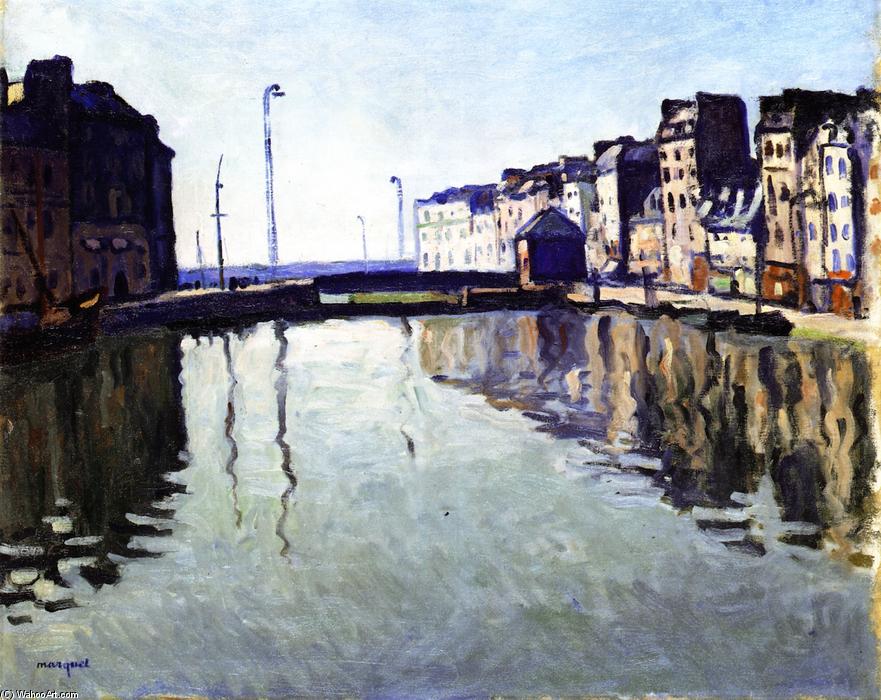
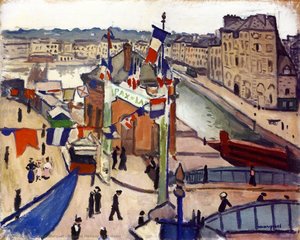
Dock at Havre
 Acrylic On Canvas
- WallArt
- Post-Impressionism
 1906
1906- 19th Century
 Musée National d'Art Moderne Centre Georges Pompidou
 Read More
Purchase a high-resolution, enhanced digital image, far superior to the online preview.
Each file is meticulously prepared by our in-house specialists using advanced tools and expert manual retouching. We ensure every image has exceptional clarity, precise color accuracy, and fine detail.
The final file is delivered via email within 72 hours, optimized for immediate use in professional, editorial, and print environments. This is the same quality trusted by top-tier design studios, publishers, and galleries.
Digital Image
Download a high-resolution file for personal display, printing, and creative projects. ( Buy Print Buy Hand Made Painting)
Included in Every Digital Image Order
Expert Digital Delivery, Guaranteed
When you choose ArtsDot.com, you're not just getting an image - you're receiving a professionally enhanced digital artwork, crafted with precision and backed by a satisfaction guarantee. Here's everything that comes with your order, automatically:

Fast Email Delivery
Your high-resolution digital image file will be emailed to you within 72 hours of ordering - ready for immediate use.

AI-Enhanced Digital File
Your artwork is professionally optimized using advanced AI tools and manual editing, ensuring maximum detail, clarity, and color accuracy.

Free Lifetime Re-Delivery
Accidentally deleted or lost your file? No worries - we'll resend it to you anytime, free of charge.

No Import Fees - Ever
Enjoy your artwork instantly with zero customs, duties, or delivery fees - digital downloads are always tax-free.

Color Accuracy Guarantee
We ensure your digital image reflects the original colors as closely as possible using professional tools and color management.

60-Day Satisfaction Guarantee
If you're not satisfied with your digital image, we'll revise it or refund 100% within 60 days - no questions asked.

100% Money-Back Guarantee
Not satisfied? Get a full refund within 60 days of receiving your digital file - no questions asked.

Bulk Order Discounts
Buy 3 images, save 10% - Buy 5, save 15% - Buy 10+, save 20%. Great for creative projects, galleries, and agencies.
Collectible Description
A Window on Havre’s Soul: Albert Marquet's "Dock at Havre"
Albert Marquet’s “Dock at Havre” (1906) isn’t merely a depiction of a harbor; it’s a vibrant, almost palpable distillation of late 19th-century France – a moment suspended between industry and leisure, tradition and modernity. Painted during a period of rapid transformation for Le Havre, the port city itself, this canvas captures an extraordinary confluence of light, atmosphere, and human activity, offering a glimpse into a pivotal era of French history.
Marquet, a key figure in the transition from Fauvism to a more personal brand of naturalistic painting, masterfully employs his signature technique. He abandons strict realism in favor of an intensely subjective interpretation of light and color. The scene is bathed in a warm, golden glow, seemingly originating not just from the sun but also reflecting off the wet surfaces of the docks and boats. Notice how he uses broken brushstrokes – short, choppy marks that create a shimmering effect—particularly evident in the water, conveying both its movement and the play of light upon it. This deliberate manipulation of paint is crucial to the painting’s overall impression of dynamism and life.
The Industrial Heartbeat
Le Havre in 1906 was a city undergoing a dramatic metamorphosis. Once primarily a center for shipbuilding and trade, fueled by the slave trade and later by burgeoning international commerce, it was now grappling with the challenges and opportunities presented by industrialization. Marquet’s painting perfectly encapsulates this duality. The bustling dockworkers, identifiable by their dark clothing and purposeful movements, are juxtaposed against the elegant sailboats gliding across the water – a visual representation of the city's evolving identity.
The presence of numerous figures engaged in various activities—loading cargo, repairing vessels, socializing—adds to the sense of a thriving community. These aren’t simply background details; they are integral to the painting’s narrative, suggesting a vibrant and complex social fabric. The detail with which Marquet renders these individuals – their postures, expressions, and interactions – speaks volumes about his keen observation skills and his ability to capture the essence of everyday life.
Symbolism in Light and Composition
Beyond its straightforward depiction of a harbor scene, “Dock at Havre” is rich with symbolic meaning. The light itself—that pervasive golden hue—can be interpreted as representing prosperity and optimism, reflecting the city’s burgeoning economic growth. However, there's also an underlying sense of melancholy, perhaps hinting at the social inequalities inherent in this period of rapid industrialization. The composition, too, is carefully considered. Marquet uses a strong diagonal line created by the boats to draw the viewer’s eye into the heart of the scene, while the receding docks and buildings establish a sense of depth and perspective.
Furthermore, the inclusion of the distant silhouette of the Eiffel Tower – a relatively new landmark at the time – subtly anchors the painting in its specific historical context. It serves as a reminder of France’s industrial prowess and its embrace of modernity, while simultaneously highlighting the contrast between urban progress and the enduring beauty of the natural world.
A Legacy of Light and Color
“Dock at Havre” is more than just a beautiful painting; it's a powerful testament to Albert Marquet’s artistic vision. His ability to capture the fleeting effects of light, his masterful use of color, and his insightful portrayal of human life have cemented this work as a cornerstone of French Impressionism. Reproductions of this piece offer an exceptional opportunity to bring this evocative scene into any space, inviting viewers to contemplate the complexities of a rapidly changing era and appreciating the enduring power of art to capture both the beauty and the spirit of a place.
Related Artworks
Artist Biography
A Life Immersed in Light and Color
Born in Bordeaux, France, in 1875, Albert Marquet’s artistic journey was one of subtle evolution, beginning with the explosive energy of Fauvism and ultimately settling into a deeply personal form of naturalistic expression. His early life took a pivotal turn at fifteen when he moved to Paris and enrolled at the École des Arts Décoratifs. It was here that his path intertwined with that of Henri Matisse – a friendship that would prove profoundly influential. The two young artists not only shared camaraderie but also a studio, fostering an environment of creative exchange that shaped their early work. Marquet continued his studies at the prestigious École des Beaux-Arts under Gustave Moreau, absorbing the Symbolist aesthetic while simultaneously charting his own course toward modern expression. These formative years laid the groundwork for his participation in exhibitions that would challenge conventional artistic norms and redefine the landscape of art.From Fauve Ferocity to Serene Landscapes
Marquet’s emergence as an artist coincided with the birth of Fauvism, a movement celebrated for its bold use of color and expressive brushwork. He exhibited alongside Matisse, André Derain, Maurice de Vlaminck, and others at the infamous 1905 Salon d'Automne, where critics derisively labeled them “les fauves” – the wild beasts. While embracing the Fauvist palette, Marquet’s approach remained uniquely his own. Unlike some contemporaries who reveled in unrestrained chromatic intensity, he possessed a remarkable control over drawing and light, subtly modulating colors to create harmonious compositions. This inherent restraint hinted at his later evolution towards a more naturalistic style. Around 1910, Marquet began distancing himself from the purely expressive fervor of Fauvism, increasingly turning to landscapes as his primary subject matter. He embarked on extensive travels throughout Europe and North Africa, seeking inspiration in the ports, beaches, and cityscapes that would become hallmarks of his mature work. These journeys weren’t merely about depicting locations; they were explorations of atmosphere, light, and the subtle poetry of everyday life.A Master of Atmosphere and Light
Marquet's artistic vision was deeply rooted in a sensitivity to light and atmosphere. His landscapes are not simply representations of places but rather evocations of mood and sensation. He masterfully captured shimmering reflections on water, the hazy glow of sunlight filtering through mist, and the subtle nuances of color that define a particular time of day or season. He often returned to the same locations repeatedly, observing how light transformed the scene over time – a testament to his dedication to capturing ephemeral effects. This is vividly evident in his numerous paintings of the Seine River in Paris, the harbors of Normandy, and the coastal landscapes of North Africa. His technique involved abbreviated brushstrokes and a muted palette—grays, blues, and ochres—allowing him to convey both form and atmosphere with remarkable economy. Matisse himself recognized a kinship between Marquet’s work and that of Japanese masters like Hokusai, noting a shared emphasis on calligraphic simplicity and the evocative power of line. The artist wasn't interested in merely reproducing what he saw; he sought to capture the feeling of being there.Legacy and Enduring Influence
Albert Marquet passed away in 1947, leaving behind a body of work that continues to captivate audiences with its quiet beauty and subtle emotional depth. His paintings are held in prestigious museums worldwide, including the Musée National d'Art Moderne in Paris, attesting to his enduring significance in the history of modern art. While initially recognized as a key figure in Fauvism, Marquet’s lasting legacy lies in his ability to transcend stylistic labels and create a uniquely personal vision. He demonstrated that it was possible to embrace modernity without sacrificing traditional values such as draftsmanship and composition. His influence can be seen in the work of subsequent generations of landscape painters who sought to capture the fleeting beauty of the natural world with sensitivity and restraint. Marquet’s art reminds us of the power of observation, the importance of light, and the enduring appeal of a serene and contemplative vision. He remains a testament to the artist's ability to find profound meaning in the everyday.Key Characteristics of Marquet’s Style
- Fauvist Beginnings: Early works demonstrate bold color palettes characteristic of Fauvism, though with more restraint than some contemporaries.
- Emphasis on Light and Atmosphere: A defining feature of his mature work, focusing on capturing the ephemeral qualities of light and its effect on landscapes.
- Muted Palette: A preference for grays, blues, and ochres to convey atmosphere and form with economy.
- Abbreviated Brushstrokes: A technique used to suggest rather than define details, enhancing the sense of movement and light.
- Influence of Japanese Art: A noted appreciation for the calligraphic simplicity and evocative power of line found in Japanese prints.
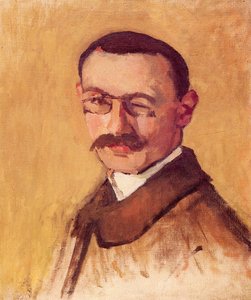
Albert Marquet
1875 - 1947 , France
Quick Facts
- Artistic Movement Or Style: Fauvism, Naturalism
- Artists Or Movements Influenced By This Artist: ['Landscape painters']
- Artists Who Influenced This Artist:
- Henri Matisse
- Gustave Moreau
- Date Of Birth: 1875
- Date Of Death: 1947
- Full Name: Albert Marquet
- Nationality: French
- Place Of Birth: Bordeaux, France

