

 Preview
 Send
Send Share
Share
 Details

 Download
 Similars
 X-Ray
X-Ray Diaporama
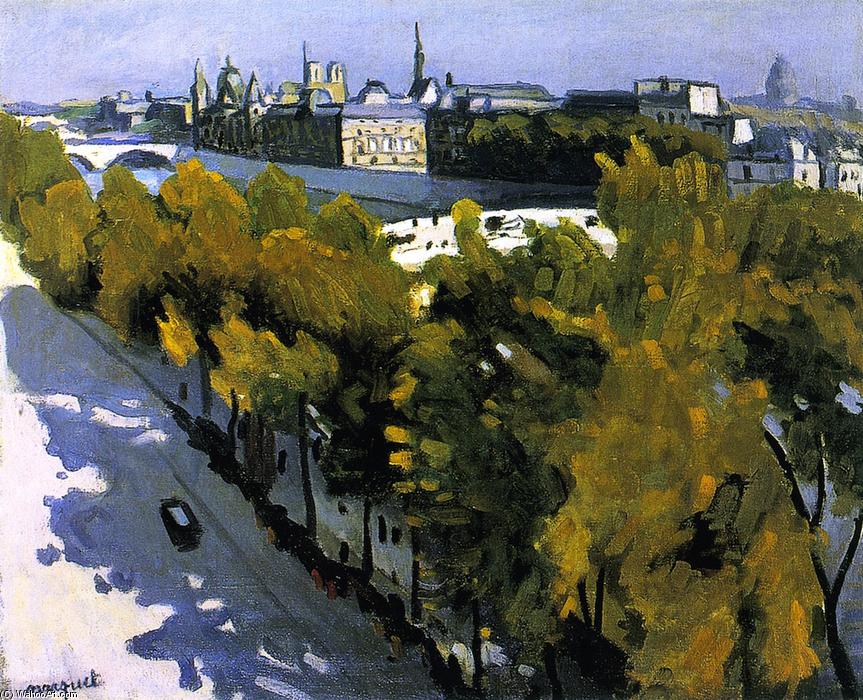
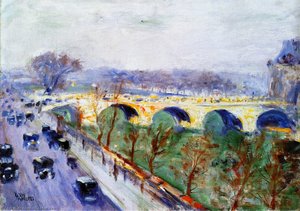
Louvre Embankment and the New Bridge
 Oil On Canvas
- WallArt
- Fauvist style
 1906
1906 60.0 x 73.0 cm
 Read More
Purchase a high-resolution, enhanced digital image, far superior to the online preview.
Each file is meticulously prepared by our in-house specialists using advanced tools and expert manual retouching. We ensure every image has exceptional clarity, precise color accuracy, and fine detail.
The final file is delivered via email within 72 hours, optimized for immediate use in professional, editorial, and print environments. This is the same quality trusted by top-tier design studios, publishers, and galleries.
Digital Image
Download a high-resolution file for personal display, printing, and creative projects. ( Buy Print Buy Hand Made Painting)
Included in Every Digital Image Order
Expert Digital Delivery, Guaranteed
When you choose ArtsDot.com, you're not just getting an image - you're receiving a professionally enhanced digital artwork, crafted with precision and backed by a satisfaction guarantee. Here's everything that comes with your order, automatically:

Fast Email Delivery
Your high-resolution digital image file will be emailed to you within 72 hours of ordering - ready for immediate use.

AI-Enhanced Digital File
Your artwork is professionally optimized using advanced AI tools and manual editing, ensuring maximum detail, clarity, and color accuracy.

Free Lifetime Re-Delivery
Accidentally deleted or lost your file? No worries - we'll resend it to you anytime, free of charge.

No Import Fees - Ever
Enjoy your artwork instantly with zero customs, duties, or delivery fees - digital downloads are always tax-free.

Color Accuracy Guarantee
We ensure your digital image reflects the original colors as closely as possible using professional tools and color management.

60-Day Satisfaction Guarantee
If you're not satisfied with your digital image, we'll revise it or refund 100% within 60 days - no questions asked.

100% Money-Back Guarantee
Not satisfied? Get a full refund within 60 days of receiving your digital file - no questions asked.

Bulk Order Discounts
Buy 3 images, save 10% - Buy 5, save 15% - Buy 10+, save 20%. Great for creative projects, galleries, and agencies.
Collectible Description
A Parisian Symphony in Color: Exploring Marquet's Vision
To stand before Albert Marquet’s Louvre Embankment and the New Bridge is to be instantly transported into the vibrant, exhilarating heart of Paris at the turn of the 20th century. This oil on canvas, dating from 1906, is far more than a mere depiction of an urban vista; it is a captured moment of life—a symphony played out across the cobblestones and along the Seine. Marquet masterfully arrests the energy of a bustling city day, inviting the viewer not just to look, but to breathe in the very atmosphere of that era.
The Embrace of Fauvism and Modern Life
While Marquet’s career saw him evolve from the explosive palette of Fauvism toward a more naturalistic depth, this particular work retains the electrifying spirit of that movement. The Fauvist style, with its bold colors and energetic brushstrokes, lends the scene an undeniable vitality. Observe how the light seems to vibrate off the facades of the Louvre Museum and along the graceful curve of the New Bridge. This technique prevents the historical setting from feeling static; instead, it pulses with life. The interplay between the monumental architecture and the fleeting movement of people and automobiles creates a dynamic tension that is utterly captivating.
Compositional Harmony: Nature Meets Metropolis
The genius of the composition lies in its perfect balance between the organic and the constructed. The imposing presence of Parisian landmarks anchors the piece, speaking to history and permanence. Yet, this grandeur is softened by the inclusion of foreground trees, which introduce a necessary touch of verdant life into the urban sprawl. These natural elements act as visual counterpoints to the hard lines of stone and steel, guiding the eye through the scene while simultaneously grounding the viewer in a sense of peaceful observation amidst the city's ceaseless activity. It is a dialogue between enduring culture and ephemeral daily existence.
An Emotional Resonance for the Modern Collector
Owning a reproduction of Louvre Embankment and the New Bridge is to invite a piece of Parisian romance into your own space. For the art lover, it offers a tangible connection to early 20th-century artistic fervor; for the interior designer, it serves as an unparalleled focal point, injecting immediate color and narrative depth into any room. The painting doesn't just decorate a wall; it elevates the mood, suggesting stories of promenades, intellectual encounters, and the sheer joy of modern urban living. It is a celebration of Parisian spirit rendered with masterful technique.
Related Artworks
Artist Biography
A Life Immersed in Light and Color
Born in Bordeaux, France, in 1875, Albert Marquet’s artistic journey was one of subtle evolution, beginning with the explosive energy of Fauvism and ultimately settling into a deeply personal form of naturalistic expression. His early life took a pivotal turn at fifteen when he moved to Paris and enrolled at the École des Arts Décoratifs. It was here that his path intertwined with that of Henri Matisse – a friendship that would prove profoundly influential. The two young artists not only shared camaraderie but also a studio, fostering an environment of creative exchange that shaped their early work. Marquet continued his studies at the prestigious École des Beaux-Arts under Gustave Moreau, absorbing the Symbolist aesthetic while simultaneously charting his own course toward modern expression. These formative years laid the groundwork for his participation in exhibitions that would challenge conventional artistic norms and redefine the landscape of art.From Fauve Ferocity to Serene Landscapes
Marquet’s emergence as an artist coincided with the birth of Fauvism, a movement celebrated for its bold use of color and expressive brushwork. He exhibited alongside Matisse, André Derain, Maurice de Vlaminck, and others at the infamous 1905 Salon d'Automne, where critics derisively labeled them “les fauves” – the wild beasts. While embracing the Fauvist palette, Marquet’s approach remained uniquely his own. Unlike some contemporaries who reveled in unrestrained chromatic intensity, he possessed a remarkable control over drawing and light, subtly modulating colors to create harmonious compositions. This inherent restraint hinted at his later evolution towards a more naturalistic style. Around 1910, Marquet began distancing himself from the purely expressive fervor of Fauvism, increasingly turning to landscapes as his primary subject matter. He embarked on extensive travels throughout Europe and North Africa, seeking inspiration in the ports, beaches, and cityscapes that would become hallmarks of his mature work. These journeys weren’t merely about depicting locations; they were explorations of atmosphere, light, and the subtle poetry of everyday life.A Master of Atmosphere and Light
Marquet's artistic vision was deeply rooted in a sensitivity to light and atmosphere. His landscapes are not simply representations of places but rather evocations of mood and sensation. He masterfully captured shimmering reflections on water, the hazy glow of sunlight filtering through mist, and the subtle nuances of color that define a particular time of day or season. He often returned to the same locations repeatedly, observing how light transformed the scene over time – a testament to his dedication to capturing ephemeral effects. This is vividly evident in his numerous paintings of the Seine River in Paris, the harbors of Normandy, and the coastal landscapes of North Africa. His technique involved abbreviated brushstrokes and a muted palette—grays, blues, and ochres—allowing him to convey both form and atmosphere with remarkable economy. Matisse himself recognized a kinship between Marquet’s work and that of Japanese masters like Hokusai, noting a shared emphasis on calligraphic simplicity and the evocative power of line. The artist wasn't interested in merely reproducing what he saw; he sought to capture the feeling of being there.Legacy and Enduring Influence
Albert Marquet passed away in 1947, leaving behind a body of work that continues to captivate audiences with its quiet beauty and subtle emotional depth. His paintings are held in prestigious museums worldwide, including the Musée National d'Art Moderne in Paris, attesting to his enduring significance in the history of modern art. While initially recognized as a key figure in Fauvism, Marquet’s lasting legacy lies in his ability to transcend stylistic labels and create a uniquely personal vision. He demonstrated that it was possible to embrace modernity without sacrificing traditional values such as draftsmanship and composition. His influence can be seen in the work of subsequent generations of landscape painters who sought to capture the fleeting beauty of the natural world with sensitivity and restraint. Marquet’s art reminds us of the power of observation, the importance of light, and the enduring appeal of a serene and contemplative vision. He remains a testament to the artist's ability to find profound meaning in the everyday.Key Characteristics of Marquet’s Style
- Fauvist Beginnings: Early works demonstrate bold color palettes characteristic of Fauvism, though with more restraint than some contemporaries.
- Emphasis on Light and Atmosphere: A defining feature of his mature work, focusing on capturing the ephemeral qualities of light and its effect on landscapes.
- Muted Palette: A preference for grays, blues, and ochres to convey atmosphere and form with economy.
- Abbreviated Brushstrokes: A technique used to suggest rather than define details, enhancing the sense of movement and light.
- Influence of Japanese Art: A noted appreciation for the calligraphic simplicity and evocative power of line found in Japanese prints.
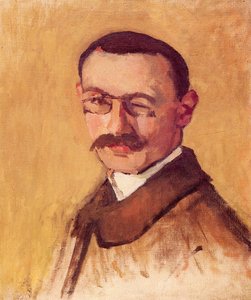
Albert Marquet
1875 - 1947 , France
Quick Facts
- Artistic Movement Or Style: Fauvism, Naturalism
- Artists Or Movements Influenced By This Artist: ['Landscape painters']
- Artists Who Influenced This Artist:
- Henri Matisse
- Gustave Moreau
- Date Of Birth: 1875
- Date Of Death: 1947
- Full Name: Albert Marquet
- Nationality: French
- Place Of Birth: Bordeaux, France

