 Preview
 Send
Send Share
Share
 Details

 Download
 Similars
 X-Ray
X-Ray Diaporama
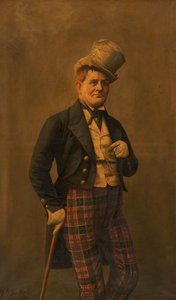
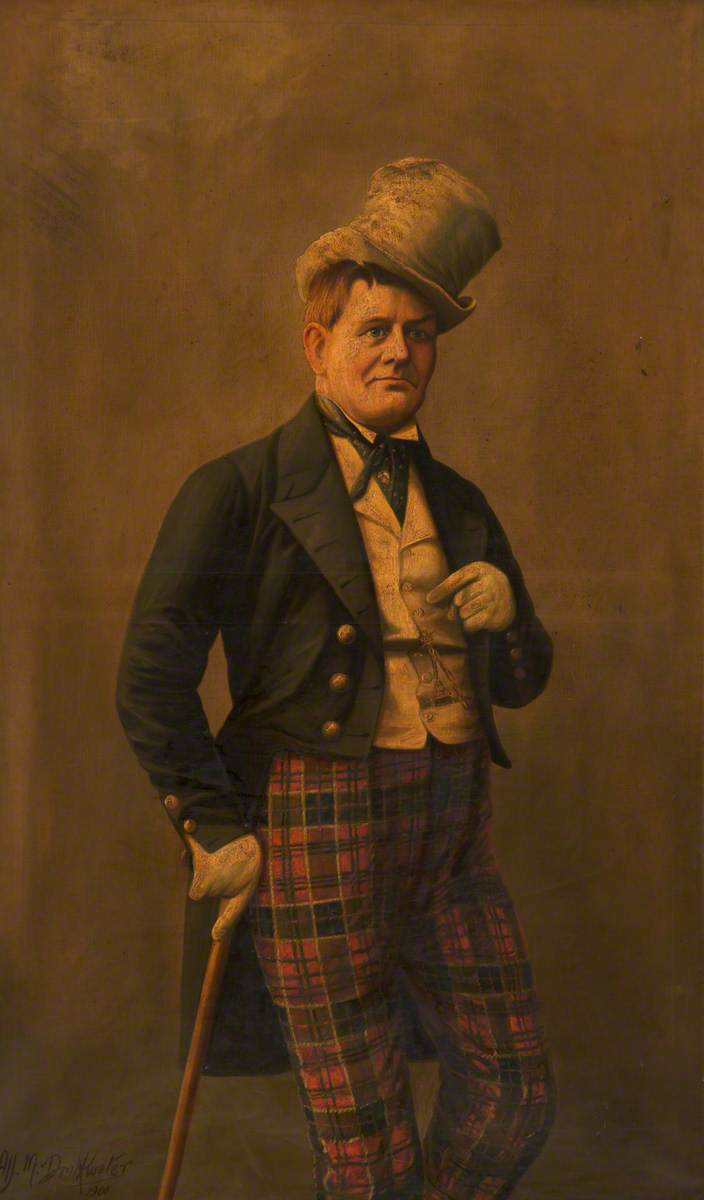
Edwin Brinsley ('Sheridan Brinsley') (1835–1890), Comedian
 1900
1900 125.0 x 65.0 cm
 Read More
Hand Made Oil Reproduction
Hand-painted oil on canvas in your size and frame, made to order by our artists. ( Buy Print Buy Image)




































Pick from our preset sizes that match the artwork's original proportions.

You may enter your own dimensions to fit a specific frame or space. If your selected size does not match the original image's proportions, we will either crop the artwork or extend the painting with additional hand-painted elements. A digital mockup will be sent for your approval before production begins.
Please note that the on-screen preview does not reflect the actual cropping or extension. Only the mockup will accurately show the final composition.
While custom sizes are available, we recommend selecting a dimension from the predefined list to preserve the original proportions.
After order, ArtsDot.com team will email client for instructions and provide a mockup preview
Worldwide Delivery () in 3/4 weeks instead of standard 5 weeks. (26 August). No compromise on quality.

Free Worldwide Express Shipping

High-Quality Linen Canvas

Full Shipping Insurance

Customs Tax Refund Guarantee

True Color Matching Guarantee

60-Day Return Policy (Defects Only)

100% Money-Back Guarantee

Bulk Discount Offer
 Glass option is only available in size under 110 CM

Edwin Brinsley ('Sheridan Brinsley') (1835–1890), Comedian
Reproduction Medium
Reproduction Size
-


Total Price
$ 263
Related Artworks










Artist Biography
A Life Painted in Atmosphere: Albert Milton Drinkwater (1860–1917)
Albert Milton Drinkwater, a name perhaps less celebrated than some of his Victorian contemporaries, nevertheless occupies a significant niche within the landscape and portrait traditions of late 19th-century British art. Born in 1860, Drinkwater’s life coincided with a period of immense social and artistic change, a time when the rigid academic styles were beginning to yield to new explorations of light, mood, and individual expression. While biographical details remain somewhat sparse, the body of work he left behind speaks volumes about an artist deeply attuned to the subtleties of the natural world and the character of his sitters. He wasn’t a revolutionary in the manner of the Impressionists, but rather a skilled realist who imbued his paintings with a quiet emotional resonance that continues to captivate viewers today.Early Influences and Artistic Development
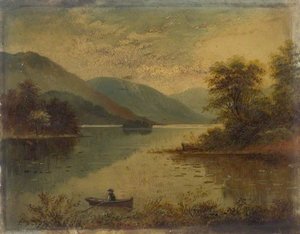
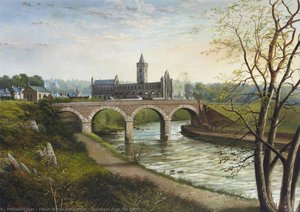
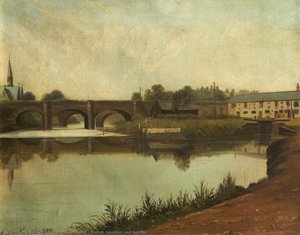
Drinkwater's artistic journey unfolded against the backdrop of a Britain undergoing rapid industrialization and urbanization. This era fostered a growing appreciation for rural scenes and a nostalgic yearning for a simpler way of life, themes that would become central to his oeuvre. While specific details regarding his formal training are limited, it’s reasonable to assume he received instruction in traditional techniques—the meticulous detail evident in his work suggests a solid grounding in academic principles. However, Drinkwater quickly moved beyond mere replication, developing a distinctive style characterized by atmospheric perspective and a sensitive handling of light. His early works often depict the English countryside – tranquil lakes reflecting the sky, weathered bridges spanning quiet rivers, and expansive fields bathed in golden sunlight. These paintings aren’t simply topographical records; they are imbued with a sense of peace and solitude, inviting the viewer to step into the scene and experience its tranquility firsthand. The influence of artists like John Constable and Thomas Gainsborough is palpable, particularly in Drinkwater's ability to capture the fleeting effects of weather and the inherent beauty of the English landscape. He also demonstrated an aptitude for portraiture, creating compelling likenesses that reveal not only physical appearance but also a sense of inner life.Mastering Realism and Capturing Character
Drinkwater’s skill lay in his ability to blend technical proficiency with emotional insight. His landscapes are notable for their detailed realism—every tree leaf, every ripple on the water's surface is rendered with painstaking accuracy. Yet, this meticulousness never feels cold or clinical; instead, it serves to enhance the overall atmospheric effect. He was a master of capturing light and shadow, using subtle gradations of tone to create depth and mood. His portraits share this same attention to detail, but they are also distinguished by their psychological depth. Drinkwater wasn’t interested in simply creating flattering representations; he sought to capture the essence of his sitters—their personality, their intelligence, their vulnerabilities. A portrait of Edwin Brinsley ('Sheridan Brinsley'), a comedian, for example, reveals not only the subject's outward appearance but also a hint of the performer's inner complexities. Drinkwater’s ability to convey character through subtle nuances of expression and pose sets his portraits apart from more conventional examples of Victorian portraiture.Legacy and Historical Significance
Albert Milton Drinkwater died in 1917, leaving behind a body of work that offers a fascinating glimpse into the artistic sensibilities of late Victorian Britain. While he may not have achieved widespread fame during his lifetime, his paintings continue to be appreciated for their technical skill, atmospheric beauty, and emotional depth. His works provide valuable insights into the social and cultural values of the era—the growing appreciation for rural life, the fascination with individual character, and the desire to capture the fleeting moments of everyday existence.- Detailed Realism: Drinkwater’s paintings are characterized by a meticulous attention to detail, capturing the subtleties of light, texture, and form.
- Atmospheric Perspective: He was a master of creating depth and mood through subtle gradations of tone and atmospheric effects.
- Psychological Insight: His portraits reveal not only physical appearance but also a sense of inner life and character.
- Victorian Landscape Tradition: Drinkwater’s landscapes reflect the growing appreciation for rural scenes and a nostalgic yearning for a simpler way of life.
albert milton drinkwater
1860 - 1917
Quick Facts
- Artistic Movement Or Style: Landscape Painting
- Artists Or Movements Influenced By This Artist: ['']
- Artists Who Influenced This Artist: ['']
- Date Of Birth: 1860
- Date Of Death: 1917
- Full Name: Albert Milton Drinkwater
- Nationality: British
- Notable Artworks:
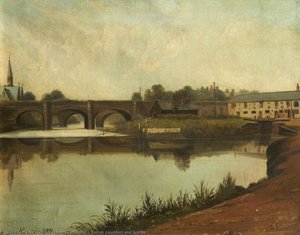
- Barton Aqueduct and Bridge
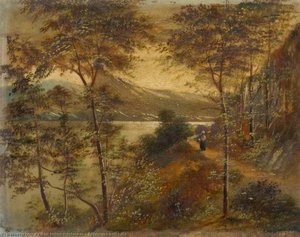
- Landscape with Mountain and Lake
- Place Of Birth: England