 Preview
 Send
Send Share
Share
 Details

 Download
 Similars
 X-Ray
X-Ray Diaporama
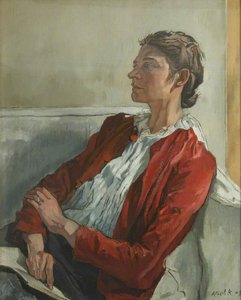
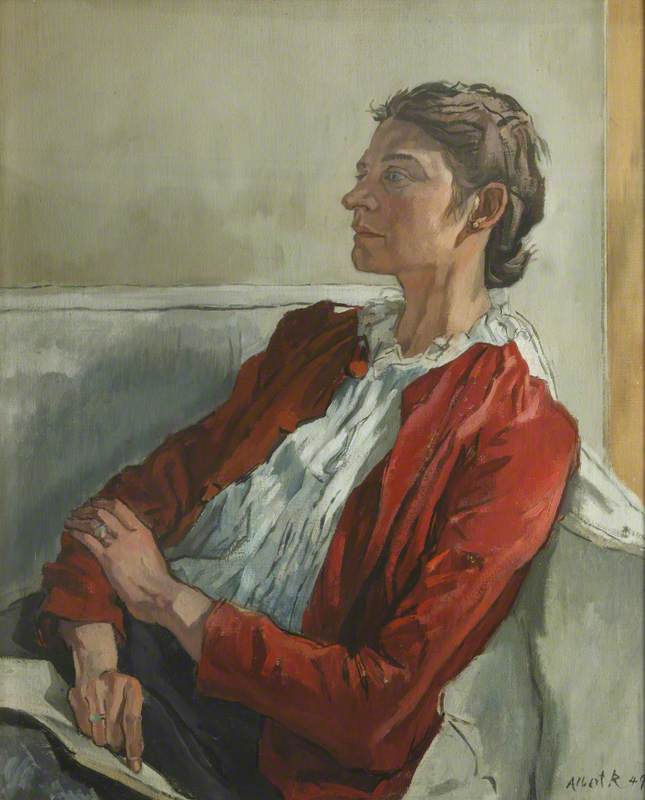
Catherine Ing, Lecturer and Fellow (1951–1983)
 1949
1949 58.0 x 48.0 cm
 Коледж Сент-Хільди, Оксфорд
 Read More
Hand Made Oil Reproduction
Hand-painted oil on canvas in your size and frame, made to order by our artists. ( Buy Print Buy Image)




































Pick from our preset sizes that match the artwork's original proportions.

You may enter your own dimensions to fit a specific frame or space. If your selected size does not match the original image's proportions, we will either crop the artwork or extend the painting with additional hand-painted elements. A digital mockup will be sent for your approval before production begins.
Please note that the on-screen preview does not reflect the actual cropping or extension. Only the mockup will accurately show the final composition.
While custom sizes are available, we recommend selecting a dimension from the predefined list to preserve the original proportions.
After order, ArtsDot.com team will email client for instructions and provide a mockup preview
Worldwide Delivery () in 3/4 weeks instead of standard 5 weeks. (26 August). No compromise on quality.

Free Worldwide Express Shipping

High-Quality Linen Canvas

Full Shipping Insurance

Customs Tax Refund Guarantee

True Color Matching Guarantee

60-Day Return Policy (Defects Only)

100% Money-Back Guarantee

Bulk Discount Offer
 Glass option is only available in size under 110 CM

Catherine Ing, Lecturer and Fellow (1951–1983)
Reproduction Medium
Reproduction Size
-


Total Price
$ 263
Related Artworks










Artist Biography
The Versatile Vision of Albert Rutherston
In the vibrant tapestry of early twentieth-century British art, few figures possessed the multifaceted brilliance of Albert Rutherston. Born in 1881 to a German Jewish family in Bradford, Yorkshire, Rutherston’s life was shaped by a profound intersection of tradition and transformation. The son of immigrants who settled in England's textile heartland, his upbringing was steeped in the industrious spirit of the wool trade, yet his soul was irrevocably drawn toward the ethereal realms of aesthetics and design. Alongside his brothers—the esteemed painter Sir William Rothenstein and the art collector Charles Rutherston—Albert became part of a formidable artistic dynasty that would influence the British cultural landscape for decades.
His formal education at the Slade School of Art provided him with a rigorous foundation in realism, a period during which he mastered the delicate nuances of form and light. However, the rigid boundaries of representational art could not long contain his creative impulses. Around 1910, Ruther and his artistic contemporaries began to feel the pull of a new, more rhythmic aesthetic. This marked a pivotal transition in his career as he moved away from the literal toward the decorative. Embracing the burgeoning Art Deco movement, Rutherston began to experiment with bold color palettes, intricate patterns, and a streamlined elegance that would become his hallmark.
A Master of Stage and Surface
Rutherston’s genius lay in his ability to transcend the canvas, treating every medium as an opportunity for storytelling. He was not merely a painter but a true designer of worlds. His work in theatrical design remains some of his most enduring legacy; through his collaborations with the legendary Harley Granville Barker, he breathed life into the stage with opulent sets that captured the dramatic grandeur of the era. He understood that the theater was a total work of art, where scenery, light, and movement converged to create a singular emotional experience.
This mastery of space and ornament extended far beyond the footlights. Rutherston’s versatility allowed him to leave an indelible mark on various facets of visual culture:
- Book Illustration: His delicate and evocative illustrations brought literary worlds to life, most notably in his work for authors like Thomas Hardy.
- Poster Design: He contributed to the visual identity of modern London, creating iconic posters and tickets for the London Underground that blended utility with high art.
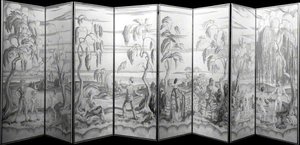
- Decorative Arts: His fascination with pattern led him to create intricate works such as folding screens, where classical myths were reimagined through a sophisticated, stylized lens.
Legacy of an Artistic Polymath
As the decades progressed, Rutherston’s influence deepened through his roles as an educator and critic. Holding the prestigious post of Ruskin Master of Drawing at Oxford from 1929 to 1948, he played a vital role in shaping the next generation of British artists, instilling in them the same respect for craftsmanship and observation that had guided his own journey. His ability to navigate the shift from the Victorian era into the modern age allowed him to act as a bridge between the old world of meticulous detail and the new world of graphic abstraction.
Though he passed away in 1953, Rutherston’s significance remains etched in the history of the decorative arts. He was an artist who refused to be confined by a single discipline, finding beauty whether in the sweeping landscapes of a painting, the structured lines of a poster, or the dramatic shadows of a stage set. His life stands as a testament to the power of artistic evolution—a journey from the grounded reality of Bradford to the limitless possibilities of the imagination.
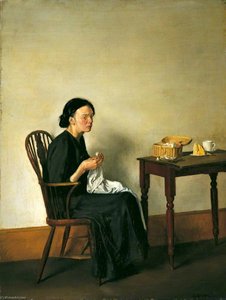
albert rutherston
1881 - 1953
Quick Facts
- Artistic Movement Or Style: Realism & Decorative Style
- Artists Or Movements Influenced By This Artist: ['Art Deco']
- Artists Who Influenced This Artist:
- William Rotherstein
- Charles Rotherston
- Date Of Birth: December 5, 1881
- Date Of Death: July 14, 1953
- Full Name: Albert Daniel Rotherston
- Nationality: British
- Notable Artworks:
- Pastoral
- Self Portrait
- Place Of Birth: Bradford, Yorkshire