 Preview
 Send
Send Share
Share
 Details

 Download
 Similars
 X-Ray
X-Ray Diaporama
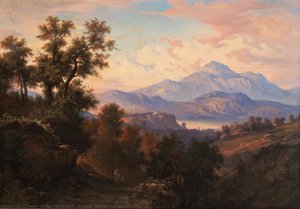
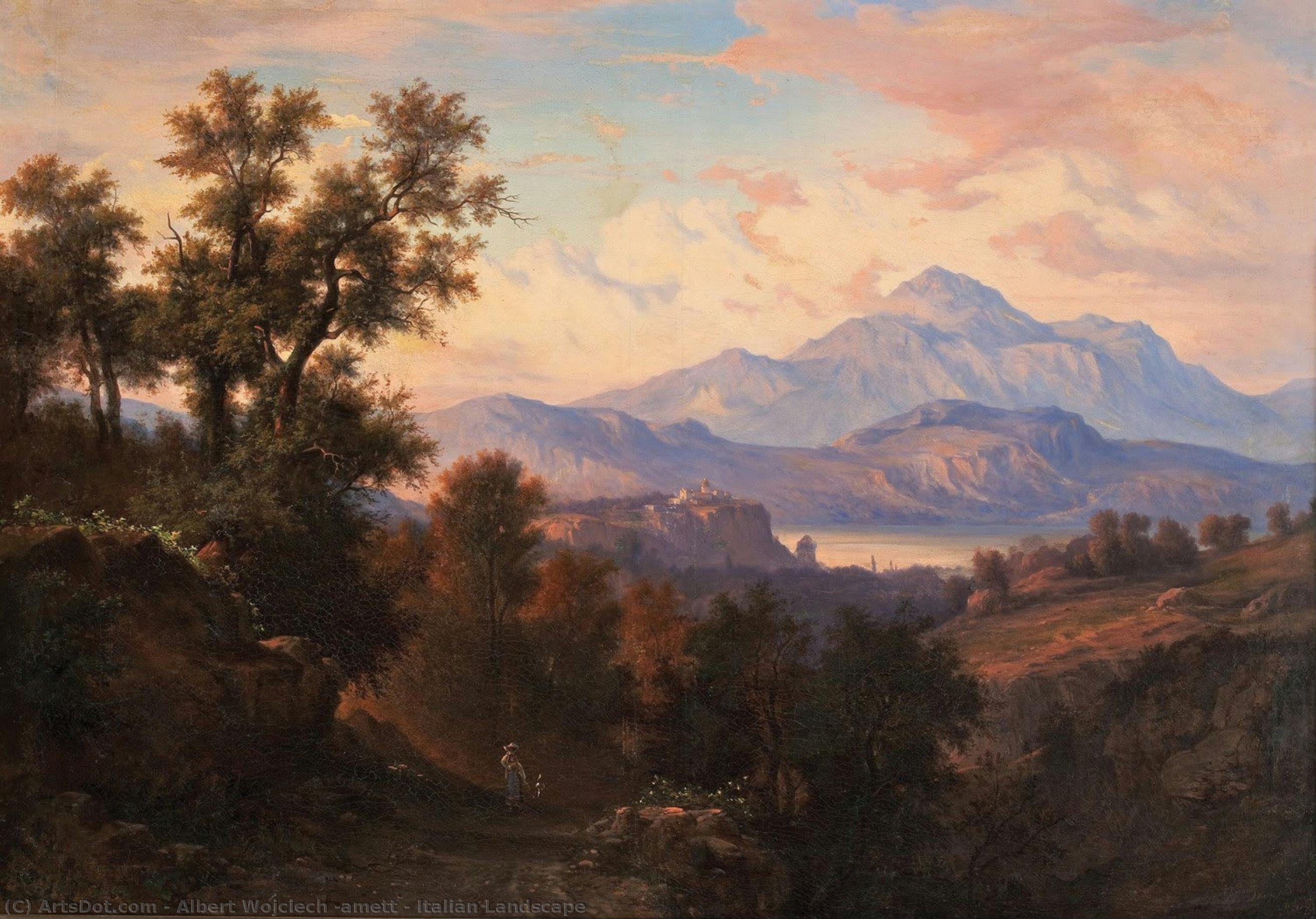
Italian Landscape
 1861
1861 77.0 x 105.0 cm
 Lithuanian Art Centre TARTLE
 Read More
Hand Made Oil Reproduction
Hand-painted oil on canvas in your size and frame, made to order by our artists. ( Buy Print Buy Image)




































Pick from our preset sizes that match the artwork's original proportions.

You may enter your own dimensions to fit a specific frame or space. If your selected size does not match the original image's proportions, we will either crop the artwork or extend the painting with additional hand-painted elements. A digital mockup will be sent for your approval before production begins.
Please note that the on-screen preview does not reflect the actual cropping or extension. Only the mockup will accurately show the final composition.
While custom sizes are available, we recommend selecting a dimension from the predefined list to preserve the original proportions.
After order, ArtsDot.com team will email client for instructions and provide a mockup preview
Worldwide Delivery () in 3/4 weeks instead of standard 5 weeks. (22 August). No compromise on quality.

Free Worldwide Express Shipping

High-Quality Linen Canvas

Full Shipping Insurance

Customs Tax Refund Guarantee

True Color Matching Guarantee

60-Day Return Policy (Defects Only)

100% Money-Back Guarantee

Bulk Discount Offer
 Glass option is only available in size under 110 CM

Italian Landscape
Reproduction Medium
Reproduction Size
-


Total Price
$ 263
Artwork Description
Related Artworks









Artist Biography
A Life Painted in Light: The Evocative Landscapes of Albert Żamett
Albert Wojciech Żamett (1821–1876) was a painter whose life and work beautifully bridged the worlds of Polish Romanticism and Russian academic tradition. Born on November 25th, 1821, in Vilnius, Lithuania, his story is one of artistic pursuit fueled by patronage and shaped by extensive travel across Europe’s cultural heartlands. Żamett was not merely documenting landscapes; he was capturing fleeting moments of serenity and light, imbuing his scenes with a quiet emotional resonance that continues to captivate viewers today. His upbringing was steeped in both Polish heritage and the broader Imperial context, as his father, Daniel Schamett, an emigrant from East Prussia, had established himself as a Russian citizen in Vilnius. The foundations of Żamett’s technical mastery were laid during his formative years in Vilnius, where he attended gymnasium education before seeking more rigorous training. His journey led him to the Imperial Academy of Arts in St. Petersburg, where he studied under the guidance of Maxim Vorobiev. Under Vorobiev’s mentorship, Żamett absorbed the essential stylistic precepts of the era, specifically focusing on tonal harmony and atmospheric perspective. Though he attended the academy as a free listener—a testament to his independent spirit—the training he received there provided him with the structural precision necessary to later master the more fluid, emotive qualities of Romantic landscape art.The Italian Transformation and Artistic Refinement
A pivotal moment in Żamett’s development arrived in 1847, facilitated by the generous support of the Kaunas Marshal, Benedict Tyszkiewicz. This patronage enabled a transformative decade-long immersion in Italy, where he lived from 1847 to 1857. During this period, Żamett moved beyond the academic rigors of St. Petersburg to study at the St. Luke Academy in Rome, perfecting his ability to capture the sublime beauty of the Mediterranean landscape. He became profoundly captivated by the Italian light, the grandeur of classical ruins, and the picturesque countryside—themes that would dominate his oeuvre for decades to come. His time in Italy was not merely a period of study but an emotional awakening. He drew inspiration from the vibrant hues of Tuscan hillsides and the dramatic vistas of the Apennines. One of his most notable achievements includes works depicting the Gran Sasso in the Abruzzo region, where he utilized a masterly composition to showcase mountain peaks looming over tranquil waters. Even after leaving Italy, Żamett continued to recreate these landscapes from memory and sketches, ensuring that the warm, shimmering evening light and the romantic mood of the Italian peninsula remained central to his artistic identity.Legacy and the Romantic Vision
Beyond his Italian sojourns, Żamett’s travels extended through France, England, and Germany, allowing him to absorb the diverse artistic currents of 19th-century Europe. His years in France, specifically between 1859 and 1863, further refined his ability to capture atmospheric effects, a skill that allowed him to create "ideal landscapes" that were highly sought after by collectors of the era. His work often featured:- Atmospheric Perspective: The use of light and haze to create a sense of depth and distance.
- Emotional Resonance: The inclusion of small, human elements—such as a lone figure walking a path—to emphasize the vastness and grandeur of nature.
- Tonal Harmony: A sophisticated palette that transitioned from the lush greens of foreground foliage to the soft pinks and blues of distant, sun-drenched hills.
albert wojciech żamett
1821 - 1876 , Lithuania
Quick Facts
- Artistic Movement Or Style: Romantic Painting
- Artists Or Movements Influenced By This Artist: ['Imperial Academy of Arts']
- Artists Who Influenced This Artist: ['Maxim Vorobiev']
- Date Of Birth: November 25, 1821
- Date Of Death: 1876
- Full Name: Albert Wojciech Żamett
- Nationality: Lithuanian
- Notable Artworks:
- Italian Landscapes
- Serene Scenes
- Place Of Birth: Vilnius, Lithuania