 Preview
 Send
Send Share
Share
 Details

 Download
 Similars
 X-Ray
X-Ray Diaporama
 Stats
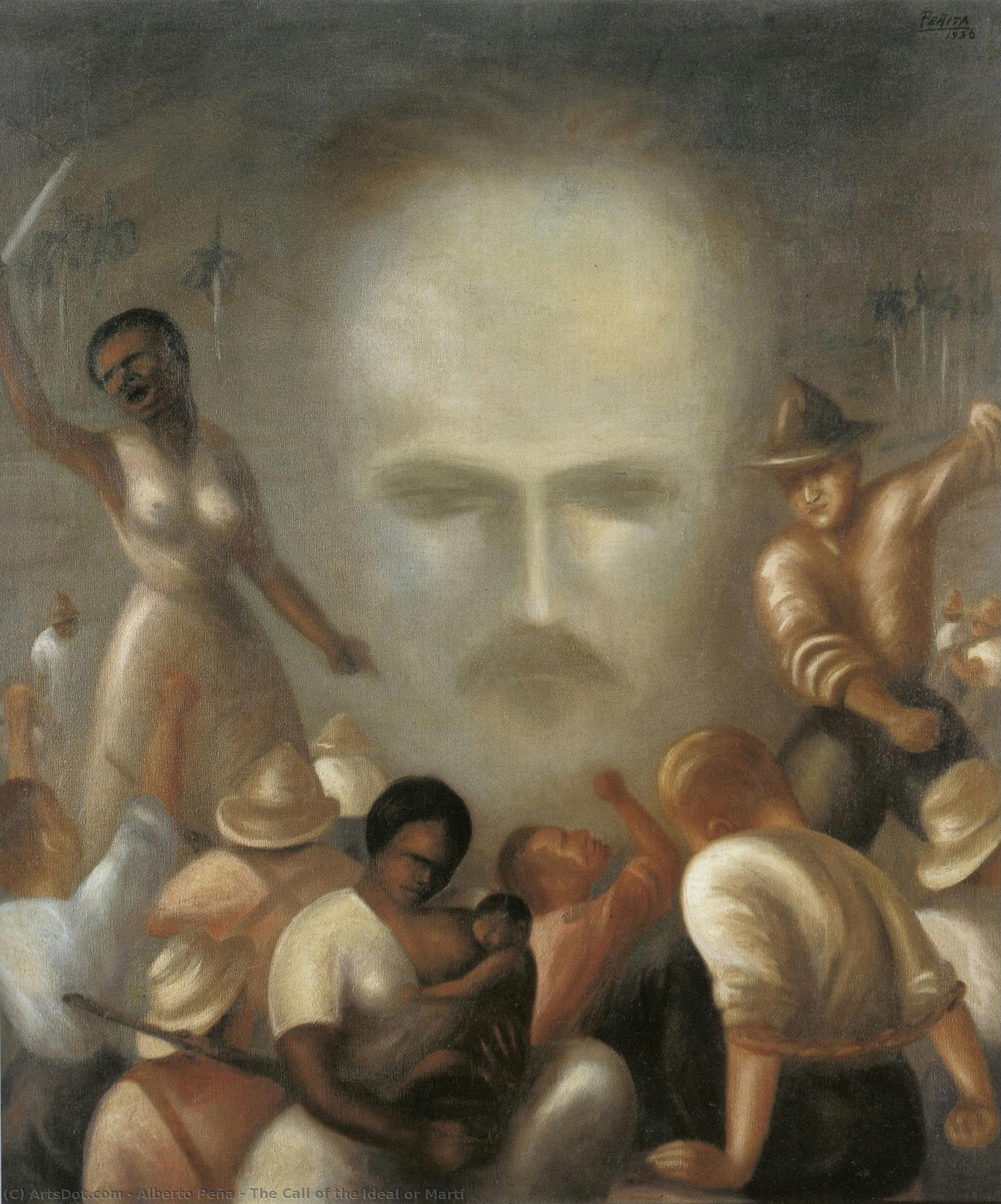
StatsThe Call of the Ideal or Martí
 1936
1936 95.0 x 81.0 cm
 The Bronx Museum of the Arts
 Read More
Hand Made Oil Reproduction
Hand-painted oil on canvas in your size and frame, made to order by our artists. ( Switch to Print Switch to Digital Image)




































Pick from our preset sizes that match the artwork's original proportions.

You may enter your own dimensions to fit a specific frame or space. If your selected size does not match the original image's proportions, we will either crop the artwork or extend the painting with additional hand-painted elements. A digital mockup will be sent for your approval before production begins.
Please note that the on-screen preview does not reflect the actual cropping or extension. Only the mockup will accurately show the final composition.
While custom sizes are available, we recommend selecting a dimension from the predefined list to preserve the original proportions.
After order, ArtsDot.com team will email client for instructions and provide a mockup preview
Worldwide Delivery () in 3/4 weeks instead of standard 5 weeks. (10 September). No compromise on quality.

Free Worldwide Express Shipping

High-Quality Linen Canvas

Full Shipping Insurance

Customs Tax Refund Guarantee

True Color Matching Guarantee

100-Day Return Policy (Defects Only)

100% Money-Back Guarantee

Bulk Discount Offer
 Glass option is only available in size under 110 CM

The Call of the Ideal or Martí
Reproduction Medium
Reproduction Size
-


Total Price
$ 263
Related Artworks








Artist Biography
The Soul of the Vanguardia: The Life and Art of Albertó Peña
In the vibrant tapestry of Cuban art history, few threads are as luminous or as deeply rooted in the national spirit as those woven by Albertó Peña. Known affectionately to many as Peñito, this master of the Vanguardia movement emerged from Santiago de Cuba at the dawn of the twentieth century, bringing with him a vision that sought to transcend mere representation. His life and work stand as a profound testament to an era when Cuban artists began to turn their gaze inward, rejecting the stifling academic traditions of Europe to discover a visual language that was authentically, unapologetically Cuban. Through his eyes, the verdant landscapes and the resilient faces of the rural populace were transformed into symbols of a burgeoning national identity.
Peña’s artistic evolution was inextricably linked to the fervor of the Vanguardia movement, a collective of visionaries including Raúl Lozano Barrancos and José Ángel Velázquez. This group shared a radical commitment to spontaneity and raw emotion, prioritizing the visceral impact of a brushstroke over the rigid perfection of classical formalism. Influenced by the structural complexities of Cubism and the dreamlike depths of Surrealism, Peña did not merely paint scenes; he distilled the very essence of experience. His work became a bridge between the political realities of his time and a spiritual exploration of the Cuban landscape, capturing the pulse of a nation striving for its own unique voice amidst a changing world.
Technique, Color, and the Essence of Cuba
To stand before a canvas by Peña is to be immersed in a sensory celebration of light and earth. His technique was defined by an energetic, dynamic application of paint, where thick layers of pigment built textures that seemed to breathe with life. He possessed a masterful command over color palettes that mirrored the tropical vitality of his homeland—dominating his compositions with sun-drenched yellows, deep earthy reds, and lush, verdant greens. These bold hues were never static; through careful layering, he created surfaces that danced with light and shadow, evoking the humid atmosphere and the shimmering heat of the Cuban countryside.
Beyond the technical brilliance, there is a profound humanism embedded in his brushwork. His compositions often eschewed grand, sweeping historical narratives in favor of the palpable, everyday moments of rural life. In doing so, he elevated the mundane to the monumental. Whether capturing the quiet dignity of a laborer or the rhythmic movement of the landscape, Peña’s work remains deeply rooted in meticulous observation imbued with intense emotion. This ability to blend the political and the personal—to illustrate the struggles of his era without succumbing to mere commercialism—is what truly defines his legacy as a humanist painter.
A Lasting Legacy in the Canon of Cuban Art
The historical significance of Albertó Peña is perhaps most tangibly felt in his most celebrated contributions to the global art stage. His monumental oil on canvas, “The Call of the Ideal or Martí,” currently housed at the Bronx Museum of the Arts in New York, serves as a cornerstone of his oeuvre. This work exemplifies his ability to weave complex historical reverence into a visual form that resonates with profound respect for Cuban cultural heritage and the ideals of national heroes like José Martí.
Peña’s impact extends far beyond his individual canvases. He helped establish a foundation upon which subsequent generations of Cuban artists could build, proving that art could be both a tool for identity formation and a medium for pure aesthetic exploration. His life, spanning from the early 1900s to 1974, mirrored the transformative shifts of Cuba itself, leaving behind a body of work that remains an essential window into the heart of the Vanguardia movement. Through his vibrant colors and expressive gestures, Peña ensured that the soul of rural Cuba would remain eternally captured in the amber of fine art.

albertó peña
1901 - 1974 , Cuba
Quick Facts
- Artistic Movement Or Style: Vanguardia
- Artists Or Movements Influenced By This Artist: ['None specified']
- Artists Who Influenced This Artist: ['None specified']
- Date Of Birth: Santiago de Cuba, Cuba (1901)
- Full Name: Albertó Peña
- Nationality: Cuban
- Notable Artworks: ['The Call of the Ideal or Martí']
- Place Of Birth: Cuba