 Preview
 Send
Send Share
Share
 Details

 Download
 Similars
 X-Ray
X-Ray Diaporama
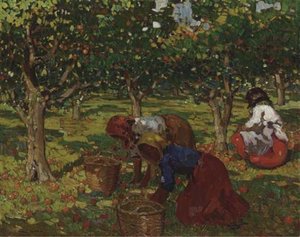
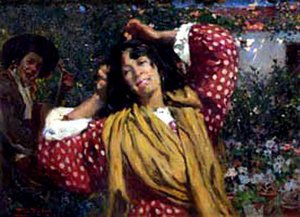
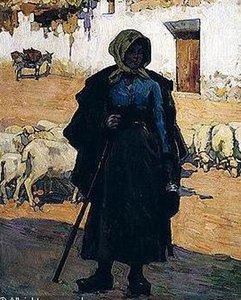
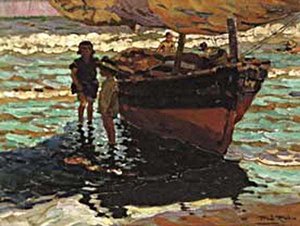
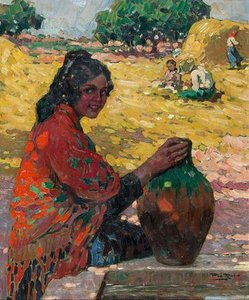
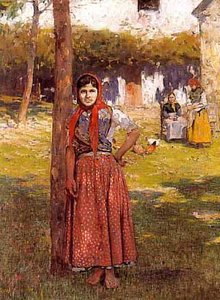
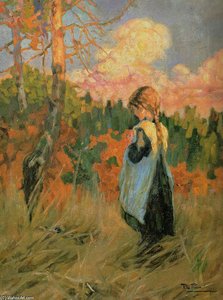
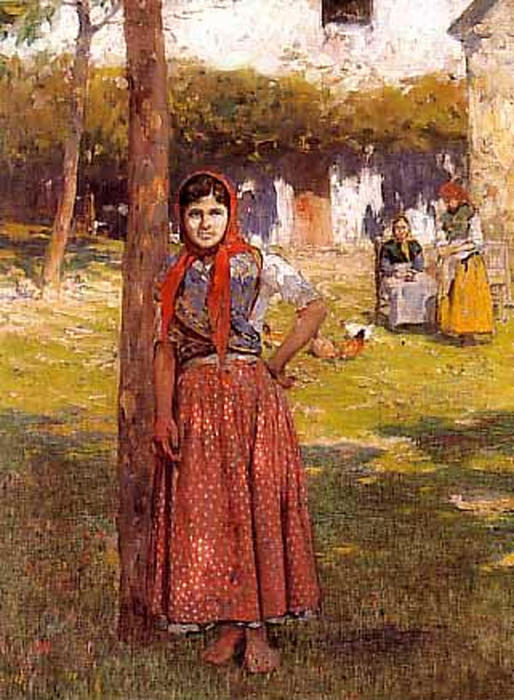
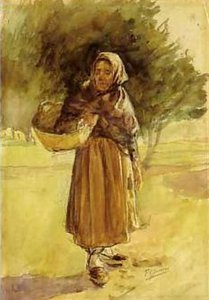
Mujer en el Campo
 Read More
Hand Made Oil Reproduction
Hand-painted oil on canvas in your size and frame, made to order by our artists. ( Buy Print Buy Image)




































Pick from our preset sizes that match the artwork's original proportions.

You may enter your own dimensions to fit a specific frame or space. If your selected size does not match the original image's proportions, we will either crop the artwork or extend the painting with additional hand-painted elements. A digital mockup will be sent for your approval before production begins.
Please note that the on-screen preview does not reflect the actual cropping or extension. Only the mockup will accurately show the final composition.
While custom sizes are available, we recommend selecting a dimension from the predefined list to preserve the original proportions.
After order, ArtsDot.com team will email client for instructions and provide a mockup preview
Worldwide Delivery () in 3/4 weeks instead of standard 5 weeks. (17 August). No compromise on quality.

Free Worldwide Express Shipping

High-Quality Linen Canvas

Full Shipping Insurance

Customs Tax Refund Guarantee

True Color Matching Guarantee

60-Day Return Policy (Defects Only)

100% Money-Back Guarantee

Bulk Discount Offer
 Glass option is only available in size under 110 CM

Mujer en el Campo
Reproduction Medium
Reproduction Size
-


Total Price
$ 263
Related Artworks
Artist Biography
Pierre Bonnard: A Painter of Intimate Light
Born in Fontenay-aux-Roses, a charming suburb just outside Paris, on October 3rd, 1867, Pierre Bonnard was more than simply a painter; he was a meticulous architect of light and color. His life, intertwined with the burgeoning artistic circles of late 19th and early 20th century France, ultimately led him to become a pivotal figure in the Post-Impressionist movement, particularly within the group known as Les Nabis. Bonnard’s legacy rests not on grand historical narratives or dramatic subject matter, but rather on his profound ability to capture the fleeting beauty of everyday moments – intimate interiors, sunlit landscapes, and the quiet dignity of ordinary people.
His early artistic education was a blend of formal training and self-directed exploration. Initially drawn to caricature, Bonnard honed his skills at the Lycée Louis-le-Grand and Lycée Charlemagne in Vanves, Paris. He later attended classes at the Académie Julian, where he encountered fellow artists like Paul Sérusier and developed an appreciation for the Impressionist movement’s emphasis on capturing transient effects of light and color. However, Bonnard quickly moved beyond mere imitation, seeking to distill his observations into a uniquely personal style. Influenced by the Japanese prints of Hokusai – their bold compositions and flattened perspectives – and the expressive brushwork of Paul Gauguin, he began to experiment with simplified forms and vibrant palettes.
The Nabis and a New Vision
In 1888, Bonnard joined Les Nabis (meaning “prophets”), a group of artists who sought to create a new form of religious expression through art. Led by Émile Bernard, the Nabis rejected academic conventions and embraced symbolism, color theory, and a focus on spiritual experience. Bonnard’s contribution to the group was particularly significant; he developed a distinctive approach to color that prioritized emotional resonance over strict representation. He famously described his painting process as “painting with colors,” emphasizing the importance of hue, saturation, and value in conveying mood and atmosphere. His early works, such as *The Garden at Vétheuil* (1887), demonstrate this shift towards a more subjective and expressive style.
Bonnard’s artistic development was deeply influenced by his personal relationships, particularly his marriage to Marthe Cubism (no relation to the Cubist movement). Their home in Montmartre became a haven for artists and intellectuals, fostering a vibrant atmosphere of creativity and collaboration. Marthe served as Bonnard's muse and model, appearing frequently in his paintings – not as idealized figures, but as warmly rendered individuals engaged in everyday activities. These intimate domestic scenes, bathed in soft light and imbued with a sense of quiet contentment, became a hallmark of his oeuvre.
Technique and Style
Bonnard’s technique was characterized by a remarkable economy of brushstrokes. He employed short, broken strokes to build up layers of color, creating a shimmering effect that seemed to capture the very essence of light. He often worked on multiple canvases simultaneously, allowing colors to bleed into one another and creating unexpected harmonies. His use of complementary colors – particularly blue and orange – was masterful, generating vibrant contrasts and adding depth to his compositions. Unlike many Impressionists who focused on capturing a single moment in time, Bonnard frequently depicted scenes as they appeared through memory or emotion, blurring the boundaries between reality and imagination.
Bonnard’s style evolved over time, moving away from the more overtly decorative qualities of his early work towards a greater emphasis on abstraction. In his later years, he experimented with flattened perspectives, simplified forms, and bold color combinations, anticipating developments in modern art. His paintings of the 1930s, such as *The Large Window* (1932), are particularly notable for their expressive power and innovative use of color.
Legacy and Influence
Pierre Bonnard died on January 23rd, 1947, in La Route de Serra Capeou, at the age of 79. His work was initially overlooked by the art establishment, but it has since been recognized as a major contribution to modern painting. Bonnard’s influence can be seen in the works of numerous artists, including Matisse, Cézanne, and even Picasso. His emphasis on color, emotion, and personal expression paved the way for new approaches to painting and helped to shape the course of 20th-century art.
Today, Bonnard’s paintings are celebrated for their beauty, tranquility, and profound sense of intimacy. They offer a glimpse into a world where light, color, and emotion converge to create moments of enduring grace.
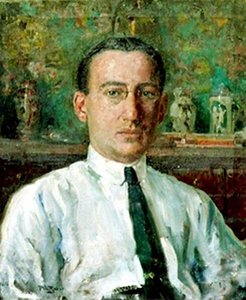
alberto pla y rubio
1867 - 1937 , Spain
Quick Facts
- Artistic Movement Or Style: Post-Impressionism, Nabis
- Artists Or Movements Influenced By This Artist:
- Henri Matisse
- Pablo Picasso
- Artists Who Influenced This Artist:
- Paul Gauguin
- Hokusai
- Date Of Birth: 1867-10-03
- Date Of Death: 1947-01-23
- Full Name: Pierre Bonnard
- Nationality: French
- Notable Artworks:
- La Route de Serra Capeou
- Mont Sainte-Victoire
- The Large Bronze Still Life
- Place Of Birth: Fontenay-aux-Roses, France