 Preview
 Send
Send Share
Share
 Details

 Download
 Similars
 X-Ray
X-Ray Diaporama
The Battle of Alexander
 Oil On Canvas
- WallArt
- German Renaissance Landscape
 1529
1529 158.0 x 120.0 cm
 Alte Pinakothek
 Read More
Hand Made Oil Reproduction
Hand-painted oil on canvas in your size and frame, made to order by our artists. ( Buy Print Buy Image)




P118B $10

P118H $10

P118W $10

P438Z $10

P508JH $12

P508YH $12

P805H $10

P805Z $10

P919BZ $10

P919G $10

P919XJ $10

P959ZH $10

P968JZ $12

W106C $8

W218G $10

W218JH $8

W218Y $10

W307PJ $10

W316G $10

W316PJ $8

W316Y $10

W398PJ $8

W4111J $10

W500HY $15

W500JH $15

W692G $12

W849H $8

W940BG $15

W953PJ $8




Pick from our preset sizes that match the artwork's original proportions.

You may enter your own dimensions to fit a specific frame or space. If your selected size does not match the original image's proportions, we will either crop the artwork or extend the painting with additional hand-painted elements. A digital mockup will be sent for your approval before production begins.
Please note that the on-screen preview does not reflect the actual cropping or extension. Only the mockup will accurately show the final composition.
While custom sizes are available, we recommend selecting a dimension from the predefined list to preserve the original proportions.
After order, ArtsDot.com team will email client for instructions and provide a mockup preview
Worldwide Delivery () in 3/4 weeks instead of standard 5 weeks. (25 August). No compromise on quality.

Free Worldwide Express Shipping

High-Quality Linen Canvas

Full Shipping Insurance

Customs Tax Refund Guarantee

True Color Matching Guarantee

60-Day Return Policy (Defects Only)

100% Money-Back Guarantee

Bulk Discount Offer
 Glass option is only available in size under 110 CM

The Battle of Alexander
Reproduction Medium
Reproduction Size
-


Total Price
$ 263
Artwork Description
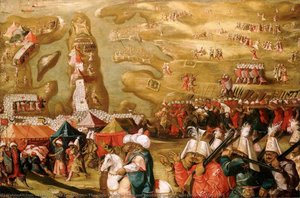
The Battle of Alexander at Issus: A Frozen Moment of Triumph
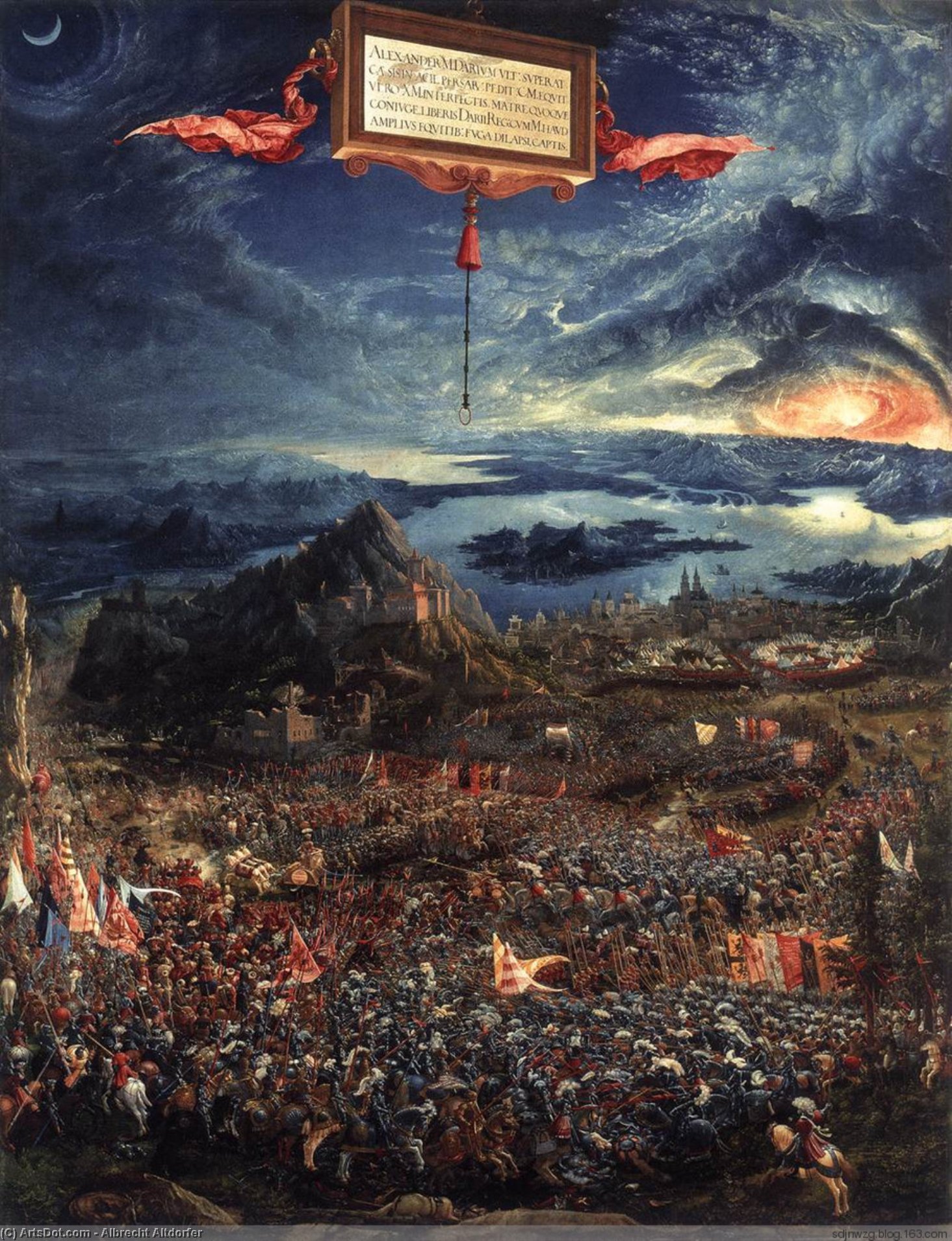
Albrecht Altdorfer’s “The Battle of Alexander at Issus,” painted in 1529, isn't merely a depiction of a historical clash; it’s a meticulously crafted tableau brimming with symbolic weight and an almost palpable sense of drama. This monumental oil-on-panel work, now residing within the Alte Pinakothek in Munich, transcends its subject matter to become a profound meditation on power, fate, and the fleeting nature of victory. Altdorfer, a pivotal figure in the burgeoning German Renaissance landscape movement, masterfully blends classical narrative with a strikingly modern approach to composition and color, creating an image that continues to captivate viewers centuries later.
The scene unfolds across a vast, dramatically lit expanse – not a traditional battlefield rendered in stark realism, but rather a carefully constructed stage. Altdorfer employs a technique reminiscent of the Northern Renaissance masters, particularly Lucas Cranach the Elder, utilizing layered brushstrokes and a rich palette to build depth and atmosphere. The composition is dominated by a swirling vortex of figures: Macedonian warriors charging across the foreground, Persian cavalry surging forward in the midground, and a distant, almost ethereal army massed on the horizon. Noticeably absent are any clear lines delineating friend from foe; Altdorfer deliberately obscures individual identities, emphasizing instead the overwhelming chaos and momentum of the conflict. The figures themselves are rendered with a remarkable dynamism – they’re not static representations but rather caught in moments of intense action, their limbs outstretched, weapons raised, and faces contorted in expressions of fury or determination.
A World Landscape: Beyond Narrative
What distinguishes “The Battle of Alexander at Issus” from earlier historical paintings is Altdorfer’s radical embrace of the ‘world landscape.’ He abandons the conventional practice of setting a battle within a confined space, instead presenting it as an integral part of a vast, interconnected natural world. The rugged mountains in the background, the rolling hills, and the dramatic sky are not merely decorative elements; they actively shape the narrative, mirroring the forces at play on the battlefield. The artist’s use of atmospheric perspective – the subtle shifts in color and detail as objects recede into the distance – further enhances this sense of spatial depth and immersion. This wasn't simply a painting *about* a battle; it was a painting *of* a landscape, imbued with its own inherent drama and power.
Symbolism Woven into the Canvas
Beyond the immediate depiction of the battle, “The Battle of Alexander at Issus” is laden with symbolic meaning. The prominent book or scroll hanging from above, visible in the upper left corner, is a particularly intriguing element. While its precise significance remains debated by art historians, it’s widely believed to represent divine judgment – a visual echo of the prophecies foretelling Alexander's triumph and, perhaps, his eventual downfall. The sheer size of the scroll suggests an overwhelming weight of destiny, while its placement above the chaotic scene implies that fate is ultimately controlling the outcome. The two horses, one on the right side near the bottom and another further back on the left side, could symbolize the power of war and the relentless cycle of violence. Even the sky itself—a swirling vortex of blues, purples, and golds—suggests a cosmic drama unfolding above the earthly battlefield.
Emotional Resonance: A Frozen Moment
Despite its grand scale and complex composition, “The Battle of Alexander at Issus” possesses an undeniable emotional resonance. It’s not a glorification of war but rather a poignant meditation on its cost – both human and natural. The painting captures the fleeting nature of victory, suggesting that even in moments of triumph, chaos and destruction remain ever-present. There's a sense of foreboding woven throughout the image, hinting at the inevitable consequences of conflict. The viewer is left with a feeling of unease, as if witnessing a pivotal moment suspended in time – a frozen tableau of power, ambition, and ultimately, mortality. Reproductions of this masterpiece offer a remarkable opportunity to experience Altdorfer’s visionary approach to landscape painting and his profound understanding of the human condition.
Related Artworks
Artist Biography
A Pioneer of the Northern Renaissance Landscape
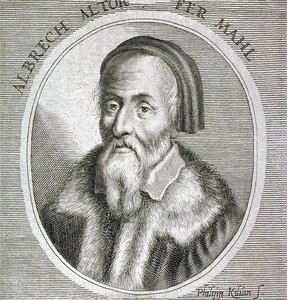
Albrecht Altdorfer, born around 1480 in Regensburg, Germany, stands as a pivotal figure bridging the late Gothic period and the burgeoning German Renaissance. He wasn’t merely an artist *of* his time; he actively reshaped its artistic trajectory, particularly in the realm of landscape painting. Coming from a family deeply rooted in artistic tradition—his father, Ulrich Altdorfer, was a painter and miniaturist—the younger Altdorfer quickly distinguished himself not as a follower, but as an innovator. Regensburg, a free imperial city strategically positioned on the Danube River, provided a vibrant cultural backdrop for his formative years. This location profoundly shaped his artistic sensibilities, fostering a connection to the natural world that would become central to his oeuvre. Beyond his artistry, Altdorfer was a man of civic duty, serving as both town architect and council member—a testament to his versatile talents. However, it was through his art—particularly his early engravings and drawings from around 1506, such as *Stygmata of St. Francis* and *St. Jerome*—that he first revealed a unique artistic voice, hinting at the emotional intensity and meticulous detail that would characterize his mature style.The Danube School and a Revolutionary Vision
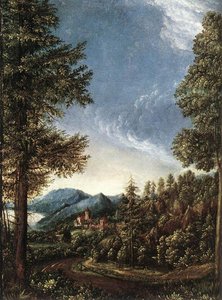
Altdorfer is most prominently recognized as a leading member of the Danube School, an influential group of artists active in southern Germany during the early 16th century. This artistic circle shared a common fascination with exploring the expressive potential of landscape, elevating it from a mere backdrop to become a central subject in its own right. Before Altdorfer, landscapes primarily served as settings for religious or historical narratives; he dared to depict nature *for itself*, imbued with atmosphere and emotional resonance. A transformative journey down the Danube River and into the Alps around 1511 proved crucial to his artistic development. The dramatic vistas, dense forests, and imposing mountains ignited within him a passion for depicting nature with unprecedented fidelity and feeling. He became, arguably, the first modern landscape painter, not simply replicating what he saw but conveying an emotional response—a sense of awe, mystery, and even spiritual connection. This wasn’t topographical accuracy alone; it was about capturing the *experience* of being within a landscape. His work, like “The Large Spruce,” exemplifies this shift, offering a serene and intricate depiction of nature's beauty.Masterpieces and Artistic Influences
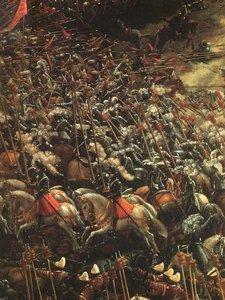
Throughout his career, Altdorfer produced a diverse body of work encompassing paintings, engravings, drawings, and architectural designs. Among his most celebrated achievements is *The Battle of Alexander at Issus* (1529), commissioned by Duke William IV of Bavaria. This monumental painting showcases not only his mastery of composition and detail but also his innovative use of landscape to heighten the dramatic tension of the battle scene. The swirling clouds, jagged mountains, and chaotic melee of soldiers create a sense of overwhelming energy and spectacle. His collaboration with Emperor Maximilian I in Innsbruck from 1513 further expanded his artistic horizons and provided opportunities for large-scale projects. Altdorfer’s style wasn't formed in isolation; he absorbed influences from various sources. The poetic lyricism of Giorgione, the expressive figures of Lucas Cranach the Elder, and the meticulous detail of Albrecht Dürer all left their mark on his work. However, he synthesized these influences into a uniquely personal vision, characterized by its emotional intensity, dramatic lighting, and evocative landscapes. His engravings, such as “Venus after the Bath” demonstrate his skill in this medium, showcasing delicate lines and intricate details.Legacy and Lasting Impact
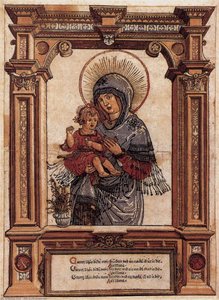
Albrecht Altdorfer’s artistic legacy extends far beyond the 55 panels, 120 drawings, and numerous engravings he created during his lifetime. He fundamentally altered the way artists approached landscape painting, paving the way for future generations to explore its expressive possibilities. His influence can be seen in the works of later German Romantic painters who similarly sought to capture the sublime beauty and emotional power of nature. Today, Altdorfer’s art is represented in major museum collections worldwide, including the Museum Ostdeutsche Galerie in Germany—which houses his *Madonna (Beautiful Maria of Regensburg)*—and the Kunstsammlungen und Museen Augsburg in Austria. His innovative spirit, technical skill, and profound connection to the natural world continue to inspire artists and captivate audiences centuries after his death in 1538. He remains a towering figure of the German Renaissance, a true pioneer who dared to see landscape not merely as scenery but as a powerful force capable of evoking deep emotion and spiritual meaning. His work serves as a testament to the enduring power of art to transform our perception of the world around us—a legacy that continues to resonate with viewers today.Exploring Altdorfer’s Diverse Works
Beyond his iconic landscapes and battle scenes, Altdorfer's artistic range encompassed religious subjects, mythological narratives, and even architectural designs. His depictions of biblical stories, such as “Abraham’s Sacrifice”, are imbued with a dramatic intensity and emotional depth that set them apart from earlier interpretations. He wasn’t simply illustrating scripture; he was exploring the human condition through the lens of faith.- Engravings: Altdorfer's engravings, like “Mucius Scaevola Burning His Hand”, demonstrate his mastery of line and detail, often conveying a sense of movement and drama.
- Drawings: His drawings offer intimate glimpses into his creative process, revealing his meticulous observation skills and expressive use of shading.
- Architectural Designs: As town architect of Regensburg, Altdorfer contributed to the city’s fortifications and urban planning, showcasing his practical as well as artistic talents.
Albrecht Altdorfer
1480 - 1538 , Germany
Quick Facts
- Artistic Movement Or Style: Danube School, Renaissance
- Artists Or Movements Influenced By This Artist: ['German Romantic painters']
- Artists Who Influenced This Artist:
- Giorgione
- Lucas Cranach the Elder
- Albrecht Dürer
- Date Of Birth: c. 1480
- Date Of Death: 1538
- Full Name: Albrecht Altdorfer
- Nationality: German
- Notable Artworks:
- Battle of Alexander at Issus
- The Large Spruce
- St. George and the Dragon
- Place Of Birth: Regensburg, Germany
Related Articles
Albrecht Dürer's Masterpieces: 25 Iconic Artworks for Your Home | ArtsDot
Explore 25 iconic artworks by Albrecht Dürer, a master of the German Renaissance. Discover the stories behind Melencolia I, Knight Death and Devil & more. Find museum-quality art reproductions for your home at ArtsDot.com.
Albrecht Altdorfer: Innovation, Spirituality & the Northern Renaissance Landscape
Explore the groundbreaking art of Albrecht Altdorfer, a pioneer of the Northern Renaissance's Danube School. Discover his innovative landscapes, spiritual symbolism & lasting influence on German painting.

Romantic Landscapes: 10 Masterpieces for Your Home | ArtsDot
Journey through 10 Romantic landscape masterpieces by Friedrich, Turner & Cole. Explore emotional art, sublime nature scenes & iconic 19th-century paintings. Find museum-quality reproductions for your home at ArtsDot.com – discover the full collection online!

Evocations of Place: A Historical Journey Through Landscape Art
Explore the rich history of landscape art with ArtsDot. Discover renowned artists, movements like Impressionism & Romanticism, and expert guidance for collecting timeless pieces. Find your perfect serene escape today!

John Constable's Masterpieces: Explore 25 Iconic Landscapes for Your Home
Journey through John Constable's 25 most celebrated landscapes. Explore Romanticism, Dedham Vale & his masterful use of light in iconic paintings like 'Hay Wain'. Find museum-quality art reproductions and elevate your home decor on ArtsDot.com.