 Preview
 Send
Send Share
Share
 Details

 Download
 Similars
 X-Ray
X-Ray Diaporama
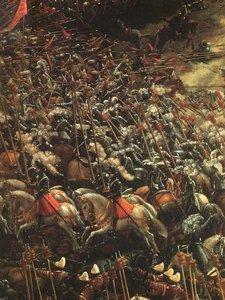
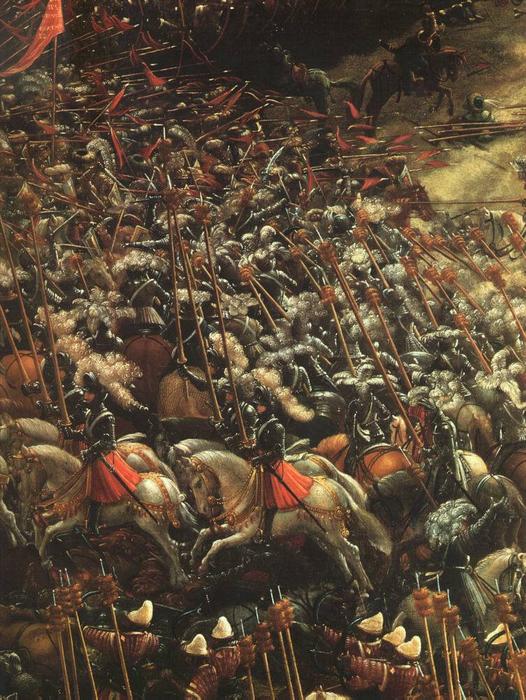
The Battle of Alexander (detail)


 Read More
Hand Made Oil Reproduction
Hand-painted oil on canvas in your size and frame, made to order by our artists. ( Buy Print Buy Image)




P118B $10

P118H $10

P118W $10

P438Z $10

P508JH $12

P508YH $12

P805H $10

P805Z $10

P919BZ $10

P919G $10

P919XJ $10

P959ZH $10

P968JZ $12

W106C $8

W218G $10

W218JH $8

W218Y $10

W307PJ $10

W316G $10

W316PJ $8

W316Y $10

W398PJ $8

W4111J $10

W500HY $15

W500JH $15

W692G $12

W849H $8

W940BG $15

W953PJ $8




Pick from our preset sizes that match the artwork's original proportions.

You may enter your own dimensions to fit a specific frame or space. If your selected size does not match the original image's proportions, we will either crop the artwork or extend the painting with additional hand-painted elements. A digital mockup will be sent for your approval before production begins.
Please note that the on-screen preview does not reflect the actual cropping or extension. Only the mockup will accurately show the final composition.
While custom sizes are available, we recommend selecting a dimension from the predefined list to preserve the original proportions.
After order, ArtsDot.com team will email client for instructions and provide a mockup preview
Worldwide Delivery () in 3/4 weeks instead of standard 5 weeks. (3 September). No compromise on quality.

Free Worldwide Express Shipping

High-Quality Linen Canvas

Full Shipping Insurance

Customs Tax Refund Guarantee

True Color Matching Guarantee

60-Day Return Policy (Defects Only)

100% Money-Back Guarantee

Bulk Discount Offer
 Glass option is only available in size under 110 CM

The Battle of Alexander (detail)
Reproduction Medium
Reproduction Size
-


Total Price
$ 263
The Clash of Empires: Albrecht Altdorfer’s “The Battle of Alexander at Issus”
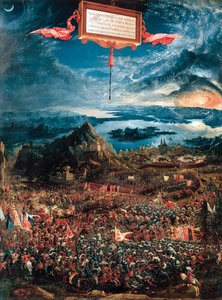
Albrecht Altdorfer's "The Battle of Alexander at Issus," painted in 1529 and now residing within the Alte Pinakothek in Munich, isn’t merely a depiction of a historical battle; it’s a visceral embodiment of ambition, conflict, and the precarious balance between East and West. More than just a military scene, this monumental work is a carefully constructed panorama—a stage upon which the destinies of empires collide, rendered with an unprecedented dynamism and emotional intensity for its time. The painting immediately assaults the viewer with its scale and frenetic energy; figures surge across the canvas in a swirling vortex of steel, color, and movement, creating a sense of overwhelming chaos that belies the strategic brilliance at play.
Altdorfer’s genius lies not simply in his technical skill—though it is undeniably masterful—but in his ability to fuse meticulous detail with an almost hallucinatory intensity. Every shield gleams, every plume of war paint reflects the light, and the musculature of each soldier is rendered with a startling realism. Yet, this hyper-realism isn’t employed to create a photographic likeness; rather, it serves to amplify the drama and heighten the sense of immediacy. The artist masterfully employs atmospheric perspective—distant figures fading into a hazy blue – to draw the eye deeper into the scene, while simultaneously utilizing bold color contrasts—the fiery reds of the Macedonian cavalry against the somber blues and greens of the Persian ranks—to establish a clear visual hierarchy.
A Landscape Transformed: The Dawn of Independent Landscape
What truly distinguishes “The Battle of Alexander” is Altdorfer’s revolutionary approach to landscape. Prior to this painting, landscapes were typically relegated to secondary roles, serving merely as backdrops for historical or religious narratives. Altdorfer, however, elevates the landscape to a central protagonist, imbuing it with its own expressive power and significance. The rolling hills of the Bavarian countryside—recognizable in the distant background—are not simply a setting; they are actively engaged in the drama unfolding before them, mirroring the turmoil and uncertainty of the conflict. The artist’s use of color – particularly the vibrant greens and blues – evokes both the beauty and the danger inherent in nature, suggesting that even the landscape itself is caught in the crosscurrents of war.
This shift towards independent landscape marked a pivotal moment in art history, establishing Altdorfer as one of the pioneers of what would later be known as the “world landscape.” He wasn’t interested in creating a realistic representation of a specific place; instead, he used the landscape to amplify the emotional impact of the scene and to convey a sense of timelessness. The inclusion of elements like the rising sun on the left side of the painting—a symbol of hope and renewal—further reinforces this notion of landscape as an active participant in the unfolding drama.
Symbolism and Political Undertones
Beyond its purely visual impact, “The Battle of Alexander” is laden with symbolic meaning. The battle itself represents a clash between two civilizations – the burgeoning power of the West, embodied by Alexander the Great, and the declining empire of Persia. However, Altdorfer subtly complicates this narrative by incorporating elements that suggest a broader political context. The painting was commissioned by Duke William IV of Bavaria, who was actively preparing for war against the Ottoman Turks—a formidable threat to Europe at the time. Some art historians believe that Altdorfer deliberately used the imagery of Alexander’s victory to bolster morale and inspire his patrons to confront this contemporary enemy.
The inclusion of figures fleeing in disarray, particularly those representing Darius III, reinforces this sense of impending doom. The composition itself—with Alexander positioned at the center, radiating authority and control—suggests that Western civilization is destined to triumph over Eastern decadence. Even the sky, with its dramatic interplay of light and shadow, seems to foreshadow a future of conflict and uncertainty.
A Timeless Masterpiece: Reproduction and Beyond
“The Battle of Alexander at Issus” remains a profoundly moving and intellectually stimulating work of art. Its dynamic composition, masterful technique, and rich symbolism continue to captivate viewers centuries after its creation. High-quality reproductions offer an accessible way to experience the painting’s power and beauty, allowing art lovers, collectors, and interior designers alike to bring this iconic image into their homes or offices. When selecting a reproduction, seek out versions that faithfully capture Altdorfer's vibrant color palette and dramatic lighting—elements that are crucial to understanding the painting’s emotional impact. This monumental work serves as a potent reminder of the enduring power of art to both reflect and shape our understanding of history, politics, and the human condition.
Related Artworks


Artist Biography
A Pioneer of the Northern Renaissance Landscape
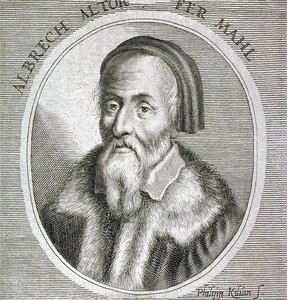
Albrecht Altdorfer, born around 1480 in Regensburg, Germany, stands as a pivotal figure bridging the late Gothic period and the burgeoning German Renaissance. He wasn’t merely an artist *of* his time; he actively reshaped its artistic trajectory, particularly in the realm of landscape painting. Coming from a family deeply rooted in artistic tradition—his father, Ulrich Altdorfer, was a painter and miniaturist—the younger Altdorfer quickly distinguished himself not as a follower, but as an innovator. Regensburg, a free imperial city strategically positioned on the Danube River, provided a vibrant cultural backdrop for his formative years. This location profoundly shaped his artistic sensibilities, fostering a connection to the natural world that would become central to his oeuvre. Beyond his artistry, Altdorfer was a man of civic duty, serving as both town architect and council member—a testament to his versatile talents. However, it was through his art—particularly his early engravings and drawings from around 1506, such as *Stygmata of St. Francis* and *St. Jerome*—that he first revealed a unique artistic voice, hinting at the emotional intensity and meticulous detail that would characterize his mature style.The Danube School and a Revolutionary Vision
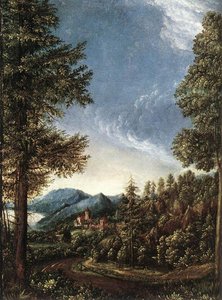
Altdorfer is most prominently recognized as a leading member of the Danube School, an influential group of artists active in southern Germany during the early 16th century. This artistic circle shared a common fascination with exploring the expressive potential of landscape, elevating it from a mere backdrop to become a central subject in its own right. Before Altdorfer, landscapes primarily served as settings for religious or historical narratives; he dared to depict nature *for itself*, imbued with atmosphere and emotional resonance. A transformative journey down the Danube River and into the Alps around 1511 proved crucial to his artistic development. The dramatic vistas, dense forests, and imposing mountains ignited within him a passion for depicting nature with unprecedented fidelity and feeling. He became, arguably, the first modern landscape painter, not simply replicating what he saw but conveying an emotional response—a sense of awe, mystery, and even spiritual connection. This wasn’t topographical accuracy alone; it was about capturing the *experience* of being within a landscape. His work, like “The Large Spruce,” exemplifies this shift, offering a serene and intricate depiction of nature's beauty.Masterpieces and Artistic Influences
Throughout his career, Altdorfer produced a diverse body of work encompassing paintings, engravings, drawings, and architectural designs. Among his most celebrated achievements is *The Battle of Alexander at Issus* (1529), commissioned by Duke William IV of Bavaria. This monumental painting showcases not only his mastery of composition and detail but also his innovative use of landscape to heighten the dramatic tension of the battle scene. The swirling clouds, jagged mountains, and chaotic melee of soldiers create a sense of overwhelming energy and spectacle. His collaboration with Emperor Maximilian I in Innsbruck from 1513 further expanded his artistic horizons and provided opportunities for large-scale projects. Altdorfer’s style wasn't formed in isolation; he absorbed influences from various sources. The poetic lyricism of Giorgione, the expressive figures of Lucas Cranach the Elder, and the meticulous detail of Albrecht Dürer all left their mark on his work. However, he synthesized these influences into a uniquely personal vision, characterized by its emotional intensity, dramatic lighting, and evocative landscapes. His engravings, such as “Venus after the Bath” demonstrate his skill in this medium, showcasing delicate lines and intricate details.Legacy and Lasting Impact
Albrecht Altdorfer’s artistic legacy extends far beyond the 55 panels, 120 drawings, and numerous engravings he created during his lifetime. He fundamentally altered the way artists approached landscape painting, paving the way for future generations to explore its expressive possibilities. His influence can be seen in the works of later German Romantic painters who similarly sought to capture the sublime beauty and emotional power of nature. Today, Altdorfer’s art is represented in major museum collections worldwide, including the Museum Ostdeutsche Galerie in Germany—which houses his *Madonna (Beautiful Maria of Regensburg)*—and the Kunstsammlungen und Museen Augsburg in Austria. His innovative spirit, technical skill, and profound connection to the natural world continue to inspire artists and captivate audiences centuries after his death in 1538. He remains a towering figure of the German Renaissance, a true pioneer who dared to see landscape not merely as scenery but as a powerful force capable of evoking deep emotion and spiritual meaning. His work serves as a testament to the enduring power of art to transform our perception of the world around us—a legacy that continues to resonate with viewers today.Exploring Altdorfer’s Diverse Works
Beyond his iconic landscapes and battle scenes, Altdorfer's artistic range encompassed religious subjects, mythological narratives, and even architectural designs. His depictions of biblical stories, such as “Abraham’s Sacrifice”, are imbued with a dramatic intensity and emotional depth that set them apart from earlier interpretations. He wasn’t simply illustrating scripture; he was exploring the human condition through the lens of faith.- Engravings: Altdorfer's engravings, like “Mucius Scaevola Burning His Hand”, demonstrate his mastery of line and detail, often conveying a sense of movement and drama.
- Drawings: His drawings offer intimate glimpses into his creative process, revealing his meticulous observation skills and expressive use of shading.
- Architectural Designs: As town architect of Regensburg, Altdorfer contributed to the city’s fortifications and urban planning, showcasing his practical as well as artistic talents.
Albrecht Altdorfer
1480 - 1538 , Germany
Quick Facts
- Artistic Movement Or Style: Danube School, Renaissance
- Artists Or Movements Influenced By This Artist: ['German Romantic painters']
- Artists Who Influenced This Artist:
- Giorgione
- Lucas Cranach the Elder
- Albrecht Dürer
- Date Of Birth: c. 1480
- Date Of Death: 1538
- Full Name: Albrecht Altdorfer
- Nationality: German
- Notable Artworks:
- Battle of Alexander at Issus
- The Large Spruce
- St. George and the Dragon
- Place Of Birth: Regensburg, Germany
Related Articles

Albrecht Dürer's Masterpieces: 25 Iconic Artworks for Your Home | ArtsDot
Explore 25 iconic artworks by Albrecht Dürer, a master of the German Renaissance. Discover the stories behind Melencolia I, Knight Death and Devil & more. Find museum-quality art reproductions for your home at ArtsDot.com.
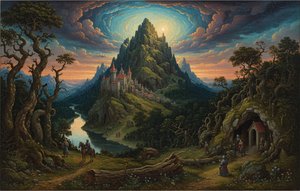
Albrecht Altdorfer: Innovation, Spirituality & the Northern Renaissance Landscape
Explore the groundbreaking art of Albrecht Altdorfer, a pioneer of the Northern Renaissance's Danube School. Discover his innovative landscapes, spiritual symbolism & lasting influence on German painting.

Romantic Landscapes: 10 Masterpieces for Your Home | ArtsDot
Journey through 10 Romantic landscape masterpieces by Friedrich, Turner & Cole. Explore emotional art, sublime nature scenes & iconic 19th-century paintings. Find museum-quality reproductions for your home at ArtsDot.com – discover the full collection online!

Evocations of Place: A Historical Journey Through Landscape Art
Explore the rich history of landscape art with ArtsDot. Discover renowned artists, movements like Impressionism & Romanticism, and expert guidance for collecting timeless pieces. Find your perfect serene escape today!

John Constable's Masterpieces: Explore 25 Iconic Landscapes for Your Home
Journey through John Constable's 25 most celebrated landscapes. Explore Romanticism, Dedham Vale & his masterful use of light in iconic paintings like 'Hay Wain'. Find museum-quality art reproductions and elevate your home decor on ArtsDot.com.