

 Preview
 Send
Send Share
Share
 Details

 Download
 Similars
 X-Ray
X-Ray Diaporama
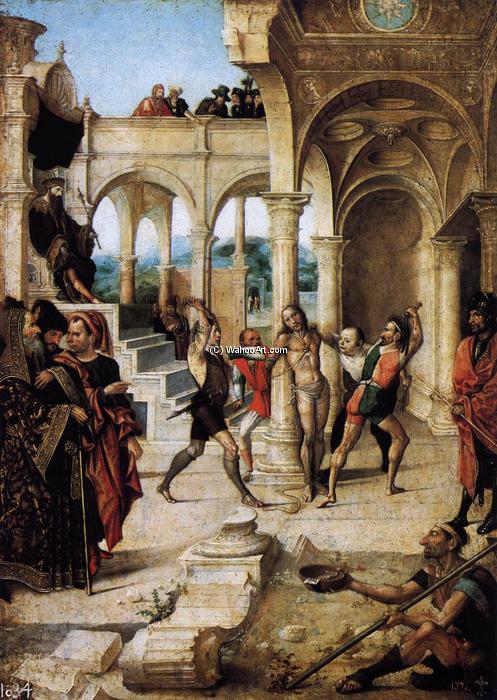
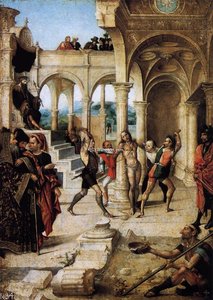
The Scourging of Christ
 48.0 x 35.0 cm
 Museo del Prado
 Read More
Purchase a high-resolution, enhanced digital image, far superior to the online preview.
Each file is meticulously prepared by our in-house specialists using advanced tools and expert manual retouching. We ensure every image has exceptional clarity, precise color accuracy, and fine detail.
The final file is delivered via email within 72 hours, optimized for immediate use in professional, editorial, and print environments. This is the same quality trusted by top-tier design studios, publishers, and galleries.
Digital Image
Download a high-resolution file for personal display, printing, and creative projects. ( Buy Print Buy Hand Made Painting)
Included in Every Digital Image Order
Expert Digital Delivery, Guaranteed
When you choose ArtsDot.com, you're not just getting an image - you're receiving a professionally enhanced digital artwork, crafted with precision and backed by a satisfaction guarantee. Here's everything that comes with your order, automatically:

Fast Email Delivery
Your high-resolution digital image file will be emailed to you within 72 hours of ordering - ready for immediate use.

AI-Enhanced Digital File
Your artwork is professionally optimized using advanced AI tools and manual editing, ensuring maximum detail, clarity, and color accuracy.

Free Lifetime Re-Delivery
Accidentally deleted or lost your file? No worries - we'll resend it to you anytime, free of charge.

No Import Fees - Ever
Enjoy your artwork instantly with zero customs, duties, or delivery fees - digital downloads are always tax-free.

Color Accuracy Guarantee
We ensure your digital image reflects the original colors as closely as possible using professional tools and color management.

60-Day Satisfaction Guarantee
If you're not satisfied with your digital image, we'll revise it or refund 100% within 60 days - no questions asked.

100% Money-Back Guarantee
Not satisfied? Get a full refund within 60 days of receiving your digital file - no questions asked.

Bulk Order Discounts
Buy 3 images, save 10% - Buy 5, save 15% - Buy 10+, save 20%. Great for creative projects, galleries, and agencies.
Related Artworks
Artist Biography
Alejo Fernández: Bridging Flemish Grandeur and Spanish Soul
Born in Córdoba around 1475, Alejo Fernández’s life was a testament to the vibrant artistic currents flowing through Spain during the early sixteenth century. While his precise origins remain somewhat shrouded in historical detail – often referred to as ‘Maestro Alexos - pintor Aléman,’ suggesting a possible German heritage – his work quickly established him as one of Seville’s most prominent painters, a pivotal figure bridging the stylistic innovations of the Flemish masters with the burgeoning spirit of Spanish Renaissance art. Fernández's career unfolded against a backdrop of significant cultural shifts: the consolidation of royal power under Ferdinand and Isabel, the expansion of Spain’s reach across the Atlantic, and an increasing engagement with Italian artistic ideals – all factors that profoundly shaped his artistic trajectory.
Early influences were undeniably rooted in the Flemish tradition. Fernández's formative years appear to have been spent studying the techniques of perspective and spatial construction championed by these northern European masters. This is particularly evident in works like the “Christ at the Column” from Córdoba’s museum, a piece characterized by its meticulous detail, dramatic lighting, and adherence to the established conventions of Flemish realism. Similarly, his Triptych of the Last Supper, housed in Zaragoza's basilica, demonstrates a clear debt to the work of Bramante, whose influence on Spanish Renaissance architecture was considerable. However, Fernández wasn’t merely a mimic; he skillfully absorbed these influences, adapting them to his own artistic vision and imbuing them with a distinctly Spanish sensibility.
The Seville Years: Humanism and Architectural Integration
Fernández's move to Seville in 1508 marked a crucial turning point. Here, amidst the bustling commercial heart of Spain – a city increasingly involved in trade with the Americas – his artistic focus shifted towards human representation. He began to explore the complexities of individual character, capturing not just physical likeness but also conveying emotion and psychological depth. This shift is powerfully illustrated in his portrait of Christopher Columbus, painted between 1531 and 1536, a work that transcends mere depiction and becomes a meditation on ambition, exploration, and the weight of historical consequence. The painting’s composition—Columbus seated with an air of quiet contemplation—is remarkably sophisticated, utilizing atmospheric perspective and subtle gestures to convey his inner state.
Crucially, Fernández didn't simply paint portraits; he integrated architectural elements into his compositions in a way that was both innovative and deeply symbolic. His later works, such as the “Virgin of the Rose” in Seville’s St. Anne church and the “Virgin of the Navigators” within the Alcázar palace, demonstrate this masterful technique. The architecture isn't merely a backdrop; it actively participates in the narrative, providing context, reinforcing religious themes, and elevating the spiritual significance of the figures depicted. This approach reflects a broader trend in Spanish Renaissance art – a desire to create works that were both aesthetically pleasing and spiritually resonant.
Italian Echoes and Lombard Influences
As Fernández’s career progressed, he increasingly embraced influences from Italy, particularly those emanating from the High Renaissance. The “Virgin of the Navigators,” in particular, reveals a clear debt to Italian masters like Pinturicchio and Raphael. The Virgin's pose, her flowing robes, and the delicate rendering of her features all bear striking resemblance to works produced by these Florentine artists. Furthermore, elements of Lombard art – characterized by its elegant figures, rich colors, and intricate details – can also be discerned in his later paintings. This eclectic blend of influences—Flemish realism, Spanish humanism, and Italian elegance—created a uniquely sophisticated style that distinguished Fernández from his contemporaries.
The influence of the Virgin of Mercy (Virgen de la Merced) is particularly notable. The subject itself was popular throughout Spain during this period, representing Mary as a protector against enemies. Fernández’s version, commissioned for Seville's House of Trade, reflects the importance of commerce and exploration in Spanish society at the time. The opulent fabrics and rich colors of the Virgin’s garments—likely imported from Italy or other distant lands—symbolize the wealth and power generated by Spain’s burgeoning empire.
Legacy and Historical Significance
Alejo Fernández died around 1545 in Seville, leaving behind a remarkably diverse body of work that offers invaluable insights into the artistic landscape of early sixteenth-century Spain. His paintings—ranging from intimate portraits to grand religious scenes—are characterized by their technical skill, emotional depth, and innovative use of architectural elements. He stands as a key figure in the transition between Flemish and Italian influences, demonstrating how these diverse traditions could be synthesized to create a uniquely Spanish artistic style. Fernández’s legacy extends beyond his individual works; he played a crucial role in shaping the development of Spanish Renaissance art, paving the way for subsequent generations of painters.
Further Exploration
- Web Gallery of Art: Alejo Fernández Biography
- Smarthistory: The Virgin of the Navigators: The Virgin of the Navigators
- Wikipedia: Alejo Fernández: Alejo Fernández (Wikipedia)
alejo fernández
1475 - 1545
Quick Facts
- Artistic Movement Or Style: Flemish Mannerism
- Artists Or Movements Influenced By This Artist:
- Pinturicchio
- Raphael
- Artists Who Influenced This Artist:
- Flemish Masters
- Bramante
- Date Of Birth: c. 1475
- Date Of Death: c. 1545
- Full Name: Alejo Fernández
- Nationality: Spanish
- Notable Artworks:
- Christ at the Column
- Virgin of the Rose
- Virgin of the Navigators
- Place Of Birth: Córdoba, Spain

