

 Preview
 Send
Send Share
Share
 Details

 Download
 Similars
 X-Ray
X-Ray Diaporama
Arrangement
 Lithograph
- WallArt
- Socialist Realism
 1922
1922 20.0 x 20.0 cm
 Read More
Purchase a high-resolution, enhanced digital image, far superior to the online preview.
Each file is meticulously prepared by our in-house specialists using advanced tools and expert manual retouching. We ensure every image has exceptional clarity, precise color accuracy, and fine detail.
The final file is delivered via email within 72 hours, optimized for immediate use in professional, editorial, and print environments. This is the same quality trusted by top-tier design studios, publishers, and galleries.
Digital Image
Download a high-resolution file for personal display, printing, and creative projects. ( Buy Print Buy Hand Made Painting)
Included in Every Digital Image Order
Expert Digital Delivery, Guaranteed
When you choose ArtsDot.com, you're not just getting an image - you're receiving a professionally enhanced digital artwork, crafted with precision and backed by a satisfaction guarantee. Here's everything that comes with your order, automatically:

Fast Email Delivery
Your high-resolution digital image file will be emailed to you within 72 hours of ordering - ready for immediate use.

AI-Enhanced Digital File
Your artwork is professionally optimized using advanced AI tools and manual editing, ensuring maximum detail, clarity, and color accuracy.

Free Lifetime Re-Delivery
Accidentally deleted or lost your file? No worries - we'll resend it to you anytime, free of charge.

No Import Fees - Ever
Enjoy your artwork instantly with zero customs, duties, or delivery fees - digital downloads are always tax-free.

Color Accuracy Guarantee
We ensure your digital image reflects the original colors as closely as possible using professional tools and color management.

60-Day Satisfaction Guarantee
If you're not satisfied with your digital image, we'll revise it or refund 100% within 60 days - no questions asked.

100% Money-Back Guarantee
Not satisfied? Get a full refund within 60 days of receiving your digital file - no questions asked.

Bulk Order Discounts
Buy 3 images, save 10% - Buy 5, save 15% - Buy 10+, save 20%. Great for creative projects, galleries, and agencies.
Collectible Description
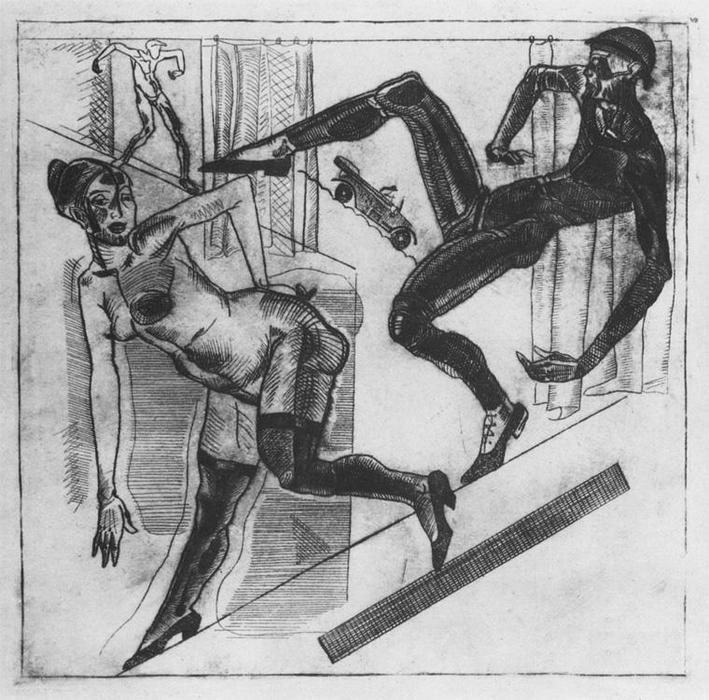
Aleksandr Deyneka's "Arrangement": A Snapshot of Soviet Modernity
Aleksandr Deyneka’s “Arrangement,” painted in 1922, isn't merely a depiction of figures within an interior space; it is a carefully constructed tableau reflecting the burgeoning spirit of post-revolutionary Russia. The lithograph pulsates with a dynamic energy, capturing a moment of seemingly casual interaction that belies a deeper commentary on social shifts and artistic experimentation. It’s a work steeped in the Constructivist movement's ideals – a celebration of industrial progress, urban life, and the new Soviet citizen. The monochromatic palette, dominated by shades of black, white, and grey, immediately draws the eye, forcing a focus on form and composition rather than coloristic nuance. This deliberate choice underscores the stark realities of the era, while simultaneously lending an air of dramatic intensity to the scene. The absence of color doesn't diminish the vibrancy; instead, it amplifies the textures created through bold lines, hatching, and cross-hatching – techniques that lend a raw, almost graphic quality to the image.Constructivism and Urban Life: A Visual Manifesto
The artwork’s style is firmly rooted in Constructivism, an avant-garde movement that sought to synthesize art with industrial production and social reform. Deyneka, like many of his contemporaries, aimed to create a visual language that reflected the new Soviet reality – one characterized by rapid modernization, technological advancement, and a collective spirit. The scene itself—a crowded interior space populated by figures engaged in various activities—is quintessential urban. A skateboard lies casually on the floor, an unexpected element hinting at youthful energy and perhaps even a touch of Western influence amidst the socialist fervor. The composition is deliberately asymmetrical, eschewing traditional notions of balance in favor of a more dynamic and unsettling arrangement. The diagonal lines created by limbs and objects contribute to this sense of movement, pulling the viewer’s eye across the canvas and creating a feeling of restless energy. This deliberate disruption of visual harmony mirrors the societal upheaval that defined the post-revolutionary period.Symbolism and Social Commentary
While seemingly straightforward in its depiction, "Arrangement" is rich with symbolic undertones. The reclining woman and standing man are central figures, their poses suggesting a complex interplay of power dynamics and social relationships. The other figures populating the background add to the sense of crowded urban life, hinting at the anonymity and interconnectedness of modern society. The skateboard itself can be interpreted as a symbol of youth culture and leisure, but also perhaps as a subtle critique of Western consumerism creeping into Soviet society. Deyneka’s use of stark contrasts between light and shadow further enhances the symbolic weight of the image. The deep shadows that engulf portions of the scene create an atmosphere of mystery and intrigue, suggesting hidden tensions beneath the surface of apparent social harmony. The rough, almost crude lines used to depict the figures contribute to a sense of immediacy and authenticity, as if we are witnessing a candid snapshot of everyday life rather than a carefully staged portrait.Technical Mastery: Lithography's Expressive Power
Deyneka’s choice of lithography as his medium is crucial to understanding the artwork’s impact. Lithography, a printmaking technique that involves drawing on a stone or metal plate with greasy materials and then using chemicals to fix the image before printing, allowed for a remarkable level of detail and tonal variation. The artist skillfully exploited the capabilities of this process, creating a range of textures and shades through meticulous hatching and cross-hatching. The resulting print possesses a unique tactile quality – one that invites close inspection and rewards careful observation. It’s not merely a reproduction; it's an original work of art in its own right, showcasing Deyneka’s technical prowess and his ability to harness the expressive potential of lithography to convey complex emotions and ideas. The slightly imperfect lines and textures further contribute to the artwork’s raw energy and authenticity, reinforcing its status as a powerful document of a pivotal moment in Russian history.Related Artworks
Artist Biography
A Life Forged in Revolution: The Artistic Journey of Aleksandr Deyneka
Aleksandr Aleksandrovich Deyneka, born in 1899 in the provincial Russian city of Kursk, was an artist inextricably linked to the tumultuous currents of the twentieth century. His life and work mirrored the dramatic shifts of his nation – from the waning days of Tsarist Russia through the fervor of revolution, the industrialization of the Soviet era, and the shadow of war. Deyneka wasn’t merely a recorder of these events; he was an active participant, shaping and being shaped by the ideological forces that swept across his homeland. His early life offered little hint of the artistic prominence to come. He initially pursued studies at a railway college, simultaneously attending art workshops – a practical grounding that would later inform the dynamic energy and structural clarity present in his compositions. This period was cut short by the upheaval of 1917, propelling him towards Moscow and enrollment at Vkhutemas, the Higher State Artistic and Technical Workshops, a crucible of avant-garde thought and experimentation. It was here, under the tutelage of Vladimir Favorsky, that Deyneka honed his skills in graphic arts and printmaking, absorbing the principles of constructivism and developing a keen understanding of form and space.The Rise of Socialist Realism and Defining an Era
Deyneka’s artistic development unfolded alongside the evolving aesthetic demands of the Soviet state. Initially aligned with groups like OST (Society of Easel Artists), he embraced modernist principles, exploring dynamic compositions and a bold visual language. However, as Stalin consolidated power and Socialist Realism became the officially sanctioned style, Deyneka adapted – not by abandoning his artistic vision entirely, but by channeling it into forms acceptable to the regime. This wasn’t simply capitulation; rather, it was a strategic negotiation that allowed him to continue creating impactful work while navigating a politically fraught landscape. His paintings of the 1930s, such as Collective Farmer on a Bicycle (1935), became iconic representations of Soviet ideals – celebrating labor, athleticism, and the promise of a new socialist society. The painting is not merely a depiction of rural life; it’s an embodiment of forward momentum, a visual manifesto of progress and optimism. This period also saw his involvement with the *Windows of ROSTA* project, creating powerful propaganda posters that disseminated revolutionary messages throughout the country. He wasn't just painting pictures; he was actively constructing a new cultural narrative.Beyond Propaganda: Monumentality and Mosaic Mastery
While often categorized as a Socialist Realist painter, to limit Deyneka to this label is to overlook the breadth of his artistic talent. His ambition extended beyond easel paintings into monumental works and public art. He created large-scale canvases depicting historical events – The Defense of Petrograd (1928) being a prime example – imbued with dramatic intensity and a sense of epic scale. These weren’t simply illustrations of battles; they were attempts to capture the spirit of revolutionary struggle, transforming historical moments into mythic narratives. Perhaps less known but equally significant is his work in mosaics. Deyneka's designs for the Mayakovskaya metro station in Moscow are breathtaking examples of public art seamlessly integrated with architecture. These vibrant, dynamic compositions – depicting scenes of Soviet life and aspirations – transformed a utilitarian space into a palace of the people, demonstrating his versatility and mastery of different artistic mediums. These mosaics stand as enduring testaments to his ability to elevate everyday themes into grand visual statements.Legacy and Enduring Influence
Aleksandr Deyneka passed away in 1969, leaving behind a vast body of work that continues to resonate today. His paintings, mosaics, and graphic designs offer a compelling window into the Soviet experience – its aspirations, contradictions, and artistic achievements. While his association with Socialist Realism has sometimes led to critical reassessment, his technical skill, compositional dynamism, and ability to capture the energy of his time remain undeniable. He is categorized as a “1A - world famous artist” in the United Artists Rating, a testament to his enduring international recognition. Exhibitions dedicated to his work, such as those held at the Gallery for Russian Arts and Design in London, continue to introduce new audiences to his art. Deyneka’s influence can be seen in subsequent generations of artists who sought to engage with social and political themes through powerful visual imagery. His ability to blend modernist techniques with socially conscious subject matter makes him a uniquely important figure in the history of twentieth-century art, a golden boy whose work continues to provoke thought and inspire awe.A Complex Artistic Identity
Ultimately, Aleksandr Deyneka’s artistic identity is one of compelling complexity. He was an artist who navigated a shifting political landscape with both pragmatism and passion, adapting his style while maintaining a distinctive visual voice. His work wasn't simply propaganda; it was a reflection of the hopes and anxieties of a nation undergoing radical transformation.- He embraced modernity but also sought to connect with the traditions of Russian art.
- He celebrated collective ideals yet retained a sense of individual artistic expression.
- His work continues to spark debate about the relationship between art, politics, and ideology.
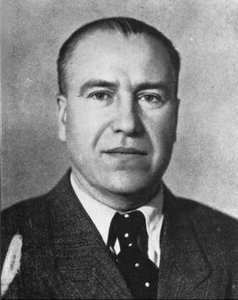
Aleksandr Deyneka
1899 - 1969 , Russia
Quick Facts
- Artistic Movement Or Style: Socialist Realism
- Date Of Birth: May 20, 1899
- Date Of Death: June 12, 1969
- Full Name: Aleksandr Aleksandrovich Deyneka
- Nationality: Russian
- Notable Artworks:
- Collective Farmer on a Bicycle
- Defense of Petrograd
- Basketball
- The Battle of Sevastopol
- Place Of Birth: Kursk, Russia

