

 Send
Send Share
Share
 Details

 Download
 Similars
 Diaporama
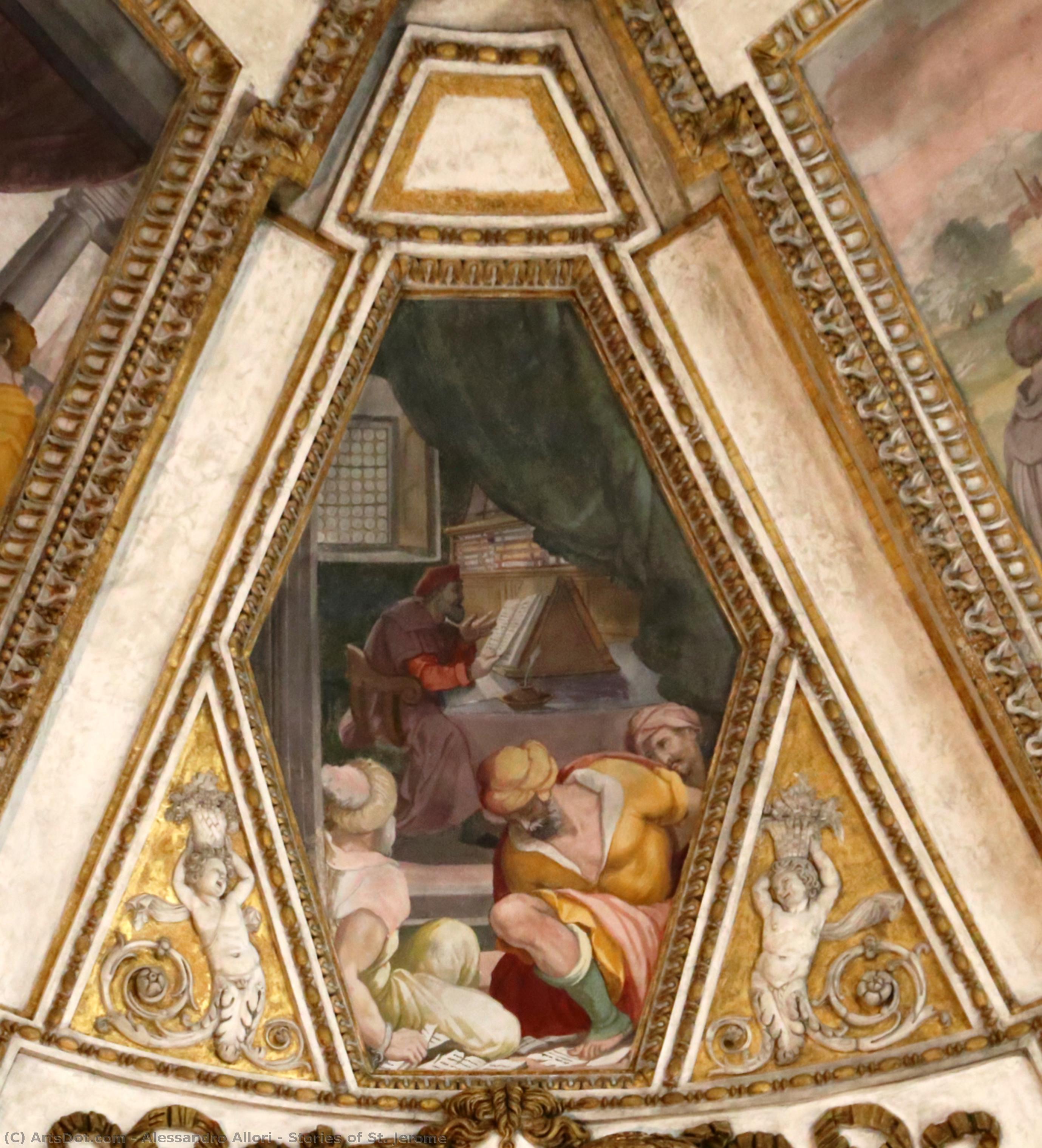
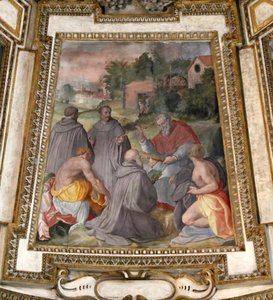
Stories of St. Jerome


 Read More
Purchase a high-resolution, enhanced digital image, far superior to the online preview.
Each file is meticulously prepared by our in-house specialists using advanced tools and expert manual retouching. We ensure every image has exceptional clarity, precise color accuracy, and fine detail.
The final file is delivered via email within 72 hours, optimized for immediate use in professional, editorial, and print environments. This is the same quality trusted by top-tier design studios, publishers, and galleries.
Digital Image
Download a high-resolution file for personal display, printing, and creative projects. ( Buy Print Buy Hand Made Painting)
Included in Every Digital Image Order
Expert Digital Delivery, Guaranteed
When you choose ArtsDot.com, you're not just getting an image - you're receiving a professionally enhanced digital artwork, crafted with precision and backed by a satisfaction guarantee. Here's everything that comes with your order, automatically:

Fast Email Delivery
Your high-resolution digital image file will be emailed to you within 72 hours of ordering - ready for immediate use.

AI-Enhanced Digital File
Your artwork is professionally optimized using advanced AI tools and manual editing, ensuring maximum detail, clarity, and color accuracy.

Free Lifetime Re-Delivery
Accidentally deleted or lost your file? No worries - we'll resend it to you anytime, free of charge.

No Import Fees - Ever
Enjoy your artwork instantly with zero customs, duties, or delivery fees - digital downloads are always tax-free.

Color Accuracy Guarantee
We ensure your digital image reflects the original colors as closely as possible using professional tools and color management.

60-Day Satisfaction Guarantee
If you're not satisfied with your digital image, we'll revise it or refund 100% within 60 days - no questions asked.

100% Money-Back Guarantee
Not satisfied? Get a full refund within 60 days of receiving your digital file - no questions asked.

Bulk Order Discounts
Buy 3 images, save 10% - Buy 5, save 15% - Buy 10+, save 20%. Great for creative projects, galleries, and agencies.
Collectible Description
A Glimpse into Scholarly Reverie: Alessandro Allori’s “Stories of St. Jerome”
Alessandro Allori's "Stories of St. Jerome," painted in 1577, is more than just a decorative fresco; it’s a meticulously crafted window into the intellectual and spiritual heart of Renaissance Florence. This monumental work, originally adorning a ceiling within a grand church (though its precise location remains debated), transports the viewer to a realm of contemplative study and divine inspiration. The scene unfolds as a vibrant tableau vivant – a gathering of learned figures immersed in reading, writing, and philosophical discourse, all set against an architectural backdrop that speaks volumes about the era’s artistic ambitions.
The composition itself is a masterclass in Mannerist technique, drawing heavily on the principles established by Bronzino, Allori's formative mentor. A pyramidal structure anchors the scene, radiating outwards from a central group engaged in animated discussion. Linear perspective guides the eye through the space, creating an illusion of depth and recession that draws us into this intimate scholarly world. Geometric shapes – triangles, rectangles, and ovals – dominate both the figures themselves and the intricate decorative border, lending a sense of order and control to the dynamic activity within.
The Allori Manner: Polished Surfaces and Sculptural Forms
Allori’s distinctive style is immediately recognizable. He eschews the vibrant colors and dramatic lighting favored by his contemporaries, opting instead for a palette of cool, muted tones – predominantly earth hues accented with touches of gold leaf. This restrained approach contributes to the fresco's overall sense of serenity and intellectual gravity. The figures are rendered with an almost sculptural quality; their elongated forms and subtly exaggerated features convey a deliberate elegance and refinement. Notice how Allori meticulously details the folds of clothing, the textures of books, and the expressions on the faces of his subjects – each element contributing to a palpable sense of realism despite the overall stylized presentation.
The use of *fresco secco*, a technique involving painting directly onto dry plaster, is crucial to understanding the fresco’s enduring quality. This method, while demanding precision and skill, results in a surface that is remarkably durable and resistant to weathering – a testament to Allori's mastery of his craft. The subtle variations in texture—the smooth sheen of the painted figures contrasted with the slightly rougher quality of the gold leaf accents—add layers of visual interest and tactile appeal.
Symbolism and Spiritual Resonance
Beyond its technical brilliance, “Stories of St. Jerome” is rich in symbolic meaning. The central theme, naturally, revolves around the life and writings of Saint Jerome, a pivotal figure in Christian theology known for his translation of the Bible into Latin. The books scattered throughout the scene represent knowledge, wisdom, and divine inspiration – essential components of the intellectual pursuit depicted here. The architectural setting itself—a grand hall with bookshelves and windows—evokes the atmosphere of a medieval scriptorium, a place dedicated to scholarly work and religious devotion.
Furthermore, the figures themselves embody specific virtues: diligence, contemplation, and piety. Their engaged expressions and focused attention suggest a deep commitment to intellectual inquiry and spiritual understanding. The overall effect is one of profound reverence—a celebration of learning as a pathway to enlightenment and connection with the divine.
A Legacy in Reproduction – Bringing Allori’s Vision Home
Today, “Stories of St. Jerome” continues to captivate viewers through faithful reproductions. These meticulously crafted prints capture not only the visual splendor of the original fresco but also its underlying emotional resonance. Whether adorning a grand salon or a more intimate space, this artwork offers a timeless reminder of the enduring power of knowledge, contemplation, and the pursuit of spiritual understanding. The intricate details and masterful composition make it an ideal choice for discerning collectors and interior designers seeking to infuse their surroundings with a touch of Renaissance elegance and intellectual sophistication.
Related Artworks


Artist Biography
A Florentine Legacy: The Life and Art of Alessandro Allori
Alessandro Allori, born in Florence on May 31st, 1535, stands as a compelling figure within the late Mannerist school. His artistic journey was profoundly shaped by circumstance; orphaned at a young age, he found an unlikely father figure and mentor in Agnolo Bronzino, one of Florence’s most celebrated painters. This adoption wasn't merely familial—it was an immersion into a world of refined technique, intellectual rigor, and the distinctive aesthetic principles that would come to define Allori’s own style. Bronzino instilled within him not only technical mastery but also a particular sensibility: a preference for polished surfaces, elongated forms, and a cool, almost sculptural quality in his figures. This influence became the cornerstone of Allori's artistic identity, though it often drew criticism for its perceived derivativeness throughout his career. He supplemented this foundational training with anatomical studies – even undertaking dissections at the Hospital of Santa Maria Nuova – demonstrating a commitment to understanding the human form that underpinned his stylized representations.The Echoes of Mannerism and Artistic Development
Allori’s work is deeply rooted in the Mannerist tradition, an artistic movement characterized by its artificiality, elegance, and emphasis on stylistic sophistication over naturalistic representation. However, he wasn't a revolutionary; rather, he was a skilled interpreter and developer of existing forms. Critics often noted his tendency to draw heavily from pre-existing art, refining and reinterpreting the works of masters like Michelangelo and Raphael through the lens of Bronzino’s aesthetic. This isn’t necessarily a detraction—it speaks to Allori's role as a crucial link in the transmission of artistic knowledge within Florentine circles. His paintings are marked by an almost unsettling smoothness, figures possessing a marble-like quality that lends them a two-dimensional, statue-esque appearance. This effect wasn’t simply a matter of technique; it was a deliberate aesthetic choice, reflecting the Mannerist desire to elevate art above nature, to create images of idealized beauty and intellectual complexity. He headed one of Florence's most important workshops alongside Santi di Tito, and his pupils included notable artists like Cristoforo del Altissimo, Cesare Dandini, Aurelio Lomi, and his own son, Cristofano Allori, ensuring the continuation of this artistic lineage.Major Works and Patronage
Allori’s career flourished under the patronage of prominent Florentine families, most notably the Medici. He contributed significantly to several important decorative projects for them, including his work on the Studiolo of Francesco I in the Palazzo Vecchio. His *Pearl Fishers*, part of this elaborate chamber, exemplifies his ability to create complex allegorical scenes filled with graceful figures and intricate detail. He also expanded upon frescoes begun by earlier masters like Andrea del Sarto and Franciabigio within the Villa di Poggio a Caiano, demonstrating both his technical skill and his willingness to engage with the artistic legacy of Florence. Beyond these grand commissions, Allori produced numerous portraits, religious paintings, and altarpieces that showcase his mastery of composition, color, and form. A notable example is “Allegory of Human Life,” housed in the Uffizi Gallery, which encapsulates the Renaissance humanist ideals prevalent during his time. His "Stories of St. Jerome" fresco further demonstrates his skill in narrative painting and illusionistic space.Legacy and Historical Significance
Alessandro Allori died in Florence on September 22nd, 1607, leaving behind a body of work that continues to fascinate and challenge art historians. While often overshadowed by the more innovative artists of his time, his significance lies in his role as a key figure in the late Mannerist movement and as a transmitter of artistic tradition. He wasn’t an innovator in the same vein as Michelangelo or Leonardo da Vinci, but he was a supremely skilled craftsman who refined and developed existing styles, ensuring their survival for future generations. The story of a painting – possibly a portrait of Eleonora di Toledo de' Medici – returned to the Gemäldegalerie in Berlin after decades lost adds an intriguing layer to his legacy. His influence extended through his numerous pupils, most notably his son Cristofano Allori, who continued the family’s artistic tradition. Allori’s paintings remain valuable testaments to the elegance and intellectual complexity of Florentine Mannerism, offering a glimpse into a world where art was not merely about representation but about the pursuit of idealized beauty and refined expression. He remains an important figure for understanding the transition from Renaissance artistry towards the Baroque period.Exploring Allori’s World Today
- Museum Collections: Discover Alessandro Allori's masterpieces in institutions like the Uffizi Gallery, the Gemäldegalerie in Berlin, and various other museums worldwide.
- Notable Works: Explore iconic paintings such as “Allegory of Human Life,” “Stories of St. Jerome,” and his contributions to the Studiolo of Francesco I.
- Further Research: Delve deeper into Allori’s life and art through resources like Wikipedia, Getty Museum archives, and scholarly articles on Florentine Mannerism.

Alessandro Allori
1535 - 1607 , Italy
Quick Facts
- Artistic Movement Or Style: Mannerism
- Artists Or Movements Influenced By This Artist: ['Cristofano Allori']
- Artists Who Influenced This Artist: ['Agnolo Bronzino']
- Date Of Birth: May 31, 1535
- Date Of Death: September 22, 1607
- Full Name: Alessandro Allori
- Nationality: Italian
- Notable Artworks:
- Allegory of Human Life
- Stories of St. Jerome
- Place Of Birth: Florence, Italy

