 Preview
 Send
Send Share
Share
 Details

 Download
 Similars
 X-Ray
X-Ray Diaporama
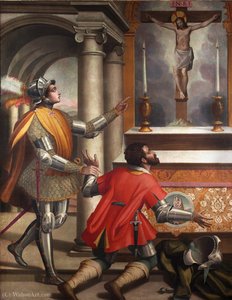
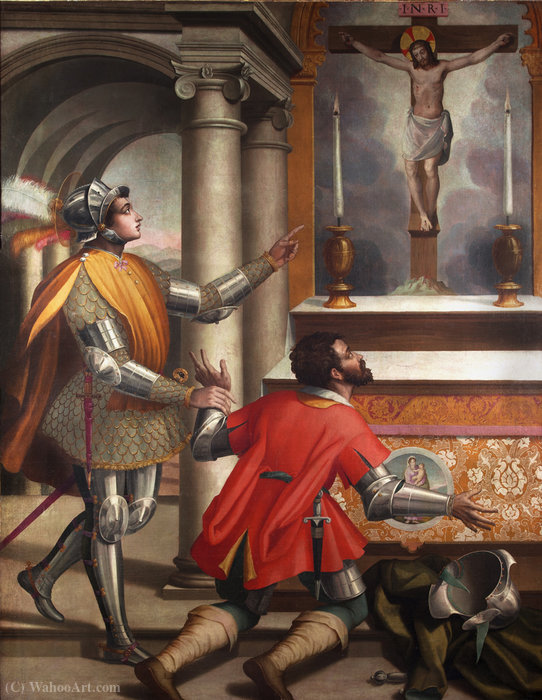
St. john gualbert and the killer of his brother before the crucifix of san miniato
 Read More
Hand Made Oil Reproduction
Hand-painted oil on canvas in your size and frame, made to order by our artists. ( Buy Print Buy Image)




































Pick from our preset sizes that match the artwork's original proportions.

You may enter your own dimensions to fit a specific frame or space. If your selected size does not match the original image's proportions, we will either crop the artwork or extend the painting with additional hand-painted elements. A digital mockup will be sent for your approval before production begins.
Please note that the on-screen preview does not reflect the actual cropping or extension. Only the mockup will accurately show the final composition.
While custom sizes are available, we recommend selecting a dimension from the predefined list to preserve the original proportions.
After order, ArtsDot.com team will email client for instructions and provide a mockup preview
Worldwide Delivery () in 3/4 weeks instead of standard 5 weeks. (28 August). No compromise on quality.

Free Worldwide Express Shipping

High-Quality Linen Canvas

Full Shipping Insurance

Customs Tax Refund Guarantee

True Color Matching Guarantee

60-Day Return Policy (Defects Only)

100% Money-Back Guarantee

Bulk Discount Offer
 Glass option is only available in size under 110 CM

St. john gualbert and the killer of his brother before the crucifix of san miniato
Reproduction Medium
Reproduction Size
-


Total Price
$ 263
Related Artworks
Artist Biography
Giorgio Vasari: The Architect of Art History
The year 1550 marks a pivotal moment, not just in the artistic landscape of Florence but also in the very way we understand and appreciate art itself. It was the year that Giorgio Vasari, a painter, architect, and writer, published *Le Vite de' più eccellenti pittori, scultori, et architettori* – “The Lives of the Most Eminent Painters, Sculptors, and Architects” – a monumental work that would forever alter the course of art history. This ambitious project, initially conceived as a celebration of Italian artistic achievement, ultimately laid the groundwork for systematic art criticism and biographical study, establishing Vasari as the father of the genre.
Born in Florence around 1511 (the exact date remains uncertain), Vasari’s early life was marked by hardship. He apprenticed under Domenico Ghirlandaio, a prominent Florentine painter, learning the fundamentals of fresco painting and portraiture. However, his ambition extended beyond mere technical skill; he yearned to understand the lives and creative processes of the great masters who had shaped Italian art. This desire led him to become associated with Cardinal Giulio de’ Medici, later Pope Clement VII, serving as a court painter and architect for several years. It was during this period that he began meticulously documenting the careers of his artistic peers, laying the foundation for *The Lives*.
The initial impetus for Vasari's undertaking came from Paolo Giovio, a fellow humanist and writer who sought to compile a comprehensive history of contemporary artists. Recognizing the potential of a biographical approach, Vasari took on the project, initially intending to focus solely on painters and sculptors. However, as he delved deeper into the lives of these figures, he expanded his scope to include architects, recognizing their crucial role in shaping the visual world. The first edition of *The Lives*, published in 1550, was a two-volume work, a testament to Vasari’s dedication and ambition. A revised and enlarged version, incorporating a greater emphasis on Venetian art – a significant departure from the Florentine bias prevalent at the time – appeared in 1568.
The Structure and Content of *The Lives*
*The Lives* is not simply a collection of biographies; it’s a carefully constructed narrative, interwoven with Vasari's own artistic theories and observations. Each entry typically begins with a detailed account of the artist’s life, tracing their origins, training, and professional development. He meticulously documented their patrons, commissions, and stylistic evolution, offering insights into the social and political contexts that shaped their work. Beyond biographical details, Vasari provided technical analyses of the artists' techniques, discussing materials, methods, and compositional principles. He frequently included anecdotes and personal observations, lending a human dimension to these artistic figures.
Vasari’s approach was revolutionary for its time. He moved away from purely formalistic analysis, focusing instead on the artist as an individual – their personality, motivations, and creative process. This shift marked a significant departure from earlier art criticism, which primarily concerned itself with identifying stylistic trends and imitating classical models. Furthermore, Vasari’s emphasis on the importance of artistic lineage—tracing the influence of masters and pupils—established a framework for understanding the development of Italian art over centuries.
Vasari's Artistic Contributions
While *The Lives* is undoubtedly Vasari’s most enduring legacy, he was also a skilled artist and architect in his own right. He served as the chief architect for the Palazzo Vecchio in Florence, designing numerous rooms and public spaces. His architectural style blended Renaissance classicism with elements of Mannerism, creating buildings that were both elegant and imposing. He also contributed significantly to the decoration of the Uffizi Gallery, a complex of government offices and art collections, where he designed the grand staircase and several other important spaces.
Vasari’s paintings, though less celebrated than his writings, demonstrate a mastery of fresco painting and portraiture. He produced numerous portraits of prominent Florentine figures, capturing their likenesses with remarkable accuracy and psychological insight. His work reflects the influence of Leonardo da Vinci and Raphael, showcasing a refined sense of composition, color, and detail.
Legacy and Historical Significance
Giorgio Vasari’s *The Lives* remains an invaluable resource for art historians and scholars today. It provides a wealth of information about the lives and works of Italian artists during the Renaissance, offering insights into their creative processes, social contexts, and artistic influences. More importantly, it established the tradition of biographical art criticism, shaping the way we approach the study of art history.
Vasari’s work was not without its biases. His strong Florentine patriotism occasionally led him to overemphasize the achievements of his native city, sometimes at the expense of other artistic centers like Venice and Rome. However, these criticisms do not diminish the significance of *The Lives* as a pioneering achievement in art history. Vasari’s meticulous research, insightful observations, and engaging narrative continue to captivate readers centuries after its publication, solidifying his place as “the father of art history.”
alessandro pieroni
1550 - 1607 , Italy
Quick Facts
- Artistic Movement Or Style: Renaissance art history
- Artists Or Movements Influenced By This Artist: ["Vasari's work shaped art history"]
- Artists Who Influenced This Artist:
- Leonardo da Vinci
- Michelangelo
- Date Of Birth: 1511
- Date Of Death: 1574
- Full Name: Giorgio Vasari
- Nationality: Italian
- Notable Artworks:
- Lives of the Most Eminent Painters...
- The Lives of the Most Eminent Sculptors...
- Place Of Birth: Florence, Italy