 Preview
 Send
Send Share
Share
 Details

 Download
 Similars
 X-Ray
X-Ray Diaporama
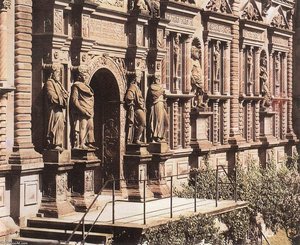
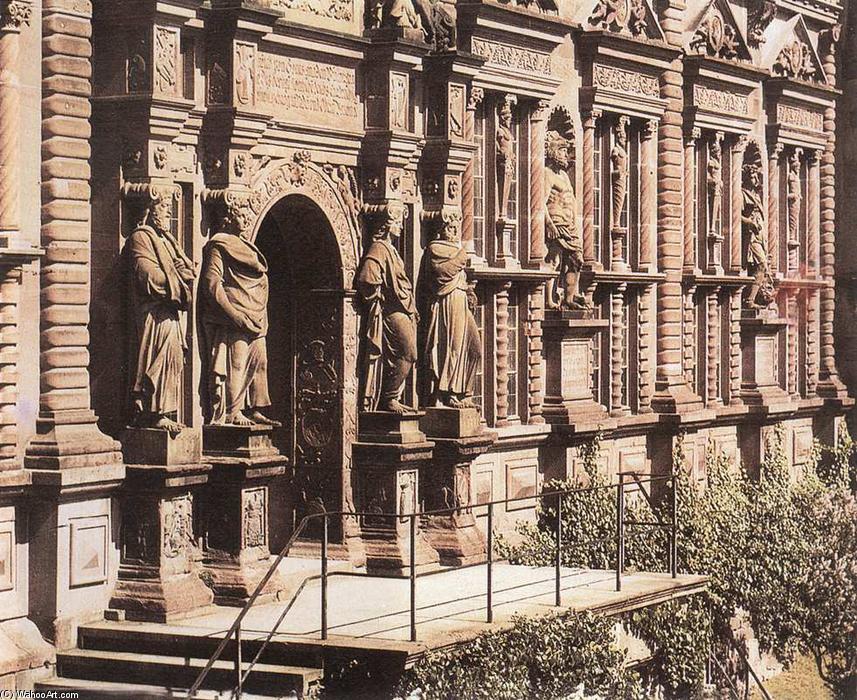
Facade Of The Otto Heinrich Wing


 Read More
Hand Made Oil Reproduction
Hand-painted oil on canvas in your size and frame, made to order by our artists. ( Buy Print Buy Image)




































Pick from our preset sizes that match the artwork's original proportions.

You may enter your own dimensions to fit a specific frame or space. If your selected size does not match the original image's proportions, we will either crop the artwork or extend the painting with additional hand-painted elements. A digital mockup will be sent for your approval before production begins.
Please note that the on-screen preview does not reflect the actual cropping or extension. Only the mockup will accurately show the final composition.
While custom sizes are available, we recommend selecting a dimension from the predefined list to preserve the original proportions.
After order, ArtsDot.com team will email client for instructions and provide a mockup preview
Worldwide Delivery () in 3/4 weeks instead of standard 5 weeks. (26 August). No compromise on quality.

Free Worldwide Express Shipping

High-Quality Linen Canvas

Full Shipping Insurance

Customs Tax Refund Guarantee

True Color Matching Guarantee

60-Day Return Policy (Defects Only)

100% Money-Back Guarantee

Bulk Discount Offer
 Glass option is only available in size under 110 CM

Facade Of The Otto Heinrich Wing
Reproduction Medium
Reproduction Size
-


Total Price
$ 263
Related Artworks








Artist Biography
Giuseppe Arcimboldo: A Master of Immersive Portraits
Giuseppe Arcimboldo, born in Genoa on November 18, 1527, and passing away in Milan on July 11, 1593, was not merely a painter; he was a visionary sculptor of images. His unique approach to portraiture—transforming everyday objects like fruits, vegetables, flowers, books, and even animals into strikingly recognizable human faces – cemented his place as one of the most inventive and enduring figures of the Italian Renaissance. Arcimboldo’s work transcends simple representation, delving into themes of nature, mythology, and perhaps even a subtle commentary on mortality and the passage of time. He was a master of illusion, inviting viewers to engage in a complex visual puzzle, prompting questions about identity, symbolism, and the very definition of art itself.Early Life and Artistic Training
Arcimboldo’s artistic journey began within the established framework of Genoa’s vibrant art scene. His father, Biagio Arcimboldo, was a respected painter working for the offices of the Duomo in Milan, specializing in stained glass and frescoes. This provided Giuseppe with an invaluable foundation in decorative arts and fresco techniques – skills he would later skillfully adapt to his revolutionary portrait style. He initially followed in his father’s footsteps, gaining experience designing intricate window panels and contributing to grand religious murals. However, Arcimboldo's ambition extended beyond the traditional roles of a court painter; he sought to forge his own distinct artistic identity. His early career involved assisting established artists like Giuseppe Meda on significant projects within Milan’s cathedral, further honing his technical abilities and exposing him to diverse artistic styles.The Imperial Court and a New Style Emerges
Arcimboldo's trajectory shifted dramatically in 1562 when he accepted a position as court painter for Ferdinand I, the Holy Roman Emperor, in Vienna. This marked a pivotal moment in his career, propelling him into the heart of Habsburg power and introducing him to a new audience. He quickly established himself as a highly sought-after decorator and portraitist, creating elaborate images that catered to the Emperor’s eccentric tastes. His portraits weren't simply likenesses; they were carefully constructed narratives, brimming with symbolic meaning. For example, his “Four Seasons” (1566), a monumental work featuring each season represented by an assemblage of natural elements, demonstrated his mastery of composition and his ability to imbue inanimate objects with life and personality. Later, he served Maximilian II and Rudolf II in Prague, continuing to produce both religious subjects and increasingly elaborate symbolic compositions.The Grotesque and the Renaissance Neo-Platonism
Arcimboldo’s most celebrated works—the “grotesque” portraits—are not merely whimsical displays of artistic ingenuity; they are deeply rooted in intellectual currents of the time. The late 16th century witnessed a resurgence of interest in Renaissance Neo-Platonism, which sought to reconcile classical philosophy with Christian theology. This philosophical movement emphasized the interconnectedness of all things and saw beauty as a reflection of divine order. Arcimboldo’s use of natural elements—fruits, vegetables, flowers—can be interpreted as an embodiment of this philosophy, suggesting that even in death, these objects retain their inherent beauty and vitality. The arrangement of these items within the human form creates a powerful metaphor for the cyclical nature of life and the transience of earthly existence. Critics have debated whether Arcimboldo’s work was purely a courtly amusement or if it genuinely engaged with these complex philosophical ideas, but the sheer inventiveness and symbolic richness of his portraits suggest a deeper intellectual engagement.Legacy and Lasting Influence
Despite his considerable success and recognition during his lifetime, Arcimboldo’s unconventional style largely faded from public view after his death. However, in the 20th century, his work experienced a remarkable revival, fueled by renewed interest in Mannerism and the Surrealist movement. His innovative approach to portraiture has inspired countless artists across various disciplines, including photography, collage, and digital art. Arcimboldo’s legacy lies not only in his individual masterpieces but also in his pioneering spirit—his willingness to challenge artistic conventions and explore new ways of representing the human form. His work continues to fascinate and intrigue viewers today, reminding us of the power of art to transform the ordinary into the extraordinary and to invite us to contemplate the mysteries of life, death, and beauty. His influence can be seen in contemporary artists who utilize found objects and unconventional materials to create thought-provoking and visually arresting works.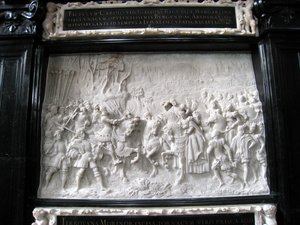
alexander colyn
1527 - 1612 , Belgium
Quick Facts
- Artistic Movement Or Style: Mannerism, Portraiture
- Artists Or Movements Influenced By This Artist: ['Renaissance Neo-Platonism']
- Artists Who Influenced This Artist: ['Biagio Arcimboldo (father)']
- Date Of Birth: April 5, 1527
- Date Of Death: July 11, 1593
- Full Name: Giuseppe Arcimboldo
- Nationality: Italian
- Notable Artworks:
- Flora (c. 1566)
- Vertumnus (c. 1591)
- Place Of Birth: Milan, Italy