 Preview
 Send
Send Share
Share
 Details

 Download
 Similars
 X-Ray
X-Ray Diaporama
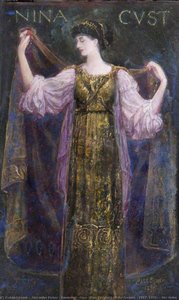
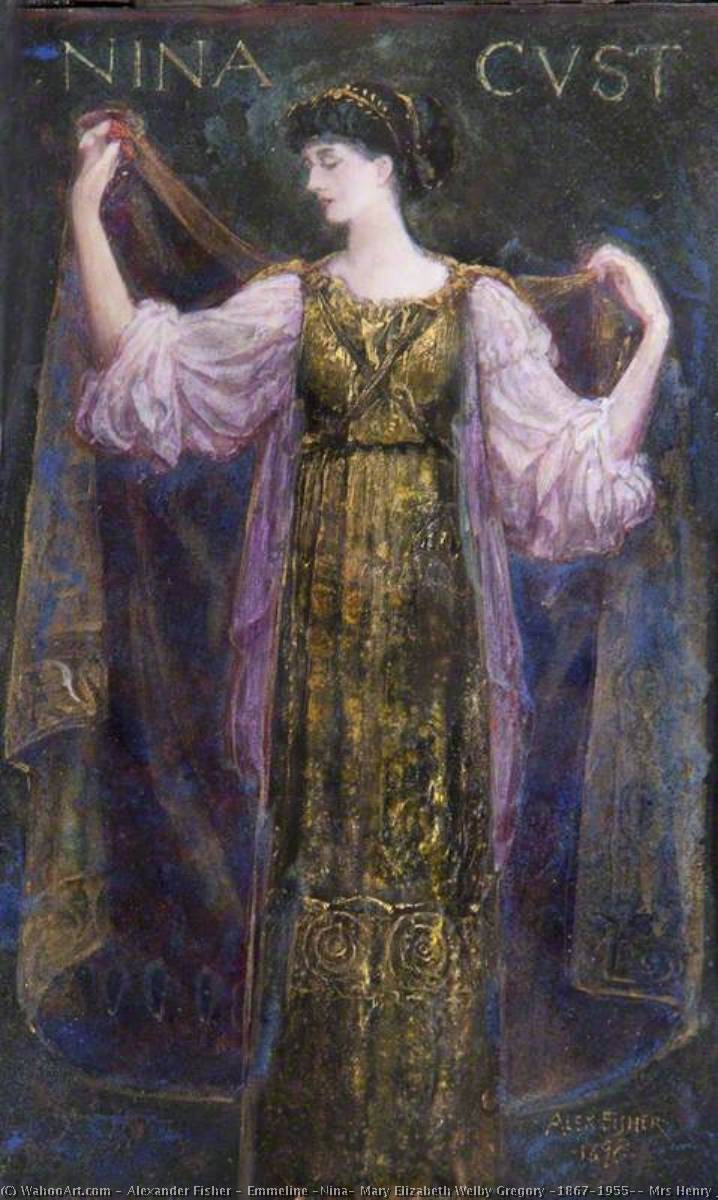
Emmeline 'Nina' Mary Elizabeth Welby Gregory (1867–1955), Mrs Henry John Cockayne Cust
 18.0 x 11.0 cm
 National Trust
 Read More
Giclée / Art Print
Museum-quality giclée or canvas print with fast production and flexible finish options. ( Buy Hand Made Painting Buy Image)




































Pick from our preset sizes that match the artwork's original proportions.

You may enter your own dimensions to fit a specific frame or space. If your selected size does not match the original image's proportions, we will either crop the artwork or extend the image with a mirrored or solid-fill edge. A digital mockup will be sent for your approval before production begins.
Please note that the on-screen preview does not reflect the actual cropping or extension. Only the mockup will accurately show the final composition.
While custom sizes are available, we recommend selecting a dimension from the predefined list to preserve the original proportions.
Worldwide Delivery () in 2 weeks instead of standard 4/5 weeks. (27 August)

Free Worldwide Express Shipping

High-Quality Linen Canvas

Full Shipping Insurance

Customs Tax Refund Guarantee

True Color Matching Guarantee

60-Day Return Policy (Defects Only)

100% Money-Back Guarantee

Bulk Discount Offer
 Glass option is only available in size under 110 CM

Emmeline 'Nina' Mary Elizabeth Welby Gregory (1867–1955), Mrs Henry John Cockayne Cust
Giclée / Art Print
Reproduction Size
-


Total Price
$ 63
Related Artworks









Artist Biography
A Life Dedicated to Beauty: The Art of Alexander Fisher
Alexander Fisher (born in 1867, died 1934) was a pivotal figure in the British Arts and Crafts movement, though his name remains surprisingly less known than contemporaries like William Morris or Charles Ashbee. This is perhaps due to the breadth of his talents – he excelled not only as a painter, particularly renowned for his exquisite depictions of roses, but also as an accomplished enamelist and highly respected silversmith. Fisher’s life was one devoted to the pursuit of beauty in all its forms, seamlessly blending classical influences with the aesthetic principles of the Arts and Crafts ethos. He wasn't merely replicating styles; he was synthesizing them into a uniquely personal vision that celebrated craftsmanship, naturalism, and refined elegance. His early training laid the foundation for this multifaceted career, beginning at the Birmingham School of Art under Henry Payne, where he developed a strong grounding in drawing and design. This formal education was followed by studies at the South Kensington Schools (later the Royal College of Art), exposing him to a wider range of artistic traditions and techniques. However, it was his subsequent apprenticeship with A.J. Collings, a leading silversmith, that truly shaped his path, instilling in him a deep appreciation for the meticulous processes involved in creating objects of lasting quality.From Silverware to Canvas: The Evolution of an Artistic Style
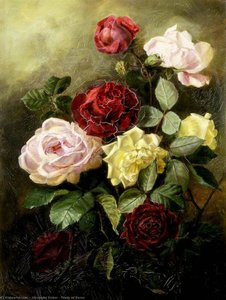
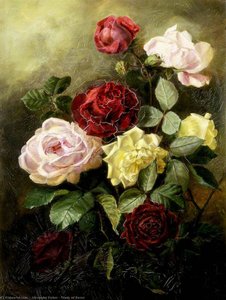
Fisher initially established himself as a skilled silversmith, producing pieces characterized by their graceful forms and delicate detailing. His work during this period often drew inspiration from 18th-century designs, reflecting a broader revival of interest in historical styles within the Arts and Crafts movement. However, he soon began to explore other artistic avenues, most notably painting. This transition wasn’t abrupt; rather, it was a natural extension of his existing sensibilities. The same attention to detail and refined aesthetic that informed his silverware found expression in his canvases. He became particularly celebrated for his paintings of roses – not the idealized, romanticized roses of earlier traditions, but meticulously observed studies capturing their subtle nuances of color, form, and texture. These weren’t simply botanical illustrations; they were imbued with a sense of quiet contemplation and poetic beauty. Simultaneously, Fisher embarked on a remarkable career in enamel work, becoming one of the leading exponents of *Limoges enameling* techniques in Britain. His enamel panels, often depicting floral motifs or classical scenes, showcased his mastery of color and his ability to create luminous, jewel-like surfaces. He frequently combined these different mediums – incorporating enamel into his silverwork or using painted designs as studies for larger enamel compositions.Influences and Artistic Philosophy
Fisher’s artistic development was shaped by a confluence of influences. The Pre-Raphaelites, with their emphasis on naturalism and detailed observation, undoubtedly played a role in his early work. He admired the clarity of form and vibrant color found in Italian Renaissance painting, particularly the works of Botticelli and Fra Angelico. However, he wasn’t simply imitating these masters; he was adapting their principles to suit his own aesthetic vision. The Arts and Crafts movement itself provided a crucial framework for his artistic philosophy. Fisher believed strongly in the importance of craftsmanship, rejecting mass-produced objects in favor of handmade items that celebrated skill and individuality. He also embraced the movement's emphasis on *naturalism*, seeking inspiration from the natural world and striving to depict it with accuracy and sensitivity. His work often reflects a sense of harmony between art and nature, suggesting a deep respect for the beauty and order inherent in the natural world. He saw his role as an artist not merely as creating beautiful objects, but as elevating everyday life through the quality and artistry of his creations.Major Achievements and Legacy
Throughout his career, Fisher exhibited widely, gaining recognition for his exceptional skill and refined aesthetic. He contributed to numerous Arts and Crafts exhibitions, showcasing his silverware, paintings, and enamel work. His pieces were highly sought after by collectors and connoisseurs, and he received commissions from prominent patrons of the arts. While he didn’t found a large workshop like some of his contemporaries, Fisher exerted a significant influence on other artists through his teaching and mentorship. He lectured at various art schools and encouraged students to embrace craftsmanship and naturalism in their own work. His enamel panels were particularly influential, inspiring a new generation of enamelists to explore the possibilities of this ancient medium. His paintings of roses remain highly prized for their delicate beauty and meticulous detail. Today, Fisher’s work is held in numerous public and private collections, including the Victoria and Albert Museum and the British Museum. His legacy lies not only in the exquisite objects he created but also in his unwavering commitment to craftsmanship, naturalism, and refined elegance – principles that continue to resonate with artists and designers today.Historical Significance
Alexander Fisher occupies a unique position within the history of the Arts and Crafts movement. He wasn’t solely focused on one particular craft; he excelled in multiple disciplines, demonstrating a remarkable versatility and artistic range. This breadth of talent allowed him to explore the interconnectedness between different art forms and to create works that seamlessly blended painting, enamel work, and silversmithing. His emphasis on classical influences set him apart from some of his more overtly medievalist contemporaries, suggesting a broader understanding of historical styles and their potential for contemporary expression.- He helped to elevate the status of enamel work within British art.
- His paintings of roses represent a significant contribution to botanical art.
- His silverwork embodies the aesthetic principles of the Arts and Crafts movement.
Quick Facts
- Artistic Movement Or Style: Arts & Crafts
- Current Meta Keywords: Painter, Enamels, Silversmith
- Full Name: Alexander Fisher
- Notable Artworks:
- Rose Paintings
- Frieze Designs
- Enamel Artistry