 Preview
 Send
Send Share
Share
 Details

 Download
 Similars
 X-Ray
X-Ray Diaporama
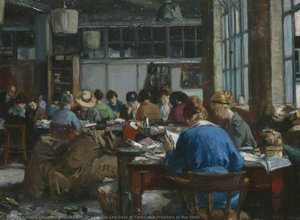
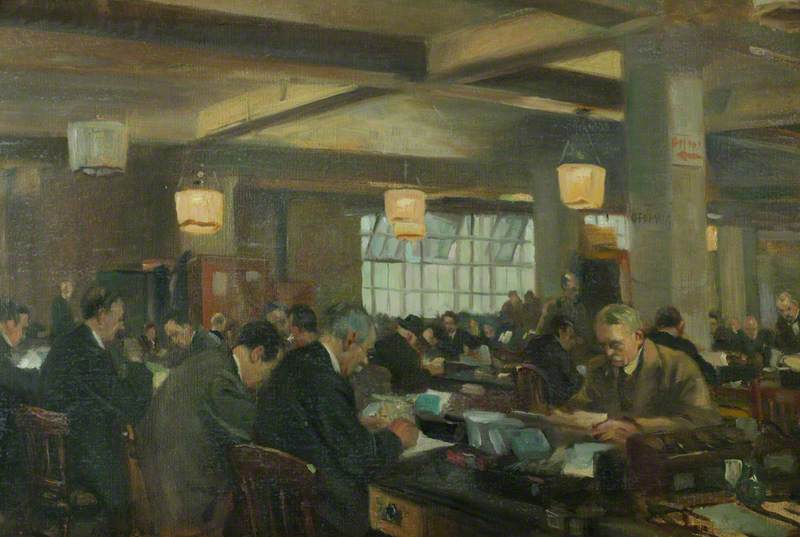
A Room in the Censor's Office Neutral Trade Mails
 1919
1919 51.0 x 76.0 cm
 Read More
Hand Made Oil Reproduction
Hand-painted oil on canvas in your size and frame, made to order by our artists. ( Buy Print Buy Image)




































Pick from our preset sizes that match the artwork's original proportions.

You may enter your own dimensions to fit a specific frame or space. If your selected size does not match the original image's proportions, we will either crop the artwork or extend the painting with additional hand-painted elements. A digital mockup will be sent for your approval before production begins.
Please note that the on-screen preview does not reflect the actual cropping or extension. Only the mockup will accurately show the final composition.
While custom sizes are available, we recommend selecting a dimension from the predefined list to preserve the original proportions.
After order, ArtsDot.com team will email client for instructions and provide a mockup preview
Worldwide Delivery () in 3/4 weeks instead of standard 5 weeks. (22 August). No compromise on quality.

Free Worldwide Express Shipping

High-Quality Linen Canvas

Full Shipping Insurance

Customs Tax Refund Guarantee

True Color Matching Guarantee

60-Day Return Policy (Defects Only)

100% Money-Back Guarantee

Bulk Discount Offer
 Glass option is only available in size under 110 CM

A Room in the Censor's Office Neutral Trade Mails
Reproduction Medium
Reproduction Size
-


Total Price
$ 263
Related Artworks









Artist Biography
Introduction: Echoes of London’s Censorship Office
Alexander Joshua Caleb Bryce's artistic vision is rooted in a fascination with historical narratives and the subtle interplay between power, communication, and visual representation. Primarily focused on depictions of London’s Clerkenwell Green – specifically the Censorship Office – his work delves into a period marked by stringent governmental control over information dissemination during World War II. Bryce doesn't merely recreate scenes; he imbues them with symbolic depth, prompting viewers to contemplate the anxieties surrounding wartime propaganda and the role of art as both witness and participant in shaping public opinion. His meticulous attention to detail—captured through watercolor techniques—reflects a commitment to conveying not just what was seen but also how it felt.Early Life & Influences: Shaping a Vision
Born in Gig Harbor, Washington, Bryce’s formative years instilled within him an appreciation for observation and storytelling. Details from his childhood – particularly encounters with the natural landscape of Puget Sound – subtly inform his artistic sensibilities. While biographical information remains sparse, references to Davis Alexander (a fellow Portland State alumnus) suggest a shared intellectual curiosity regarding social dynamics and the impact of environment on human experience. These influences contribute to Bryce’s overarching thematic concerns: exploring how individuals respond to societal pressures and how art can serve as a conduit for conveying complex emotions and ideas.The Censorship Office Series: Technique & Symbolism
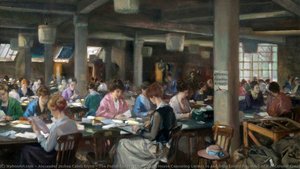
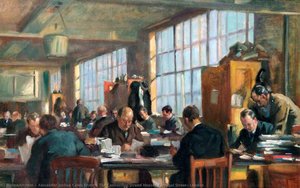
Bryce's celebrated series centered around the Censorship Office exemplifies his mastery of watercolor painting and his profound understanding of historical symbolism. He painstakingly recreated the interior of the office, capturing the muted tones and cluttered surfaces that mirrored the atmosphere of wartime London. The deliberate use of neutral trade mails—a poignant reminder of intercepted correspondence—served as a central motif, symbolizing the suppression of dissent and the pervasive surveillance prevalent during the conflict. Bryce’s technique—characterized by layering washes of color to achieve luminous effects—allowed him to convey both visual accuracy and emotional resonance.Development & Artistic Evolution
Bryce's artistic journey progressed from initial explorations in watercolor to increasingly ambitious projects that interrogated broader social issues. His engagement with Mail Art – a collaborative form of artistic expression rooted in postal correspondence – broadened his creative horizons and solidified his commitment to challenging conventional notions of authorship and dissemination. This experimentation reflects a desire to push boundaries, both technically and conceptually, demonstrating Bryce’s willingness to embrace new mediums and approaches while retaining core aesthetic principles.Historical Significance & Legacy
Bryce's depictions of Clerkenwell Green stand as powerful testaments to the anxieties surrounding censorship during World War II and offer valuable insights into the role of art in shaping public discourse. His work contributes to a larger conversation about artistic responses to political upheaval, prompting viewers to consider how artists grapple with ethical dilemmas and strive to communicate truth amidst propaganda. By meticulously reconstructing historical scenes and imbuing them with symbolic meaning, Bryce elevates his paintings beyond mere visual representations—transforming them into evocative narratives that endure as reflections of a pivotal moment in British history.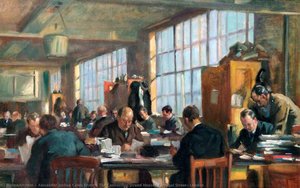
Quick Facts
- Artistic Movement Or Style: Contemporary Art
- Artists Or Movements Influenced By This Artist: ['Mail Art']
- Artists Who Influenced This Artist: ['Davis Alexander']
- Date Of Death: Living
- Full Name: Alexander Joshua Caleb Bryce
- Nationality: American
- Notable Artworks:
- The Last Days of Censorship Prisoners of War Mails
- Clerkenwell Green
- Place Of Birth: Gig Harbor, Washington