 Preview
 Send
Send Share
Share
 Details

 Download
 Similars
 X-Ray
X-Ray Diaporama
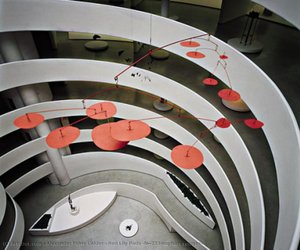
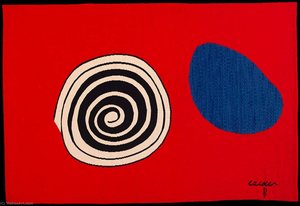
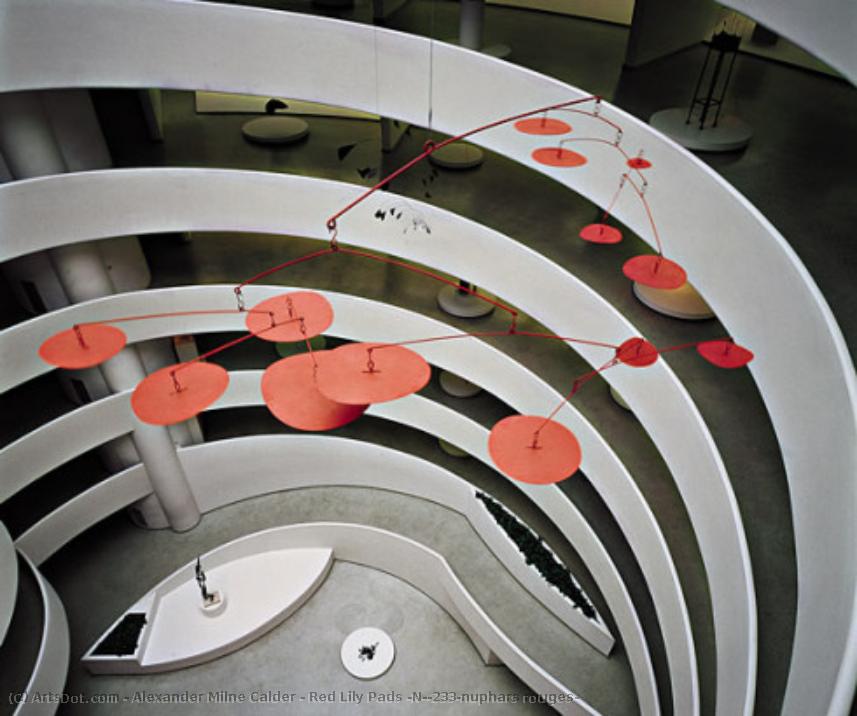
Red Lily Pads (Nénuphars rouges)


 Read More
Giclée / Art Print
Museum-quality giclée or canvas print with fast production and flexible finish options. ( Buy Hand Made Painting Buy Image)




P118B $10

P118H $10

P118W $10

P438Z $10

P508JH $12

P508YH $12

P805H $10

P805Z $10

P919BZ $10

P919G $10

P919XJ $10

P959ZH $10

P968JZ $12

W106C $8

W218G $10

W218JH $8

W218Y $10

W307PJ $10

W316G $10

W316PJ $8

W316Y $10

W398PJ $8

W4111J $10

W500HY $15

W500JH $15

W692G $12

W849H $8

W940BG $15

W953PJ $8




Pick from our preset sizes that match the artwork's original proportions.

You may enter your own dimensions to fit a specific frame or space. If your selected size does not match the original image's proportions, we will either crop the artwork or extend the image with a mirrored or solid-fill edge. A digital mockup will be sent for your approval before production begins.
Please note that the on-screen preview does not reflect the actual cropping or extension. Only the mockup will accurately show the final composition.
While custom sizes are available, we recommend selecting a dimension from the predefined list to preserve the original proportions.
Worldwide Delivery () in 2 weeks instead of standard 4/5 weeks. (18 August)

Free Worldwide Express Shipping

High-Quality Linen Canvas

Full Shipping Insurance

Customs Tax Refund Guarantee

True Color Matching Guarantee

60-Day Return Policy (Defects Only)

100% Money-Back Guarantee

Bulk Discount Offer
 Glass option is only available in size under 110 CM

Red Lily Pads (Nénuphars rouges)
Giclée / Art Print
Reproduction Size
-


Total Price
$ 63
Collectible Description
A Dance of Light and Reflection: Unveiling Calder’s “Red Lily Pads”
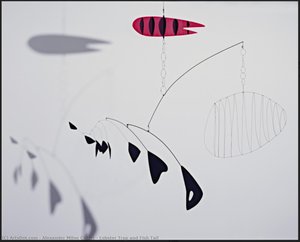
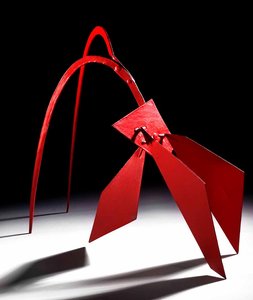
Alexander Milne Calder's "Red Lily Pads (Nénuphars rouges)" isn’t merely a depiction of a serene pond; it’s an invitation to lose oneself in the delicate balance of form, color, and movement. Created in 1956, this captivating sculpture – captured through a masterful photograph – embodies Calder's signature approach: embracing chance and celebrating the ephemeral beauty of nature within a distinctly modern aesthetic. The piece resides within a contemporary architectural space, its organic shapes echoing the curves of the surrounding walls, creating an illusion of seamless integration between art and environment.
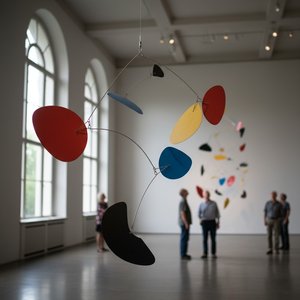
The composition immediately draws the eye to the central arrangement of circular lily pads, rendered in a vibrant coral-red that commands attention against the cool neutrality of the white architecture. These aren’t static forms; they possess a subtle dynamism, hinting at an unseen movement – perhaps the gentle sway of water or the whisper of air currents. The delicate wires and rods connecting them are almost invisible, yet crucial to the sculpture's overall effect, suggesting a complex network of support and balance. Calder masterfully utilizes negative space, allowing the surrounding walls to contribute significantly to the artwork’s visual weight and sense of openness.
The Legacy of a Pioneer: Calder and His Architectural Sculptures
To fully appreciate “Red Lily Pads,” it's essential to understand Alexander Milne Calder’s broader artistic trajectory. Born in Aberdeen, Scotland, in 1846, he initially trained as a stonemason before embarking on a career that would ultimately define him as one of the 20th century’s most innovative sculptors. His early work focused on monumental commissions for public buildings, notably his groundbreaking design for Philadelphia City Hall – a project that spanned two decades and involved over 250 individual sculptures. This experience profoundly shaped Calder's approach to architectural sculpture, instilling in him a deep appreciation for the interplay between form, space, and function.
Calder’s fascination with movement is evident throughout his oeuvre, but it’s perhaps most powerfully expressed in his mobiles – kinetic sculptures that respond to air currents. “Red Lily Pads” represents a shift towards a more static form while retaining this core principle of dynamic balance. The photograph captures a fleeting moment of equilibrium, suggesting the constant negotiation between stability and motion that characterizes Calder's work.
Symbolism and Emotional Resonance
The lily pad itself is a potent symbol – representing tranquility, purity, and rebirth. In this context, however, Calder subverts traditional associations, transforming these symbols into an abstract meditation on form and color. The red hue adds a layer of intensity, evoking feelings of passion, energy, and perhaps even a hint of melancholy. The surrounding white walls create a sense of serenity and contemplation, inviting the viewer to lose themselves in the sculpture’s visual rhythm.
Ultimately, “Red Lily Pads” is more than just a beautiful image; it's an invitation to experience the world through Calder’s unique lens. It speaks to our innate desire for balance, harmony, and connection with nature – qualities that resonate deeply in today’s increasingly complex and chaotic environment.
Related Artworks
Artist Biography
introduction to alexander milne calder
alexander milne calder was a scottish american sculptor, born in aberdeen, scotland in 1846. he is best known for his architectural sculpture of philadelphia city hall, and both his son, alexander stirling calder, and grandson, alexander 'sandy' calder, became significant sculptors in the 20th century.early life and career
alexander milne calder began his career in scotland, working for sculptor john rhind, while attending the royal academy in edinburgh. he moved to london and worked on the albert memorial. calder immigrated to the united states in 1868 and settled in philadelphia, where he studied with joseph a. bailly and took classes with thomas eakins at the pennsylvania academy of fine arts.notable works
some of alexander milne calder's notable works include:- philadelphia city hall: a commission that involved more than 250 pieces in marble and bronze, taking calder 20 years to complete.
- william penn: a colossal bronze statue that was to crown the city hall's tower.
- indian figure: a sculpture prior to its installation on city hall.
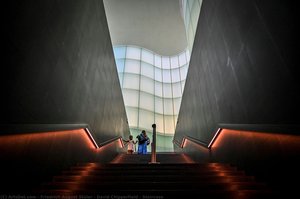
- south portal and west portal: illuminated with colored lights, showcasing calder's attention to detail.
legacy
alexander milne calder's legacy extends beyond his own work, as both his son and grandson became prominent sculptors. his contributions to the world of art can be seen in various museums, including the smithsonian american art museum and the galleria civica di arte moderna e contemporanea torino. to learn more about alexander milne calder and his work, visit https://ArtsDot.com/@/alexander-milne-calder or explore the wahoo art timeline for a detailed overview of art history. important to note that alexander milne calder's work has been recognized and appreciated by art enthusiasts and scholars alike, making him a significant figure in the world of art. his contributions will continue to be celebrated and studied for generations to come.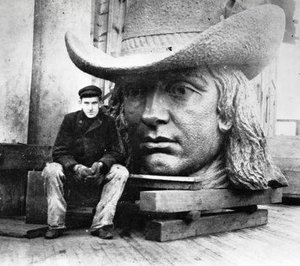
Alexander Milne Calder
1898 - 1976 , United Kingdom
Quick Facts
- Artistic Movement Or Style: Architectural sculpture
- Artists Or Movements Influenced By This Artist:
- Alexander Stirling Calder
- Alexander Calder
- Artists Who Influenced This Artist: ['John Rhind']
- Date Of Birth: August 23, 1846
- Date Of Death: June 14, 1923
- Full Name: Alexander Milne Calder
- Nationality: Scottish-American
- Notable Artworks:
- Philadelphia City Hall
- William Penn statue
- Indian figure
- Place Of Birth: Aberdeen, Scotland
Related Articles
Alexander Calder: Kinetic Sculpture, Mobile Art & the Poetics of Chance
Explore the revolutionary world of Alexander Calder's kinetic sculptures & mobiles. Discover insights for collectors, acquisition advice, and the enduring legacy of this modern master. Expert analysis & art valuation.

Bronze Sculptures That Defined Art History | ArtsDot
Journey through art history with our Top 10 bronze sculptures! Explore masterpieces by Rodin, Michelangelo & more. Discover stories behind iconic statues and find museum-quality reproductions for your home decor at ArtsDot.com.

The Enduring Form: Exploring Themes & Techniques in Sculpture Across Historical Periods
Explore the rich history of sculpture from ancient masterpieces to contemporary innovations. Discover key techniques, influential artists & investment potential for discerning art collectors.

Kandinsky's Masterpieces: 25 Paintings That Define Abstract Art | ArtsDot
Journey through Wassily Kandinsky's 25 most iconic abstract paintings. Explore his revolutionary use of color, form & spiritual expressionism. Find museum-quality Kandinsky reproductions and elevate your home decor with ArtsDot.com. Discover all masterpieces on ArtsDot.com!

Abstract Expressionism's 10 Defining Masterpieces |
Explore 10 defining Abstract Expressionism masterpieces by Pollock, Rothko & de Kooning. Discover the stories behind these iconic paintings and find museum-quality art reproductions to elevate your home decor on .