 Preview
 Send
Send Share
Share
 Details

 Download
 Similars
 X-Ray
X-Ray Diaporama
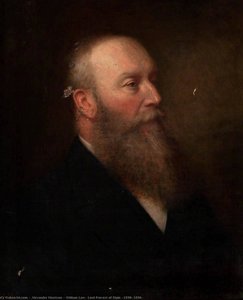
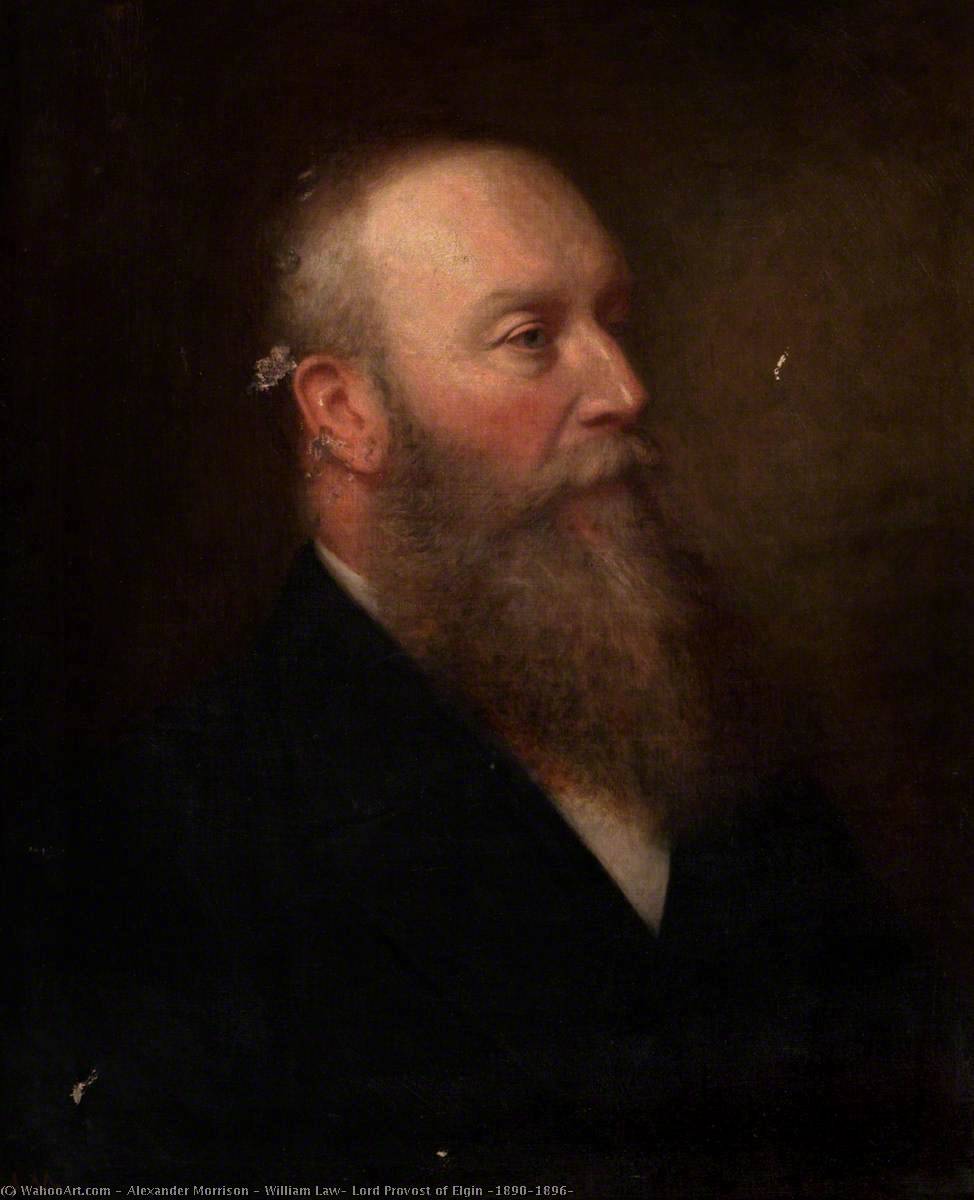
William Law, Lord Provost of Elgin (1890–1896)
 1896
1896 61.0 x 51.0 cm
 Read More
Giclée / Art Print
Museum-quality giclée or canvas print with fast production and flexible finish options. ( Buy Hand Made Painting Buy Image)




































Pick from our preset sizes that match the artwork's original proportions.

You may enter your own dimensions to fit a specific frame or space. If your selected size does not match the original image's proportions, we will either crop the artwork or extend the image with a mirrored or solid-fill edge. A digital mockup will be sent for your approval before production begins.
Please note that the on-screen preview does not reflect the actual cropping or extension. Only the mockup will accurately show the final composition.
While custom sizes are available, we recommend selecting a dimension from the predefined list to preserve the original proportions.
Worldwide Delivery () in 2 weeks instead of standard 4/5 weeks. (25 August)

Free Worldwide Express Shipping

High-Quality Linen Canvas

Full Shipping Insurance

Customs Tax Refund Guarantee

True Color Matching Guarantee

60-Day Return Policy (Defects Only)

100% Money-Back Guarantee

Bulk Discount Offer
 Glass option is only available in size under 110 CM

William Law, Lord Provost of Elgin (1890–1896)
Giclée / Art Print
Reproduction Size
-


Total Price
$ 63
Related Artworks









Artist Biography
A Legacy in Likeness: The Portraiture of Alexander Morrison
Alexander Morrison occupies a fascinating, and often overlooked, niche within the pantheon of 19th-century Scottish portraiture. While not enjoying the widespread fame of contemporaries like Sir Henry Raeburn or William McTaggart, Morrison carved out a significant reputation for his meticulously rendered depictions of civic leaders, military personnel, and prominent figures in Scottish society. His work serves as a compelling visual record of an era defined by both industrial progress and enduring tradition, offering invaluable insights into the character and aspirations of those who shaped it. Born and continuing to live within Scotland, Morrison’s artistic journey began with a dedication to capturing not merely physical resemblance, but also the essence of his sitters – their authority, intellect, and social standing. He became particularly known for what are now referred to as the “Elgin Portraits,” a series commissioned by prominent families in the Moray region, solidifying his place within local artistic history.Early Life and Artistic Foundations
Details regarding Morrison’s formal training remain somewhat scarce, a common characteristic of artists working outside the immediate orbit of major academies. However, it is evident that he possessed a strong grounding in traditional techniques, likely acquired through apprenticeship or private study. The influence of earlier Scottish portraitists – Raeburn's directness and Allan Ramsay’s elegance – can be detected in his early works, though Morrison quickly developed a distinctive style characterized by its precision and attention to detail. He eschewed the flamboyant romanticism that captivated many of his peers, instead favoring a more restrained and dignified approach. This preference suggests an early understanding of the importance of conveying status and respectability through portraiture, a key factor in securing commissions from the upper echelons of Scottish society. His initial focus was on establishing himself within local communities, undertaking portraits of landowners, merchants, and members of the burgeoning professional classes.The Elgin Portraits: A Defining Commission
Morrison’s career reached its zenith with the commission to paint a series of portraits for families associated with the Earls of Elgin. These “Elgin Portraits,” executed over several decades, represent his most significant achievement and showcase his mastery of the genre. The portraits were not simply exercises in likeness; they were statements of lineage, wealth, and social connection. Morrison understood this implicitly, meticulously depicting each sitter within settings that reflected their status and accomplishments. He paid particular attention to clothing, accessories, and symbolic objects, imbuing each portrait with layers of meaning. The portraits are remarkable for their consistency in style and quality, demonstrating a sustained level of artistic excellence over an extended period. They also provide a fascinating glimpse into the lives and aspirations of the Scottish aristocracy during a time of significant social and political change. The commission allowed Morrison to refine his technique, experiment with composition, and establish himself as the preeminent portraitist in the Moray region.Style and Technique: A Study in Realism
Morrison’s artistic style is best described as a refined form of realism, tempered by a sensitivity to character and mood. He was not interested in idealizing his sitters or imposing artificial beauty upon them; rather, he sought to capture their individual features with unflinching accuracy. His brushwork is typically smooth and precise, creating a polished surface that enhances the sense of clarity and detail. He employed a subtle palette of colors, favoring muted tones and earth shades that contribute to the portraits’ dignified atmosphere. Morrison was also adept at using light and shadow to sculpt his sitters’ faces, highlighting their bone structure and conveying a sense of depth and volume. His compositions are generally straightforward and uncluttered, focusing attention on the sitter's face and upper body. While he occasionally incorporated symbolic elements into his portraits, these were always subordinate to the primary goal of capturing likeness and character.Historical Significance and Enduring Legacy
Alexander Morrison’s work holds significant historical value as a visual record of 19th-century Scottish society. His portraits provide invaluable insights into the lives and aspirations of those who shaped the era, offering a glimpse into their social standing, political beliefs, and personal values.- The “Elgin Portraits” are particularly important for documenting the lineage and wealth of prominent families in the Moray region.
- His depictions of military leaders offer a fascinating perspective on Scotland’s role within the British Empire.
- Morrison's portraits of Lord Provosts provide a visual history of civic leadership in Scottish cities.