 Preview
 Send
Send Share
Share
 Details

 Download
 Similars
 X-Ray
X-Ray Diaporama
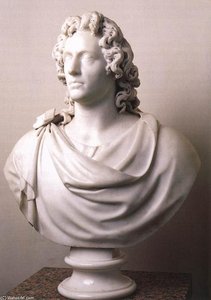
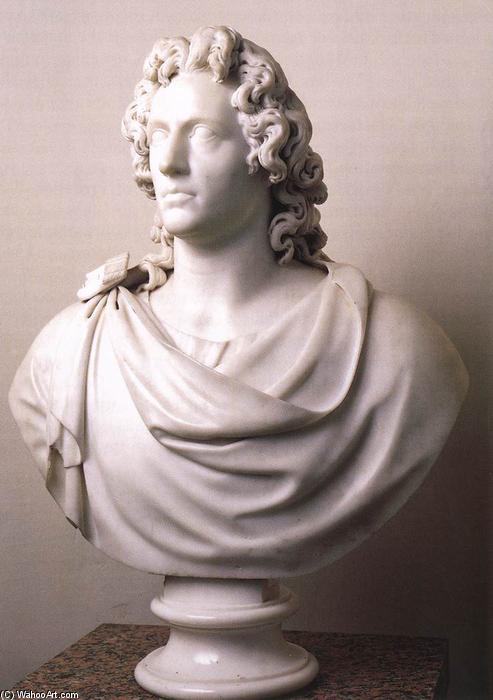
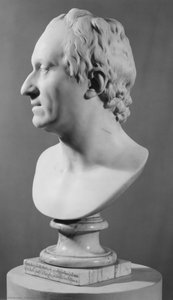
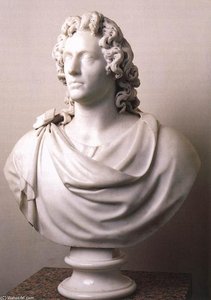
Johann Wolfgang von Goethe


 Read More
Giclée / Art Print
Museum-quality giclée or canvas print with fast production and flexible finish options. ( Buy Hand Made Painting Buy Image)




































Pick from our preset sizes that match the artwork's original proportions.

You may enter your own dimensions to fit a specific frame or space. If your selected size does not match the original image's proportions, we will either crop the artwork or extend the image with a mirrored or solid-fill edge. A digital mockup will be sent for your approval before production begins.
Please note that the on-screen preview does not reflect the actual cropping or extension. Only the mockup will accurately show the final composition.
While custom sizes are available, we recommend selecting a dimension from the predefined list to preserve the original proportions.
Worldwide Delivery () in 2 weeks instead of standard 4/5 weeks. (24 August)

Free Worldwide Express Shipping

High-Quality Linen Canvas

Full Shipping Insurance

Customs Tax Refund Guarantee

True Color Matching Guarantee

60-Day Return Policy (Defects Only)

100% Money-Back Guarantee

Bulk Discount Offer
 Glass option is only available in size under 110 CM

Johann Wolfgang von Goethe
Giclée / Art Print
Reproduction Size
-


Total Price
$ 63
Related Artworks





Artist Biography
The Sculptor of Enlightenment: The Life and Vision of Alexander Trippel
Born in the serene landscape of Schaffhausen, Switzerland, in 1744, Alexander Trippel emerged as a profound voice within the Neoclassical movement, a sculptor whose work sought to bridge the gap between the physical form and the spiritual essence. His early life was deeply rooted in the humanist traditions of his upbringing; as the son of a professor of theology, Trippel was immersed from childhood in the study of classical antiquity and moral philosophy. This intellectual foundation provided the bedrock for a career that would transcend mere craftsmanship, aiming instead to capture the eternal truths found in the grandeur of the ancient world.
Trippel’s artistic journey was one of constant movement across the great cultural hubs of Europe. After honing his technical mastery at the Copenhagen Academy of Art, he ventured through Berlin and Paris, absorbing the evolving aesthetic currents of the era. However, it was in Rome that his creative spirit truly found its sanctuary. In the heart of the classical world, Trippel engaged deeply with the remnants of Greek and Roman antiquity, meticulously studying ancient monuments to master the principles of clarity, balance, and idealized form. His work during this period reflected a rigorous commitment to the Neoclassical ideal, where every curve and contour was designed to evoke a sense of serene permanence.
A Symbiosis of Art and Intellect: The Influence of Goethe
Perhaps the most transformative chapter of Trippel’s life was his profound intellectual partnership with Johann Wolfgang von Goethe. Their friendship, forged in the vibrant artistic circles of Rome, became a powerful catalyst for Trippel's creative evolution. This was not merely a social connection but a deep philosophical dialogue that challenged the sculptor to look beyond the surface of stone. Influenced by Goethe’s explorations of human nature and the sublime, Trippel began to envision sculpture as a medium capable of conveying profound moral and spiritual truths.
This intellectual synergy breathed new life into his subjects. While his technical execution remained rooted in classical precision, his thematic depth expanded significantly:
- Mythological Narratives: He reimagined ancient myths not just as stories, but as psychological explorations of the human condition.
- Psychological Portraiture: His portraits moved beyond mere likeness, striving to capture the inner character and intellectual weight of his subjects.
- Monumental Ambition: Inspired by the need for enduring legacies, he pursued ambitious projects, such as designs for equestrian statues, intended to honor historical figures through a lens of timeless dignity.
Legacy of the Neoclassical Ideal
The significance of Alexander Trippel lies in his ability to synthesize the rigorous discipline of classical sculpture with the burgeoning emotional and philosophical complexities of the Enlightenment. He did not merely replicate the past; he reinterpreted it for a new age of reason and humanism. Through his meticulous study of ancient forms and his collaborative spirit with the era's greatest thinkers, Trippel helped elevate the medium of sculpture from decorative ornamentation to a high art form capable of profound expression.
Though his life was relatively short, ending in 1793, the impact of his vision remains etched in the history of European Neoclassicism. His dedication to the pursuit of idealized beauty and moral truth serves as a testament to an era when art and philosophy were inextricably linked, forever marking him as a sculptor who shaped not just stone, but the very spirit of his time.
alexander trippel
1744 - 1793 , Switzerland
Quick Facts
- Artistic Movement Or Style: Neoclassical Art
- Artists Or Movements Influenced By This Artist: ['Classical Sculpture']
- Artists Who Influenced This Artist: ['Johann Sebastian Bach']
- Date Of Birth: September 27, 1744
- Date Of Death: October 25, 1793
- Full Name: Alexander Trippel
- Nationality: Swiss
- Notable Artworks: ['Portrait of Johann Wolfgang von Goethe']
- Place Of Birth: Schaffhausen, Switzerland