 Preview
 Send
Send Share
Share
 Details

 Download
 Similars
 X-Ray
X-Ray Diaporama
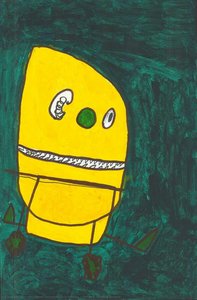
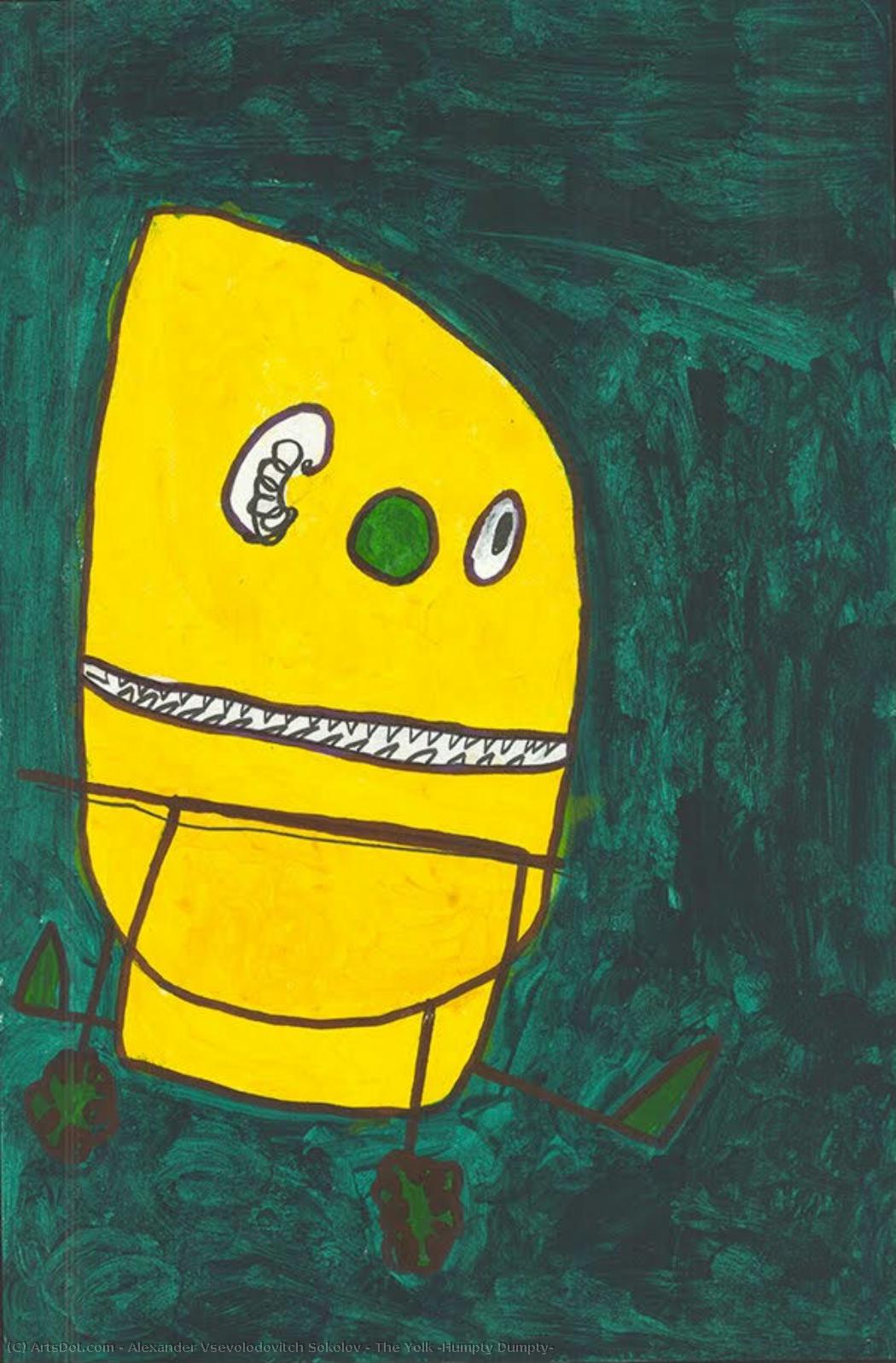
The Yolk (Humpty Dumpty)


 Read More
Hand Made Oil Reproduction
Hand-painted oil on canvas in your size and frame, made to order by our artists. ( Buy Print Buy Image)




P118B $10

P118H $10

P118W $10

P438Z $10

P508JH $12

P508YH $12

P805H $10

P805Z $10

P919BZ $10

P919G $10

P919XJ $10

P959ZH $10

P968JZ $12

W106C $8

W218G $10

W218JH $8

W218Y $10

W307PJ $10

W316G $10

W316PJ $8

W316Y $10

W398PJ $8

W4111J $10

W500HY $15

W500JH $15

W692G $12

W849H $8

W940BG $15

W953PJ $8




Pick from our preset sizes that match the artwork's original proportions.

You may enter your own dimensions to fit a specific frame or space. If your selected size does not match the original image's proportions, we will either crop the artwork or extend the painting with additional hand-painted elements. A digital mockup will be sent for your approval before production begins.
Please note that the on-screen preview does not reflect the actual cropping or extension. Only the mockup will accurately show the final composition.
While custom sizes are available, we recommend selecting a dimension from the predefined list to preserve the original proportions.
After order, ArtsDot.com team will email client for instructions and provide a mockup preview
Worldwide Delivery () in 3/4 weeks instead of standard 5 weeks. (29 August). No compromise on quality.

Free Worldwide Express Shipping

High-Quality Linen Canvas

Full Shipping Insurance

Customs Tax Refund Guarantee

True Color Matching Guarantee

60-Day Return Policy (Defects Only)

100% Money-Back Guarantee

Bulk Discount Offer
 Glass option is only available in size under 110 CM

The Yolk (Humpty Dumpty)
Reproduction Medium
Reproduction Size
-


Total Price
$ 263
A Whimsical Encounter with the Mechanical and the Surreal
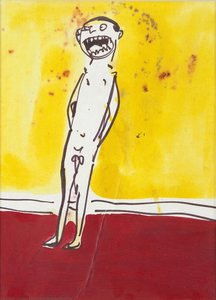
In the captivating painting "The Yolk (Humpty Dumpty)," created in 2017 by the visionary artist Alexander Vsevolodovitch Sokolov, we are invited into a world where the boundaries between the organic and the mechanical dissolve. The piece centers on a striking yellow robot, its vibrant hue commanding immediate attention against a deep, contrasting green backdrop. With wide, inquisitive green eyes and an open mouth that suggests a moment of silent, humorous surprise, the figure possesses a personality that feels startlingly alive. This is not a cold, industrial machine, but rather a character imbued with a sense of playfulness and vulnerability, sitting perched upon a chair as if caught in a quiet moment of contemplation.
The composition utilizes a masterful use of color theory to create visual tension and harmony. The brilliant yellow of the robot’s body acts as a luminous focal point, while the surrounding verdant tones provide a lush, atmospheric depth that pushes the subject forward. This interplay of light and shadow, combined with the presence of secondary chairs that frame the central figure, creates a stage-like setting, transforming a simple interior into a surrealist landscape. The artist’s ability to manipulate color allows the viewer to feel the weight and texture of the scene, making the robot's presence feel both substantial and dreamlike.
The Artistry of the Uncanny and the Expressive
Sokolov’s technique in this work leans into a fascinating stylistic intersection, balancing the raw energy of primitive art with the sharp, biting wit of caricature. There is an unmistakable influence of British illustrator Ralph Steadman present in the expressive, almost frenetic quality of the characterization. The brushwork does not seek to hide its movement; instead, it celebrates the spontaneous and the emotive. This approach creates a sense of "unsettling friendliness"—a hallmark of Sokol_ov's oeuvre—where characters appear approachable yet carry a subtle, manic edge in their smiles that lingers in the viewer's mind.
For collectors and interior designers, this piece offers a profound emotional resonance. It is a work that demands conversation, acting as a bold statement piece in any curated collection. The painting’s ability to evoke both humor and a slight sense of unease makes it an ideal selection for spaces designed to provoke thought and stimulate the imagination. Whether placed in a modern gallery setting or integrated into a sophisticated residential interior, "The Yolk (Humpty Dumpty)" serves as a window into a complex psychological realm, offering a high-quality visual experience that transcends mere decoration to become a true centerpiece of narrative art.
Related Artworks
![Squarely — [ A Y S H ], Contemporary](/media/artworks/images-thumb/9c/63/9c639222a0e49f2f2aec64b619112471.jpg)
Artist Biography
Alexander Vsevolodovitch Sokolov: A Weaver of Language and Dreams
Sasha Sokolov, a name perhaps less familiar to the general public than many canonical figures of 20th-century literature, remains a profoundly influential and uniquely challenging voice. Born in Ottawa, Canada, in 1943, his life has been one of constant movement – a restless journey between continents and cultures that deeply informs his distinctive writing style. Sokolov’s work isn't easily categorized; it exists at the intersection of prose and poetry, realism and surrealism, offering readers an experience both unsettling and profoundly beautiful. His legacy lies not in straightforward narratives but in the sheer audacity of his linguistic experimentation, a deliberate disruption of conventional forms that invites intense engagement and rewards careful consideration.
Early Life and Influences: A Canadian Roots with Russian Echoes
Sokolov’s childhood was marked by displacement. His father, Vsevolod Sokolov, a military attaché during World War II, found himself embroiled in Soviet espionage activities, leading to his deportation from Canada in 1946. This event cast a long shadow over the family's life, shaping Sokolov’s perspective and fueling a lifelong fascination with themes of exile, identity, and the complexities of loyalty. Growing up in the Soviet Union after this upheaval instilled in him a deep awareness of surveillance, censorship, and the limitations imposed by political control – elements that subtly permeate his writing.
Despite these challenging circumstances, Sokolov’s early education was largely self-directed, nurtured within the confines of his home. His mother, recognizing her son's exceptional intelligence and voracious appetite for knowledge, fostered a love of literature and encouraged independent thought. This unconventional upbringing proved crucial to developing his distinctive voice; he learned to observe keenly, to question relentlessly, and to construct narratives that defied easy interpretation. The influence of Russian folklore and mythology is also evident in his work, providing a rich tapestry of imagery and symbolism.
The Breakthrough: “A School for Fools” and the Rise of a Unique Voice
Sokolov’s international recognition began with the publication of *A School for Fools* (Школа для дураков) in 1976, translated by Carl R. Proffer and later re-translated by Alexander Boguslawski. This novel, a darkly humorous and profoundly melancholic exploration of human relationships and the absurdity of existence, immediately captivated critics and readers alike. Its unconventional structure, fragmented narrative, and deliberately jarring language were hailed as groundbreaking – a radical departure from traditional literary conventions.
The success of *A School for Fools* opened doors to wider publication and translation, establishing Sokolov as a significant figure in contemporary Russian literature. However, he resisted the label of “celebrity author,” preferring to remain largely out of the public eye. His subsequent works, including *Between Dog and Wolf* (1980) and *Palisandriia* (1985), continued to push the boundaries of language and form, further solidifying his reputation as a challenging and uncompromising artist.
Linguistic Innovation and Postmodern Techniques
Sokolov’s writing is characterized by an extraordinary command of language. He doesn't simply use words; he manipulates them, twisting their meanings, playing with rhythms and sounds, and creating a dense, layered texture that rewards repeated readings. His work is deeply rooted in postmodern techniques, embracing fragmentation, metafiction, and the blurring of boundaries between reality and illusion.
He coined the term “proeziia” – a portmanteau of prose and poetry – to describe his unique style, recognizing its hybrid nature. Sokolov’s sentences often resemble extended metaphors, brimming with symbolic resonance. He frequently employs stream-of-consciousness techniques, allowing readers to glimpse the chaotic workings of the human mind. His use of imagery is particularly striking, drawing heavily on folklore, mythology, and personal experience.
Legacy and Continuing Influence
Despite not achieving widespread commercial success, Sasha Sokolov’s influence within literary circles remains considerable. His work has been studied extensively in universities around the world, and his novels continue to be translated into numerous languages. He is recognized as one of the most important voices of 20th-century Russian literature, a pioneer of experimental prose, and a master of linguistic innovation.
Sokolov’s legacy lies not just in his individual works but also in his willingness to challenge conventional literary norms and push the boundaries of language. He invites readers to engage with his work on a deeply personal level, demanding active participation and rewarding intellectual curiosity. Sasha Sokolov remains an artist whose unique vision continues to resonate with those who appreciate the power and beauty of unconventional writing.
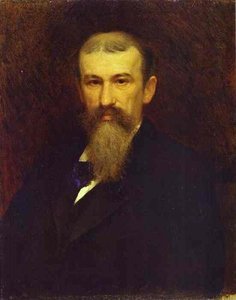
alexander vsevolodovitch sokolov
1943 - , Canada
Quick Facts
- Artistic Movement Or Style: Experimental prose, Avant-garde writing
- Artists Or Movements Influenced By This Artist: ['Postmodernism']
- Artists Who Influenced This Artist: ['Vladimir Nabokov']
- Date Of Birth: November 6, 1943
- Full Name: Alexander Vsevolodovitch Sokolov
- Nationality: Canadian, Russian
- Notable Artworks:
- A School for Fools
- Between Dog and Wolf
- Astrophobia
- Place Of Birth: Ottawa, Canada
Related Articles
Verdant Visions: Exploring the Symbolism & Aesthetic Impact of Green in Art History
Explore the rich history & symbolism of green in art! Discover iconic paintings, techniques, and how to bring verdant harmony into your home with ArtsDot's expert guide.
Emerald Visions: Top 10 Paintings Dominated by Cadmium Green |
Explore 10 iconic paintings where cadmium green reigns supreme! From Monet to Van Gogh, discover the stories behind these masterpieces & the power of color. Find museum-quality art reproductions and elevate your home decor on .
Chrome Green Masterpieces: 10 Famous Paintings & Their Alluring Hues |
Explore 10 famous paintings where 'Chrome Green' reigns supreme! Discover Monet, Manet & Van Gogh’s masterpieces. Learn the stories behind these iconic artworks and find museum-quality art reproductions for your home at .
Seafoam & Masterpieces: 10 Paintings Dominated by Medium Sea Green | ArtsDot
Dive into serenity with 10 famous paintings bathed in calming medium sea green. Explore Impressionist masterpieces by Monet, Degas & Renoir. Find museum-quality art reproductions and elevate your home decor at ArtsDot.com.
Golden Hues: 10 Masterpieces Dominated by Chrome Yellow | ArtsDot
Immerse yourself in golden light! Explore 10 famous paintings dominated by 'Chrome Yellow', from Van Gogh’s Sunflowers to Monet's Haystacks. Discover the stories behind these iconic Impressionist & Post-Impressionist masterpieces and find museum-quality art reproductions at ArtsDot.com.