 Preview
 Send
Send Share
Share
 Details

 Download
 Similars
 X-Ray
X-Ray Diaporama
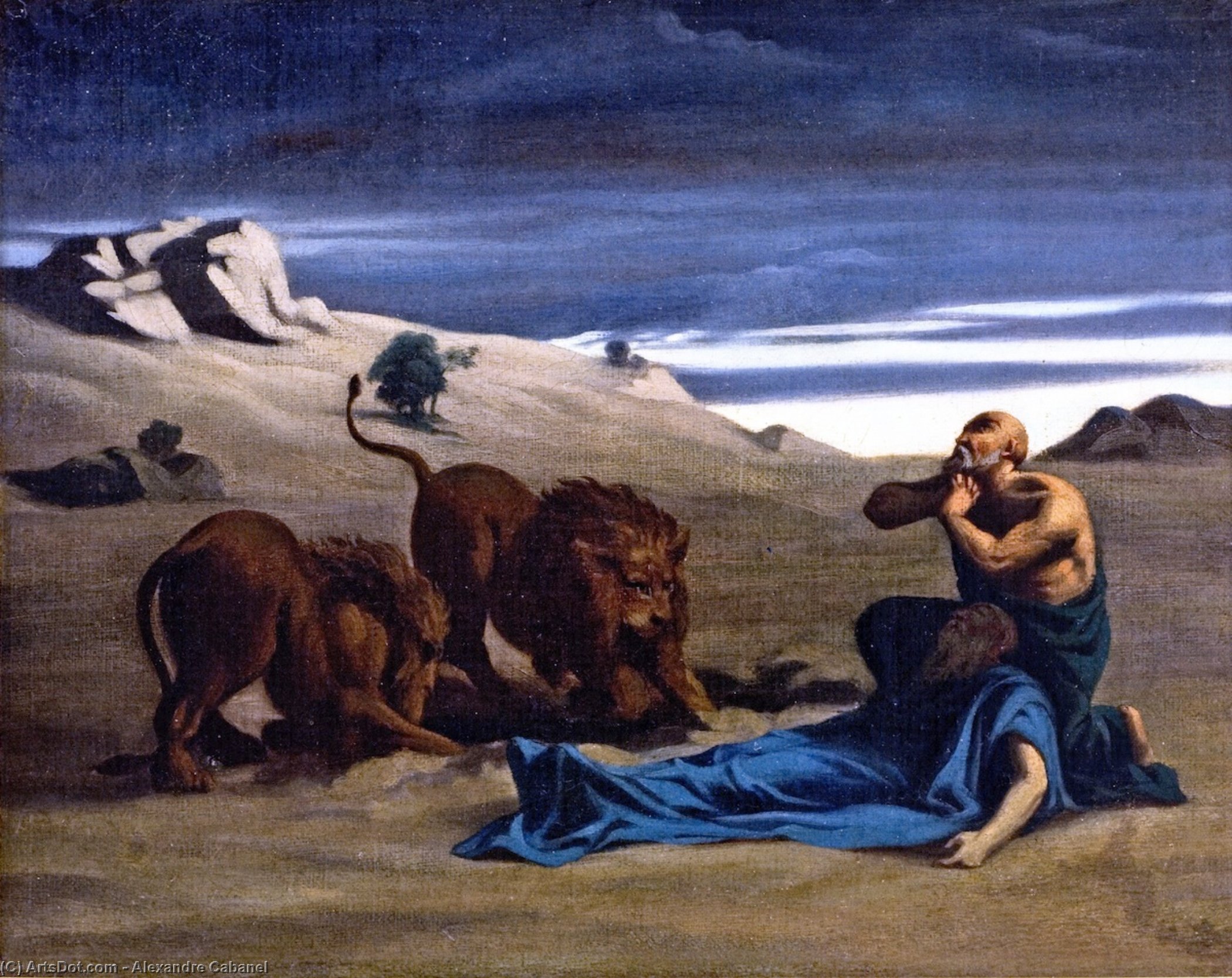
Paul the First Hermit with Lions


 Read More
Hand Made Oil Reproduction
Hand-painted oil on canvas in your size and frame, made to order by our artists. ( Buy Print Buy Image)




P118B $10

P118H $10

P118W $10

P438Z $10

P508JH $12

P508YH $12

P805H $10

P805Z $10

P919BZ $10

P919G $10

P919XJ $10

P959ZH $10

P968JZ $12

W106C $8

W218G $10

W218JH $8

W218Y $10

W307PJ $10

W316G $10

W316PJ $8

W316Y $10

W398PJ $8

W4111J $10

W500HY $15

W500JH $15

W692G $12

W849H $8

W940BG $15

W953PJ $8




Pick from our preset sizes that match the artwork's original proportions.

You may enter your own dimensions to fit a specific frame or space. If your selected size does not match the original image's proportions, we will either crop the artwork or extend the painting with additional hand-painted elements. A digital mockup will be sent for your approval before production begins.
Please note that the on-screen preview does not reflect the actual cropping or extension. Only the mockup will accurately show the final composition.
While custom sizes are available, we recommend selecting a dimension from the predefined list to preserve the original proportions.
After order, ArtsDot.com team will email client for instructions and provide a mockup preview
Worldwide Delivery () in 3/4 weeks instead of standard 5 weeks. (17 August). No compromise on quality.

Free Worldwide Express Shipping

High-Quality Linen Canvas

Full Shipping Insurance

Customs Tax Refund Guarantee

True Color Matching Guarantee

60-Day Return Policy (Defects Only)

100% Money-Back Guarantee

Bulk Discount Offer
 Glass option is only available in size under 110 CM

Paul the First Hermit with Lions
Reproduction Medium
Reproduction Size
-


Total Price
$ 263
Artwork Description
The Enigmatic Figure: Alexandre Cabanel’s Paul the First Hermit
Alexandre Cabanel's “Paul the First Hermit with Lions” isn’t merely a depiction of a man kneeling before animals; it’s an immersion into a profound meditation on solitude, faith, and the enduring connection between humanity and the divine. Painted in 1841 during a period of intense artistic revival in France, this oil-on-canvas masterpiece transcends its historical context to resonate with viewers across generations. The painting immediately draws the eye to the central figure – Paul himself – a man rendered with an almost unnerving stillness, his gaze fixed on some unseen horizon. He’s not presented as a saintly figure of triumphant piety, but rather as someone deeply absorbed in contemplation, radiating an aura of quiet resilience and unwavering devotion.
Cabanel's masterful use of chiaroscuro – the dramatic interplay of light and shadow – is crucial to understanding the painting’s emotional power. The stark contrast between the illuminated figure and the enveloping darkness creates a sense of intimacy, drawing us into Paul’s inner world. The shadows aren’t merely decorative; they represent the challenges and uncertainties he faced in his life of isolation, while the light symbolizes hope, faith, and the divine grace that sustained him.
A Symbolism Rich in Biblical Allusion
The inclusion of the lions is far from arbitrary. In Christian iconography, lions often symbolize strength, courage, and guardianship – qualities essential to a hermit’s life of self-discipline and resistance against temptation. Their presence isn't one of dominance over Paul, but rather of steadfast companionship, suggesting that even in his most profound solitude, he was never truly alone. The three additional lions lurking in the background further amplify this symbolism, hinting at the forces of darkness he confronted and the protective power of faith.
The setting itself is imbued with symbolic weight. The dark, nocturnal landscape evokes a sense of mystery and spiritual journey. It’s not a picturesque vista; it's a representation of the wilderness – both literal and metaphorical – that Paul traversed in his quest for communion with God. The palm tree, a recurring motif in depictions of hermits, represents the Tree of Life, symbolizing eternal life and divine grace.
The Academic Precision of a Master
Cabanel’s artistic training within the rigorous framework of the École des Beaux-Arts is evident in every brushstroke. The painting showcases his exceptional technical skill – the meticulous rendering of textures (the rough bark of the trees, the flowing robes of Paul), the precise modeling of forms, and the subtle gradations of color. However, this academic precision isn’t employed for mere imitation; it serves to heighten the emotional impact of the scene. The figures are idealized, yet retain a palpable sense of humanity, making them relatable and deeply moving.
The painting's composition is carefully balanced, creating a harmonious visual experience. The diagonal lines formed by Paul’s body and the lions lead the eye through the scene, drawing us into the heart of the image. The overall effect is one of serenity and contemplation – a testament to Cabanel’s ability to capture not just a likeness, but also the essence of his subject's spiritual journey.
A Legacy of Solitude and Spiritual Reflection
“Paul the First Hermit with Lions” remains a powerful and enduring work of art. It invites us to contemplate the nature of solitude, faith, and the human capacity for resilience in the face of adversity. More than just a historical portrait, it’s an exploration of the inner life – a reminder that true strength lies not in outward power, but in unwavering devotion and a deep connection with something greater than ourselves. Reproductions of this iconic painting offer a chance to bring this profound meditation into any space, fostering a sense of quiet contemplation and spiritual reflection.
Related Artworks
Artist Biography
Early Life and Artistic Formation
Alexandre Cabanel, a name synonymous with the academic art of 19th-century France, was born in Montpellier on September 28, 1823. His journey toward artistic mastery began not within a family of artists, but as the son of a modest carpenter—a background that instilled in him a strong work ethic and perhaps a heightened appreciation for craftsmanship. Even at a young age, Cabanel’s talent was undeniable; by ten years old, he was already receiving formal instruction at the local art school in Montpellier, demonstrating an aptitude that warranted special attention. This early promise secured him a scholarship to study in Paris in 1839, entering the prestigious École des Beaux-Arts under the tutelage of François-Édouard Picot. Picot, himself a student of Jacques-Louis David, imparted a rigorous training rooted in classical principles—a foundation that would profoundly shape Cabanel’s artistic trajectory. The curriculum wasn't solely focused on technique; it encompassed a broad education in literature, history, and philosophy, fostering an intellectual depth that informed his subject matter. His early attempts at the coveted Prix de Rome scholarship, though initially unsuccessful, demonstrated ambition and a willingness to refine his skills. Finally, in 1845, he achieved this honor, granting him a period of study at the Villa Medici in Rome—a pivotal experience for any aspiring French artist.The Roman Years and Rise to Prominence
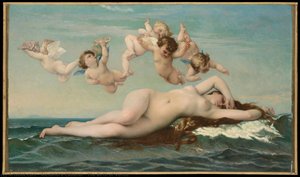
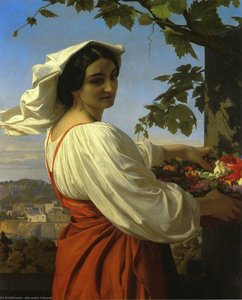
Rome proved transformative for Cabanel. Immersed in the art and culture of antiquity, he absorbed the lessons of the Renaissance masters, studying their compositions, techniques, and mastery of form. This period wasn’t merely about copying the old masters; it was a process of internalizing classical ideals and adapting them to his own artistic vision. During this time, he forged a crucial relationship with Alfred Bruyas, a fellow native of Montpellier and an avid art collector who became Cabanel's patron. Bruyas commissioned several works from the artist, including *Albaydé*, *La Chiaruccia*, and *Man Contemplating, A Young Roman Monk*—paintings that reveal Cabanel’s growing skill in depicting both historical subjects and evocative scenes imbued with romantic sensibility. Upon his return to Paris, Cabanel quickly established himself as a leading figure in the Salon system, the official art exhibition of the Académie des Beaux-Arts. His paintings consistently garnered praise for their technical brilliance, elegant compositions, and captivating beauty. The breakthrough moment arrived in 1863 with *The Birth of Venus*. This painting, a stunning depiction of the goddess emerging from the sea, caused an immediate sensation—and not without controversy. While celebrated for its exquisite rendering of the female form and masterful technique, it also drew criticism from some quarters who found it overly sensual or lacking in originality. However, Napoleon III himself purchased the work for his personal collection, solidifying Cabanel’s reputation and ensuring his place among the most sought-after artists of the Second Empire.A Master of Academic Style
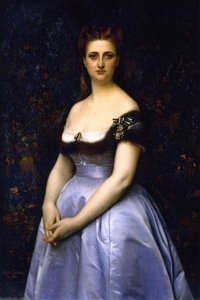
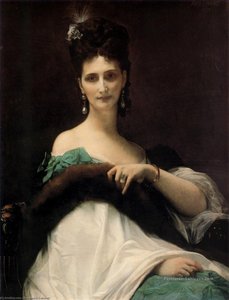
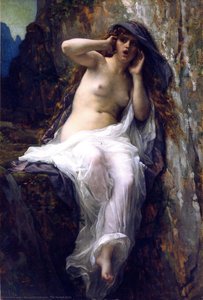
Cabanel's artistic style is firmly rooted in academic realism—a tradition that emphasized precise draftsmanship, meticulous attention to detail, and a commitment to classical ideals of beauty. He excelled at portraying historical, mythological, and religious subjects, often imbuing them with a sense of drama and emotional intensity. His portraits were equally admired for their ability to capture not only the physical likeness of his sitters but also their character and personality. Cabanel’s technique was characterized by smooth brushwork, subtle gradations of tone, and a masterful use of light and shadow. He possessed an exceptional talent for rendering flesh tones with remarkable realism, creating figures that seemed to breathe on the canvas. He wasn't simply replicating reality; he was idealizing it—striving to create images that embodied classical notions of harmony, balance, and proportion. This pursuit of idealized beauty often led him to refine and perfect his subjects, resulting in paintings that were both technically flawless and aesthetically pleasing. *Ophelia*, painted in 1883, exemplifies this approach; the tragic heroine is depicted with a haunting beauty, her pose and expression conveying a profound sense of sorrow and despair. Similarly, his *Portrait of Countess E. A. Vorontsova Dashkova* showcases his ability to capture both the elegance and inner strength of his subject.Legacy and Influence
By 1864, Cabanel had achieved a level of success that allowed him to accept a professorship at the École des Beaux-Arts—a position he held until his death in 1889. As a teacher, he influenced generations of artists, imparting his knowledge and skills to aspiring painters. Among his notable pupils were numerous successful artists who carried on the traditions of academic painting. Despite facing challenges from emerging artistic movements like Impressionism towards the end of his life, Cabanel remained steadfast in his commitment to classical ideals. His work continued to be exhibited and celebrated, and he retained a loyal following among collectors and patrons. While later generations may view academic art with a degree of skepticism, Cabanel’s contributions remain significant. He represents the pinnacle of 19th-century French painting—a master craftsman who possessed an unparalleled ability to create images that were both beautiful and technically accomplished. His paintings continue to captivate audiences today, offering a glimpse into a world where artistry, skill, and classical ideals reigned supreme. His influence can be seen in the works of artists who followed, even those who consciously rejected academic conventions—a testament to the enduring power of his artistic vision.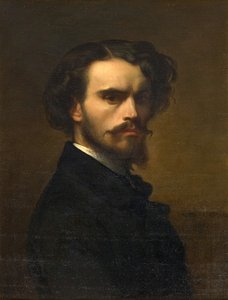
Alexandre Cabanel
1875 - 1889 , France
Quick Facts
- Artistic Movement Or Style: Academic art
- Artists Who Influenced This Artist: ['François-Édouard Picot']
- Date Of Birth: September 28, 1823
- Date Of Death: January 23, 1889
- Full Name: Alexandre Cabanel
- Nationality: French
- Notable Artworks:
- Ophelia
- The Birth of Venus
- Phaedra
- Countess E. Vorontsova
- Place Of Birth: Montpellier, France
Related Articles
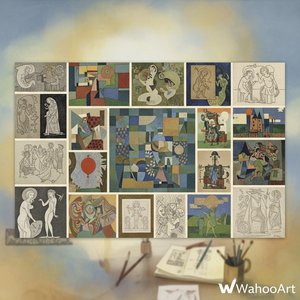
Paul Klee's Masterpieces: Explore 25 Iconic Paintings & Prints | ArtsDot
Journey through Paul Klee's 25 most iconic paintings & prints. Explore his abstract style, Bauhaus influence, and vibrant color palettes. Find museum-quality art reproductions & decor ideas at ArtsDot.com. Discover all masterpieces online.

Cézanne's Masterpieces: 25 Iconic Artworks to Transform Your Space
Journey through 25 iconic artworks by Paul Cézanne – a master of Impressionism and Post-Impressionism. Explore his landscapes, still lifes, and the stories behind these timeless masterpieces. Discover museum-quality reproductions & curated decor at ArtsDot.com.

The Enduring Legacy of Oil on Canvas: Technique, History & Aesthetic Impact
Explore the rich history & techniques of oil painting – from Renaissance masters to Impressionism. Discover pigments, layering methods, and why this timeless medium endures. Expert insights for artists & art enthusiasts.
Oil on Board Masters: 10 Paintings That Redefined Art | ArtsDot
Explore 10 legendary 'Oil on Board' masterpieces by Van Gogh, Monet & more! Discover art history, iconic styles like Impressionism, and find museum-quality reproductions to elevate your home decor. Explore the full collection online at ArtsDot.com.

Oil on Canvas: A Historical & Technical Exploration of a Timeless Artistic Medium
Explore the rich history & enduring techniques of oil painting on canvas. Discover the science behind its longevity, conservation practices, and contemporary relevance. Expert insights for art enthusiasts.