 Preview
 Send
Send Share
Share
 Details

 Download
 Similars
 X-Ray
X-Ray Diaporama
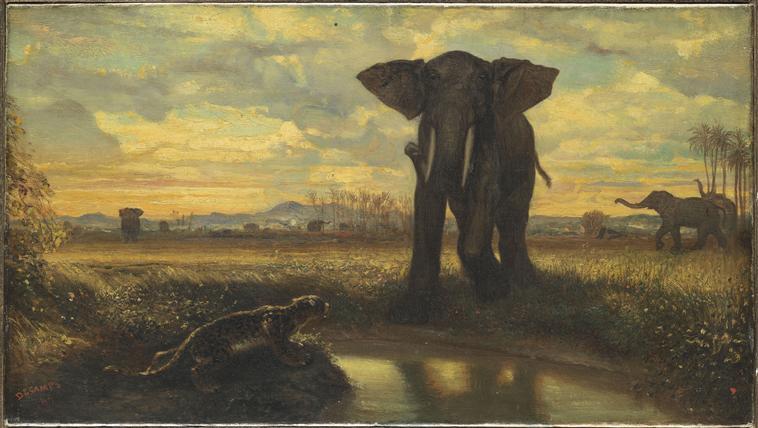
TIGRE ET ELEPHANT A LA SOURCE dit aussi LE DESERT INDIEN


 Read More
Giclée / Art Print
Museum-quality giclée or canvas print with fast production and flexible finish options. ( Buy Hand Made Painting Buy Image)




P118B $10

P118H $10

P118W $10

P438Z $10

P508JH $12

P508YH $12

P805H $10

P805Z $10

P919BZ $10

P919G $10

P919XJ $10

P959ZH $10

P968JZ $12

W106C $8

W218G $10

W218JH $8

W218Y $10

W307PJ $10

W316G $10

W316PJ $8

W316Y $10

W398PJ $8

W4111J $10

W500HY $15

W500JH $15

W692G $12

W849H $8

W940BG $15

W953PJ $8




Pick from our preset sizes that match the artwork's original proportions.

You may enter your own dimensions to fit a specific frame or space. If your selected size does not match the original image's proportions, we will either crop the artwork or extend the image with a mirrored or solid-fill edge. A digital mockup will be sent for your approval before production begins.
Please note that the on-screen preview does not reflect the actual cropping or extension. Only the mockup will accurately show the final composition.
While custom sizes are available, we recommend selecting a dimension from the predefined list to preserve the original proportions.
Worldwide Delivery () in 2 weeks instead of standard 4/5 weeks. (22 August)

Free Worldwide Express Shipping

High-Quality Linen Canvas

Full Shipping Insurance

Customs Tax Refund Guarantee

True Color Matching Guarantee

60-Day Return Policy (Defects Only)

100% Money-Back Guarantee

Bulk Discount Offer
 Glass option is only available in size under 110 CM

TIGRE ET ELEPHANT A LA SOURCE dit aussi LE DESERT INDIEN
Giclée / Art Print
Reproduction Size
-


Total Price
$ 63
Collectible Description
TIGRE ET ELEPHANT À LA SOURCE DIT AUSSI LE DESERT INDIEN
Alexandre Gabriel Decamps’ “Tigre et éléphant à la source, dit aussi Le désert indien” stands as a cornerstone of Orientalist painting—a genre that captivated the 19th century and continues to fascinate audiences today. Created in 1849, this monumental canvas embodies Decamps' signature blend of meticulous observation, dramatic composition, and Romantic fervor, transporting viewers to the arid landscapes of India and capturing a moment of palpable tension between predator and prey.- Subject Matter: The artwork depicts an encounter between a tiger and an elephant at a water source—a scene drawn directly from biblical narratives and reflecting Decamps’ fascination with portraying sacred stories in naturalistic settings.
- Style: Romanticism permeates the canvas, prioritizing emotional expression over strict realism. Decamps skillfully employs chiaroscuro – dramatic contrasts of light and shadow – to heighten visual impact and convey a sense of grandeur and awe.
- Technique: Executed in oil paint on canvas, “Tigre et éléphant” showcases Decamps’ masterful brushwork, characterized by thick impasto—raised areas of pigment that lend texture and depth to the surface. The artist utilizes loose, expressive strokes to capture the dynamism of the animals and the atmosphere of the desert environment.
- Composition: Horizontally oriented, the painting establishes a clear foreground dominated by the elephant, followed by a central grouping of elephants and a distant mountainscape rendered with atmospheric perspective—a technique that subtly diminishes color intensity and detail as distance increases.
- Color Palette: Warm earth tones – ochres, yellows, browns – dominate the palette, mirroring the heat and dryness of the desert. Cool blues and grays infuse the sky and water reflections, providing visual counterpoint and enhancing the overall mood.
Additional Research Links
- Tigre et éléphant à la source, dit aussi Le désert indien.
- Elephants and a Panther in the Indian Desert - WikiArt.org
Artist Information
Alexandre Gabriel Decamps (1803–1860) was a French painter noted for his Orientalist works.
A Pioneer of Orientalism: The Life and Art of Alexandre Gabriel Decamps
Decamps’ style was characteristically and intensely French. It was marked by vivid dramatic conception, bold and even rough brushstrokes, and startling contrasts of color and of light and shade.
Related Artworks
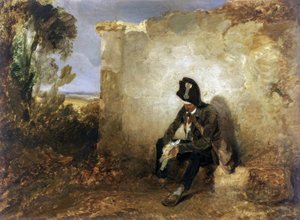
Artist Biography
A Pioneer of Orientalist Visions: The Life and Art of Alexandre Gabriel Decamps
Alexandre Gabriel Decamps, a name resonating with the vibrant hues of exotic landscapes and the dramatic flair of Romanticism, emerged as a pivotal figure in 19th-century French painting. Born in Paris on March 3, 1803, his artistic journey was one of bold innovation, challenging academic conventions and forging a path toward what would become known as Orientalism. While contemporaries like Delacroix and Ingres also held prominent positions within the French art world, Decamps distinguished himself through an intensely personal style—a blend of meticulous observation, dramatic composition, and a captivating narrative quality that drew viewers into worlds both familiar and utterly foreign. His early recognition as a talented artist foreshadowed a career marked by critical acclaim, culminating in the grand or council medal at the Paris Exhibition of 1855, a testament to his exceptional skill and unique vision. Beyond the canvas, Decamps was a man deeply connected to nature, finding solace and inspiration in the countryside surrounding Paris, where he indulged his passion for animals and field sports—a fondness that would subtly permeate much of his artistic output.From Scripture to the Sahara: The Evolution of an Artistic Style
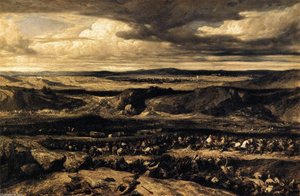
Decamps’ artistic development was characterized by a willingness to explore diverse subjects and techniques. Initially drawn to historical and biblical scenes, he quickly distinguished himself by portraying these narratives with an unprecedented level of realism—grounding them in authentic local settings rather than relying on idealized or conventional representations. This commitment to verisimilitude stemmed from his travels to the East, experiences that profoundly impacted his artistic sensibilities. He didn’t merely depict what he saw; he conveyed a feeling for the atmosphere, the light, and the very essence of these distant lands. Joseph Sold by His Brethren, for example, is not simply an illustration of a biblical story but a vivid portrayal of a specific time and place, imbued with emotional depth and psychological insight. This approach extended to his larger historical works like The Defeat of the Cimbri, where he masterfully captured the chaos and brutality of battle, showcasing his ability to handle large-scale compositions with dynamic energy. However, it was his depictions of Oriental life that truly set him apart. He revealed everyday scenes—markets, schools, domestic interiors—with a fidelity that initially puzzled critics accustomed to more romanticized or stereotypical representations.The Father of Orientalism and His Lasting Influence
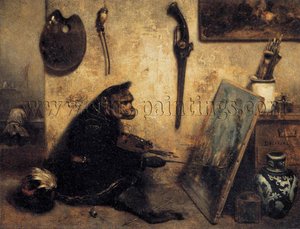
Decamps is rightfully considered the founding father of Orientalism in French painting. Before him, depictions of the East were often filtered through a lens of fantasy and exoticism. He presented a different vision—one rooted in direct observation and genuine curiosity. His 1831 Salon exhibition marked a turning point, introducing Parisian audiences to an unvarnished glimpse of life in North Africa and the Middle East. This groundbreaking approach resonated with artists and writers alike, inspiring a wave of Orientalist works that would dominate much of 19th-century art. His style—characterized by bold brushstrokes, striking contrasts of light and shadow, and a palpable sense of atmosphere—became a reference point for generations of painters, photographers, and authors. Maxime du Camp famously dubbed him the “Christopher Columbus of the Orient,” recognizing his pioneering role in opening up this new artistic territory. The Albanian Dancer, with its vibrant colors and energetic composition, exemplifies his ability to capture the spirit of a culture while maintaining a distinctly French aesthetic sensibility. Even satirical works like The Monkey Connoisseurs, a playful jab at the conservative jury of the Académie des Beaux-Arts, demonstrate his willingness to challenge established norms and embrace a more independent artistic vision.A Tragic End and an Enduring Legacy
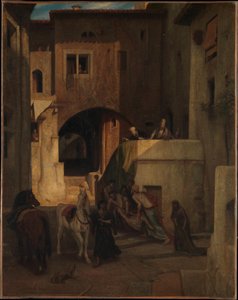
Tragically, Decamps’ life was cut short on August 22, 1860, at the age of 57, following a hunting accident near Fontainebleau. His untimely death robbed the art world of a truly innovative talent, but his legacy continues to endure through his captivating paintings and their enduring appeal. Today, masterpieces like Incendie d'un village italien, with its dramatic depiction of conflict and masterful use of impasto, and A Bedouin and a Camel Resting in a Desert, showcasing the textures and tranquility of desert life, are celebrated for their artistic merit and historical significance. His works can be found in prestigious institutions such as the Musée du Louvre in Paris, ensuring that his vision continues to inspire and captivate audiences worldwide. Platforms like ArtsDot.com play a vital role in preserving and disseminating his art, offering high-quality reproductions that allow admirers to experience the beauty and power of Decamps’ paintings firsthand. His influence extends beyond the realm of painting, shaping perceptions of the East and leaving an indelible mark on the cultural landscape of 19th-century Europe.Exploring Decamps' World: Notable Works
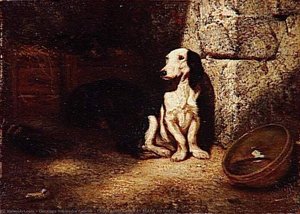
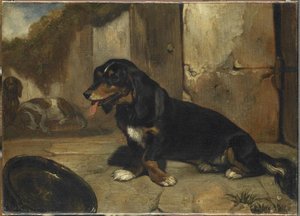
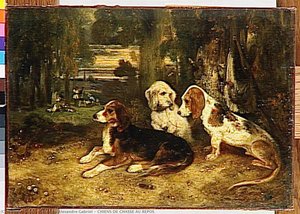
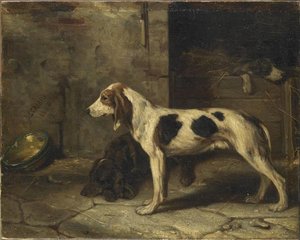
- CHIENS BRIFAUTS: A charming Orientalist scene showcasing dogs in a vibrant setting.
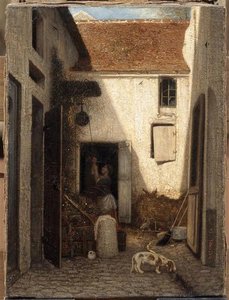
- LA COUR DE FERME: A captivating 19th-century painting blending French Romanticism with historical detail.
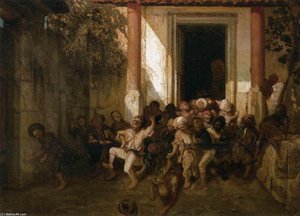
- L’ÉCOLE TURQUE: A lively depiction of a Turkish school, capturing the energy and atmosphere of daily life.
- PAYSAGE TURC: A serene landscape exploring realism and romanticism in a French setting.
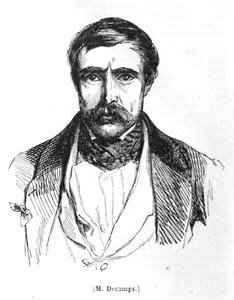
Alexandre Gabriel Decamps
1803 - 1860 , France
Quick Facts
- Artistic Movement Or Style: Orientalism, Romanticism
- Artists Or Movements Influenced By This Artist:
- Delacroix
- Théophile Gautier
- Date Of Birth: March 3, 1803
- Date Of Death: August 22, 1860
- Full Name: Alexandre Gabriel Decamps
- Nationality: French
- Notable Artworks:
- The Defeat of the Cimbri
- Joseph Sold by His Brethren
- The Monkey Connoisseurs
- The Albanian Dancer
- Incendie d'un village italien
- A Bedouin and a Camel Resting
- PAYSAGE TURC
- Place Of Birth: Paris, France
Related Articles

19th Century Masterpieces: 10 Paintings That Defined an Era | ArtsDot
Journey through 19th century art with ArtsDot! Explore 10 iconic paintings – from Monet & Renoir to Courbet – and discover the stories behind Romanticism, Realism & Impressionism. Find museum-quality reproductions for your home decor. Explore the full collection online!
Alexandre Gabriel Decamps: Pioneering Romantic Visions & Challenging Academic Tradition
Explore the captivating world of Alexandre Gabriel Decamps, a pioneer of Romanticism and Orientalism. Discover his bold style, satirical masterpieces like 'The Experts,' and lasting impact on 19th-century art history.
Alexandre Benois: A Life Dedicated to Russian Art & the 'World of Art' Aesthetic
Explore the life & art of Alexandre Benois, a pivotal figure in Russian art history and founder of 'World of Art'. Discover his stunning stage designs for the Ballets Russes and lasting influence on modern aesthetics.
Echoes of Change: Exploring Themes & Techniques in 19th-Century Art
Explore the captivating world of 19th-century art! Discover Romanticism & Realism's key artists, masterpieces, and social commentary. Expert insights for collectors & enthusiasts.
Iconic Art of the 18th & 19th Centuries: Masterpieces for Your Home | ArtsDot
Journey through 18th & 19th century art! Explore iconic masterpieces by Monet, Van Gogh & more. Discover the stories behind these timeless paintings and find museum-quality reproductions for your home at ArtsDot.com.