 Preview
 Send
Send Share
Share
 Details

 Download
 Similars
 X-Ray
X-Ray Diaporama
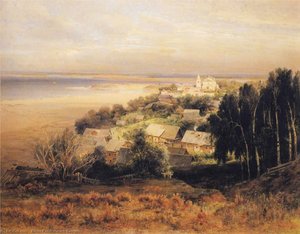
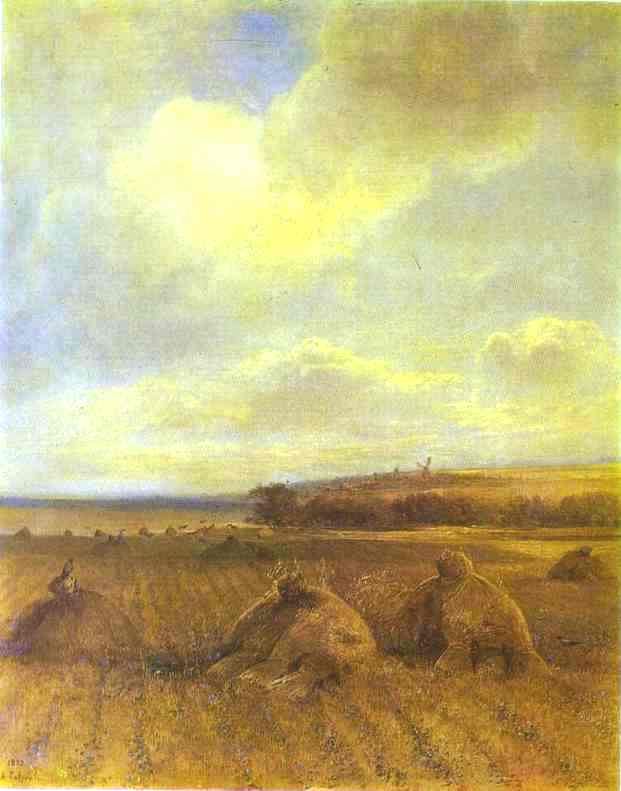
The End of Summer on the Volga River


 Read More
Hand Made Oil Reproduction
Hand-painted oil on canvas in your size and frame, made to order by our artists. ( Buy Print Buy Image)




P118B $10

P118H $10

P118W $10

P438Z $10

P508JH $12

P508YH $12

P805H $10

P805Z $10

P919BZ $10

P919G $10

P919XJ $10

P959ZH $10

P968JZ $12

W106C $8

W218G $10

W218JH $8

W218Y $10

W307PJ $10

W316G $10

W316PJ $8

W316Y $10

W398PJ $8

W4111J $10

W500HY $15

W500JH $15

W692G $12

W849H $8

W940BG $15

W953PJ $8




Pick from our preset sizes that match the artwork's original proportions.

You may enter your own dimensions to fit a specific frame or space. If your selected size does not match the original image's proportions, we will either crop the artwork or extend the painting with additional hand-painted elements. A digital mockup will be sent for your approval before production begins.
Please note that the on-screen preview does not reflect the actual cropping or extension. Only the mockup will accurately show the final composition.
While custom sizes are available, we recommend selecting a dimension from the predefined list to preserve the original proportions.
After order, ArtsDot.com team will email client for instructions and provide a mockup preview
Worldwide Delivery () in 3/4 weeks instead of standard 5 weeks. (29 August). No compromise on quality.

Free Worldwide Express Shipping

High-Quality Linen Canvas

Full Shipping Insurance

Customs Tax Refund Guarantee

True Color Matching Guarantee

60-Day Return Policy (Defects Only)

100% Money-Back Guarantee

Bulk Discount Offer
 Glass option is only available in size under 110 CM

The End of Summer on the Volga River
Reproduction Medium
Reproduction Size
-


Total Price
$ 263
A Moment Frozen in Time: The Volga’s Serene Farewell
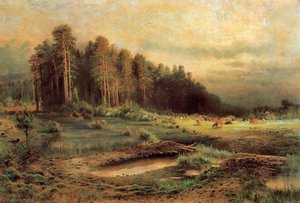
Alexei Kondratyevich Savrasov's “The End of Summer on the Volga River,” painted in 1873, isn’t merely a depiction of a landscape; it’s an immersion into a specific mood, a poignant distillation of fading light and quiet contemplation. Savrasov, a pivotal figure in establishing the "lyrical landscape" movement within Russian art, eschewed the grand, heroic narratives favored by earlier generations. Instead, he focused on capturing the subtle emotional resonance of everyday scenes – here, the melancholic beauty of a Volga sunset, signaling summer’s end.
The painting immediately draws the eye with its muted palette: the dominant hues are ochres, browns, and deep blues, reflecting the twilight sky and the damp earth. These aren't vibrant, celebratory colors; they possess a somber quality, mirroring the feeling of transition and loss inherent in the subject matter. The artist masterfully employs atmospheric perspective – distant elements fade into a hazy blue, creating a sense of depth and vastness that stretches out towards the horizon. The brushstrokes are loose and expressive, particularly noticeable in the depiction of the hay bales and the riverbank reeds, conveying a feeling of movement and rustling in the breeze.
A Volga Valley Portrait: People and Livestock
Central to the composition is a small group of figures – men and women – standing near a horse. They are not actively engaged in any particular activity; rather, they seem lost in quiet observation, their postures suggesting a shared appreciation for the scene’s beauty. Their presence anchors the painting, reminding us that this landscape isn't simply an abstract vista but a lived experience, a moment of connection with nature and each other. The horse, a symbol of strength and vitality, adds another layer to the narrative – perhaps representing the bounty of the land or the enduring rhythm of rural life.
Savrasov’s skill lies in his ability to imbue these ordinary subjects with an extraordinary sense of dignity. The figures are rendered with a gentle realism, their faces etched with a quiet serenity. They are not idealized heroes but relatable individuals, reflecting the simple pleasures and enduring values of rural Russia.
Echoes of Tradition: Savrasov’s Lyrical Vision
Painted during a period of significant social and political change in Russia – the late 19th century – “The End of Summer on the Volga River” reflects the growing interest in depicting Russian landscapes with emotional depth and psychological insight. Savrasov's work aligns with the broader trend towards realism, but he departs from purely objective representation to prioritize capturing a specific mood or feeling. He was deeply influenced by the Romantic tradition, particularly the emphasis on nature’s power to evoke emotion, yet he tempered this influence with a distinctly Russian sensibility.
The painting's historical context is further illuminated by its connection to the Volga Bulgaria, a significant trading center and cultural crossroads that flourished along the river for centuries. Savrasov’s depiction of the Volga – a vital artery connecting Europe and Asia – subtly alludes to this rich history, suggesting a continuity between past and present.
A Legacy of Serenity: The Enduring Appeal
“The End of Summer on the Volga River” is more than just a beautiful painting; it’s a meditation on time, memory, and the enduring power of nature. Savrasov's masterful use of light, color, and composition creates an atmosphere of profound tranquility, inviting viewers to pause and contemplate the fleeting beauty of the natural world. It remains a powerful example of Russian lyrical landscape painting, demonstrating Savrasov’s ability to transform ordinary scenes into works of enduring emotional resonance. Reproductions capture this essence beautifully, offering a window into a timeless moment on the Volga.
Related Artworks
Artist Biography
A Pioneer of Lyrical Landscape: The Life and Art of Alexei Savrasov
Alexei Kondratyevich Savrasov, born in Moscow in 1830, occupies a pivotal position in the history of Russian painting. He wasn’t merely a recorder of scenery; he was a poet of the land, a creator of what would become known as the “lyrical landscape.” His work transcended simple representation, imbuing ordinary scenes with profound emotional resonance and establishing a distinctly Russian voice within the broader European tradition. Savrasov's journey began with formal training at the Moscow School of Painting, Sculpture and Architecture, where he studied under Karl Rabus, graduating in 1850 and immediately dedicating himself to landscape painting—a genre gaining prominence during this period. Early travels took him through Ukraine, absorbing its expansive vistas, before a significant relocation to St. Petersburg in 1854 at the invitation of Grand Duchess Maria Nikolayevna. This move placed him within the heart of Russia’s artistic establishment and led to a teaching position at his alma mater, where he would profoundly influence generations of artists, most notably Isaac Levitan and Konstantin Korovin, who held their teacher in deep admiration.
The Emergence of a Unique Vision
Savrasov's artistic development was shaped by exposure to both Russian traditions and Western European masters. Journeys to England and Switzerland in the 1860s proved formative, particularly his encounter with the works of John Constable and Alexandre Calame. He admired their ability to capture atmospheric effects and imbue landscapes with a sense of mood and feeling. However, Savrasov didn’t simply imitate; he synthesized these influences into something uniquely his own. His paintings began to move away from the grand historical or idealized landscapes favored by academic art towards more intimate, realistic depictions of the Russian countryside. He found beauty not in dramatic vistas but in humble scenes—a quiet forest path, a thawing field, a village church nestled amongst trees. This shift reflected a growing national consciousness and a desire to celebrate the specific character of the Russian land. His marriage to Sophia Karlovna Hertz, sister of the art historian Karl Hertz, further enriched his life, creating a home that became a vibrant hub for artists and collectors like Pavel Tretyakov, fostering intellectual exchange and artistic collaboration. A particularly close friendship with Vasily Perov led to mutual assistance in their respective works—Perov aiding Savrasov with figures within landscapes, while Savrasov contributed backgrounds to Perov’s genre scenes.
The Rooks Have Returned: A Defining Moment
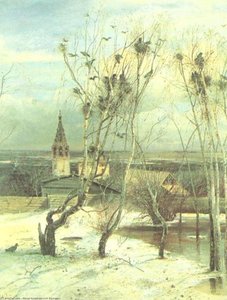
While Savrasov produced a substantial body of work throughout his career – including evocative pieces like *View of the Kremlin from the Krymsky Bridge in Inclement Weather* (1851), *Winter Night* (1869) and *Sundown over a Marsh* (1871) – it is *The Rooks Have Returned* (1871) that remains his most iconic and enduring achievement. This seemingly simple depiction of spring’s arrival—rooks returning to their nests in birch trees against the backdrop of melting snow—captured the collective imagination of Russia. It wasn't merely a visual representation; it was an emotional experience, evoking feelings of hope, renewal, and nostalgia. The painting’s power lay in its ability to distill a universal human sentiment into a specific, recognizable scene. Critics hailed it as the birth of the “mood landscape,” a style that prioritized atmosphere and emotion over precise topographical detail. *The Rooks Have Returned* brought Savrasov widespread recognition and cemented his place within the Peredvizhniki (Wanderers) group—a movement dedicated to realist art with social commentary, breaking away from the constraints of government-sponsored academic traditions.
Tragedy and Legacy
Despite his artistic success, Savrasov’s later life was marked by personal tragedy and a descent into alcoholism. The death of his daughter in 1871 proved devastating, triggering a period of profound crisis that impacted both his art and his well-being. His struggles with alcohol led to dismissal from his teaching position in 1882, and he spent his final years wandering in poverty, increasingly isolated and forgotten. It is a poignant irony that the artist who so beautifully captured the spirit of renewal should experience such personal decline. However, even amidst hardship, Savrasov continued to paint, though his later works often reflect his inner turmoil. His funeral in 1897 was a somber affair, attended only by a handful of loyal friends—including Pavel Tretyakov, who recognized and preserved Savrasov’s legacy for posterity. Alexei Savrasov's influence on Russian landscape painting is immeasurable. He paved the way for artists like Isaac Levitan to explore the emotional depths of the natural world, establishing a tradition of lyrical realism that continues to resonate today. His paintings are not just images; they are windows into the soul of Russia, capturing its beauty, its melancholy, and its enduring spirit.
Selected Works
- View of the Kremlin from the Krymsky Bridge in Inclement Weather (1851)
- View in the Neighborhood of Oranienbaum (1854)
- Landscape with River and Angler (1859)
- Rustic View (1867)
- Winter Night (1869)
- Winter (1870)
- The Rooks Have Returned (1871)
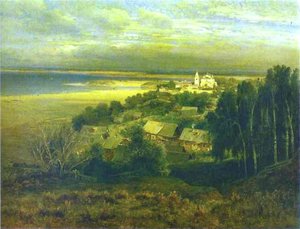
- Monastery of Caves near Nizhny Novgorod (1871)
- Sukharev Tower (1872)
- Rainbow (1873)
- Spring Day (1873)
- Rafts (1873)
- Monastery Gates (1875)
- Early Spring. Thaw. (1880s)
- Spring. Kitchen Gardens (1893)
- Rasputitsa (Sea of Mud, 1894)
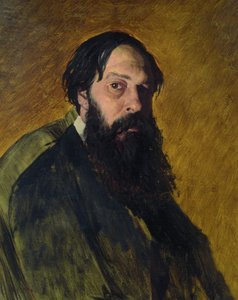
Alexei Kondratyevich Savrasov
1830 - 1897 , Russia
Quick Facts
- Artistic Movement Or Style: Lyrical landscape
- Artists Or Movements Influenced By This Artist:
- Isaac Levitan
- Peredvizhniki
- Artists Who Influenced This Artist:
- John Constable
- Alexandre Calame
- Date Of Birth: May 24, 1830
- Date Of Death: October 8, 1897
- Full Name: Alexei Kondratyevich Savrasov
- Nationality: Russian
- Notable Artworks:
- The Rooks Have Returned
- View of the Kremlin
- Winter Night
- Spring Day
- Place Of Birth: Moscow, Russia
Related Articles
Aleksey Savrasov: The Poetic Realism That Defined Russian Landscape Painting
Explore the poetic realism of Aleksey Savrasov, founder of Russian lyrical landscape painting. Discover his masterpieces like 'The Rooks Have Returned' and learn about his lasting influence on 19th-century art. ArtsDot offers high-quality reproductions.

John Constable's Masterpieces: Explore 25 Iconic Landscapes for Your Home
Journey through John Constable's 25 most celebrated landscapes. Explore Romanticism, Dedham Vale & his masterful use of light in iconic paintings like 'Hay Wain'. Find museum-quality art reproductions and elevate your home decor on ArtsDot.com.
Serene Visions: Exploring Themes of Tranquility in Art History & Contemporary Practice
Explore the history of serene landscape art & discover artists who evoke tranquility. Find the perfect calming artwork for your home with expert guidance from ArtsDot.

Romantic Landscapes: 10 Masterpieces for Your Home | ArtsDot
Journey through 10 Romantic landscape masterpieces by Friedrich, Turner & Cole. Explore emotional art, sublime nature scenes & iconic 19th-century paintings. Find museum-quality reproductions for your home at ArtsDot.com – discover the full collection online!

Evocations of Place: A Historical Journey Through Landscape Art
Explore the rich history of landscape art with ArtsDot. Discover renowned artists, movements like Impressionism & Romanticism, and expert guidance for collecting timeless pieces. Find your perfect serene escape today!