 Preview
 Send
Send Share
Share
 Details

 Download
 Similars
 X-Ray
X-Ray Diaporama
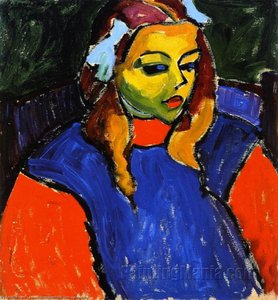
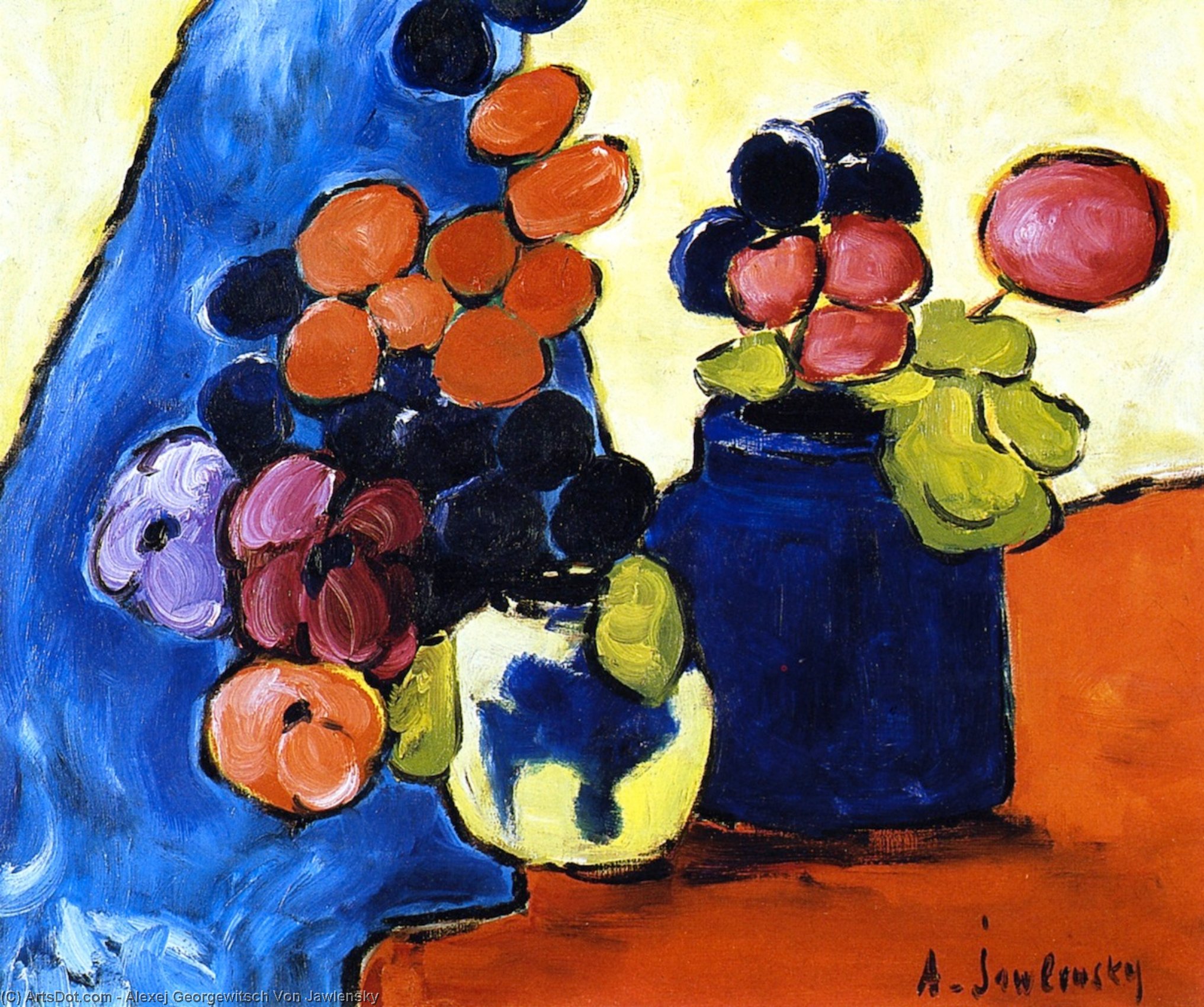
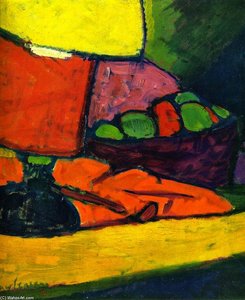
On Red Cloth
 Oil On Canvas
- WallArt
- Expressionism
 1909
1909- Modern
 38.0 x 46.0 cm
 Read More
Giclée / Art Print
Museum-quality giclée or canvas print with fast production and flexible finish options. ( Buy Hand Made Painting Buy Image)




P118B $10

P118H $10

P118W $10

P438Z $10

P508JH $12

P508YH $12

P805H $10

P805Z $10

P919BZ $10

P919G $10

P919XJ $10

P959ZH $10

P968JZ $12

W106C $8

W218G $10

W218JH $8

W218Y $10

W307PJ $10

W316G $10

W316PJ $8

W316Y $10

W398PJ $8

W4111J $10

W500HY $15

W500JH $15

W692G $12

W849H $8

W940BG $15

W953PJ $8




Pick from our preset sizes that match the artwork's original proportions.

You may enter your own dimensions to fit a specific frame or space. If your selected size does not match the original image's proportions, we will either crop the artwork or extend the image with a mirrored or solid-fill edge. A digital mockup will be sent for your approval before production begins.
Please note that the on-screen preview does not reflect the actual cropping or extension. Only the mockup will accurately show the final composition.
While custom sizes are available, we recommend selecting a dimension from the predefined list to preserve the original proportions.
Worldwide Delivery () in 2 weeks instead of standard 4/5 weeks. (24 August)

Free Worldwide Express Shipping

High-Quality Linen Canvas

Full Shipping Insurance

Customs Tax Refund Guarantee

True Color Matching Guarantee

60-Day Return Policy (Defects Only)

100% Money-Back Guarantee

Bulk Discount Offer
 Glass option is only available in size under 110 CM

On Red Cloth
Giclée / Art Print
Reproduction Size
-


Total Price
$ 63
Collectible Description
A Symphony in Crimson: The Emotional Resonance of On Red Cloth
The canvas breathes with an intensity rarely achieved by artists of its era, presenting “On Red Cloth,” a 1909 masterpiece by Alexej Georgewitsch von Jawlensky—a name synonymous with the nascent Expressionist movement. More than just a still life depicting fruits and flowers arranged in vases; it is a profound meditation on color, emotion, and the artist's unwavering commitment to conveying inner experience rather than mere visual representation. Examining this work unveils layers of artistic innovation and historical significance that continue to resonate today, offering a window into a soul seeking spiritual depth through the medium of paint.
Jawlensky’s stylistic approach was fundamentally rooted in Expressionism’s core belief—that color possesses the power to communicate feelings directly, bypassing rational thought. Unlike Impressionists who sought to capture fleeting moments of light and atmosphere, Jawlentky deliberately employed a palette dominated by crimson red – a hue he considered particularly potent for expressing spiritual yearning. The audacious choice wasn't merely aesthetic; it was a conscious decision to prioritize emotional resonance above all else. Influenced by figures like Wassily Kandinsky and Franz Marc, Jawlensky sought to liberate painting from the constraints of objective observation, mirroring the burgeoning anxieties and spiritual quests characteristic of the early twentieth century.
Compositional Harmony and Visual Rhythm
The arrangement within “On Red Cloth” is meticulously considered, reflecting a desire for visual balance and rhythmic movement. Three vases—one positioned prominently on the left, another centrally located, and the third anchoring the right side—serve as focal points, guiding the viewer’s gaze across the canvas in a graceful dance. Scattered oranges punctuate the scene, injecting bursts of vibrant color and textural contrast against the deep, saturated background. This strategic placement creates a sense of structured chaos, where the organic forms of fruit and flora are held together by a rigorous compositional logic.
The interplay between the objects is further enriched by the presence of a bowl placed towards the bottom left, adding weight and stability to the lower register of the painting. This careful distribution of mass ensures that the eye never rests too long in one place, but rather wanders through the vibrant landscape of the still life, discovering new nuances of shade and light with every glance. For the collector or interior designer, this rhythmic quality makes the piece a dynamic centerpiece, capable of commanding attention and injecting a sense of sophisticated energy into any curated space.
A Timeless Legacy for the Modern Collector
To possess a reproduction of “On Red Cloth” is to invite the very essence of Expressionism into one's home. The painting serves as more than decoration; it is an invitation to introspection. The way the deep reds interact with the bright oranges and the structured silhouettes of the vases creates a visual tension that is both stimulating and deeply moving. It captures a moment in art history where the boundaries of reality were being pushed aside to make room for the raw, rhythmic pulse of the human spirit.
Whether you are an art historian drawn to its technical mastery or a designer looking for a bold, emotive statement piece, this work offers unparalleled inspiration. The thick, tactile quality suggested by Jawlensky's technique and his masterful control of a limited yet potent palette ensures that the painting remains as impactful today as it was in 1909. It stands as a testament to the power of color to transcend time, offering a permanent sanctuary of visionary splendor for those who appreciate the profound beauty of the painted emotion.
Related Artworks
Artist Biography
A Life Painted in Emotion: The Journey of Alexej von Jawlensky
Alexej von Jawlensky, born Alexej Georgewitsch von Jawlensky on March 13, 1864, in the Russian town of Torzhok, embarked on a path that would firmly establish him as a pivotal figure within early twentieth-century Expressionism. His formative years were characterized by frequent relocations, culminating in a settling within Moscow at the age of ten—an experience that likely instilled a sense of displacement and perhaps, a yearning for deeper connection, themes subtly woven into the emotional core of his later artistic explorations. Initially drawn to a military career, Jawlensky’s encounter with the vibrant world of art during the 1880 Moscow World Exposition proved transformative. This exposure ignited within him a passion that would ultimately supersede any sense of duty, leading him down a path dedicated to visual expression. Securing a posting in St. Petersburg through his social connections allowed Jawlensky to formally study at the Art Academy from 1889 to 1896, balancing artistic pursuits with military obligations. It was during this period that he crossed paths with Ilya Repin, a prominent Russian realist painter, and more importantly, met Marianne von Werefkin. Werefkin, herself an accomplished artist of considerable means, became not only his mentor but also a crucial benefactor, providing him the financial stability to fully dedicate himself to his craft. Their relationship was complex, deeply intertwined with artistic ambition and mutual support, shaping the trajectory of both their careers.
Munich and the Seeds of Expressionist Innovation
The move to Munich in 1894 marked a turning point for Jawlensky. He enrolled at Anton Ažbe’s private school, immersing himself in an environment that encouraged experimentation and challenged conventional academic approaches. This period witnessed his growing engagement with avant-garde ideas circulating within the European art world. The influence of artists like Ferdinand Hodler, Jan Verkade, and Paul Sérusier proved particularly significant, exposing him to principles of symbolism and synthetism—movements that prioritized subjective experience and emotional resonance over strict representational accuracy. Jawlensky’s artistic style began to evolve, moving away from the realism he had initially studied. He became increasingly interested in exploring the expressive potential of color and form, simplifying compositions and intensifying hues to convey inner states rather than merely depicting external appearances. This exploration led him towards abstraction, a path that would define much of his later work. His involvement with groups like the Neue Künstlervereinigung München (NKvM) further solidified his commitment to artistic innovation, placing him at the heart of a burgeoning Expressionist movement. The NKvM, though short-lived, was a crucible for radical ideas, and Jawlensky’s participation demonstrated his willingness to challenge established norms and embrace new modes of visual language.
The Mystical Heads: A Descent into Spiritual Essence
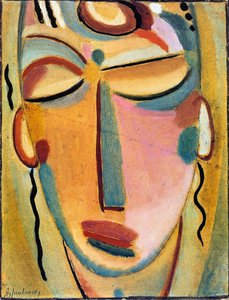
Around 1909, Jawlensky embarked on what would become his most iconic series—the “Mystical Heads.” These intensely colored portraits, often depicting faces reduced to essential forms, are not merely representations of individuals but rather explorations of spiritual essence and inner life. The heads possess a haunting quality, their simplified features and vibrant palettes conveying a sense of profound emotion and psychological depth. Works like Schokko with Red Hat (1909) and Portrait of Alexander Sakharoff (1909) exemplify this period, showcasing his mastery of color and composition. These weren’t portraits in the traditional sense; they were attempts to capture something beyond physical likeness—the soul, the inner landscape of the sitter. He distilled faces into geometric shapes, emphasizing the power of color to evoke emotion and spiritual resonance. Throughout the 1910s, Jawlensky continued to refine his style, moving towards an even greater degree of abstraction. His compositions became increasingly geometric, with forms distilled to their most fundamental elements. He developed a formulaic approach, often employing a limited range of colors arranged in carefully balanced configurations. Violet Turban (1911) demonstrates this stylistic evolution, showcasing his ability to create powerful visual statements through the interplay of color and shape.
Exile, Resilience, and Lasting Legacy
The outbreak of World War I brought upheaval to Jawlensky’s life. Expelled from Germany in 1914 due to his Russian origins, he sought refuge in Switzerland, where he encountered Emmy Scheyer. Scheyer became a devoted champion of his work, tirelessly promoting it in the United States and securing him recognition on an international stage. Despite facing increasing health challenges—including severe arthritis that progressively limited his ability to paint—Jawlensky continued to create until his death in Wiesbaden, Germany, on March 15, 1941. His later works, created under immense physical hardship, are a testament to his unwavering dedication to artistic expression. Today, Alexej von Jawlensky is celebrated as a key figure in the development of Expressionism. His paintings are held in prominent museum collections worldwide, including the Museum Ostwall in Dortmund and the Städtische Galerie im Lenbachhaus in Munich. His exploration of color, form, and spiritual themes continues to resonate with audiences, solidifying his place as one of the most important artists of the early twentieth century. He left behind a body of work that is both visually striking and emotionally profound, offering a glimpse into the inner world of an artist who dared to challenge conventions and embrace the power of subjective expression.
Influences and Artistic Associations
Jawlensky’s artistic journey was shaped by a network of influential figures and movements:
- Ilya Repin: Early mentor providing foundational training in realist techniques.
- Marianne von Werefkin: Crucial benefactor, mentor, and artistic partner who supported his development.
- Ferdinand Hodler: Influenced Jawlensky’s use of simplified forms and symbolic imagery.
- Jan Verkade & Paul Sérusier: Introduced him to the principles of symbolism and synthetism, shaping his approach to color and composition.
- Wassily Kandinsky & Franz Marc: Collaborators within Der Blaue Reiter, fostering a shared commitment to artistic innovation.
These relationships were not merely passive influences; they were dynamic exchanges that fueled Jawlensky’s creative evolution and contributed to the rich tapestry of early Expressionist art. His legacy continues to inspire artists today, reminding us of the power of art to transcend boundaries and explore the depths of human emotion and spirituality.
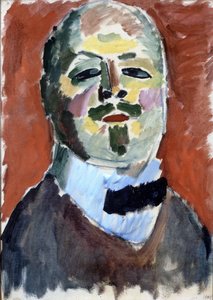
Alexej von Jawlensky
1864 - 1941 , Russia
Quick Facts
- Artistic Movement Or Style: Expressionism
- Artists Or Movements Influenced By This Artist:
- Der Blaue Reiter
- Die Blaue Vier
- Artists Who Influenced This Artist:
- Ilya Repin
- Marianne von Werefkin
- Ferdinand Hodler
- Date Of Birth: March 13, 1864
- Date Of Death: March 15, 1941
- Full Name: Alexej von Jawlensky
- Nationality: Russian
- Notable Artworks:
- Schokko with Red Hat
- Violet Turban
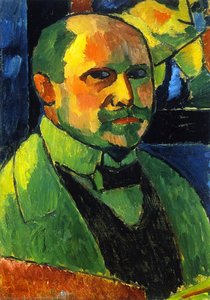
- Self-Portrait
- Place Of Birth: Torzhok, Russia
Related Articles

Crimson Threads of Narrative: Exploring Symbolism & Representation in Artworks Featuring the Red Dress
Explore the rich symbolism of the red dress in art history! From ancient power displays to iconic portraits like Cézanne’s 'Madame Cezanne', discover the cultural and artistic significance behind this captivating color. Expert analysis & insights.
Clyfford Still's Abstract Expressionism: A Study of Color, Form & the Existential Landscape
Explore the profound world of Clyfford Still's Abstract Expressionism with ArtsDot. Discover his unique style, existential themes & investment potential. Expert analysis for discerning collectors.
The Raw Emotion of Expressionism: A Deep Dive into its History, Characteristics & Enduring Influence
Explore the raw emotion of Expressionism with ArtsDot. Discover its history, key artists like Kirchner & Munch, and lasting influence on modern art. Expert insights for collectors & enthusiasts.

Mark Rothko's Masterpieces: 25 Paintings That Define Abstract Expressionism | ArtsDot
Explore 25 iconic Mark Rothko paintings that define Abstract Expressionism. Discover the stories, colors & emotions behind these masterpieces. Find museum-quality art reproductions and curated decor ideas at ArtsDot.com.
Silent Narratives: Exploring the Enduring Appeal of Still Life Painting Across Centuries
Explore the rich history of still life painting with ArtsDot. Discover Dutch Masters, decode vanitas symbolism & learn about collecting timeless art. Expert insights and museum-quality reproductions.