

 Send
Send Share
Share
 Details

 Download
 Similars
 Diaporama


 Read More
Purchase a high-resolution, enhanced digital image, far superior to the online preview.
Each file is meticulously prepared by our in-house specialists using advanced tools and expert manual retouching. We ensure every image has exceptional clarity, precise color accuracy, and fine detail.
The final file is delivered via email within 72 hours, optimized for immediate use in professional, editorial, and print environments. This is the same quality trusted by top-tier design studios, publishers, and galleries.
Digital Image
Download a high-resolution file for personal display, printing, and creative projects. ( Buy Print Buy Hand Made Painting)
Included in Every Digital Image Order
Expert Digital Delivery, Guaranteed
When you choose ArtsDot.com, you're not just getting an image - you're receiving a professionally enhanced digital artwork, crafted with precision and backed by a satisfaction guarantee. Here's everything that comes with your order, automatically:

Fast Email Delivery
Your high-resolution digital image file will be emailed to you within 72 hours of ordering - ready for immediate use.

AI-Enhanced Digital File
Your artwork is professionally optimized using advanced AI tools and manual editing, ensuring maximum detail, clarity, and color accuracy.

Free Lifetime Re-Delivery
Accidentally deleted or lost your file? No worries - we'll resend it to you anytime, free of charge.

No Import Fees - Ever
Enjoy your artwork instantly with zero customs, duties, or delivery fees - digital downloads are always tax-free.

Color Accuracy Guarantee
We ensure your digital image reflects the original colors as closely as possible using professional tools and color management.

60-Day Satisfaction Guarantee
If you're not satisfied with your digital image, we'll revise it or refund 100% within 60 days - no questions asked.

100% Money-Back Guarantee
Not satisfied? Get a full refund within 60 days of receiving your digital file - no questions asked.

Bulk Order Discounts
Buy 3 images, save 10% - Buy 5, save 15% - Buy 10+, save 20%. Great for creative projects, galleries, and agencies.
Collectible Description
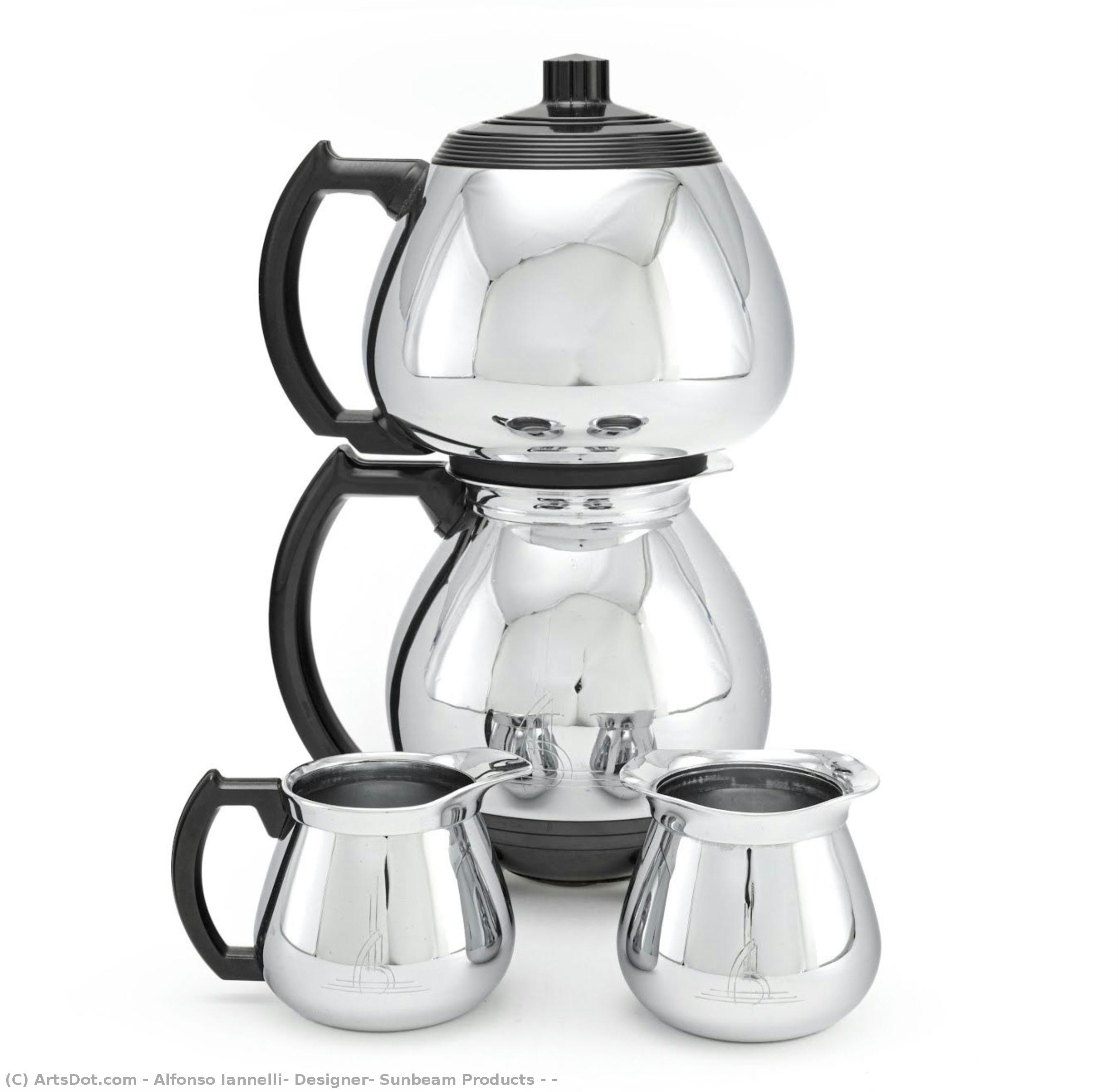
A Testament to Streamline: Alfonso Iannelli’s Silver Coffee Set (1939)
This meticulously crafted hand-painted reproduction captures the essence of mid-century modern design, specifically through the lens of Alfonso Iannelli's celebrated work for Sunbeam Products. Dating back to 1939, this silver coffee set isn’t merely a collection of cookware; it’s a tangible artifact of an era defined by optimism, technological innovation, and a burgeoning appreciation for elegant functionality. The photograph itself, reminiscent of a period product shot, immediately draws the eye to the dominant form – a substantial silver coffee pot boasting the hallmarks of Art Deco aesthetics: smooth curves, refined proportions, and a deliberate sense of movement. Iannelli’s influence is palpable in every detail, reflecting his training under Gutzon Borglum and his subsequent embrace of streamlined design principles that would shape consumer goods for decades to come.
- Design Philosophy: Iannelli's designs were rooted in a belief that form should follow function. This coffee set exemplifies this philosophy, prioritizing both aesthetic appeal and practical use. The symmetrical arrangement of the pots and cups speaks to a desire for order and balance – values increasingly prevalent in design during this period.
- Art Deco Influence: The rounded shapes, smooth surfaces, and overall sense of luxury are hallmarks of the Art Deco movement, which was gaining significant traction in the 1930s. This set represents a sophisticated adaptation of these trends for everyday use.
Materiality and Technique – A Reflection of Craftsmanship
The reproduction skillfully replicates the original’s materials and construction. The primary material is undoubtedly silver-plated metal, chosen not only for its inherent beauty but also for its association with wealth and status during this time. The subtle variations in reflectivity across the surfaces—a deliberate effect achieved through careful painting techniques—mimics the genuine sheen of polished silver. The black handles and base provide a striking contrast, grounding the set and emphasizing the metallic tones. Note the inclusion of black plastic or rubber handles – a practical addition that speaks to the era’s evolving approach to product design. The meticulous hand-painting process ensures an unparalleled level of detail, faithfully recreating the tactile qualities of the original object.
- Surface Treatment: The reproduction utilizes layering techniques to achieve the desired metallic effect, capturing the nuances of light reflection characteristic of silver plating.
- Handle Design: The black handles are rendered with a matte finish, providing a textural counterpoint to the polished metal and enhancing the overall visual interest.
Symbolism and Emotional Resonance – Nostalgia for a Golden Age
More than just a functional object, this silver coffee set evokes a powerful sense of nostalgia. It’s a portal back to an era of confident optimism, where design was seen as a means of elevating everyday life. The sleek lines and luxurious materials suggest sophistication and quality – qualities that remain highly desirable in contemporary design. The photograph's composition, with its emphasis on symmetry and balance, further contributes to this feeling of order and tranquility. It’s an image that speaks to the enduring appeal of classic design principles.
- Mid-Century Modern Aesthetic: The set embodies the core tenets of mid-century modernism – simplicity, functionality, and a focus on natural materials.
- Emotional Connection: The piece taps into our inherent desire for beauty, comfort, and connection to the past. It’s an object that invites contemplation and sparks memories of bygone eras.
Historical Context – Alfonso Iannelli and the Rise of Consumer Design
Created by Alfonso Iannelli, a sculptor who transitioned into industrial design, this coffee set represents a pivotal moment in the evolution of consumer goods. Iannelli’s work for Sunbeam Products demonstrates his ability to translate sculptural forms into functional objects, reflecting the broader trend of incorporating artistic principles into everyday products. His background in architecture – evident in the careful attention to proportion and detail – further informed his design approach. The 1939 date places this set firmly within a period of significant social and economic change, marked by rapid technological advancements and a growing consumer culture. Research reveals Iannelli’s involvement with design drawings from 1928-1948, showcasing the evolution of his style and techniques.
Related Artworks





Artist Biography
Alfonso Iannelli: A Sculptor of Streamline and Spirit
Born in Andretta, Italy, in 1888, Alfonso Iannelli’s artistic journey spanned continents and embraced a remarkable diversity of styles. Initially trained as a sculptor under Gutzon Borglum – a name inextricably linked to Mount Rushmore – Iannelli’s early career laid the foundation for his later explorations into industrial design, architecture, and vibrant poster art. His arrival in America in 1898 marked not just a geographical shift but also the beginning of a creative evolution deeply intertwined with the burgeoning optimism and technological advancements of the early 20th century.
Iannelli’s formative years were spent honing his skills in New York City, where he gained invaluable experience working on the facade of the New Cathedral of St. John the Divine. This exposure to grand architectural projects instilled a deep appreciation for form and detail – qualities that would later manifest in his diverse body of work. His early artistic pursuits included modeling figures for the cathedral, demonstrating an early talent for capturing human expression and translating it into tangible forms. He then moved on to working as a model for other artists, gaining experience with various sculpting techniques.
A pivotal moment in Iannelli’s career arrived in 1910 when he secured a position designing posters for the Orpheum Theatre in Los Angeles. These weren't merely advertisements; they were dynamic visual narratives, employing bold geometric shapes and simplified imagery to capture the essence of each vaudeville act. This period showcased his burgeoning interest in Cubism and modern design principles – an influence that would become increasingly pronounced throughout his career. The posters demonstrated a keen understanding of composition and color theory, elements he skillfully applied across all his subsequent projects.
The Wright Partnership: A Bitter Bloom
Iannelli’s association with Frank Lloyd Wright proved to be both professionally stimulating and ultimately fraught with tension. Invited to contribute to Wright's ambitious Midway Gardens project in Chicago in 1914, Iannelli created a series of “Sprite” sculptures – whimsical, stylized figures that embodied the spirit of the garden itself. These sculptures, characterized by their flowing lines and playful forms, became an instant sensation.
However, this collaboration was tragically cut short. Wright, seeking to claim sole credit for the Midway Gardens’ aesthetic vision, systematically appropriated Iannelli's designs, effectively erasing the Italian sculptor from the narrative. This act of artistic theft ignited a bitter dispute that ultimately severed their professional relationship and left Iannelli deeply disillusioned. Despite the setback, this experience solidified his commitment to independent creative expression and fueled his determination to establish his own studio.
Industrial Design and the Age of Streamline
Following the Wright debacle, Iannelli relocated to Chicago and embarked on a prolific period of industrial design work. His distinctive style – characterized by its streamlined forms, bold colors, and geometric precision – perfectly captured the spirit of the Art Deco era and the burgeoning “Streamline Moderne” movement. He quickly became a sought-after designer for leading manufacturers, including Sunbeam Products.
Perhaps Iannelli’s most enduring legacy lies in his work with Sunbeam. In 1938, he designed the iconic Coffeemaster vacuum coffeemaker and the T20 toaster – appliances that became household staples and instantly recognizable symbols of mid-century American design. These products weren't simply functional; they were works of art, embodying a sense of optimism and technological progress. The designs’ sleek curves and vibrant colors reflected the era’s fascination with speed, efficiency, and modernity.
Beyond Sunbeam, Iannelli contributed significantly to the Adler Planetarium in Chicago, creating Art Deco-style plaques depicting the zodiac signs and planetary symbols. He also designed an exterior fountain for the Riverside Studio in Tulsa, Oklahoma – a project that showcased his ability to integrate seamlessly with diverse architectural styles. His work extended into church interiors throughout the Midwest, adding a touch of artistic flair to sacred spaces.
A Legacy in Illinois: Studios and Enduring Influence
In 1925, Iannelli established Iannelli Studios in Park Ridge, Illinois, alongside his wife, Margaret – a talented illustrator and artist in her own right. The studio quickly became one of Chicago’s most prestigious design centers, attracting a diverse clientele and producing a remarkable range of work, including commercial designs, advertising campaigns, architectural interiors, and furniture designs.
Iannelli's influence extended beyond his immediate projects. He collaborated with notable Prairie School architects Purcell and Elmslie on the Woodbury County Courthouse and with Barry Byrne on numerous church projects. His contributions to the 1933 Century of Progress World’s Fair, including the Radio Flyer and Havoline Thermometer buildings, further cemented his reputation as a leading designer of his time. His work continues to be celebrated today, reminding us of the enduring power of artistic vision and innovative design.
Alfonso Iannelli passed away in Chicago on March 23, 1965, leaving behind a rich legacy of sculptural artistry and industrial design that continues to inspire and captivate audiences worldwide. His work stands as a testament to his creativity, versatility, and unwavering commitment to pushing the boundaries of artistic expression.
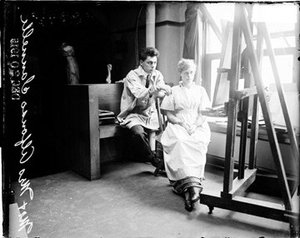
alfonso iannelli, designer, sunbeam products
1888 - 1965 , Italy
Quick Facts
- Artistic Movement Or Style: Streamline Moderne, Art Deco
- Artists Or Movements Influenced By This Artist: ['Frank Lloyd Wright']
- Artists Who Influenced This Artist: ['Gutzon Borglum']
- Date Of Birth: Feb 17, 1888
- Date Of Death: Mar 23, 1965
- Full Name: Alfonso Iannelli
- Nationality: Italian-American
- Notable Artworks:
- Sprite sculptures
- Adler Planetarium plaques
- Riverside Studio fountain
- Place Of Birth: Andretta, Italy

