 Preview
 Send
Send Share
Share
 Details

 Download
 Similars
 X-Ray
X-Ray Diaporama
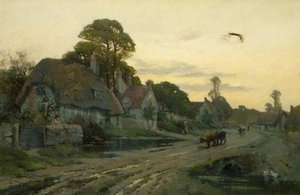
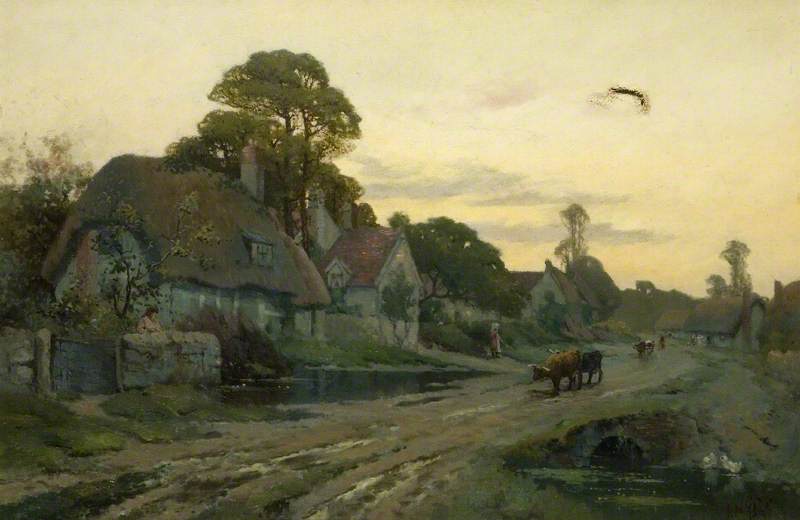
Village Scene, Cleve Prior, Worcestershire
 48.0 x 50.0 cm
 Read More
Giclée / Art Print
Museum-quality giclée or canvas print with fast production and flexible finish options. ( Buy Hand Made Painting Buy Image)




































Pick from our preset sizes that match the artwork's original proportions.

You may enter your own dimensions to fit a specific frame or space. If your selected size does not match the original image's proportions, we will either crop the artwork or extend the image with a mirrored or solid-fill edge. A digital mockup will be sent for your approval before production begins.
Please note that the on-screen preview does not reflect the actual cropping or extension. Only the mockup will accurately show the final composition.
While custom sizes are available, we recommend selecting a dimension from the predefined list to preserve the original proportions.
Worldwide Delivery () in 2 weeks instead of standard 4/5 weeks. (27 August)

Free Worldwide Express Shipping

High-Quality Linen Canvas

Full Shipping Insurance

Customs Tax Refund Guarantee

True Color Matching Guarantee

60-Day Return Policy (Defects Only)

100% Money-Back Guarantee

Bulk Discount Offer
 Glass option is only available in size under 110 CM

Village Scene, Cleve Prior, Worcestershire
Giclée / Art Print
Reproduction Size
-


Total Price
$ 63
Related Artworks









Artist Biography
A Legacy of Landscapes: The Life and Art of Alfred Fontville de Breanski Jr.
Alfred Fontville de Breanski Jr., born in London on August 28, 1877, emerged from a family deeply steeped in the traditions of British landscape painting. His father, the highly respected Victorian artist Alfred de Breanski Sr., laid the foundation for his artistic journey, but the influence extended beyond paternal guidance. His mother, Annie Roberts, was herself a Welsh painter, and both an uncle, Gustave de Breanski—a celebrated seascape specialist—and a younger brother, Arthur, also found success within the art world. This familial environment fostered an early immersion in artistic principles and techniques, shaping young Alfred’s initial approach to capturing the natural world. He received formal training at St. Martins School of Art, but it was a sojourn to France in the 1890s that proved pivotal, igniting a passion for new aesthetic possibilities.The Parisian Influence and Artistic Development
De Breanski's time in Paris during the belle époque wasn’t merely an educational pursuit; it was a transformative experience. He encountered the aging James McNeil Whistler, whose emphasis on tonal harmony and atmospheric effects resonated deeply with the young artist. Simultaneously, he absorbed the burgeoning principles of Impressionism—the unadulterated use of color, the broken brushwork designed to capture fleeting moments of light and sensation. This fusion of Symbolist sensibilities inherited from Whistler and the immediacy of Impressionism became a defining characteristic of his work. Upon returning to London, de Breanski began exhibiting regularly at prestigious venues like the Royal Academy and the Royal Society of British Artists, steadily establishing his reputation. His early paintings reflected a commitment to natural landscapes and rustic scenes, but increasingly infused with a nuanced understanding of light and color that set him apart. He generally signed his work as “A.F. de Breanski Jr.”, a practice often necessary to distinguish his creations from those of his father and brother, all three artists sharing similar subject matter and stylistic tendencies.Themes and Techniques: Capturing the Essence of Place
De Breanski’s oeuvre is characterized by a profound sensitivity to atmosphere and mood. He excelled at depicting sunlit landscapes and garden scenes, often focusing on the interplay of light and shadow to create depth and evoke emotional responses. Burnham Beeches, with its ancient trees, became a recurring motif, providing ample opportunity to explore these themes. Paintings like “Autumn Evening” exemplify his balanced compositions, framing water views and sunsets as focal points, employing muted palettes with warm oranges and yellows contrasting against cooler blues and grays. This tonalist approach prioritized atmosphere over precise detail, inviting viewers into the serenity of the scene. Later in his career, he demonstrated a remarkable versatility, venturing beyond traditional landscapes to create evocative maritime compositions featuring Dutch harbors at dusk—works like those depicting Deventer and Veere showcase an adept adaptation of Impressionistic techniques. These paintings capture the quiet grandeur of these locations, with tall-masted vessels silhouetted against fading light, church towers punctuating the skylines.Beyond Landscapes: The London Tram Posters
While celebrated for his landscapes, de Breanski’s artistic contributions extended beyond traditional painting. During World War I, in 1915, he produced a series of striking posters for the Underground Electric Railways Company. These posters, featuring scenes like “Twickenham by Tram” and “Kew Gardens by Tram,” were more than mere advertisements; they were vibrant depictions of London life, capturing the energy and accessibility of the city’s expanding transportation network. The posters are notable examples of early 20th-century design, blending artistic merit with commercial purpose and offering a fascinating glimpse into the social landscape of the era. They represent a unique facet of his talent—a capacity to translate his sensitivity to light and color into a dynamic public medium.Legacy and Historical Significance
Alfred Fontville de Breanski Jr. passed away in Tonbridge, Kent, on April 17, 1957, leaving behind a substantial body of work that continues to captivate audiences today. His paintings are held in the Government Art Collection and the London Transport Museum, testament to his enduring artistic legacy. He occupies a significant position within British landscape painting, bridging the gap between Victorian traditions and the emerging modern styles of the early 20th century. His ability to blend Impressionistic techniques with a nuanced understanding of atmosphere, coupled with his versatility as an artist—from serene landscapes to dynamic posters—ensures his continued relevance in art historical discourse. He wasn’t simply replicating scenes; he was capturing the *essence* of place, evoking emotional responses and offering viewers a glimpse into the beauty and tranquility of the natural world. His work serves as a reminder of the power of art to transform observation into experience, and his legacy continues to inspire artists and collectors alike.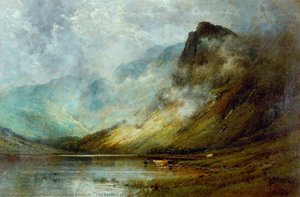
Quick Facts
- Artistic Movement Or Style: Impressionism, Symbolist
- Artists Who Influenced This Artist:
- Alfred de Breanski Sr.
- James McNeil Whistler
- Date Of Birth: August 28, 1877
- Date Of Death: April 17, 1957
- Full Name: Alfred Fontville de Breanski Jr.
- Nationality: British
- Notable Artworks:
- Autumn Evening
- Early Morning
- Twickenham by Tram
- Kew Gardens by Tram
- Place Of Birth: London, England