 Preview
 Send
Send Share
Share
 Details

 Download
 Similars
 X-Ray
X-Ray Diaporama
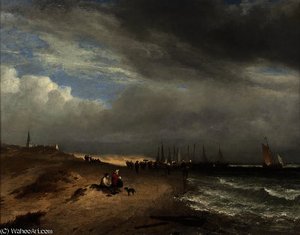
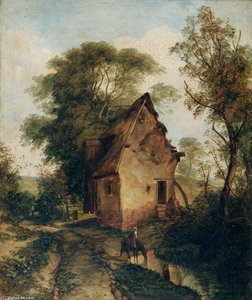
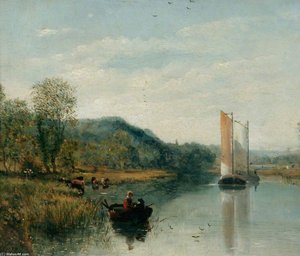
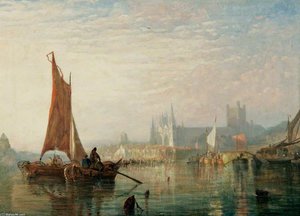
A View Of Gresham Near Cromer
 Read More
Hand Made Oil Reproduction
Hand-painted oil on canvas in your size and frame, made to order by our artists. ( Buy Print Buy Image)




































Pick from our preset sizes that match the artwork's original proportions.

You may enter your own dimensions to fit a specific frame or space. If your selected size does not match the original image's proportions, we will either crop the artwork or extend the painting with additional hand-painted elements. A digital mockup will be sent for your approval before production begins.
Please note that the on-screen preview does not reflect the actual cropping or extension. Only the mockup will accurately show the final composition.
While custom sizes are available, we recommend selecting a dimension from the predefined list to preserve the original proportions.
After order, ArtsDot.com team will email client for instructions and provide a mockup preview
Worldwide Delivery () in 3/4 weeks instead of standard 5 weeks. (17 August). No compromise on quality.

Free Worldwide Express Shipping

High-Quality Linen Canvas

Full Shipping Insurance

Customs Tax Refund Guarantee

True Color Matching Guarantee

60-Day Return Policy (Defects Only)

100% Money-Back Guarantee

Bulk Discount Offer
 Glass option is only available in size under 110 CM

A View Of Gresham Near Cromer
Reproduction Medium
Reproduction Size
-


Total Price
$ 263
Related Artworks


Artist Biography
Alfred George Stannard: A Master of Coastal English Landscapes
Alfred George Stannard (1827-1885) emerges from the rich artistic tapestry of 19th-century Britain as a significant, though often understated, figure in the landscape painting tradition. Born into a family deeply rooted in art – his father, Alfred Stannard, was himself a respected watercolourist – Stannard inherited not just a profession but an entire lineage dedicated to capturing the beauty and drama of the English countryside. His work, characterized by meticulous detail, atmospheric perspective, and a subtle romanticism, offers a poignant glimpse into a vanishing era of rural life and maritime activity.
Stannard’s early life was shaped by his father's influence and the vibrant artistic community of Norwich. This city, renowned for its thriving school of painting – the Norwich School – provided him with invaluable training and exposure to established artists like John Brett and Frank Day. The Norwich School distinguished itself from its more academic counterparts by prioritizing direct observation of nature, a commitment reflected in Stannard’s own approach. He spent considerable time sketching and painting outdoors, meticulously rendering the textures of weathered stone, the shifting patterns of light on water, and the subtle hues of coastal vegetation.
His artistic development was further influenced by his travels throughout Wales and Switzerland, experiences that broadened his palette and deepened his understanding of diverse landscapes. These journeys instilled in him a keen appreciation for the dramatic contrasts between rugged mountainsides and verdant valleys, a theme frequently explored in his later works. Stannard’s style evolved over time, moving from looser, more expressive brushwork to a greater degree of precision and control, particularly evident in his detailed depictions of harbors and coastal scenes.
The Maritime Influence and Coastal Scenes
Stannard's oeuvre is overwhelmingly dominated by maritime subjects – harbors bustling with activity, fishing boats returning laden with their catch, and expansive views of the North Sea. These weren’t merely picturesque representations; they were imbued with a sense of immediacy and realism that captured the rhythms of coastal life. His paintings frequently depict scenes of industry alongside natural beauty, showcasing the symbiotic relationship between humanity and the sea.
The influence of Dutch Masters is readily apparent in Stannard's compositions – particularly his use of light and shadow, a hallmark of their work. He skillfully employed atmospheric perspective to create a sense of depth and distance, drawing the viewer into the heart of the scene. His meticulous attention to detail extended beyond mere representation; he sought to convey the very essence of these places—the salty air, the cries of gulls, and the ever-changing moods of the sea.
Notable works like “The Old Mill” and “River Scene With Peterborough Cathedral In The Distance” exemplify this talent. These paintings are not simply depictions of physical locations; they’re windows into a bygone era, offering glimpses of daily life and capturing the spirit of a community deeply connected to its maritime heritage.
A Family Affair: Stannard and His Artistic Legacy
It's crucial to acknowledge that Alfred George Stannard was part of a larger artistic family. His father, Alfred Stannard, was a respected watercolourist in his own right, and his sister, Eloise Harriet Stannard, also pursued a career as an artist. This familial connection fostered a shared passion for painting and provided a supportive environment for their creative endeavors.
Furthermore, the Stannards’ collaboration extended beyond simply sharing a profession; they actively engaged in artistic discussions and critiques, influencing each other's work and contributing to the vibrant artistic atmosphere of Norwich. The legacy of the Stannard family is therefore inextricably linked to the success and influence of the Norwich School of painters.
Historical Significance and Lasting Impact
While Alfred George Stannard may not be as widely celebrated as some of his contemporaries, his work holds significant historical value. He represents a crucial link in the chain of landscape painting that evolved from the Romantic era into the Victorian period. His meticulous observation of nature, combined with a subtle romantic sensibility, reflects the prevailing artistic trends of his time.
Stannard’s paintings offer valuable insights into the social and economic realities of coastal communities during the 19th century, documenting the lives of fishermen, shipbuilders, and other individuals who depended on the sea for their livelihood. His work serves as a poignant reminder of a disappearing way of life—a time when rural England was undergoing rapid transformation.
Today, Stannard’s paintings can be found in public collections and private hands, testament to his enduring artistic merit. His legacy continues to inspire artists and art lovers alike, reminding us of the power of landscape painting to capture both the beauty and the complexity of the natural world.
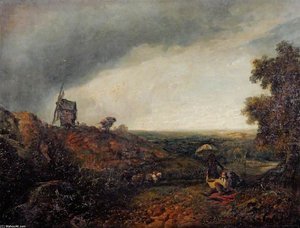
alfred george stannard
1828 - 1885 , United Kingdom
Quick Facts
- Artistic Movement Or Style: Norwich School
- Artists Or Movements Influenced By This Artist:
- Constable
- Turner
- Artists Who Influenced This Artist: ['Dutch Masters']
- Date Of Birth: 1827
- Date Of Death: 1885
- Full Name: Alfred George Stannard
- Nationality: British
- Notable Artworks:
- River Scene with Cathedral
- The Old Mill
- Seascape or Coastal Scene
- Place Of Birth: Norwich, England