 Preview
 Send
Send Share
Share
 Details

 Download
 Similars
 X-Ray
X-Ray Diaporama
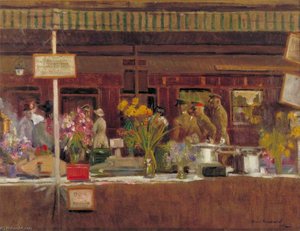
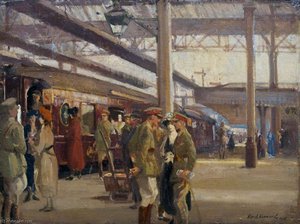
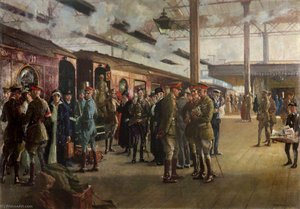
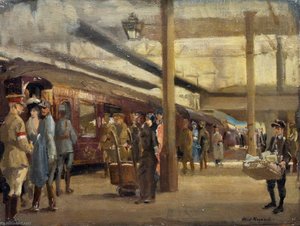
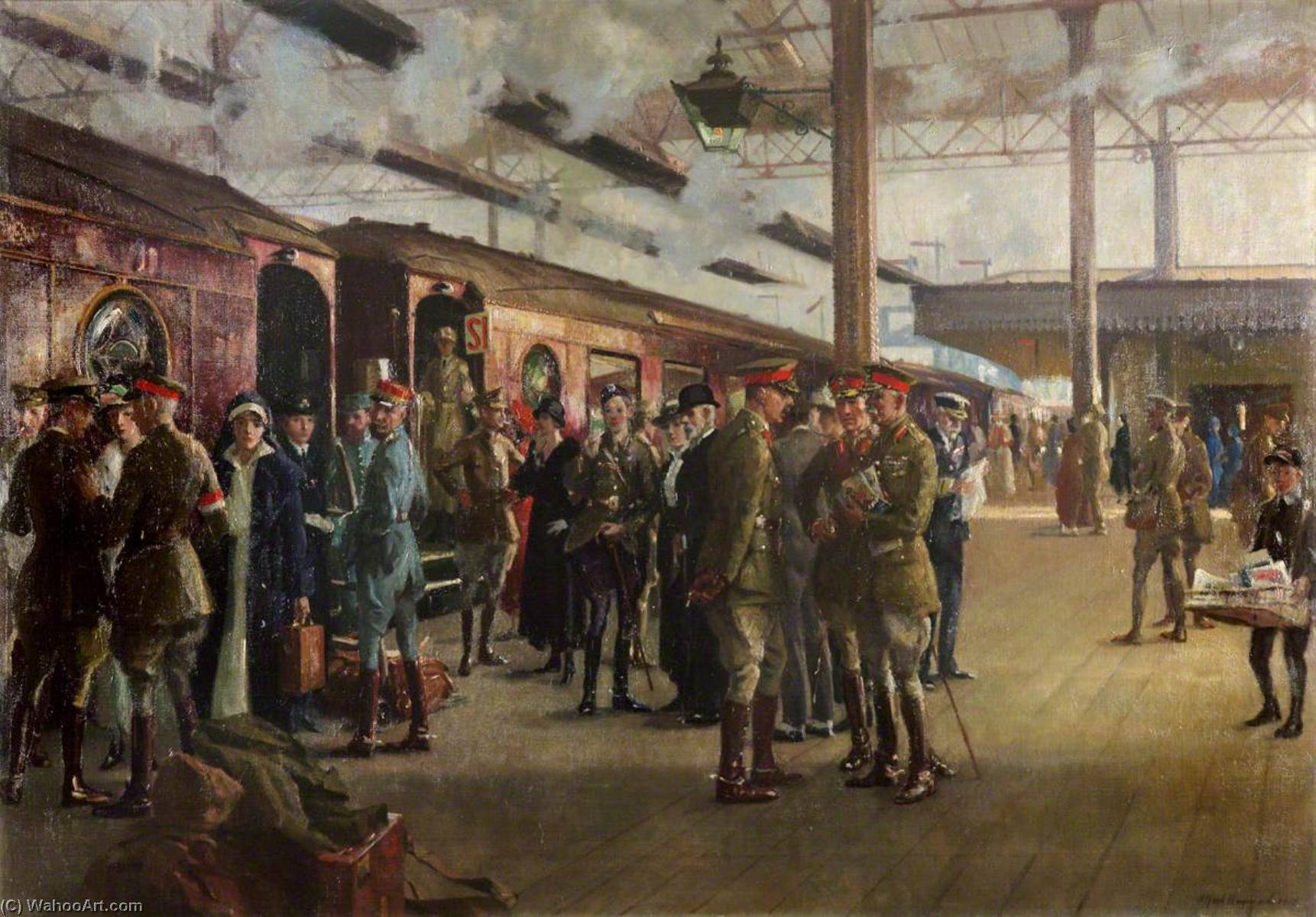
The Staff Train at Charing Cross Station
 1918
1918 107.0 x 152.0 cm
 Read More
Hand Made Oil Reproduction
Hand-painted oil on canvas in your size and frame, made to order by our artists. ( Buy Print Buy Image)




































Pick from our preset sizes that match the artwork's original proportions.

You may enter your own dimensions to fit a specific frame or space. If your selected size does not match the original image's proportions, we will either crop the artwork or extend the painting with additional hand-painted elements. A digital mockup will be sent for your approval before production begins.
Please note that the on-screen preview does not reflect the actual cropping or extension. Only the mockup will accurately show the final composition.
While custom sizes are available, we recommend selecting a dimension from the predefined list to preserve the original proportions.
After order, ArtsDot.com team will email client for instructions and provide a mockup preview
Worldwide Delivery () in 3/4 weeks instead of standard 5 weeks. (24 August). No compromise on quality.

Free Worldwide Express Shipping

High-Quality Linen Canvas

Full Shipping Insurance

Customs Tax Refund Guarantee

True Color Matching Guarantee

60-Day Return Policy (Defects Only)

100% Money-Back Guarantee

Bulk Discount Offer
 Glass option is only available in size under 110 CM

The Staff Train at Charing Cross Station
Reproduction Medium
Reproduction Size
-


Total Price
$ 263
Related Artworks








Artist Biography
Alfred Robert Hayward (1875–1971): A Canadian Visionary of Urban Life
Alfred Robert Hayward was born in Vancouver, British Columbia, Canada, in 1875—a child of the burgeoning frontier spirit and a lineage steeped in artistic tradition. His father, William Hayward, was a Scottish immigrant who established a successful lumber business, fostering an environment that encouraged creativity and exploration. From a young age, Hayward demonstrated exceptional talent for drawing and painting, honing his skills through self-study and mentorship from local artists. This formative period instilled in him a lifelong fascination with capturing the essence of human experience—particularly within the dynamic landscapes of Canadian cities. Hayward’s artistic journey began formally at the Royal Academy School in London in 1897, where he studied under William Ord Kendall and Frank Wilfrid Bacon. These influential teachers championed academic realism—a meticulous approach to portraying subjects with painstaking detail and accurate tonal values—which profoundly shaped Hayward's stylistic sensibilities. He embraced this technique wholeheartedly, producing canvases that meticulously rendered urban scenes and portraits with remarkable precision. His work wasn’t merely descriptive; it sought to convey mood and emotion through subtle nuances of color and light. A pivotal moment in Hayward’s career arrived in 1908 when he joined the Slade School of Fine Art alongside fellow artists Arthur James Mason, William Ord Kendall, Frank Wilfrid Bacon, and Henry Herbert Armitage—forming what would become known as Station Photography. This collective aimed to elevate British art by exploring innovative photographic techniques combined with painting. Hayward’s involvement in Station Photography solidified his commitment to experimentation while maintaining a steadfast dedication to realism. He skillfully blended photographic observation with artistic interpretation, resulting in paintings that possessed both visual accuracy and expressive depth. Hayward's prolific output spanned decades, producing over 300 canvases—primarily landscapes and portraits—that cemented his reputation as one of Canada’s foremost artists. His subjects ranged from majestic Canadian wilderness vistas to intimate depictions of individuals—often capturing them in moments of quiet contemplation or dignified repose. He possessed an uncanny ability to convey character and emotion through subtle gestures and expressions, demonstrating a profound understanding of human psychology. Notably, Hayward's paintings frequently incorporated symbolic elements—drawing inspiration from mythology and folklore—adding layers of meaning beyond mere visual representation. Throughout his life, Hayward remained active in the artistic community, lecturing extensively on art history and technique, and mentoring younger artists. He served as President of the Royal Canadian Academy of Arts from 1938 to 1940, fostering a supportive environment for artistic development. His legacy extends beyond his impressive oeuvre; he championed the importance of rigorous training and unwavering dedication to craft—inspiring generations of painters to pursue excellence in their work. Alfred Robert Hayward died peacefully in Kettering, Massachusetts, in 1971, leaving behind an enduring contribution to Canadian art history and a testament to the transformative power of artistic vision.
alfred robert hayward
1875 - 1971
Quick Facts
- Artistic Movement Or Style: Station Photography
- Artists Who Influenced This Artist:
- George Frederic Watts
- William Ord Kendall
- Date Of Birth: 1875
- Date Of Death: 1971
- Full Name: Alfred Robert Hayward
- Nationality: Canadian
- Notable Artworks:
- Lieutenant General Sir William T. Furse
- Arthur James Mason
- General Sir William Riddell Birdwood
- Place Of Birth: Vancouver, British Columbia