 Preview
 Send
Send Share
Share
 Details

 Download
 Similars
 X-Ray
X-Ray Diaporama
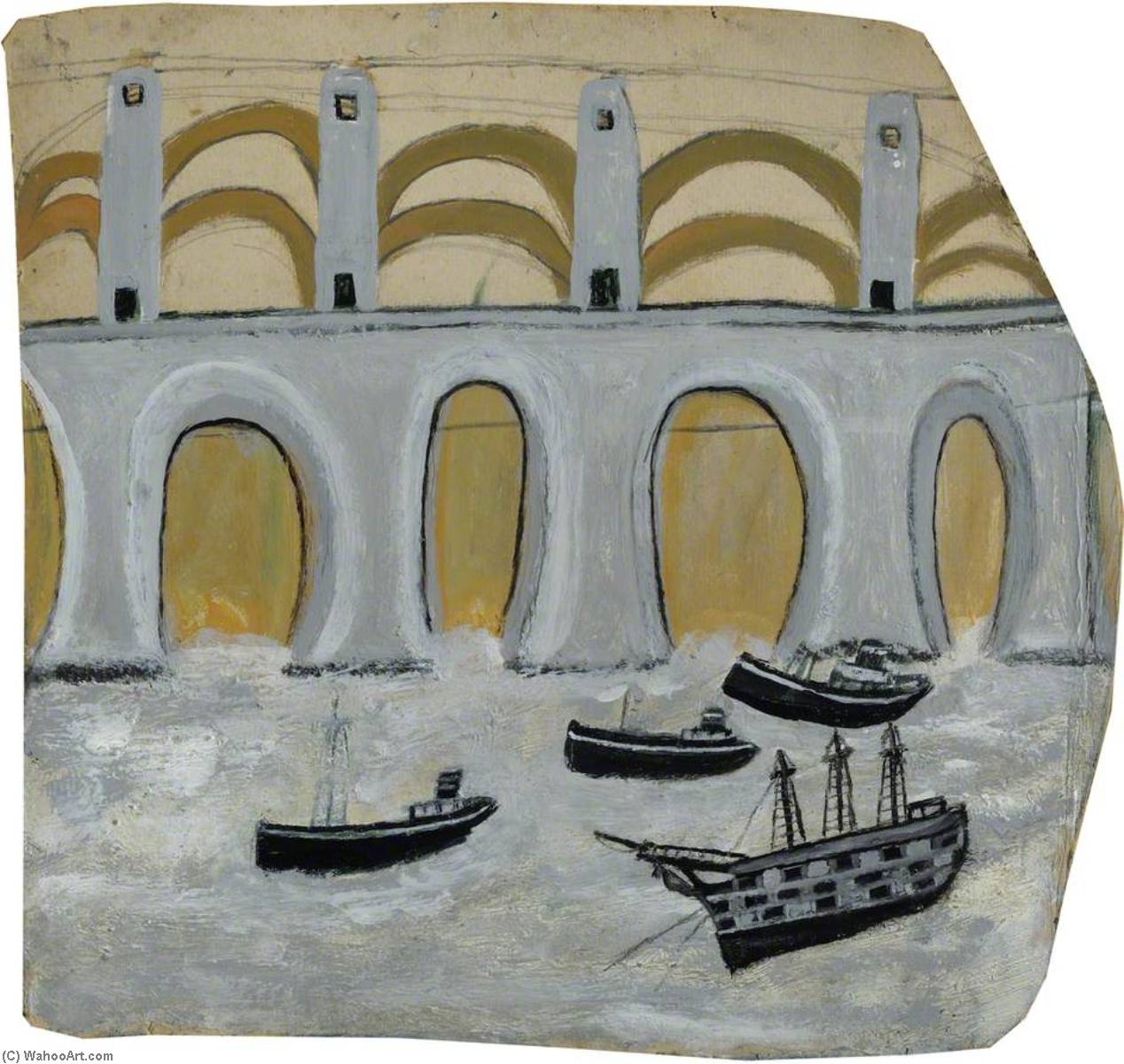
Boats before a Great Bridge (Royal Albert Bridge )
 Painting
- Naive Art
 1937
1937- Modern
 37.0 x 39.0 cm
 Kettle's Yard
 Read More
Hand Made Oil Reproduction
Hand-painted oil on canvas in your size and frame, made to order by our artists. ( Buy Print Buy Image)




P118B $10

P118H $10

P118W $10

P438Z $10

P508JH $12

P508YH $12

P805H $10

P805Z $10

P919BZ $10

P919G $10

P919XJ $10

P959ZH $10

P968JZ $12

W106C $8

W218G $10

W218JH $8

W218Y $10

W307PJ $10

W316G $10

W316PJ $8

W316Y $10

W398PJ $8

W4111J $10

W500HY $15

W500JH $15

W692G $12

W849H $8

W940BG $15

W953PJ $8




Pick from our preset sizes that match the artwork's original proportions.

You may enter your own dimensions to fit a specific frame or space. If your selected size does not match the original image's proportions, we will either crop the artwork or extend the painting with additional hand-painted elements. A digital mockup will be sent for your approval before production begins.
Please note that the on-screen preview does not reflect the actual cropping or extension. Only the mockup will accurately show the final composition.
While custom sizes are available, we recommend selecting a dimension from the predefined list to preserve the original proportions.
After order, ArtsDot.com team will email client for instructions and provide a mockup preview
Worldwide Delivery () in 3/4 weeks instead of standard 5 weeks. (17 August). No compromise on quality.

Free Worldwide Express Shipping

High-Quality Linen Canvas

Full Shipping Insurance

Customs Tax Refund Guarantee

True Color Matching Guarantee

60-Day Return Policy (Defects Only)

100% Money-Back Guarantee

Bulk Discount Offer
 Glass option is only available in size under 110 CM

Boats before a Great Bridge (Royal Albert Bridge )
Reproduction Medium
Reproduction Size
-


Total Price
$ 263
Artwork Description
A Timeless Encounter with the Cornish Coast
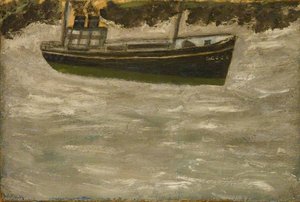
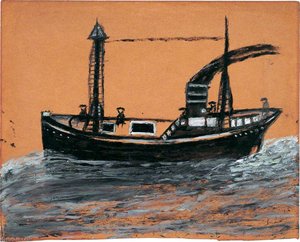
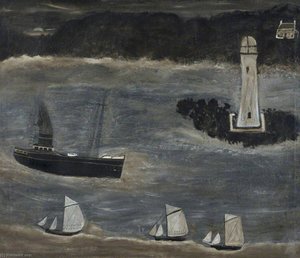
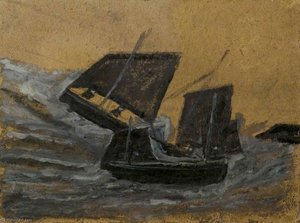
In the quiet, monochromatic depths of Boats before a Great Bridge (Royal Albert Bridge), we are transported to a moment frozen in 1937, where the rhythmic pulse of the sea meets the industrial majesty of the United Kingdom. This evocative piece by the self-taught master Alfred Wallis captures more than just a landscape; it captures a way of life. The composition presents a serene assembly of vessels, varying in scale and distance, drifting upon the water's surface like memories floating through time. A solitary figure stands poised upon one of the boats, adding a poignant human element to the vastness of the scene—a silent witness to the enduring relationship between man and the maritime environment.
The presence of the Royal Albert Bridge in the background provides a striking architectural counterpoint to the organic, fluid forms of the boats. This structural titan, stretching across the horizon, serves as a symbol of progress and connectivity, yet within Wallis’s vision, it feels integrated into the very fabric of the coastal atmosphere. The interplay between the heavy, permanent ironwork of the bridge and the light, transient nature of the floating vessels creates a profound tension, inviting the viewer to contemplate the intersection of human ingenuity and the natural world.
The Soul of Naive Artistry and Technique
To behold a work by Alfred Wallis is to experience the raw, unadulterated beauty of naïve art. Having spent much of his life as a shipbuilder in Devonport, Wallis brought an intimate, tactile knowledge of maritime structures to his canvas. His technique lacks the polished pretension of academic training, opting instead for a soulful simplicity that resonates with deep authenticity. In this particular black and white rendering, the absence of color forces the eye to focus on texture, light, and form. The subtle gradations of grey and the stark contrasts of shadow allow the viewer to feel the weight of the water and the ruggedness of the boats.
The artist’s approach is characterized by a meticulous attention to the essence of his subjects rather than photographic precision. This stylistic choice imbues the artwork with a dreamlike, nostalgic quality, making it an extraordinary piece for those who appreciate folk art and the charm of historical realism. For collectors and interior designers, this painting offers a sophisticated monochromatic palette that integrates seamlessly into modern, minimalist, or classic coastal decor, providing a focal point that is both intellectually stimulating and visually calming.
An Emotional Legacy for the Discerning Collector
Beyond its aesthetic merits, Boats before a Great Bridge carries an emotional weight that lingers long after the first glance. It evokes a sense of nostalgia for a bygone era of maritime tranquility, a time when the pace of life was dictated by the tides and the wind. The stillness of the scene offers a sanctuary of peace, making it an ideal acquisition for spaces designed for reflection, such as libraries, study halls, or quiet living areas.
Owning a high-quality reproduction of this masterpiece is an opportunity to bring a piece of British maritime history into one's personal environment. It serves not merely as decoration, but as a conversation piece that celebrates the rugged spirit of Cornwall and the profound vision of a man who saw the extraordinary within the ordinary. Whether you are an art enthusiast or a designer seeking to add depth and narrative to a room, this work stands as a testament to the enduring power of the sea and the human spirit.
Related Artworks




Artist Biography
The Cornish Mariner’s Vision
Alfred Wallis (1855-1942) stands apart from the traditional artistic landscape of his era—a figure whose quiet simplicity belies a profound engagement with observation and an unwavering dedication to capturing the essence of coastal Cornwall. Born in Devonport, England, Wallis possessed no formal art training; he was a self-taught craftsman who worked as a shipbuilder for much of his life, shaping timbers into vessels that sailed the Atlantic waters. This practical, hands-on mastery instilled in him a meticulous attention to detail and an intimate understanding of materials that would later translate into his evocative paintings. His formative years were spent honing skills in shipbuilding, a trade passed down through generations of Cornish families, which provided him with a unique, visceral connection to the maritime world he would eventually immortalize on canvas.
It was not until the 1920s that Wallis’s artistic career truly blossomed, following his relocation to the vibrant artistic enclave of St Ives, Cornwall. Drawn by the creative energy of this community—which included notable figures such as Ben Burrell and George Nash—he began producing a prolific series of works depicting boats, harbors, and landscapes bathed in the distinctive Cornish light. His aesthetic is undeniably unique, characterized by flattened perspectives, bold outlines, and a muted color palette dominated by deep blues and sea-greens. Wallis’s work embodies the principles of naive art, a style rooted in direct sensory experience rather than intellectualized academic theory. He eschewed complex compositions and elaborate brushstrokes, prioritizing clarity and an immediate, emotional impact.
A Legacy of Maritime Memory
The significance of Wallis's contribution to art lies in his ability to transform the mundane elements of seafaring life into something deeply spiritual and atmospheric. His paintings are not merely representations of places; they are imbued with a palpable sense of movement and memory. Through works such as Trawler and Boat, one can sense the weight of the Atlantic and the rhythmic pulse of the tides. Even in more turbulent compositions like Rough Sea, his expressive style and evocative brushwork capture the raw power of the ocean through a lens of folk art tradition. By rejecting the rigid academic conventions of his time, Wallis achieved a level of honesty that resonates with viewers seeking a connection to the elemental forces of nature.
His historical importance is cemented by his role as a bridge between the rugged reality of maritime labor and the modern art movements of the 20th century. While he lacked formal instruction, his "primitive" approach offered a refreshing alternative to the sophisticated techniques of the era, influencing how we perceive the relationship between subject and medium. His life's work remains a testament to the power of the untrained eye, proving that true artistic vision often emerges from a deep, lifelong intimacy with one's surroundings. Today, his legacy continues to inspire those drawn to the charm of Cornish life and the timeless beauty of the sea.
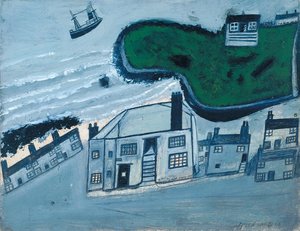
Alfred Wallis
1855 - 1942 , United Kingdom
Quick Facts
- Artistic Movement Or Style: Naive painting
- Artists Or Movements Influenced By This Artist: ['Cornish Art']
- Artists Who Influenced This Artist: ['']
- Date Of Birth: August 8, 1855
- Date Of Death: August 29, 1942
- Full Name: Alfred Wallis
- Nationality: British
- Notable Artworks:
- Boat
- Trawler
- Three Masted Ship near Lighthouse
- Place Of Birth: Devonport, United Kingdom
Related Articles

White on Canvas: 10 Masterpieces & Timeless Elegance for Your Home Decor
Explore 10 iconic white paintings by Monet, Whistler & Rothko! Discover the stories behind these serene masterpieces and their impact on art history. Find museum-quality reproductions for your home decor at .

Dark Masterpieces: 10 Iconic Paintings Dominated by Black Tones |
Explore 10 iconic paintings dominated by black tones, from Rembrandt’s chiaroscuro to Goya's dark expressions. Discover the stories behind these masterpieces & find museum-quality art reproductions for your home at .

Monochrome Visions: Exploring the Aesthetic & Historical Significance of Black & White Photography
Explore the rich history & artistic power of black and white photography. From early techniques to iconic masters like Ansel Adams, discover why monochrome continues to captivate art lovers today. Expert insights for collectors.

Mars Black Masterpieces: 10 Iconic Paintings & Timeless Art Decor Ideas
Delve into the power of 'Mars Black' with 10 iconic paintings by masters like Rembrandt & Caravaggio. Explore dramatic chiaroscuro, gothic art, and timeless beauty. Find museum-quality reproductions & elevate your home decor on .

The Subtleties of White: Exploring Absence, Light & Symbolism in Art History
Explore the profound symbolism & history of white in art! From ancient purity to modern abstraction, discover how artists have used absence & light. Expert insights from ArtsDot.