 Preview
 Send
Send Share
Share
 Details

 Download
 Similars
 X-Ray
X-Ray Diaporama
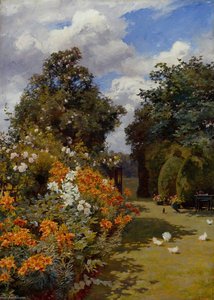
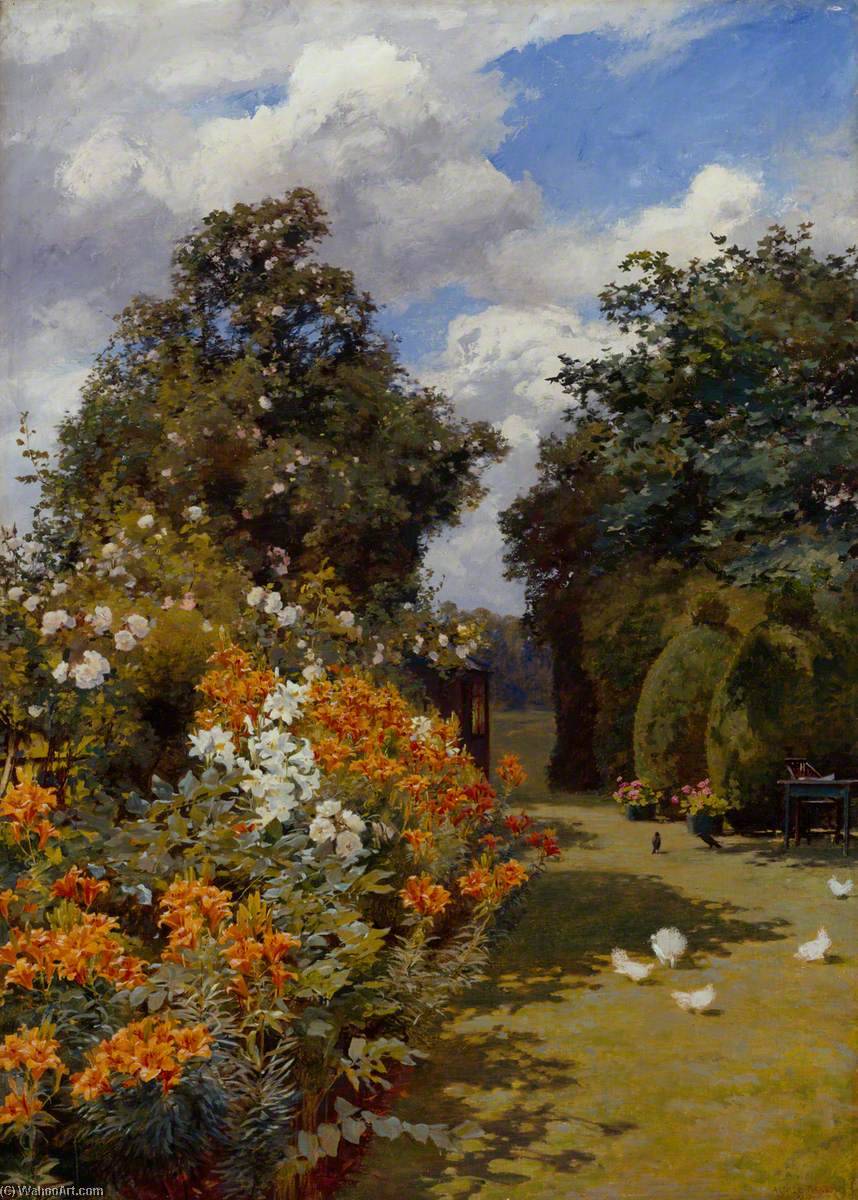
Orange Lilies, Broadway, Worcestershire
 1911
1911 92.0 x 66.0 cm
 Read More
Hand Made Oil Reproduction
Hand-painted oil on canvas in your size and frame, made to order by our artists. ( Buy Print Buy Image)




































Pick from our preset sizes that match the artwork's original proportions.

You may enter your own dimensions to fit a specific frame or space. If your selected size does not match the original image's proportions, we will either crop the artwork or extend the painting with additional hand-painted elements. A digital mockup will be sent for your approval before production begins.
Please note that the on-screen preview does not reflect the actual cropping or extension. Only the mockup will accurately show the final composition.
While custom sizes are available, we recommend selecting a dimension from the predefined list to preserve the original proportions.
After order, ArtsDot.com team will email client for instructions and provide a mockup preview
Worldwide Delivery () in 3/4 weeks instead of standard 5 weeks. (21 August). No compromise on quality.

Free Worldwide Express Shipping

High-Quality Linen Canvas

Full Shipping Insurance

Customs Tax Refund Guarantee

True Color Matching Guarantee

60-Day Return Policy (Defects Only)

100% Money-Back Guarantee

Bulk Discount Offer
 Glass option is only available in size under 110 CM

Orange Lilies, Broadway, Worcestershire
Reproduction Medium
Reproduction Size
-


Total Price
$ 263
Related Artworks










Artist Biography
The Verdant Vision of Alfred William Parsons
In the golden age of Victorian landscape painting, few artists captured the quiet majesty of the English countryside with as much botanical precision and poetic grace as Alfred William Parsons. Born on December 2nd, 1847, in the picturesque village of Beckington, Somerset, Parsons was destined to become a bridge between the worlds of fine art and horticultural science. He descended from a lineage deeply rooted in the earth; his father, Joshua Parsons, was a noted alpinist and a close correspondent to the legendary garden designer William Robinson. This early immersion in the rhythms of nature provided the foundational palette for a career that would eventually define the aesthetic of the English pastoral ideal.
Though his professional journey began far from the easel—serving as a clerk at the Post Office starting in 1867—the call of creative expression proved too potent to ignore. Driven by a desire for a more dynamic existence, Parsons abandoned the sedentary life of bureaucracy to pursue formal training at the prestigious Kensington School of Art. It was here that his technical prowess began to coalesce, blending the meticulous observation required for botanical illustration with the atmospheric sensitivity of landscape painting. His emergence into the London art scene was marked by regular exhibitions at the Royal Academy and the Grosvenor Gallery, establishing him as a vital voice in a community that sought to find divinity in the natural world.
A Symbiosis of Art and Nature
The true brilliance of Parsons lay in his ability to treat the landscape not merely as a backdrop, but as a living, breathing protagonist. His work often functioned as a seamless dialogue between the wildness of nature and the curated beauty of the garden. This dual identity as both an illustrator and a garden designer allowed him to approach his canvases with a unique scientific eye. He was particularly renowned for his fine botanical illustrations, which brought him into close collaboration with William Robinson. Through these works, Parsons helped popularize a style of gardening that favored naturalistic, flowing arrangements over the rigid, formal structures of previous eras.
His artistic technique was characterized by an exquisite use of light and texture. Whether working in oils or watercolours, Parsons possessed a remarkable ability to render the soft, diffused light of an English afternoon, capturing the way it filtered through heavy foliage or shimmered upon a serene river. His paintings often feature:
- Idyllic English landscapes that evoke a sense of timeless tranquility and nostalgic peace.
- Meticulous botanical detail that honors the specific flora of the British Isles.
- Atmospheric depth achieved through subtle, muted color palettes and masterful brushwork.
- Architectural harmony where stately manor houses are depicted as organic extensions of their verdant surroundings.
Legacy and Artistic Triumph
As his career progressed, Parsons’s influence extended far beyond the borders of England. His expertise in garden design saw him shaping significant landscapes in Scotland and even across the Atlantic in the United States. This period of his life reflected a growing belief among his contemporaries that an artist possessed the unique vision necessary to design gardens that were true works of art. His accolades were numerous and reflected his standing in the upper echelons of the British art world, including winning the prestigious Chantrey Bequest in 1887 and serving as the President of the Society of Painters in Watercolours in 1905.
Beyond his formal titles, Parsons was a man of profound curiosity and literary talent. His publication, Notes From Japan (1896), demonstrated a breadth of interest that mirrored his artistic versatility. Even as the world moved toward the more fragmented styles of the early 20th century, Parsons remained a steadfast guardian of the romantic and the real. When he passed away on January 16th, 1920, he left behind a legacy of harmony—a body of work that continues to remind us of a time when art and nature were viewed as an inseparable, sacred whole.
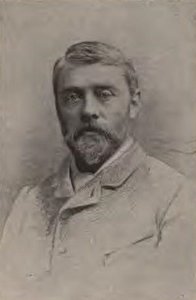
Alfred William Parsons
1847 - 1920
Quick Facts
- Artistic Movement Or Style: Victorian Landscape Painting
- Artists Or Movements Influenced By This Artist: ['Romanticism']
- Artists Who Influenced This Artist: ['William Robinson']
- Date Of Birth: 2 December 1847
- Date Of Death: 16 January 1920
- Full Name: Alfred William Parsons
- Nationality: English
- Notable Artworks:
- American Apples
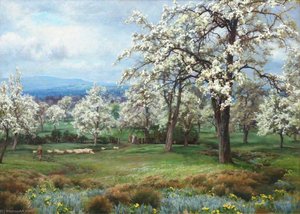
- The Pear Orchard
- The Manor Park
- Place Of Birth: Bекington, Somerset