 Preview
 Send
Send Share
Share
 Details

 Download
 Similars
 X-Ray
X-Ray Diaporama
Six Mélodies: Ici-bas!
 Drawing
- WallArt
- Romanticism
 1888
1888- 19th Century
 36.0 x 27.0 cm
 Museu Nacional da Música
 Read More
Giclée / Art Print
Museum-quality giclée or canvas print with fast production and flexible finish options. ( Buy Hand Made Painting Buy Image)




P118B $10

P118H $10

P118W $10

P438Z $10

P508JH $12

P508YH $12

P805H $10

P805Z $10

P919BZ $10

P919G $10

P919XJ $10

P959ZH $10

P968JZ $12

W106C $8

W218G $10

W218JH $8

W218Y $10

W307PJ $10

W316G $10

W316PJ $8

W316Y $10

W398PJ $8

W4111J $10

W500HY $15

W500JH $15

W692G $12

W849H $8

W940BG $15

W953PJ $8




Pick from our preset sizes that match the artwork's original proportions.

You may enter your own dimensions to fit a specific frame or space. If your selected size does not match the original image's proportions, we will either crop the artwork or extend the image with a mirrored or solid-fill edge. A digital mockup will be sent for your approval before production begins.
Please note that the on-screen preview does not reflect the actual cropping or extension. Only the mockup will accurately show the final composition.
While custom sizes are available, we recommend selecting a dimension from the predefined list to preserve the original proportions.
Worldwide Delivery () in 2 weeks instead of standard 4/5 weeks. (21 August)

Free Worldwide Express Shipping

High-Quality Linen Canvas

Full Shipping Insurance

Customs Tax Refund Guarantee

True Color Matching Guarantee

60-Day Return Policy (Defects Only)

100% Money-Back Guarantee

Bulk Discount Offer
 Glass option is only available in size under 110 CM

Six Mélodies: Ici-bas!
Giclée / Art Print
Reproduction Size
-


Total Price
$ 63
Collectible Description
A Delicate Symphony of Line and Light
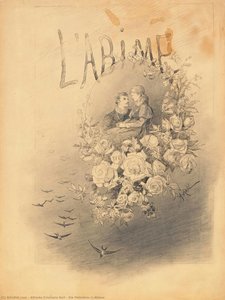
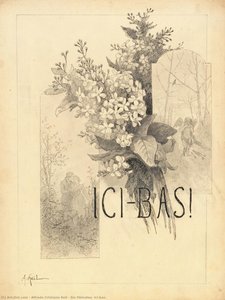
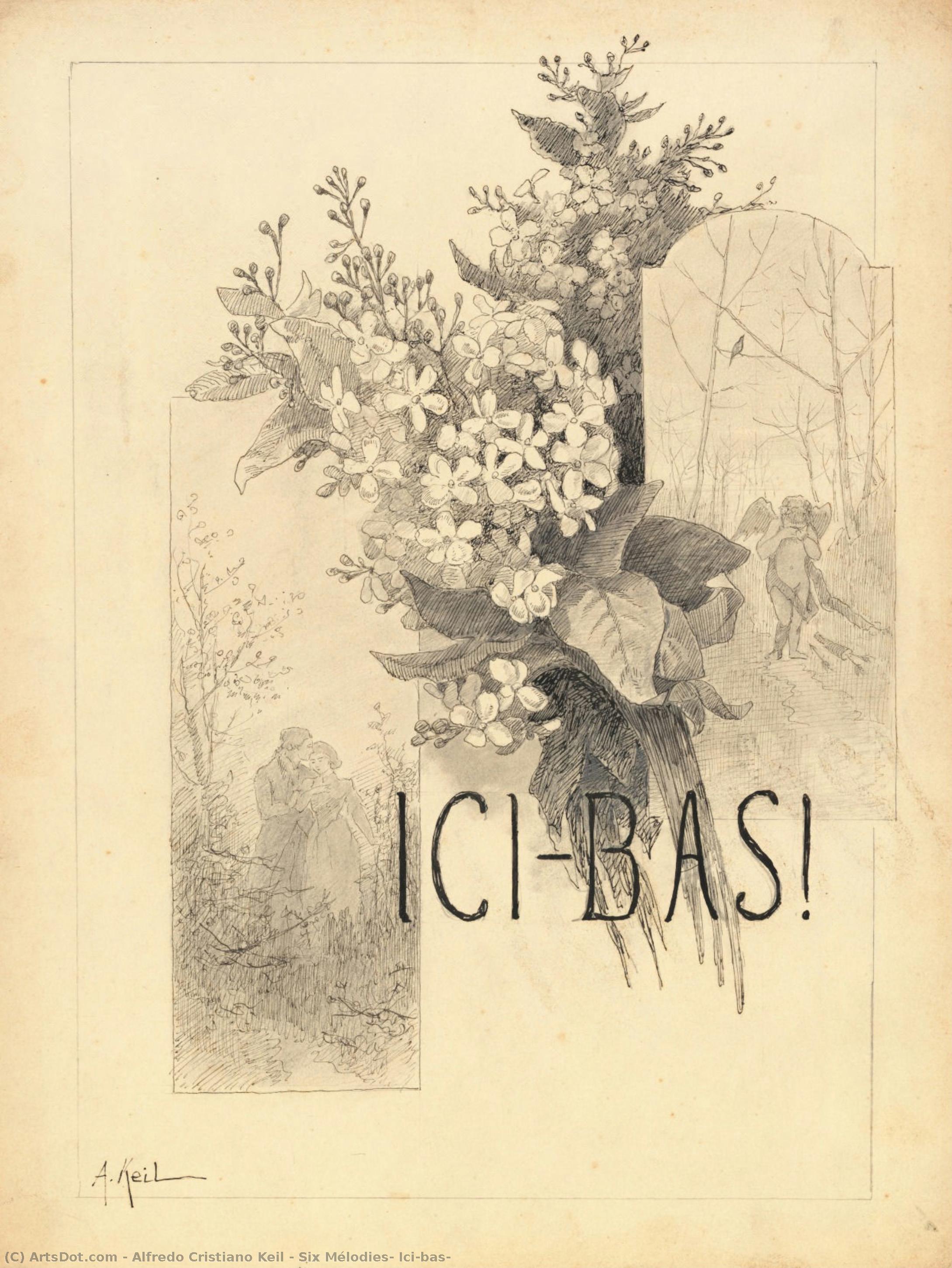
In the delicate interplay of shadow and light found within Six Mélodies: Ici-bas!, we encounter a profound moment of nineteenth-century artistry. Created in 1888 by the esteemed Portuguese master Alfredo Cristiano Keil, this exquisite drawing serves as more than just a cover for a musical collection; it is a visual poem. The composition centers on a meticulously rendered floral arrangement, where lilies emerge from a vase with a grace that feels both ephemeral and eternal. Through masterful use of monochrome tones, Keil captures the velvety texture of petals and the structural elegance of stems, inviting the viewer into a quiet, contemplative space where the boundaries between visual art and musical melody begin to dissolve.
The technique employed in this piece speaks to the rigorous training Keil received in the prestigious studios of Munich and Nuremberg. Every stroke of the pen or pencil demonstrates an intimate understanding of botanical form, utilizing fine hatching and varying line weights to create a sense of three-dimensional depth. This precision does not merely document nature; it elevates it. The way the light seems to catch the edges of the lilies suggests a soft, ambient glow, reminiscent of a late afternoon in a sun-drenched studio. For the collector or interior designer, this work offers a sophisticated touch of classical elegance, providing a focal point that is both intellectually stimulating and visually soothing.
Symbolism and the Romantic Spirit
To understand Ici-bas!—which translates to "Here Below"—one must look through the lens of the Romantic movement that defined Keil’s career. In the late 19th century, floral arrangements were rarely mere decorations; they were laden with symbolic language. The lily, often associated with purity and rebirth, stands as a silent protagonist in this arrangement, perhaps reflecting the spiritual undertones found in the melodies the drawing was intended to introduce. There is a poignant tension within the work between the permanence of the ink on paper and the fleeting, fragile nature of the blossoms depicted. This duality captures the very essence of the Romantic soul: an obsession with the beauty of the transient.
The historical context of this piece further enriches its emotional resonance. As a composer of Portugal’s national anthem, Keil possessed a unique ability to evoke deep-seated feelings of identity and nostalgia. In this drawing, that same sensitivity is applied to the natural world. The arrangement feels intimate, almost as if it were a private moment captured in a quiet corner of a Lisbon estate. For those looking to adorn a space with art that tells a story, this reproduction offers an opportunity to bring a piece of European history and a sense of poetic melancholy into the modern home.
An Essential Addition to Refined Interiors
For the discerning decorator, Six Mélodies: Ici-bas! represents a versatile masterpiece capable of anchoring diverse interior styles. Whether placed within a contemporary minimalist setting to provide a touch of organic complexity or integrated into a traditional, classical room to enhance its historical gravity, the drawing’s monochromatic palette ensures seamless harmony. Its fine detail rewards close inspection, making it an ideal piece for galleries, libraries, or study areas where art is meant to be studied and savored.
Owning a high-quality reproduction of this work allows one to preserve the legacy of Alfredo Cristiano Keil. It is not merely a decorative element but a conversation starter—a window into a bygone era of craftsmanship and emotional depth. This piece invites anyone who views it to pause, breathe, and listen to the silent music held within its delicate, floral lines.
Related Artworks

Artist Biography
The Dual Soul of a Portuguese Master
Alfredo Cristiano Keil (1850-1907) stands as a pivotal figure in Portuguese artistic history, embodying the spirit of Romanticism while simultaneously forging his own distinctive path as both composer and painter. Born in Lisbon to Johann Christian Keil and Maria Josefina Stellflug, he inherited a lineage steeped in German heritage—a duality that profoundly shaped his worldview and artistic sensibilities. His formative years were spent absorbing the intellectual currents of Munich and Nuremberg, where he honed his skills under the tutelage of esteemed Romantic painters Kaulbach and von Kreling. From these masters, he imbibed a profound mastery of dramatic composition and an emotive use of color palettes that would later define his visual language.
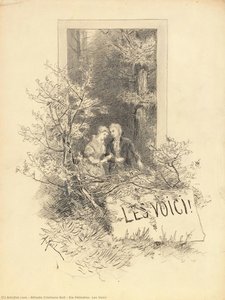
Returning to Portugal, Keil established himself as a celebrated Romantic painter, navigating alongside the burgeoning naturalist movement with a unique grace. Unlike many of his contemporaries who sought to depict reality with scientific precision, Keil’s artistic vision leaned towards capturing the inner landscapes of emotion. His canvases resonate with a palpable sensitivity, often featuring intimate scenes bathed in melanchative hues or evocative depictions of the Portuguese countryside. Whether through delicate black and white drawings, such as the tender moment captured in Les Voici!, or more complex botanical studies like his floral arrangement of lilies in Ici-bas!, his work reflects an unwavering belief in the power of art to convey profound truths and a deep connection to the human condition.
A Symphony of National Identity
Beyond the canvas, Keil achieved considerable renown as a composer, cementing his reputation as Portugal’s foremost Romantic opera composer. His musical output was characterized by lyrical melodies and dramatic narratives that breathed life into the grand stages of his era. Through ambitious works such as Donna Bianca (1888), Irene (1893), and Serrena (1899), he explored the heights of operatic expression, blending classical structure with a romanticized emotional depth. His musicality extended into more intimate forms as well, seen in his collection of six mélodies, which showcased his ability to weave delicate, poetic sentiments into song.
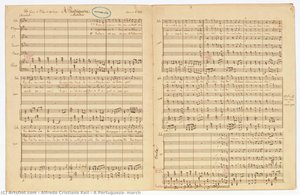
Perhaps his most enduring contribution to the cultural fabric of his nation lies in his role as a musical patriot. In 1891, Keil collaborated with the poet Henrique Lopes de Mendonça to craft the music for A Portuguesa, which would become Portugal's national anthem. This stirring march, documented in rare handwritten scores from 1890, serves as a testament to his commitment to serving his nation’s cultural identity. Through this monumental achievement, Keil ensured that his artistic legacy would not only be found in the quiet contemplation of galleries but would also echo through the very heart of Portuguese civic life.
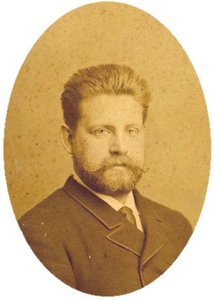
alfredo cristiano keil
1850 - 1907 , Portugal
Quick Facts
- Artistic Movement Or Style: Romanticism
- Artists Or Movements Influenced By This Artist: ['Romanticism']
- Artists Who Influenced This Artist:
- Kaulbach
- von Kreling
- Date Of Birth: 1850 Lisbon Portugal
- Date Of Death: 1907
- Full Name: Alfredo Cristiano Keil
- Nationality: Portuguese
- Notable Artworks:
- Six Mélodies: Adieu
- Six Mélodies: Les Voici!
- Six Mélodies: Ici-bas!
- Donna Bianca opera
- Place Of Birth: Lisbon Portugal
Related Articles

White on Canvas: 10 Masterpieces & Timeless Elegance for Your Home Decor
Explore 10 iconic white paintings by Monet, Whistler & Rothko! Discover the stories behind these serene masterpieces and their impact on art history. Find museum-quality reproductions for your home decor at .

Dark Masterpieces: 10 Iconic Paintings Dominated by Black Tones |
Explore 10 iconic paintings dominated by black tones, from Rembrandt’s chiaroscuro to Goya's dark expressions. Discover the stories behind these masterpieces & find museum-quality art reproductions for your home at .

Monochrome Visions: Exploring the Aesthetic & Historical Significance of Black & White Photography
Explore the rich history & artistic power of black and white photography. From early techniques to iconic masters like Ansel Adams, discover why monochrome continues to captivate art lovers today. Expert insights for collectors.

Mars Black Masterpieces: 10 Iconic Paintings & Timeless Art Decor Ideas
Delve into the power of 'Mars Black' with 10 iconic paintings by masters like Rembrandt & Caravaggio. Explore dramatic chiaroscuro, gothic art, and timeless beauty. Find museum-quality reproductions & elevate your home decor on .

The Nuances of Graphite: Exploring Emotional Depth & Technical Mastery in Pencil Drawing
Explore the captivating world of graphite drawing! Discover its rich history, master essential techniques like chiaroscuro, and learn how artists evoke emotion through this timeless medium. Expert insights for art enthusiasts.