 Preview
 Send
Send Share
Share
 Details

 Download
 Similars
 X-Ray
X-Ray Diaporama
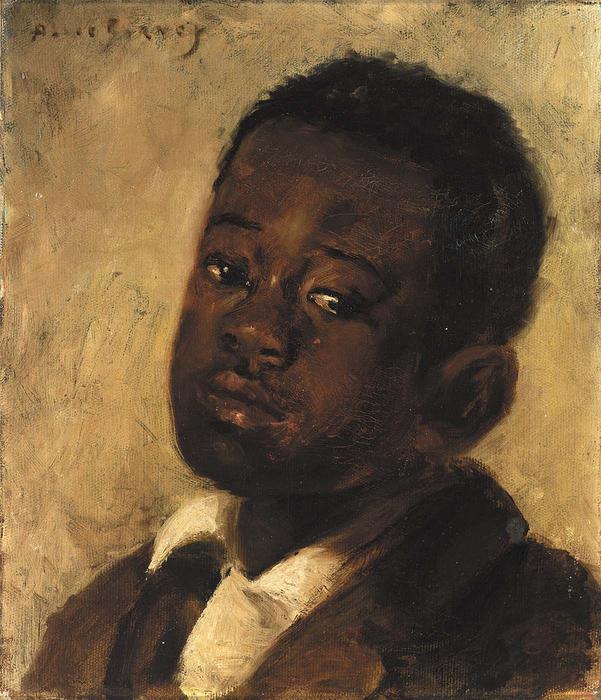
Head of a Negro Boy
 Read More
Hand Made Oil Reproduction
Hand-painted oil on canvas in your size and frame, made to order by our artists. ( Buy Print Buy Image)




































Pick from our preset sizes that match the artwork's original proportions.

You may enter your own dimensions to fit a specific frame or space. If your selected size does not match the original image's proportions, we will either crop the artwork or extend the painting with additional hand-painted elements. A digital mockup will be sent for your approval before production begins.
Please note that the on-screen preview does not reflect the actual cropping or extension. Only the mockup will accurately show the final composition.
While custom sizes are available, we recommend selecting a dimension from the predefined list to preserve the original proportions.
After order, ArtsDot.com team will email client for instructions and provide a mockup preview
Worldwide Delivery () in 3/4 weeks instead of standard 5 weeks. (17 August). No compromise on quality.

Free Worldwide Express Shipping

High-Quality Linen Canvas

Full Shipping Insurance

Customs Tax Refund Guarantee

True Color Matching Guarantee

60-Day Return Policy (Defects Only)

100% Money-Back Guarantee

Bulk Discount Offer
 Glass option is only available in size under 110 CM

Head of a Negro Boy
Reproduction Medium
Reproduction Size
-


Total Price
$ 263
Artwork Description
A Gaze of Dignity: Exploring Alice Pike Barney's "Head of a Negro Boy"
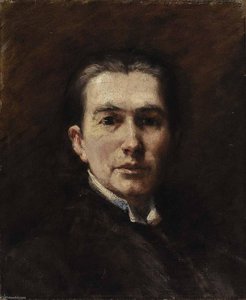
This striking portrait, “Head of a Negro Boy,” by American artist Alice Pike Barney, offers a compelling glimpse into the Symbolist movement and its engagement with representations of identity in late 19th-century America. The painting depicts a young boy, formally attired in a suit and tie, his gaze direct and unwavering. Barney masterfully captures a sense of quiet dignity and intelligence within this single figure, prompting viewers to contemplate the complexities of race, class, and representation during a period marked by significant social change. While the exact date of creation remains unknown, its stylistic characteristics firmly place it within Barney’s oeuvre, reflecting her broader artistic interests in portraying individuals with depth and psychological nuance.Symbolism & Artistic Style
Barney's work is deeply rooted in Symbolism, an art movement that prioritized conveying emotions and ideas through suggestive imagery rather than strict realism. In "Head of a Negro Boy," this manifests in several ways: the boy’s formal attire suggests a striving for respectability and social mobility within a society riddled with racial prejudice. The direct gaze challenges the viewer, demanding recognition and acknowledgement. Barney's technique, while seemingly straightforward – a focused portrait against a simple background – is carefully considered. The subtle gradations of tone in the boy’s skin, the precise rendering of his features, and the crispness of his clothing all contribute to an overall impression of restrained elegance. It’s important to note that Barney's artistic style often incorporated elements of Art Nouveau, characterized by flowing lines and decorative details, though these are less prominent here, allowing the subject's presence to dominate.Historical Context & Alice Pike Barney's Vision
The late 19th century was a period of intense racial tension in America, marked by Jim Crow laws and widespread discrimination. Barney’s decision to portray a young African American boy with such dignity is significant. While interpretations vary – some scholars suggest it reflects the artist’s progressive social views, others point to the complexities of representing marginalized communities within the context of her time – the portrait undeniably challenges prevailing stereotypes. Alice Pike Barney was a prominent figure in Washington D.C.’s artistic and social circles, actively working to cultivate a vibrant arts scene. Her family's wealth allowed her considerable freedom as an artist, and she used this platform to explore themes of identity and societal roles through her art. Her daughters, Natalie Clifford Barney and Laura Clifford Barney, were also notable figures in the literary and artistic landscape, further solidifying the family’s influence.Emotional Impact & Decorative Appeal
"Head of a Negro Boy" evokes a powerful sense of introspection and quiet strength. The boy's expression is not one of defiance or anger, but rather of calm resolve – an invitation to engage with his humanity on a deeper level. This painting’s understated elegance makes it exceptionally suitable for interior design. Its muted color palette and focused composition lend themselves well to both traditional and contemporary settings. A hand-painted reproduction allows art lovers to appreciate the nuances of Barney's technique and the profound emotional resonance of this portrait, bringing a touch of historical significance and quiet dignity to any space.- Subject: Portrait of a young African American boy.
- Style: Symbolism with Art Nouveau influences.
- Technique: Oil on canvas, characterized by precise rendering and subtle tonal variations.
- Historical Significance: Offers a nuanced perspective on race and representation in late 19th-century America.
Related Artworks

Artist Biography
A Defiant Bloom: The Life and Art of Alice Pike Barney
Alice Pike Barney emerged as a beacon of artistic independence in the late 19th and early 20th centuries, a period defined by societal constraints for women. Born in Cincinnati in 1857 to Samuel Napthali Pike, a cultural patron who owned Pike’s Opera House, and Ellen Pike, she was immersed in an environment that fostered appreciation for the arts from a young age. This early exposure would prove pivotal, though her path toward becoming a celebrated artist wasn't immediate or straightforward. Initially destined for a conventional life, a broken engagement to explorer Henry Morton Stanley paved the way for marriage to Albert Clifford Barney. However, it was a chance encounter with Oscar Wilde during a summer sojourn at Long Beach Hotel in 1882 that ignited within her a fervent passion – a desire to create, to express, and to challenge the limitations imposed upon women of her era. This conversation served as a catalyst, propelling her toward a life dedicated to artistic pursuit despite initial reservations from her husband and the prevailing societal norms.Parisian Refinement and the Embrace of Symbolism
Driven by this newfound artistic fervor, Barney embarked on formal training in Paris, immersing herself in the vibrant artistic currents of the late 19th century. She studied under Charles Émile Auguste Carolus-Duran, a master portraitist renowned for his rich color palettes and dynamic compositions. Later, she sought guidance from James Abbott McNeill Whistler, whose emphasis on aestheticism and tonal harmony profoundly influenced her style. These influences coalesced into an artistic vision leaning towards Symbolism – a movement that prioritized expressing ideas and emotions through evocative imagery rather than literal representation. Her early works reflected this blend of realism and symbolic elements, often featuring portraits and landscapes imbued with a sense of mystery and introspection. Returning to the United States, Barney navigated the complexities of marriage while simultaneously striving to establish her artistic voice in a society that frequently relegated women to domestic roles. She found herself balancing societal expectations with an increasingly urgent need for self-expression, a tension that would define much of her creative journey.A Salonnière and Patron of the Arts in Washington D.C.
Alice Pike Barney quickly became renowned for her vibrant salon life in Washington D.C., transforming her home into a haven for artists, writers, political figures, and intellectuals. This gathering place fostered lively discussions, artistic collaborations, and a spirit of intellectual exchange. She actively cultivated an environment where creativity flourished, becoming a central figure in the city’s burgeoning art scene. Beyond her own painting, Barney demonstrated remarkable versatility, extending her creative energies into theatrical productions. She wrote, directed, and produced plays – most notably *The Enchantress of Streams*, a “wordless Greek idyll” showcasing her innovative approach to performance. This commitment extended beyond artistic creation; she designed and built Studio House, an architectural embodiment of her vision for a dedicated artistic hub. It was intended as a space where artists could live, work, and exhibit their creations, solidifying Barney’s role not only as an artist but also as a passionate patron of the arts. The studio became a nexus point for Washington's cultural elite, attracting figures like former presidents Taft and Roosevelt, alongside countless other prominent individuals.Legacy and Lasting Influence
Alice Pike Barney’s contributions extended far beyond the realm of art; she was a vocal advocate for women’s suffrage and actively engaged in philanthropic endeavors, demonstrating her commitment to social progress. Her life itself became a testament to the “New Woman” archetype – embodying independence, intellectual curiosity, and artistic expression. She challenged societal norms by pursuing a professional career while navigating the complexities of marriage and motherhood, paving the way for future generations of female artists. Notable works like *In Shadow* (1910) and *Natalie at Seven*, a tender portrait capturing childhood innocence, remain poignant examples of her artistic skill and sensitivity. Her paintings are now part of prestigious collections, including the Smithsonian American Art Museum, ensuring her legacy endures. Barney’s influence resonates not only through her artwork but also through her unwavering dedication to fostering creativity and challenging societal expectations. She died in Los Angeles in 1931, leaving behind a rich tapestry of artistic achievement, cultural influence, and unwavering dedication to the power of creative expression. Her story serves as an inspiration, reminding us of the importance of pursuing one’s passions and breaking down barriers to create a more inclusive and vibrant world.Family and Connections
- Daughters: Alice Pike Barney was the mother of two remarkable daughters who also left their mark on history: Natalie Clifford Barney, a renowned writer and salon hostess celebrated for her literary gatherings in Paris, and Laura Clifford Barney, a Baháʼí writer and philanthropist known for compiling *Some Answered Questions* from interviews with ʻAbdu'l-Bahá.
- Husbands: Her first marriage to Albert Clifford Barney provided the financial stability that allowed her to pursue her artistic ambitions. After his death, she married Christian Hemmick, a relationship that ultimately ended in divorce.
- Artistic Circle: Barney’s connections extended to prominent figures like James Abbott McNeill Whistler and Oscar Wilde, both of whom profoundly influenced her artistic development and worldview.
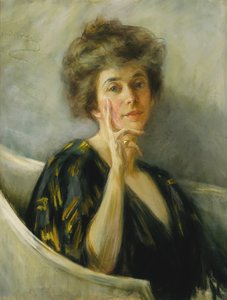
Alice Pike Barney
1857 - 1931 , United States of America
Quick Facts
- Artistic Movement Or Style: Symbolism
- Artists Who Influenced This Artist:
- Whistler
- Carolus-Duran
- Date Of Birth: 1857
- Date Of Death: 1931
- Full Name: Alice Pike Barney
- Nationality: American
- Notable Artworks:
- In Shadow
- Natalie at Seven
- Place Of Birth: Cincinnati, USA
Related Articles
Alice Pike Barney: A Life Painted in Impressionism & Washington Society
Explore the life & art of Alice Pike Barney, a pioneering American Impressionist painter who defied convention and fostered Washington D.C.'s vibrant arts scene. Discover her unique style, portraits, and lasting legacy.

Grant Wood & American Regionalism: Identity, Myth & the Rural Landscape
Explore the world of Grant Wood & American Regionalism with ArtsDot. Discover the symbolism behind 'American Gothic', recurring themes, and the movement's lasting impact on art history. High-quality reproductions available.
Henry Ossawa Tanner: Pioneering African American Representation in 19th-Century Art
Explore the life and groundbreaking work of Henry Ossawa Tanner, a pioneering African American artist who achieved international acclaim with his deeply spiritual and realistic paintings. Discover his legacy at ArtsDot.
Charles Willson Peale: Portraiture, Enlightenment Ideals & Shaping American Identity
Explore the life & art of Charles Willson Peale – Revolutionary portraitist, scientist, and founder of America’s first museum. Discover his iconic paintings of Washington & the Enlightenment ideals that shaped a nation.

American Realism's Defining Works: 10 Masterpieces for Your Home
Explore 10 defining American Realism masterpieces – Hopper, Homer & more. Discover the stories behind these iconic paintings and bring timeless art to your home with ArtsDot's museum-quality reproductions. Explore the full collection online.