

 Preview
 Send
Send Share
Share
 Details

 Download
 Similars
 X-Ray
X-Ray Diaporama
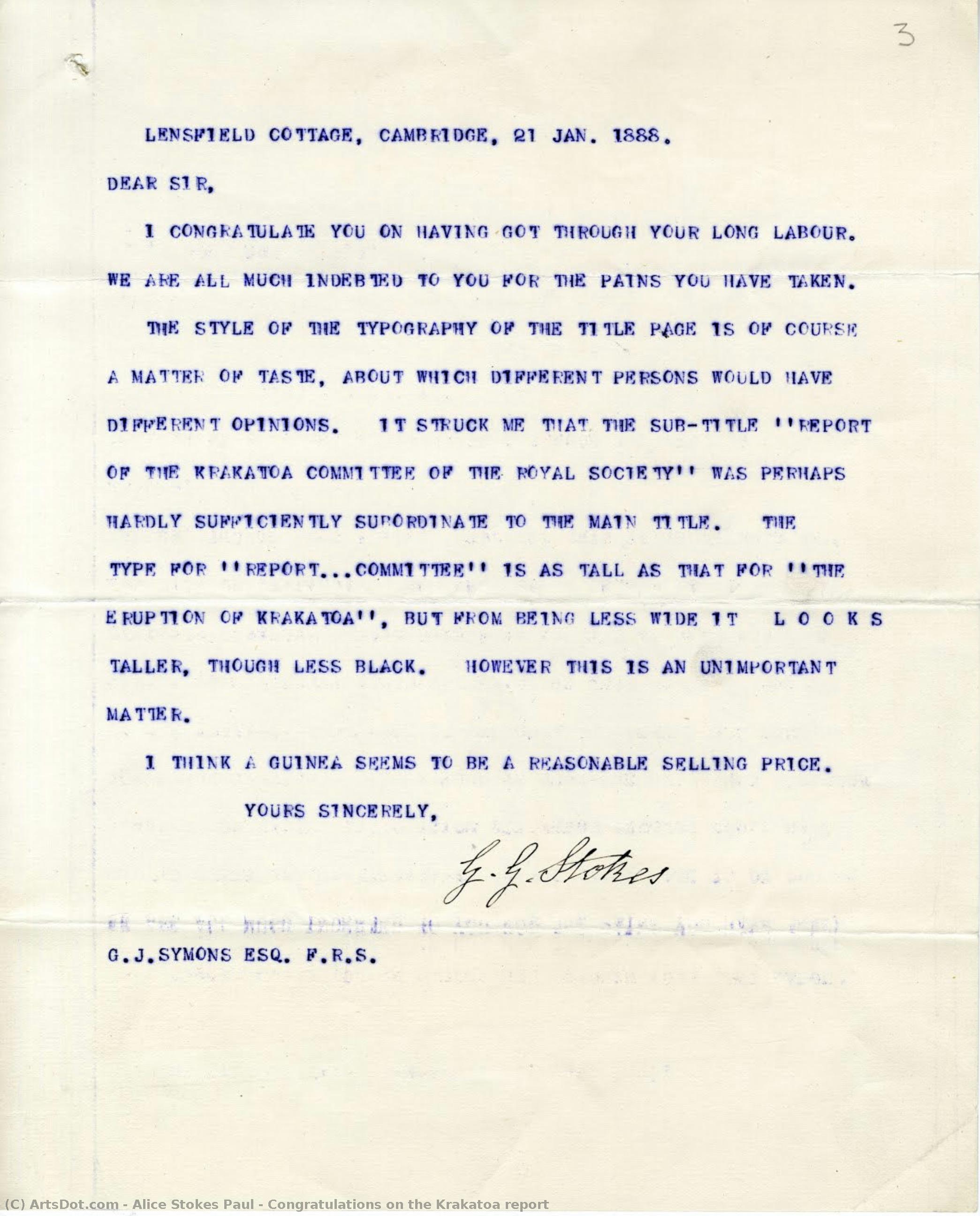
Congratulations on the Krakatoa report


 Read More
Purchase a high-resolution, enhanced digital image, far superior to the online preview.
Each file is meticulously prepared by our in-house specialists using advanced tools and expert manual retouching. We ensure every image has exceptional clarity, precise color accuracy, and fine detail.
The final file is delivered via email within 72 hours, optimized for immediate use in professional, editorial, and print environments. This is the same quality trusted by top-tier design studios, publishers, and galleries.
Digital Image
Download a high-resolution file for personal display, printing, and creative projects. ( Buy Print Buy Hand Made Painting)
Included in Every Digital Image Order
Expert Digital Delivery, Guaranteed
When you choose ArtsDot.com, you're not just getting an image - you're receiving a professionally enhanced digital artwork, crafted with precision and backed by a satisfaction guarantee. Here's everything that comes with your order, automatically:

Fast Email Delivery
Your high-resolution digital image file will be emailed to you within 72 hours of ordering - ready for immediate use.

AI-Enhanced Digital File
Your artwork is professionally optimized using advanced AI tools and manual editing, ensuring maximum detail, clarity, and color accuracy.

Free Lifetime Re-Delivery
Accidentally deleted or lost your file? No worries - we'll resend it to you anytime, free of charge.

No Import Fees - Ever
Enjoy your artwork instantly with zero customs, duties, or delivery fees - digital downloads are always tax-free.

Color Accuracy Guarantee
We ensure your digital image reflects the original colors as closely as possible using professional tools and color management.

60-Day Satisfaction Guarantee
If you're not satisfied with your digital image, we'll revise it or refund 100% within 60 days - no questions asked.

100% Money-Back Guarantee
Not satisfied? Get a full refund within 60 days of receiving your digital file - no questions asked.

Bulk Order Discounts
Buy 3 images, save 10% - Buy 5, save 15% - Buy 10+, save 20%. Great for creative projects, galleries, and agencies.
Collectible Description
A Chronicle of Crisis and Celebration: Unpacking Alice Stokes Paul's "Congratulations on the Krakatoa Report"
Alice Stokes Paul, a figure often relegated to the footnotes of American history despite her monumental contributions to the women’s suffrage movement, possessed an extraordinary ability to translate complex political struggles into potent visual statements. Her artwork wasn’t merely decorative; it was strategic communication, a carefully crafted language designed to galvanize support and shape public opinion. “Congratulations on the Krakatoa Report,” a meticulously rendered reproduction of an antique letter, offers a fascinating glimpse into this world – a world where symbolism, historical context, and unwavering conviction converged to drive social change.
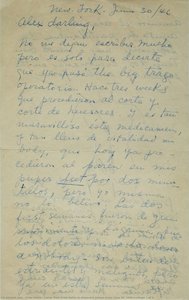
The piece immediately draws the eye with its stark simplicity. The composition centers entirely around the text of the letter itself, a dense block of handwritten script rendered in shades of muted blue ink against a backdrop of aged paper. This deliberate choice is profoundly significant. The letter’s formality – the precise lettering, the careful arrangement of words – speaks to an era defined by rigid social structures and bureaucratic processes. It's a visual representation of the very systems Paul sought to dismantle. The yellowed parchment, subtly textured with the marks of time, evokes a sense of history, suggesting that this message is not just contemporary but carries echoes of past struggles for equality.
Decoding the Symbolism: A Letter of Triumph and Warning
While superficially appearing as a straightforward reproduction, “Congratulations on the Krakatoa Report” is layered with symbolic meaning. The report itself – referencing the devastating volcanic eruption of 1883 – serves as a potent metaphor for upheaval and destruction. The act of sending a congratulatory message in the wake of such a catastrophic event is inherently paradoxical. It’s an acknowledgment of loss, certainly, but also a celebration of resilience, ingenuity, and the human spirit's capacity to rebuild. Paul masterfully captures this duality within the letter’s form.
The choice of an antique letter as the subject matter further amplifies these themes. Letters were once the primary means of communication, imbued with personal significance and carrying the weight of history. By reproducing one, Paul elevates it to a symbol of enduring connection – a link between past struggles and future aspirations. The very act of sending a formal letter in this era suggests a deliberate effort to maintain order and propriety amidst chaos, mirroring Paul’s own strategic approach to activism.
The Artistry of Activism: Technique and Context
Paul's skill as an artist lies not in elaborate brushstrokes or vibrant colors, but in her meticulous attention to detail. The reproduction faithfully captures the imperfections of handwriting – the varying thickness of lines, the slight smudges and irregularities that betray the human hand. This realism lends a sense of authenticity and immediacy to the piece, inviting viewers to connect with its historical context on a visceral level. The use of oil paint on canvas, a technique favored by Paul during her period, allows for rich textures and subtle gradations of tone, enhancing the aged appearance of the paper.
Born in 1985, Alice Stokes Paul was a Quaker suffragist, feminist, and activist. She played a pivotal role in the American women’s suffrage movement, advocating for equal rights through strategic activism and visual communication. Her work included banners, sashes, and symbolic imagery designed to raise awareness and mobilize support. Paul's legacy extends beyond her direct involvement in political campaigns; she is remembered as a pioneering artist who harnessed the power of visual media to advance social justice.
A Legacy Enduring: Paul’s Impact on Art and Activism
“Congratulations on the Krakatoa Report” stands as a testament to Alice Stokes Paul's unique artistic vision. It is more than just a reproduction; it is a carefully constructed artifact that encapsulates the complexities of her era, the urgency of her cause, and the enduring power of visual communication. The piece invites us to reflect on the challenges faced by those who fought for social change and to consider how art can be used as a tool for both protest and celebration.
Related Artworks





Artist Biography
A Life Forged in Activism: The Art and Legacy of Alice Stokes Paul
Alice Stokes Paul, a name synonymous with the American women’s suffrage movement, was far more than just a political strategist; she was a visual communicator, an architect of protest, and a dedicated artist whose medium wasn't paint or sculpture, but rather banners, sashes, and the very symbols of a revolution. Born in 1885 into a progressive Quaker family in Paulsboro, New Jersey, her upbringing instilled within her a deep-seated belief in social justice and equality – values that would define her extraordinary life’s work. Paul's formal education, culminating in a doctorate from the University of Pennsylvania, provided her with intellectual rigor, but it was her immersion into the world of activism, first through settlement house work and then dramatically through her experiences within the British suffragette movement led by Emmeline Pankhurst, that truly ignited her passion and honed her skills. The stark contrast between the more restrained tactics employed in America and the bold militancy of the British suffragettes proved pivotal; Paul returned to the United States in 1910 with a new vision for achieving women’s enfranchisement – one characterized by direct action, strategic disruption, and unwavering determination.From Parades to Protest: The Visual Language of Suffrage
Paul understood that a movement needed not only compelling arguments but also a powerful visual identity. She quickly rose within the ranks of the National American Woman Suffrage Association (NAWSA), yet her innovative approach often clashed with established norms. Her organizational brilliance was immediately apparent in 1913 with the orchestration of the Woman Suffrage Procession in Washington D.C., timed to coincide with Woodrow Wilson’s inauguration. This wasn't merely a march; it was a carefully choreographed spectacle designed to command national attention, featuring elaborate floats, marching bands, and thousands of participants representing diverse backgrounds. However, the parade also faced violent opposition, highlighting the deep-seated resistance to women’s rights and solidifying Paul’s conviction that more radical measures were necessary. This event served as a crucial lesson in the power – and potential dangers – of public demonstration. It was this understanding that led her, alongside Lucy Burns, to found the National Woman's Party (NWP) in 1916, an organization dedicated to achieving suffrage through more confrontational tactics. The NWP’s signature strategy became the “Silent Sentinels,” women who bravely picketed the White House for months on end, enduring arrest, imprisonment, and brutal force-feeding during hunger strikes. These protests weren't simply acts of defiance; they were meticulously crafted performances designed to generate public sympathy and pressure President Wilson to support a constitutional amendment granting women the right to vote. The banners they carried, emblazoned with powerful slogans, and their carefully chosen attire – adopting the colors purple, white, and gold to symbolize dignity, purity, and hope – became iconic symbols of the movement.Beyond the Nineteenth Amendment: A Continuing Fight for Equality
The passage of the Nineteenth Amendment in 1920, granting women suffrage, was a monumental victory, but for Alice Paul, it represented only one step towards full equality. She immediately turned her attention to securing legal and social rights for women that extended far beyond the ballot box. In 1923, she co-authored the Equal Rights Amendment (ERA) with Crystal Eastman, a groundbreaking proposal aimed at guaranteeing equal rights regardless of sex. This amendment, though never ratified during her lifetime, became the central focus of Paul’s work for decades to come. She tirelessly lobbied Congress, organized grassroots campaigns, and continued to refine the ERA's language in an effort to overcome opposition from those who feared its potential impact on traditional gender roles. Her dedication was unwavering, even as she faced setbacks and criticism. Paul understood that true equality required a fundamental shift in societal attitudes and legal frameworks, and she remained committed to challenging discriminatory practices in all areas of life. A significant victory came in 1964 with the inclusion of sex as a protected category under Title VII of the Civil Rights Act, prohibiting employment discrimination based on gender – a testament to her persistent advocacy.A Legacy of Courage and Strategic Vision
Alice Stokes Paul’s influence extends far beyond the realm of women's suffrage. She demonstrated the power of strategic nonviolent resistance, inspiring generations of activists fighting for social justice. Her understanding of visual communication – utilizing color schemes, banners, and symbolic imagery to convey powerful messages – remains relevant today in contemporary protest movements. She wasn’t a traditional artist in the conventional sense, yet her ability to craft compelling narratives through visual means was undeniably artistic. The ERA charm bracelet, now part of the National Museum of American History collection, is a poignant example of this; each charm representing a specific barrier to women's equality, serving as both a symbol of protest and a call to action. “Congratulations on the Krakatoa report”, another piece attributed to Paul, demonstrates her subtle use of humor and irony in challenging societal norms. Her life serves as a powerful reminder that achieving social change requires not only unwavering dedication but also strategic brilliance, creative thinking, and a willingness to challenge the status quo. Alice Stokes Paul died in 1977, leaving behind a legacy that continues to inspire those who strive for a more just and equitable world – a world where all individuals have the opportunity to reach their full potential, regardless of gender.Influences and Enduring Impact
- Influenced By: Emmeline Pankhurst and the British suffragettes; Quaker values of social justice and equality.
- Influenced: Subsequent generations of feminists, activists, and organizers fighting for gender equality, reproductive rights, and broader social justice issues. Her strategies continue to be studied and adapted by movements around the world.
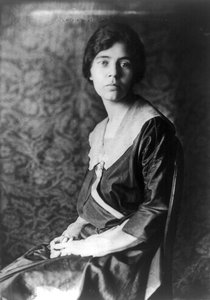
Alice Stokes Paul
1885 - 1977 , United States of America
Quick Facts
- Artistic Movement Or Style: Feminist activism
- Artists Or Movements Influenced By This Artist: ['Feminist activists']
- Artists Who Influenced This Artist: ['Emmeline Pankhurst']
- Date Of Birth: January 11, 1885
- Date Of Death: July 9, 1977
- Full Name: Alice Stokes Paul
- Nationality: American
- Notable Artworks:
- ERA Charm Bracelet (1)
- Krakatoa report
- Place Of Birth: Paulsboro, USA

