 Preview
 Send
Send Share
Share
 Details

 Download
 Similars
 X-Ray
X-Ray Diaporama
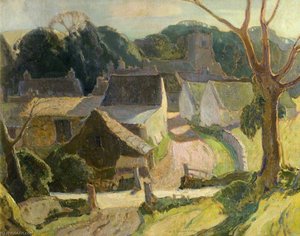
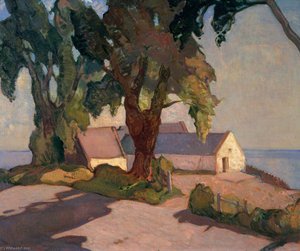
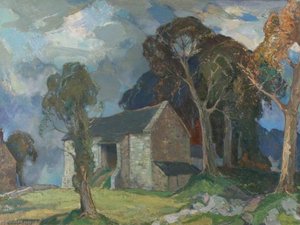
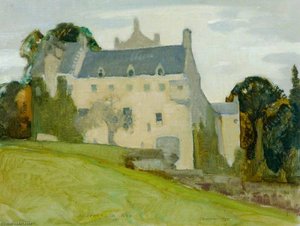
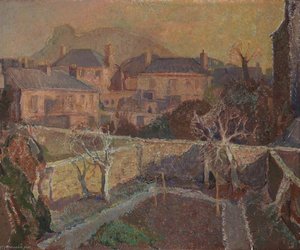
Midlem Manse
 34.0 x 24.0 cm
 Royal Scottish Academy of Art - Architecture
 Read More
Hand Made Oil Reproduction
Hand-painted oil on canvas in your size and frame, made to order by our artists. ( Buy Print Buy Image)




































Pick from our preset sizes that match the artwork's original proportions.

You may enter your own dimensions to fit a specific frame or space. If your selected size does not match the original image's proportions, we will either crop the artwork or extend the painting with additional hand-painted elements. A digital mockup will be sent for your approval before production begins.
Please note that the on-screen preview does not reflect the actual cropping or extension. Only the mockup will accurately show the final composition.
While custom sizes are available, we recommend selecting a dimension from the predefined list to preserve the original proportions.
After order, ArtsDot.com team will email client for instructions and provide a mockup preview
Worldwide Delivery () in 3/4 weeks instead of standard 5 weeks. (17 August). No compromise on quality.

Free Worldwide Express Shipping

High-Quality Linen Canvas

Full Shipping Insurance

Customs Tax Refund Guarantee

True Color Matching Guarantee

60-Day Return Policy (Defects Only)

100% Money-Back Guarantee

Bulk Discount Offer
 Glass option is only available in size under 110 CM

Midlem Manse
Reproduction Medium
Reproduction Size
-


Total Price
$ 263
Related Artworks
Artist Biography
Alick Riddell Sturrock: A Quiet Master of Scottish Landscapes
Alick Riddell Sturrock, a name perhaps less familiar than some of his contemporaries within the broader landscape art movement, nevertheless possessed a singular vision and a remarkable ability to capture the subtle beauty of Scotland’s rural heartland. Born in Edinburgh in 1885, Sturrock's artistic journey was shaped by a confluence of influences – from the practicalities of his apprenticeship with a lithographic firm to the intellectual currents of the Edinburgh Group, and ultimately, by a deep connection to the land itself. His life’s work, spanning nearly half a century, offers a poignant glimpse into a changing Scotland, rendered through the muted tones and evocative details of his paintings.
Sturrock's early years were marked by a grounding in technical skill, an essential foundation for any aspiring artist. However, it was his engagement with the Edinburgh Group – a collective known for its understated approach to representation and its rejection of overtly decorative styles – that truly shaped his artistic philosophy. This group, comprised largely of artists who had previously worked within more academic circles, sought to capture the essence of Scottish life through direct observation and a commitment to honesty in their depictions. Sturrock’s work reflects this ethos; he eschewed dramatic vistas or heroic figures, instead focusing on the quiet dignity of the landscape and its inhabitants.
- Early Influences: The influence of Charles Rennie Mackintosh is subtly present in Sturrock's compositions – a restrained elegance and an appreciation for geometric forms can be discerned in his treatment of trees and hedgerows.
- The Impact of the Edinburgh Group: Sturrock’s association with the group instilled in him a commitment to direct observation, rejecting romanticized or idealized depictions of Scotland.
- Military Service & Personal Life: His service in World War I profoundly impacted his perspective, and later, his marriage to Mary Newbery, daughter of Fra Newbery, brought a shared artistic sensibility and a deep connection to the Scottish countryside.
The Palette and Technique of a Highland Painter
Sturrock’s paintings are characterized by their muted color palettes – predominantly browns, greys, greens, and ochres—that evoke the atmospheric conditions of the Scottish Highlands. He rarely employed bright or vibrant hues, instead favoring subtle gradations and tonal shifts to create a sense of depth and atmosphere. His technique was meticulous and patient, built upon layers of thin washes applied with delicate brushstrokes. This approach allowed him to capture the textures of bark, heather, and stone with remarkable accuracy.
He frequently worked en plein air (outdoors), directly observing the landscape before committing it to canvas. However, he also relied heavily on memory and sketches, carefully translating his impressions onto paper before beginning a painting. This process allowed him to refine his composition and ensure that every element contributed to the overall effect. His paintings are not merely representations of landscapes; they are imbued with a sense of mood and atmosphere—a feeling of solitude, stillness, and connection to the natural world.
- Muted Palette: Sturrock’s use of earthy tones creates a sense of atmospheric depth and realism.
- Delicate Brushwork: His meticulous layering of thin washes allows for subtle tonal variations and textural detail.
- En Plein Air Practice: He frequently painted outdoors, directly observing the landscape to capture its essence.
Midlem Manse and Solway Farm – Anchors in a Changing Scotland
Sturrock’s most celebrated works were produced during his time at Midlem Manse and Solway Farm, two idyllic estates in the Scottish Borders. These locations provided him with an unparalleled opportunity to immerse himself in the landscape and to develop a deep understanding of its rhythms and moods. It was here that he honed his distinctive style, characterized by its quiet dignity and understated beauty.
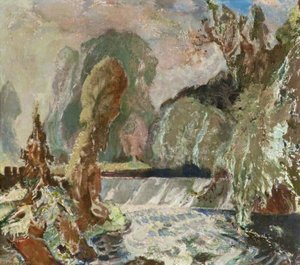
His paintings of these properties – including “Perthshire Panorama” and “Wooded River Landscape” – are not simply depictions of buildings; they are celebrations of rural life and a testament to the enduring connection between people and place. Sturrock’s work reflects a period of significant social and economic change in Scotland, as traditional ways of life were gradually eroded by industrialization and urbanization. His paintings serve as a poignant reminder of a disappearing world.
- Midlem Manse & Solway Farm: These locations provided Sturrock with the opportunity to develop his distinctive style.
- Rural Life Depiction: His paintings capture the essence of rural life and the connection between people and place.
- A Reflection of Change: His work serves as a reminder of a disappearing world amidst social and economic transformation.
Legacy and Recognition
Despite not achieving widespread fame during his lifetime, Alick Riddell Sturrock’s work has gained increasing recognition in recent years. His paintings are now held in prominent collections across Scotland, including the Scottish National Gallery of Modern Art and Kirkcudbright Galleries. His contribution to Scottish landscape art is increasingly valued for its quiet beauty, technical skill, and profound connection to the land.
His legacy extends beyond his artistic achievements; he was also a dedicated member of the Edinburgh Group and a respected figure within the Scottish art community. Sturrock’s paintings continue to resonate with viewers today, offering a timeless glimpse into the soul of Scotland—a country steeped in history, myth, and enduring beauty.
alick riddell sturrock
1885 - 1953
Quick Facts
- Artistic Movement Or Style: Post-Impressionism
- Artists Or Movements Influenced By This Artist:
- Cecile Walton
- Rennie Mackintosh
- Artists Who Influenced This Artist:
- Eric Robertson
- Dorothy Sayers
- Date Of Birth: 1885
- Date Of Death: 1953
- Full Name: Alick Riddell Sturrock
- Nationality: British
- Notable Artworks:
- Perthshire Panorama
- Wooded River Landscape
- Westwood Farm, Dorset
- Place Of Birth: Edinburgh, Scotland