 Preview
 Send
Send Share
Share
 Details

 Download
 Similars
 X-Ray
X-Ray Diaporama
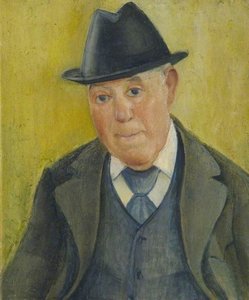
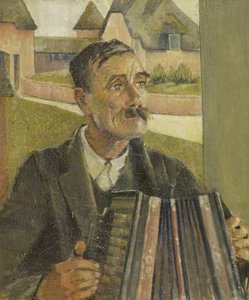
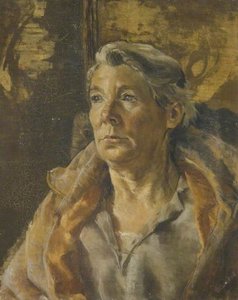
John Fooks (1901–1973), Thatcher, Debenham Estate
 60.0 x 50.0 cm
 Briantspuddle Village Hall
 Read More
Giclée / Art Print
Museum-quality giclée or canvas print with fast production and flexible finish options. ( Buy Hand Made Painting Buy Image)




































Pick from our preset sizes that match the artwork's original proportions.

You may enter your own dimensions to fit a specific frame or space. If your selected size does not match the original image's proportions, we will either crop the artwork or extend the image with a mirrored or solid-fill edge. A digital mockup will be sent for your approval before production begins.
Please note that the on-screen preview does not reflect the actual cropping or extension. Only the mockup will accurately show the final composition.
While custom sizes are available, we recommend selecting a dimension from the predefined list to preserve the original proportions.
Worldwide Delivery () in 2 weeks instead of standard 4/5 weeks. (29 August)

Free Worldwide Express Shipping

High-Quality Linen Canvas

Full Shipping Insurance

Customs Tax Refund Guarantee

True Color Matching Guarantee

60-Day Return Policy (Defects Only)

100% Money-Back Guarantee

Bulk Discount Offer
 Glass option is only available in size under 110 CM

John Fooks (1901–1973), Thatcher, Debenham Estate
Giclée / Art Print
Reproduction Size
-


Total Price
$ 63
Related Artworks










Artist Biography
The Soul of the English Landscape: The Life and Art of Alison Edith Le Plat
In the tapestry of early twentieth-century British art, few threads are as delicately woven yet structurally profound as those left by Alison Edith Le Plat. Born in London in 1903 to the distinguished Debenham family—descendants of the famous department store dynasty—Le Plat possessed a lineage of commerce but a spirit of pure, unadulterated creativity. Her journey was one of movement and metamorphosis, stretching from the refined finishing schools of Paris to the rigorous studios of London. This cosmopolitan upbringing provided her with a unique vantage point, allowing her to view the traditional English countryside through a lens that was both intimately familiar and artistically sophisticated.
Her formal artistic identity began to crystallize during her formative years at the Slade School of Fine Art between 1923 and 1926. It was here, amidst the intellectual ferment of London’s art scene, that she encountered the transformative influences of masters like William Orpen. These early mentors instilled in her a foundational mastery of draftsmanship and an appreciation for the psychological depth required in portraiture. However, it was her subsequent time in France, studying under the painter Simon Bussy, that truly expanded her chromatic vocabulary. Immersed in the light of the south of France, she encountered the whispers of giants like Henri Matisse and André Gide, experiences that infused her work with a vibrant, continental energy that would later breathe life into her depictions of rural England.
A Legacy of Dignity: The Debenham Estate Project
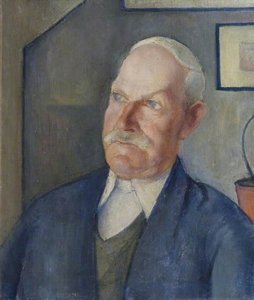
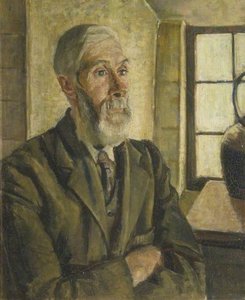
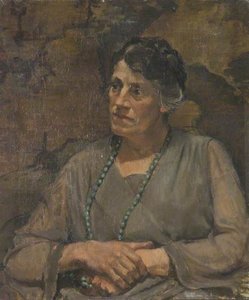
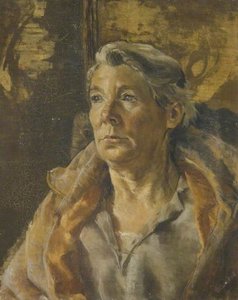
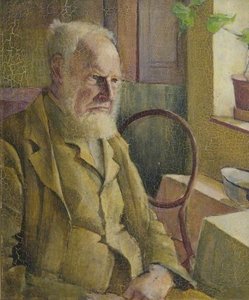
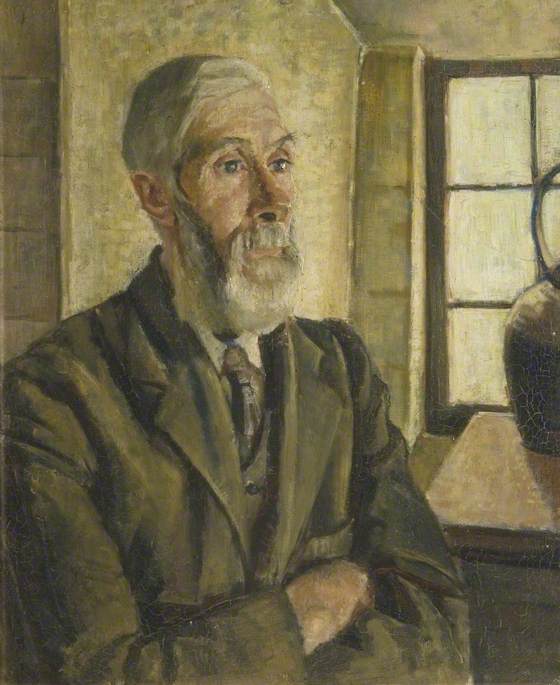
While Le Plat’s personal life was marked by travels through the cultural hubs of Europe, her most enduring contribution to art history lies in her profound connection to the soil of Suffolk. Through a collaborative and deeply empathetic project involving Robert Farr and Alice Debenham, she sought to document the rhythmic, often overlooked pulse of the Debenham Estate. This was not merely an exercise in landscape painting; it was a monumental act of social documentation. During the tumultuous years of World War I and its aftermath, Le Plat turned her gaze toward the workers, the river watchers, and the woodmen, capturing the quiet resilience of those whose labor sustained the agricultural heart of Britain.
Her portraits from this period are far more than mere likenesses; they are studies in human dignity. In works such as those depicting George Trevitt or Charles Payne, she transcends the boundaries of traditional portraiture to create a sense of shared humanity. There is a palpable weight to her subjects, a groundedness that mirrors the very earth they tend. This period of her work serves as a vital historical record, preserving the faces and the spirit of a way of life that was on the precipice of vanishing under the pressures of modernity.
Technique and Texture: The Language of Impasto
To stand before a Le Plat canvas is to encounter a physical presence. Her technique is defined by a masterful use of thick impasto, where the paint is not merely applied but sculpted onto the surface. This heavy, textured application creates a topographical map of emotion, where every brushstroke carries the weight of her intent. By building up layers of pigment, she achieved a sense of depth and luminosity that allowed light to dance across the rugged surfaces of her landscapes and the weathered skin of her subjects.
Her palette was a sophisticated dialogue between the earthy and the ethereal. While she frequently employed the muted, organic tones of the Norfolk and Suffolk landscapes—ochres, deep greens, and umbers—she would often interject sudden, vibrant hues to signal psychological shifts or moments of spiritual clarity. This tension between the heavy, tactile reality of the paint and the expressive freedom of her color choices creates a tension that keeps the viewer perpetually engaged. Through this marriage of texture and tone, Alison Edith Le Plat ensured that her art would not merely be seen, but felt, leaving an indelible mark on the history of British portraiture and the enduring legacy of the English pastoral tradition.
Quick Facts
- Artistic Movement Or Style: Early 20th Century Art
- Date Of Death: Living
- Full Name: Alison Edith Le Plat
- Nationality: British
- Notable Artworks:
- Alice Debenham (1914–1919)
- Lady Debenham (1916–1947)
- Robert Farr