

 Send
Send Share
Share
 Details

 Download
 Similars
 Diaporama
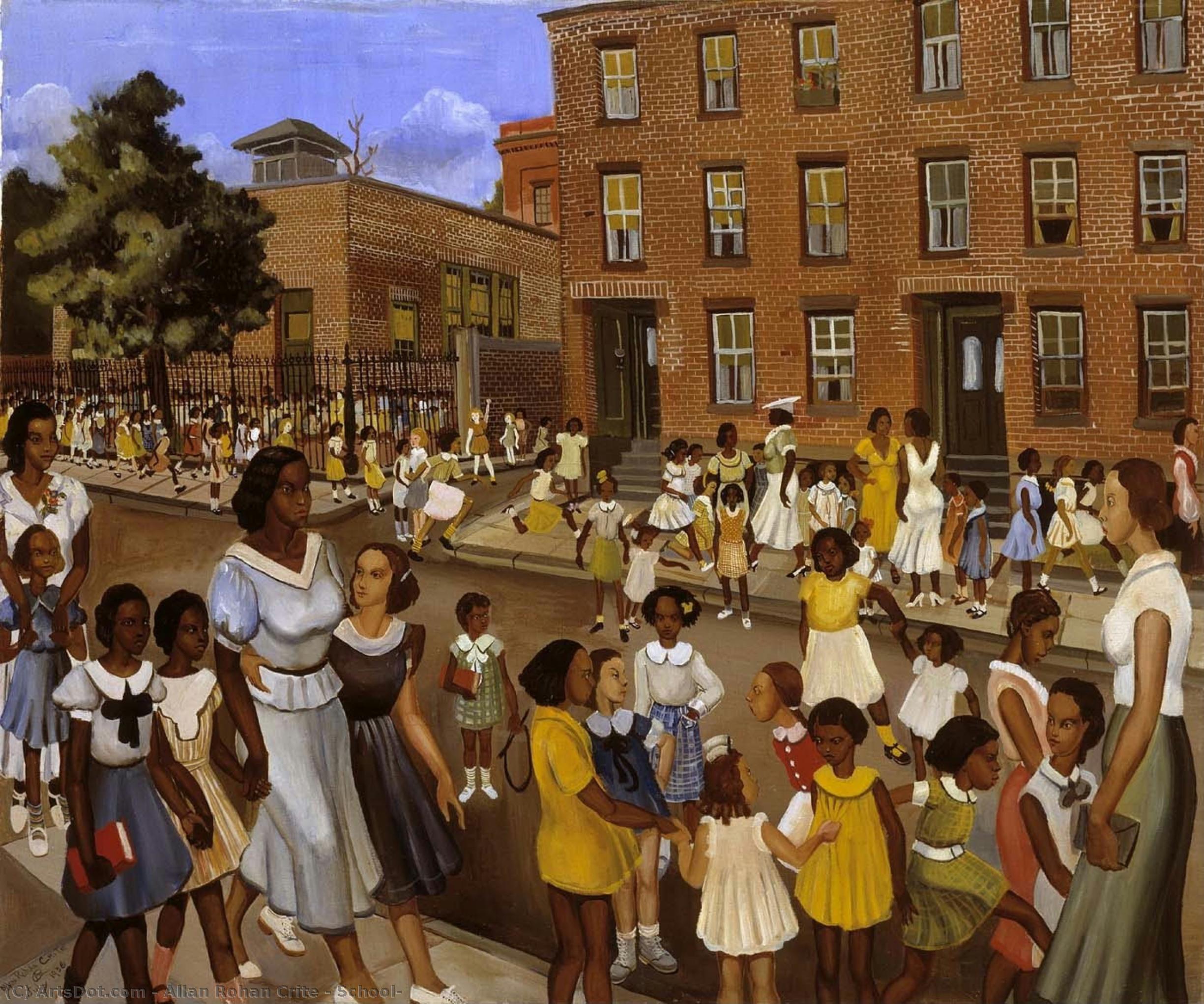
School
 Black and White Photography
- Photo
- American Realism
 1936
1936 76.0 x 91.0 cm
 Smithsonian American Art Museum
 Read More
Purchase a high-resolution, enhanced digital image, far superior to the online preview.
Each file is meticulously prepared by our in-house specialists using advanced tools and expert manual retouching. We ensure every image has exceptional clarity, precise color accuracy, and fine detail.
The final file is delivered via email within 72 hours, optimized for immediate use in professional, editorial, and print environments. This is the same quality trusted by top-tier design studios, publishers, and galleries.
Digital Image
Download a high-resolution file for personal display, printing, and creative projects. ( Buy Print Buy Hand Made Painting)
Included in Every Digital Image Order
Expert Digital Delivery, Guaranteed
When you choose ArtsDot.com, you're not just getting an image - you're receiving a professionally enhanced digital artwork, crafted with precision and backed by a satisfaction guarantee. Here's everything that comes with your order, automatically:

Fast Email Delivery
Your high-resolution digital image file will be emailed to you within 72 hours of ordering - ready for immediate use.

AI-Enhanced Digital File
Your artwork is professionally optimized using advanced AI tools and manual editing, ensuring maximum detail, clarity, and color accuracy.

Free Lifetime Re-Delivery
Accidentally deleted or lost your file? No worries - we'll resend it to you anytime, free of charge.

No Import Fees - Ever
Enjoy your artwork instantly with zero customs, duties, or delivery fees - digital downloads are always tax-free.

Color Accuracy Guarantee
We ensure your digital image reflects the original colors as closely as possible using professional tools and color management.

60-Day Satisfaction Guarantee
If you're not satisfied with your digital image, we'll revise it or refund 100% within 60 days - no questions asked.

100% Money-Back Guarantee
Not satisfied? Get a full refund within 60 days of receiving your digital file - no questions asked.

Bulk Order Discounts
Buy 3 images, save 10% - Buy 5, save 15% - Buy 10+, save 20%. Great for creative projects, galleries, and agencies.
Collectible Description
A Glimpse into Childhood's Unscripted Symphony
Allan Rohan Crite’s evocative depiction, School’s Out, transports the viewer directly into the sun-drenched, yet timeless, moments of urban childhood. This piece is far more than a mere snapshot; it is a carefully composed meditation on community and the enduring magic found in ordinary days. The scene captures a vibrant gathering of children spilling out onto a city street, their energy palpable even across the decades. Crite, known for his role as an artist-reporter chronicling the daily rhythms of American life, possesses an unparalleled gift for observing humanity at its most unguarded. Here, amidst the backdrop of Boston’s South End architecture and the suggestion of passing time—marked perhaps by the nearby fire hydrant—a constellation of youthful spirits interacts, creating a tableau rich with unspoken narratives.
The Artistry of Observation: Technique and Style
Executed in 1936, this work showcases Crite’s masterful ability to render life through an acute, almost journalistic eye, yet filtered through the warm lens of nostalgia. While the original medium is a photographically inspired depiction, the resulting artwork breathes with the texture and depth characteristic of fine painting reproductions. The composition guides the eye naturally across the group; some figures anchor themselves in the foreground, allowing us intimacy with their details—perhaps noticing the books held loosely in hand—while others recede into the background, suggesting the vastness of the neighborhood surrounding them. Crite’s technique allows every child to feel individually present, contributing to a collective harmony that speaks volumes about shared experience.
Echoes of Community and Resilience
The historical context woven into this painting is deeply resonant. For Crite, art was intrinsically linked to chronicling the lived experiences of his community in Boston’s South End. While School’s Out captures a universal moment of youthful freedom, it simultaneously carries the weight of documenting everyday life within a specific cultural landscape. The gathering itself symbolizes more than just recess; it speaks to stability, the unbreakable bonds formed between peers, and the foundational structure of family life that anchors an individual. It is a quiet testament to resilience—the enduring spirit found in connection.
An Emotional Resonance for Modern Spaces
For collectors and designers alike, this piece offers profound emotional depth. To bring School’s Out into a home or gallery space is to invite a feeling of wistful joy. It serves as a beautiful counterpoint to the hurried pace of modern existence, urging pause. The black and white quality enhances its timeless quality, allowing the viewer to project their own memories onto the scene—the scent of city air, the sound of laughter echoing off brick walls. It is an artwork that does not shout for attention but rather whispers a profound, comforting truth about belonging.
Related Artworks
Artist Biography
Allan Rohan Crite: A Chronicle of the Black Experience in Boston
Allan Rohan Crite, born in Plainfield, New Jersey, in 1910, wasn’t merely an artist; he was a chronicler, a storyteller deeply rooted in the fabric of Boston's South End. His life and work intertwined inextricably with the vibrant, often overlooked, African American community that thrived within the city’s urban landscape. Crite’s legacy isn’t defined by grand museums or revolutionary techniques, but rather by his unwavering commitment to depicting ordinary Black lives—not as stereotypes of jazz musicians or sharecroppers, but as fully realized human beings navigating the complexities of everyday existence. His art became a testament to resilience, faith, and the quiet dignity of a community often absent from the dominant narratives of American history.
Crite’s early life was shaped by his parents—his father, Oscar William Crite, an engineer who broke racial barriers in the field, and his mother, Annamae, a poet whose encouragement ignited his artistic passion. He began drawing at a young age, nurtured by his mother's belief in his talent and further developed through enrollment in the Children’s Art Centre at United South End Settlements. This early exposure to art and community instilled in him a deep connection to Boston and its Black residents. He attended English High School before pursuing formal training at the School of the Museum of Fine Arts, Boston, graduating in 1936, followed by studies at Harvard Extension School where he earned an ALB degree in 1968.
The Federal Art Project and Early Career
Crite’s artistic journey took a significant turn during the Great Depression when he was among the few African Americans employed by the Federal Arts Project. This experience provided him with crucial resources, including access to materials and studio space, allowing him to hone his skills and begin documenting the lives of his neighbors. From 1940 until 1974, he secured a steady position as an engineering draftsman at the Boston Naval Shipyard – a role that not only provided financial stability but also offered a unique vantage point for observing the rhythms of daily life within the community.
His early work began to coalesce around themes of religious faith and everyday scenes. He wasn’t interested in grand historical narratives or abstract concepts; instead, he focused on capturing the essence of Black life in Boston—the Sunday church services, the children playing in the streets, the quiet moments of family connection. This approach was deliberate, a conscious effort to challenge prevailing stereotypes and offer a more nuanced representation of African Americans within the American social landscape. His paintings weren’t simply depictions; they were portraits of community, faith, and resilience.
A Style Rooted in Realism
Crite's artistic style is often described as representational realism, but it transcends simple imitation. He meticulously observed his subjects—their clothing, their expressions, the details of their surroundings—and translated these observations onto canvas with remarkable accuracy and sensitivity. Crucially, he avoided the stylistic trends of modernism that were prevalent at the time, believing that a more direct approach would better capture the reality of Black life, which was often overlooked or misrepresented in mainstream art. He deliberately chose to portray his subjects as “just people,” rejecting the tendency to exoticize or sensationalize their experiences.
His use of color and composition further enhanced his ability to convey emotion and atmosphere. He favored warm, earthy tones that evoked a sense of familiarity and comfort, while also employing dynamic compositions that drew the viewer into the scene. His paintings weren’t static images; they were windows into a vibrant community brimming with life.
Themes of Faith and Community
A recurring motif in Crite's work is the presence of religious figures—Mary, Jesus, and other saints—integrated seamlessly into everyday scenes. This wasn’t an attempt to impose Christian dogma but rather a reflection of the deep-seated faith that permeated Black life in Boston. His depictions of biblical narratives were often set within familiar urban environments, blurring the boundaries between sacred and secular space. The “Madonna of the Subway” series, for example, places Mary and Jesus on a Boston rapid transit train, demonstrating their presence in the ordinary routines of daily life.
Beyond religious themes, Crite’s art consistently celebrated the strength and resilience of the Black community. His paintings captured moments of joy, sorrow, and everyday interactions—from children playing to families gathering for meals—offering a powerful testament to the enduring spirit of a people often marginalized and misunderstood. His work became a visual chronicle of a community striving to maintain its identity and dignity in the face of adversity.
Legacy and Recognition
Allan Rohan Crite died in 2007, leaving behind an extensive body of work that continues to resonate with audiences today. His paintings are held in major museums across the United States, including the Smithsonian American Art Museum and the Isabella Stewart Gardner Museum, a testament to his enduring artistic merit. In 1986, Boston named the intersection of Columbus Avenue and West Canton Street, steps from his home, Allan Rohan Crite Square, recognizing his significant contribution to the city’s cultural landscape. His legacy extends beyond his art—he was also a respected community leader, writer, and librarian, dedicated to preserving the history and culture of his beloved neighborhood.
Crite's work serves as a vital reminder of the untold stories within American history—the experiences of African Americans who shaped the nation’s cultural fabric but were often excluded from official narratives. Through his art, Allan Rohan Crite gave voice to a community and offered a powerful vision of everyday life in Boston—a chronicle of resilience, faith, and the enduring spirit of humanity.
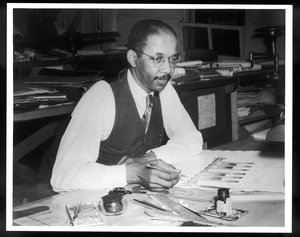
Allan Rohan Crite
1910 - 2007 , United States of America
Quick Facts
- Artistic Movement Or Style: Social realism
- Artists Or Movements Influenced By This Artist: ['None specified']
- Artists Who Influenced This Artist: ['None specified']
- Date Of Birth: March 20, 1910
- Date Of Death: September 6, 2007
- Full Name: Allan Rohan Crite
- Nationality: African American
- Notable Artworks:
- School’s Out
- Oh Freedom!
- The Street is a Memory
- Place Of Birth: North Plainfield, NJ

