 Preview
 Send
Send Share
Share
 Details

 Download
 Similars
 X-Ray
X-Ray Diaporama
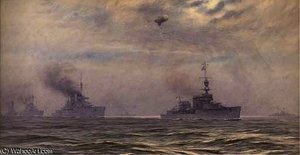
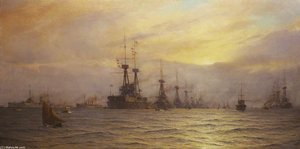
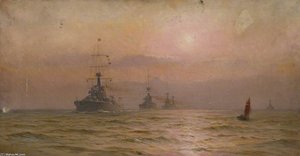
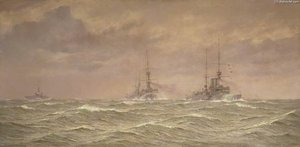
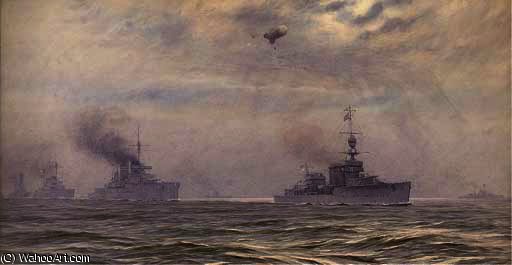
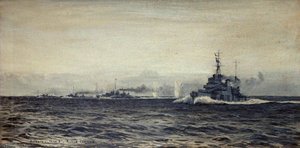
The german fleet, under escort to scapa flow, after its surrender in november

 Read More
Hand Made Oil Reproduction
Hand-painted oil on canvas in your size and frame, made to order by our artists. ( Buy Print Buy Image)




































Pick from our preset sizes that match the artwork's original proportions.

You may enter your own dimensions to fit a specific frame or space. If your selected size does not match the original image's proportions, we will either crop the artwork or extend the painting with additional hand-painted elements. A digital mockup will be sent for your approval before production begins.
Please note that the on-screen preview does not reflect the actual cropping or extension. Only the mockup will accurately show the final composition.
While custom sizes are available, we recommend selecting a dimension from the predefined list to preserve the original proportions.
After order, ArtsDot.com team will email client for instructions and provide a mockup preview
Worldwide Delivery () in 3/4 weeks instead of standard 5 weeks. (24 August). No compromise on quality.

Free Worldwide Express Shipping

High-Quality Linen Canvas

Full Shipping Insurance

Customs Tax Refund Guarantee

True Color Matching Guarantee

60-Day Return Policy (Defects Only)

100% Money-Back Guarantee

Bulk Discount Offer
 Glass option is only available in size under 110 CM

The german fleet, under escort to scapa flow, after its surrender in november
Reproduction Medium
Reproduction Size
-


Total Price
$ 263
Related Artworks



Artist Biography
A Life Dedicated to the Majesty of the Sea
Alma Claude Burlton Cull, born in the United Kingdom in 1880 and passing away in 1931, was a British marine painter whose life became inextricably linked with the depiction of the Royal Navy. While perhaps not as widely celebrated as some of his contemporaries like William Lionel Wyllie, Cull’s work holds a unique position within the tradition of naval art, characterized by meticulous detail and an evocative sense of atmosphere. His paintings weren't merely records of ships; they were celebrations of British maritime power, rendered with a skill that captured both the grandeur and the often-harsh realities of life at sea. Cull specialized in watercolours and oils, demonstrating a mastery of both mediums to portray warships with remarkable precision.Early Career and Artistic Development
Cull’s artistic journey led him to exhibit his work at prestigious venues including the Royal Academy, the Royal Institute of Painters in Watercolours, and the Walker Art Gallery – testaments to his growing reputation within the art world. He also showcased his talent at the London Salon, gaining exposure beyond British borders. His early works already hinted at a specialization; he wasn’t painting landscapes or portraits but focusing intently on vessels of war. This dedication suggests an early fascination with naval architecture and perhaps a deep-seated patriotism. The late 19th and early 20th centuries were periods of immense naval expansion for Britain, and Cull's art directly reflects this era. He wasn’t simply documenting ships; he was capturing the spirit of a nation that ruled the waves. His technique evolved over time, moving from precise renderings to incorporating more impressionistic elements, particularly in his watercolor seascapes, creating a sense of movement and drama.Themes and Style: Capturing Naval Life
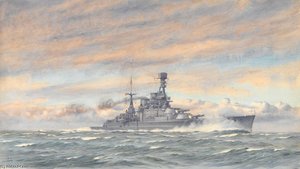
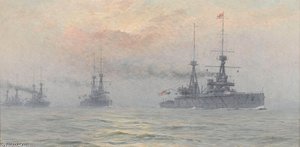
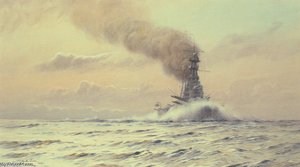
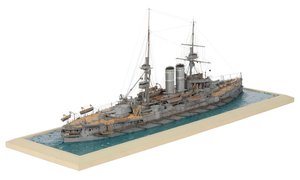
Cull’s oeuvre is dominated by scenes of Royal Navy ships – battleships, cruisers, destroyers – often depicted in various states of activity, from peaceful harbor views to dramatic wartime encounters. His paintings are notable for their photorealistic detail, particularly evident in his depictions of ship structures and rigging. However, he wasn’t solely focused on technical accuracy; Cull also possessed a keen eye for atmosphere, using light and shadow to create mood and evoke emotion. Works like “HMS Hindustan” showcase this skill beautifully – the model-like precision combined with a subtle play of light gives the vessel an almost tangible presence. Other paintings, such as "The German Fleet, under escort to Scapa Flow, after its surrender in november", demonstrate his ability to capture historical moments with evocative brushwork and a moody palette. He excelled at portraying the interplay between ships and the sea, often depicting misty conditions or turbulent waters that added depth and drama to his compositions. “Press Forward” exemplifies this, with warships emerging from the fog, hinting at both power and vulnerability.Recognition and Legacy
Throughout his career, Cull garnered recognition for his skill and dedication to naval art. He was commissioned by King Edward VII, a testament to the esteem in which his work was held within royal circles. However, tragedy struck after his death in 1931. His widow, seeking to preserve his unsold works, stored them in his studio in Old Portsmouth. Sadly, this collection was destroyed during enemy bombing raids in World War II – a devastating loss for art historians and collectors alike. Today, Cull’s surviving paintings are considered rare and highly sought after. A small but significant number of his works can be found at the National Maritime Museum in Greenwich, offering glimpses into the talent of an artist who dedicated his life to capturing the majesty of the sea. While overshadowed by some of his more prolific contemporaries, Alma Claude Burlton Cull remains a vital figure in the history of British marine painting, and his paintings continue to offer a compelling window into a bygone era of naval power and artistic skill.
alma claude burlton cull
1880 - 1931 , United Kingdom
Quick Facts
- Artistic Movement Or Style: Historical Painting
- Artists Or Movements Influenced By This Artist: ['Victorian Art Style']
- Artists Who Influenced This Artist: ['William Lionel Wyllie']
- Date Of Death: 1931
- Full Name: Alma Claude Burlton Cull
- Nationality: British
- Notable Artworks: ['Nelson in H.M.S. Victory']
- Place Of Birth: United Kingdom
Related Articles
The Allure of the Horizon: A Comprehensive Exploration of Seascape Art Through History & Emotion
Explore the captivating world of seascape art! Discover its history, key artists & movements – from Dutch Masters to Impressionism. Expert insights for collectors and enthusiasts at ArtsDot.

Romantic Landscapes: 10 Masterpieces for Your Home | ArtsDot
Journey through 10 Romantic landscape masterpieces by Friedrich, Turner & Cole. Explore emotional art, sublime nature scenes & iconic 19th-century paintings. Find museum-quality reproductions for your home at ArtsDot.com – discover the full collection online!

Evocations of Place: A Historical Journey Through Landscape Art
Explore the rich history of landscape art with ArtsDot. Discover renowned artists, movements like Impressionism & Romanticism, and expert guidance for collecting timeless pieces. Find your perfect serene escape today!

Hokusai's Masterpieces: 25 Iconic Prints & Paintings for Art Lovers | ArtsDot
Journey through Katsushika Hokusai’s 25 most iconic artworks, including *The Great Wave*. Explore the ukiyo-e master's history, style & timeless Japanese woodblock prints. Find museum-quality reproductions for your home at ArtsDot.com.

John Constable's Masterpieces: Explore 25 Iconic Landscapes for Your Home
Journey through John Constable's 25 most celebrated landscapes. Explore Romanticism, Dedham Vale & his masterful use of light in iconic paintings like 'Hay Wain'. Find museum-quality art reproductions and elevate your home decor on ArtsDot.com.